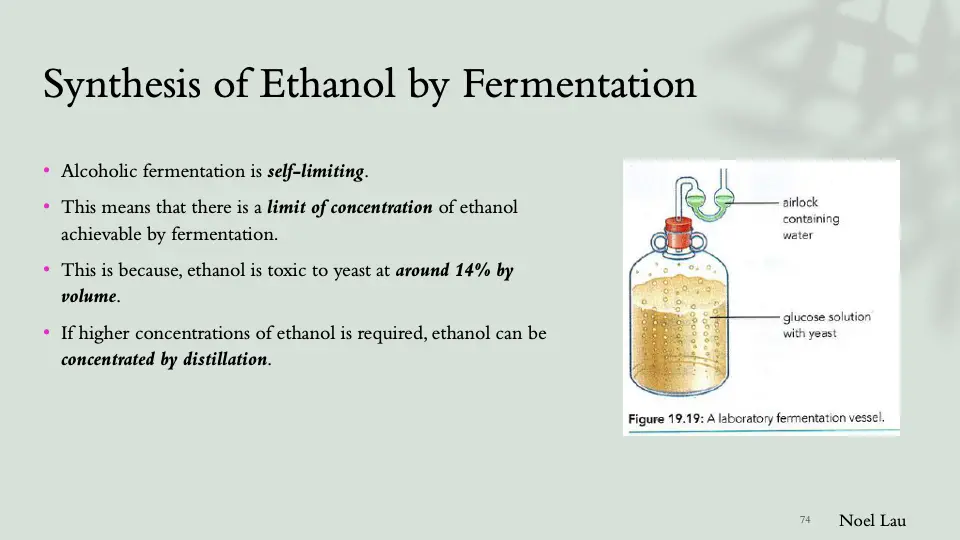
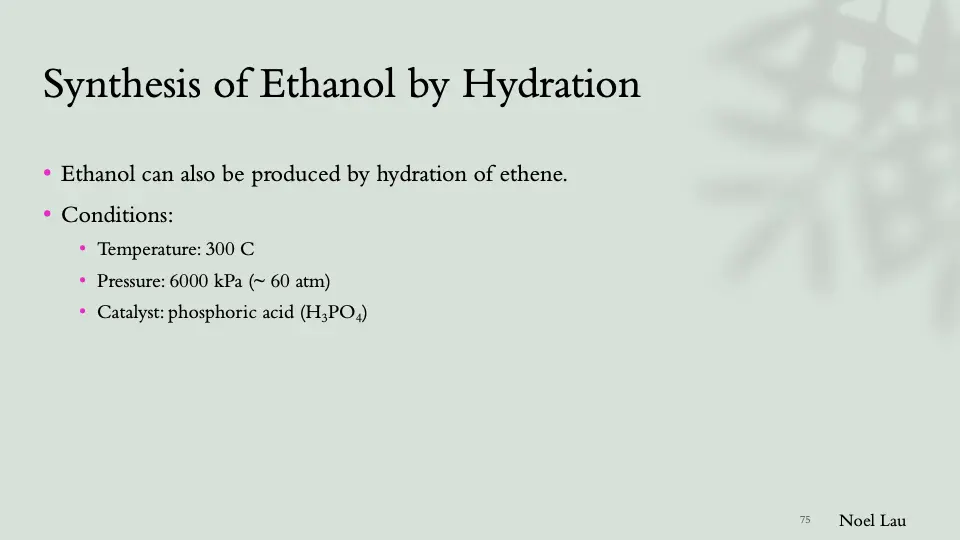
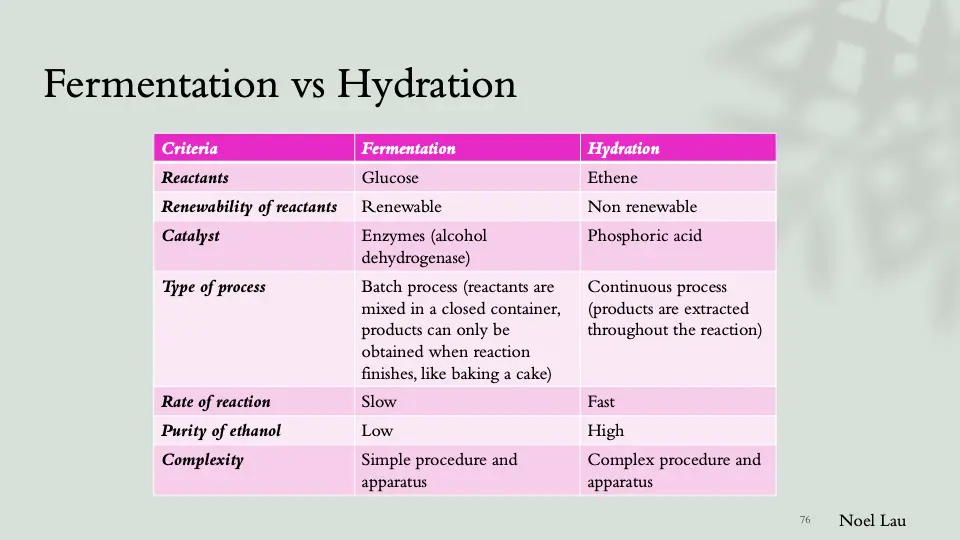
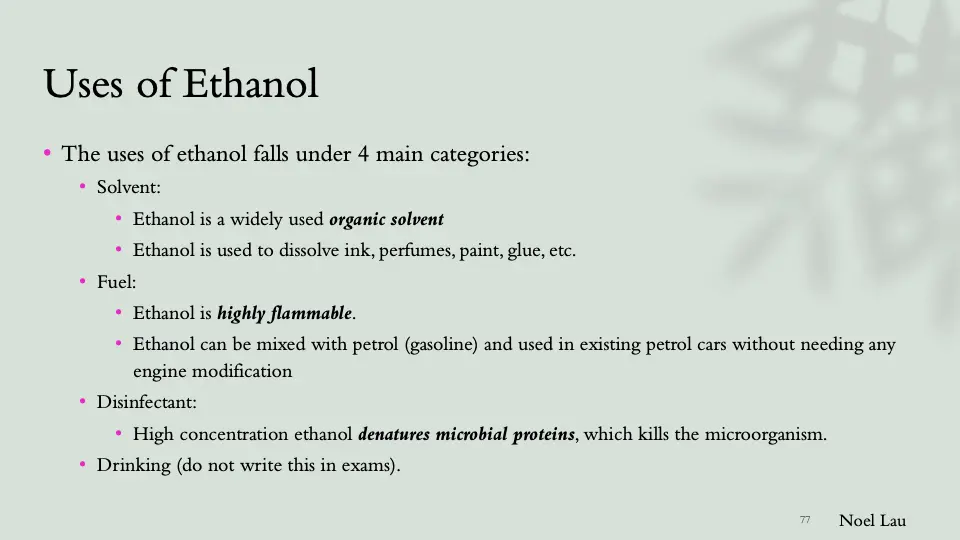
This chapter starts with an introduction to organic chemistry which is the chemistry of carbon containing compounds. We discuss why carbon alone forms more compounds than all other elements combined.
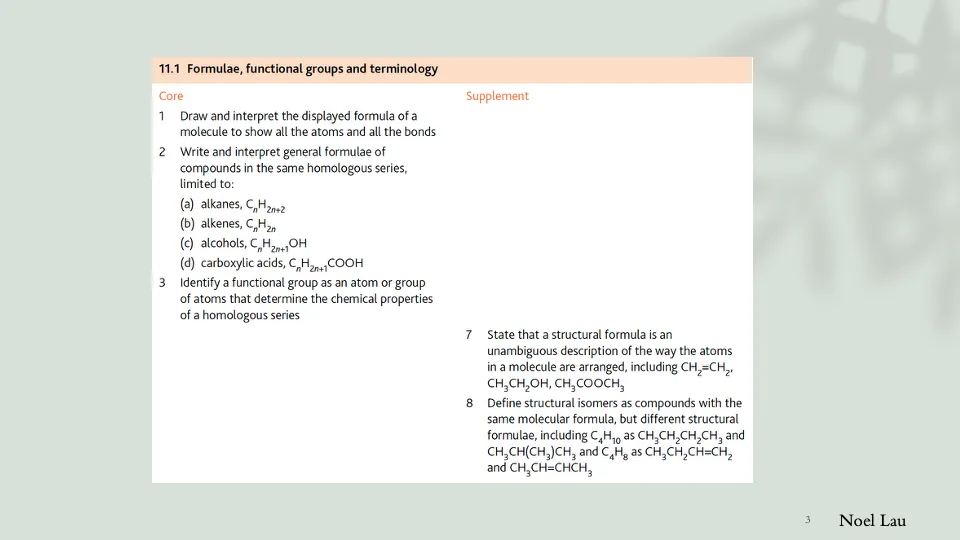
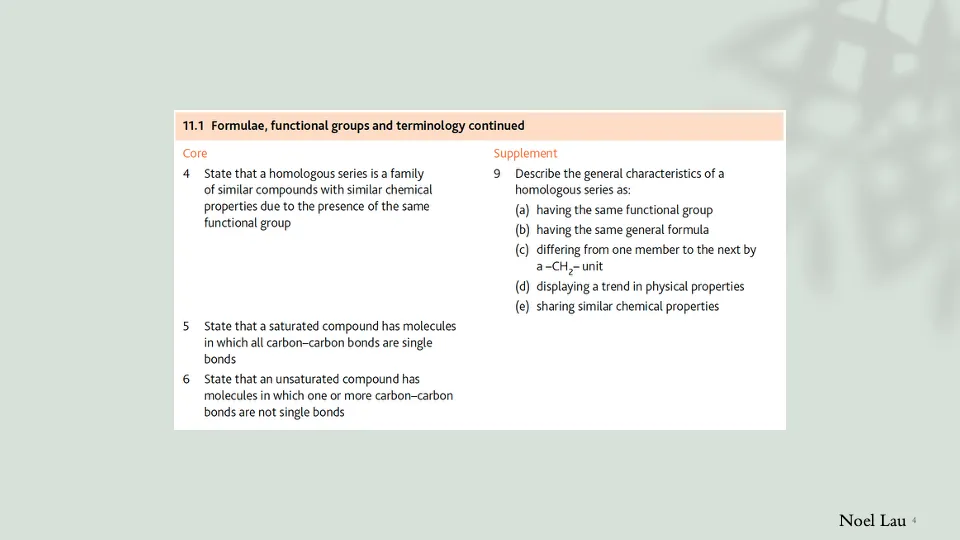
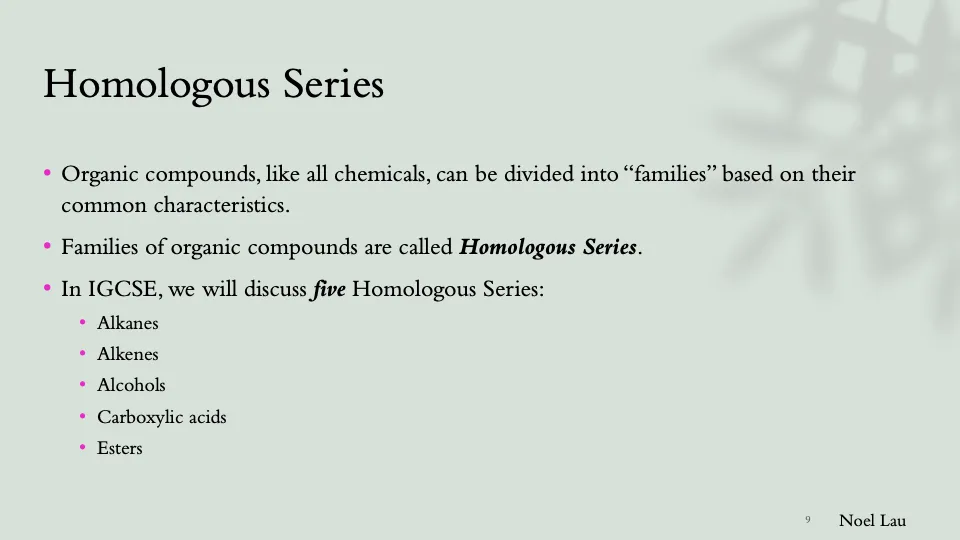
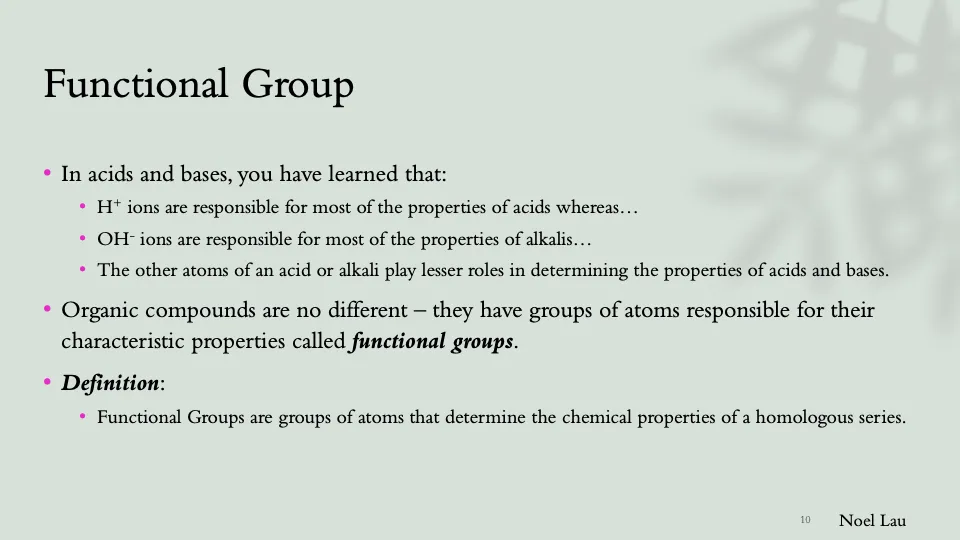
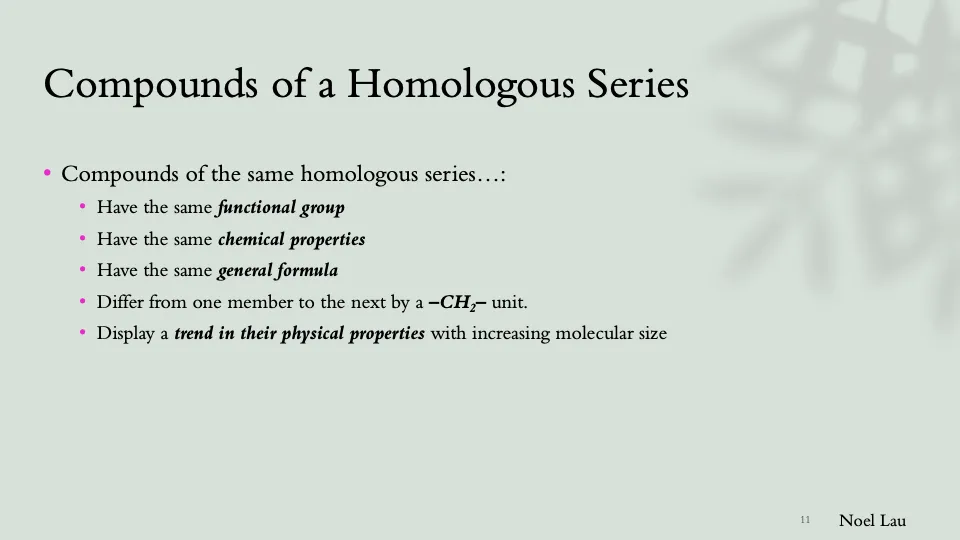
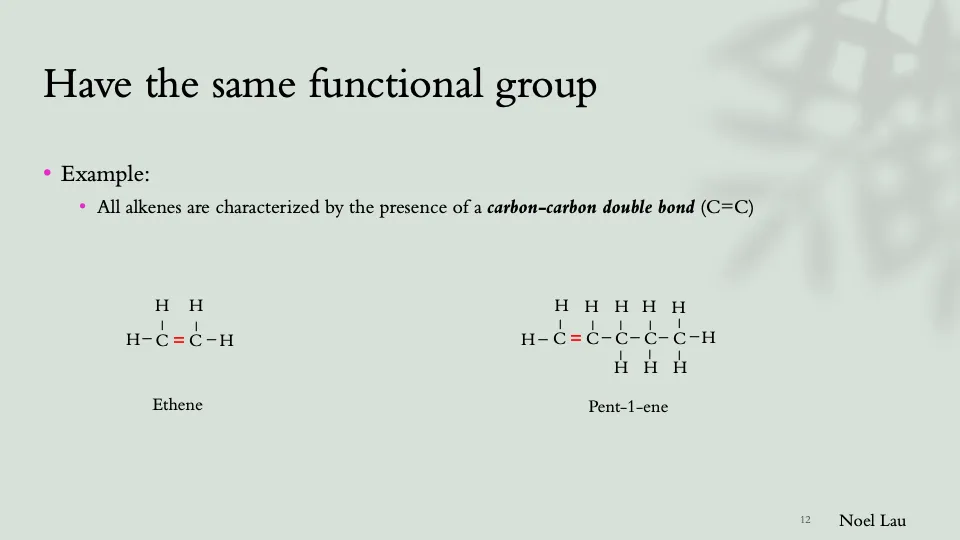
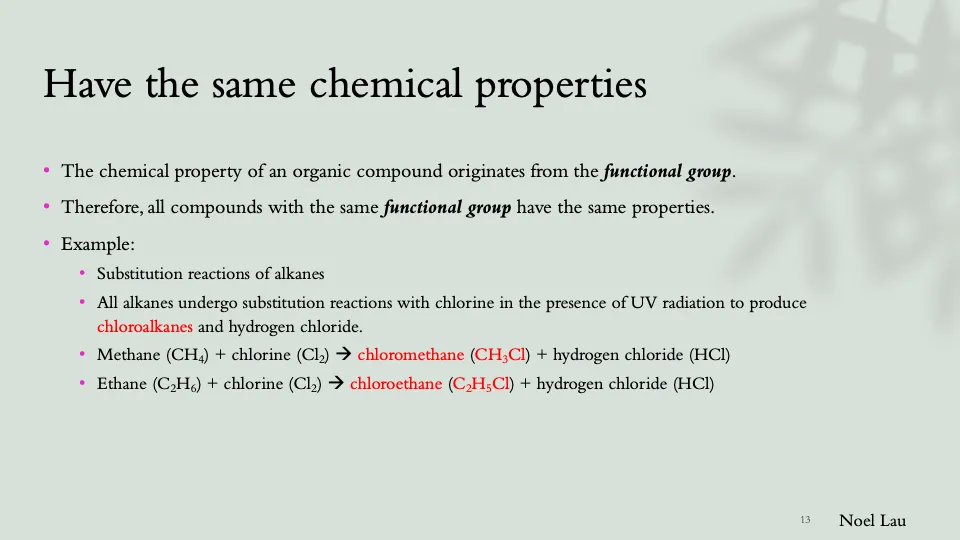
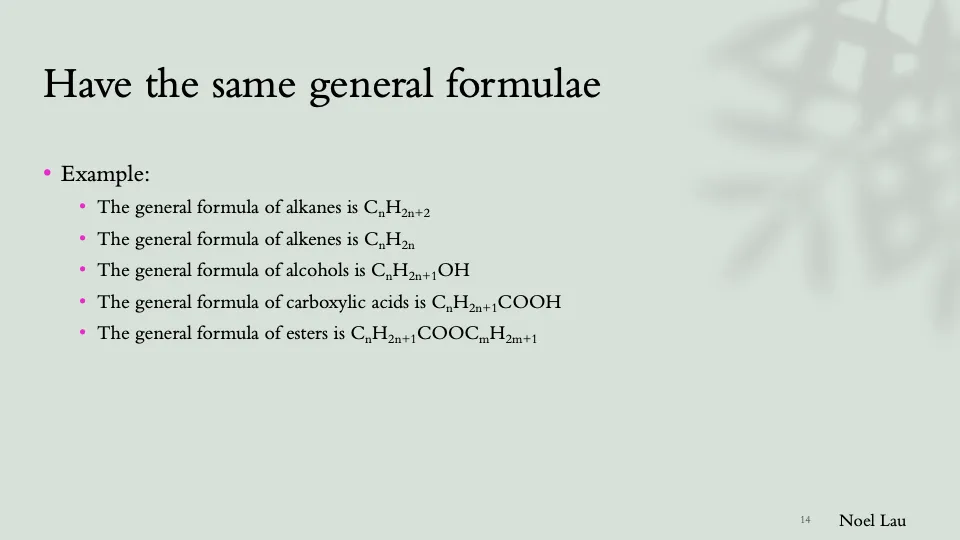
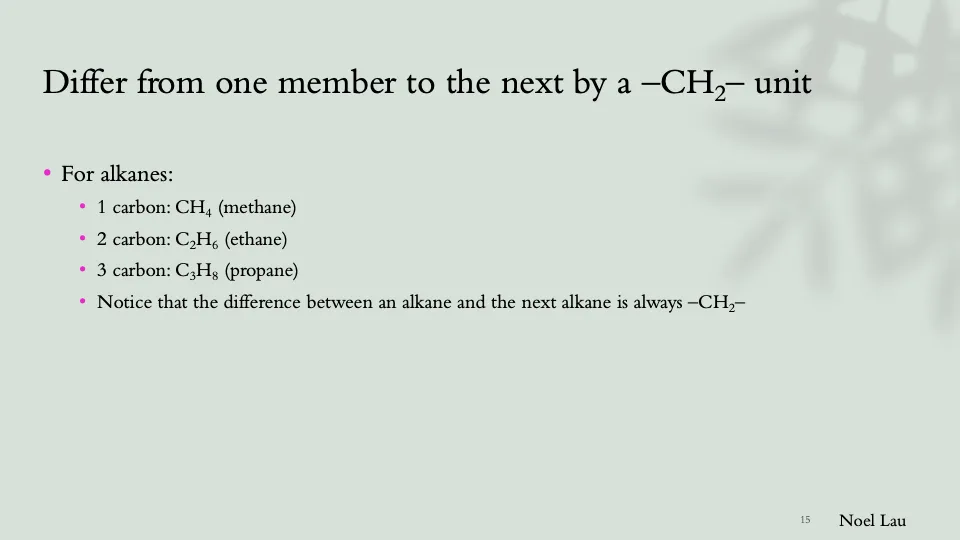
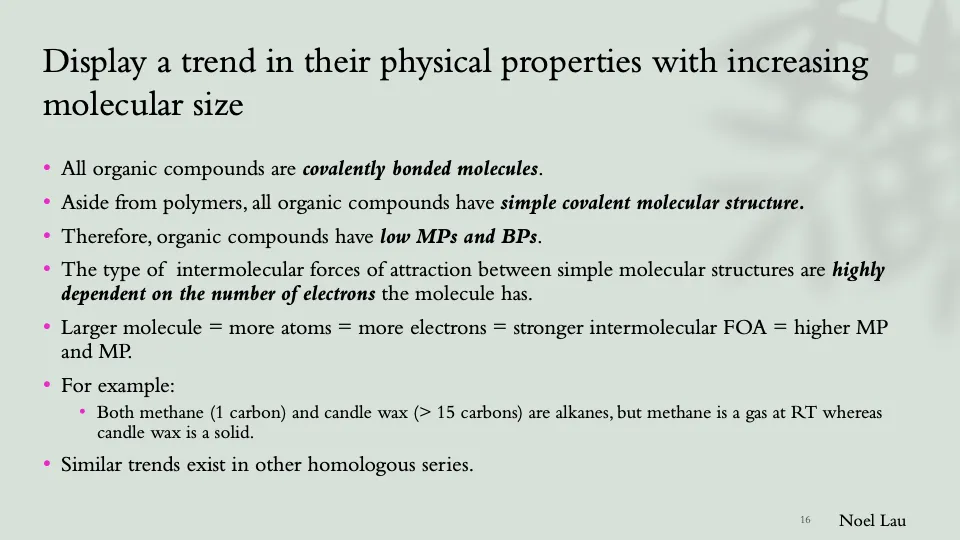
We will then discuss key terms of organic chemistry such as homologous series, functional group, and the similarities of compounds in a homologous series.
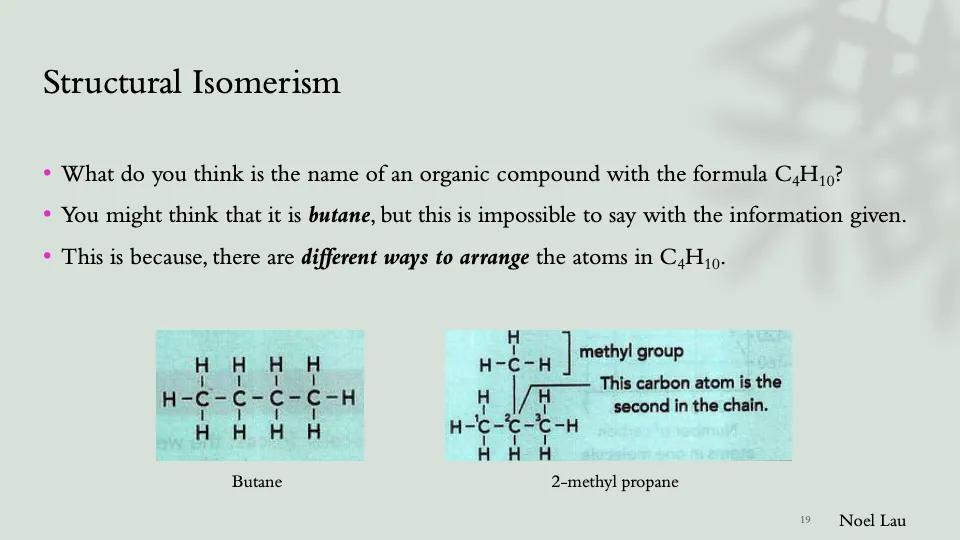
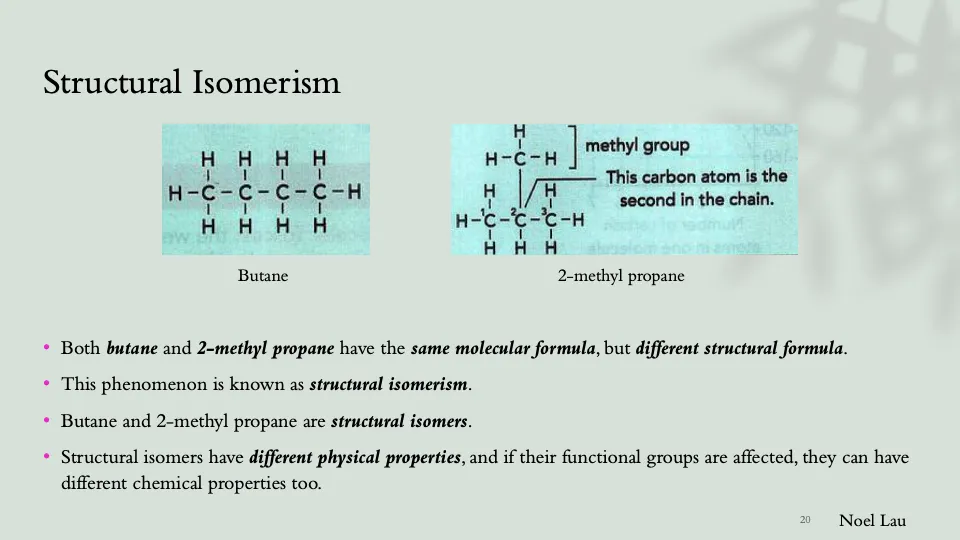
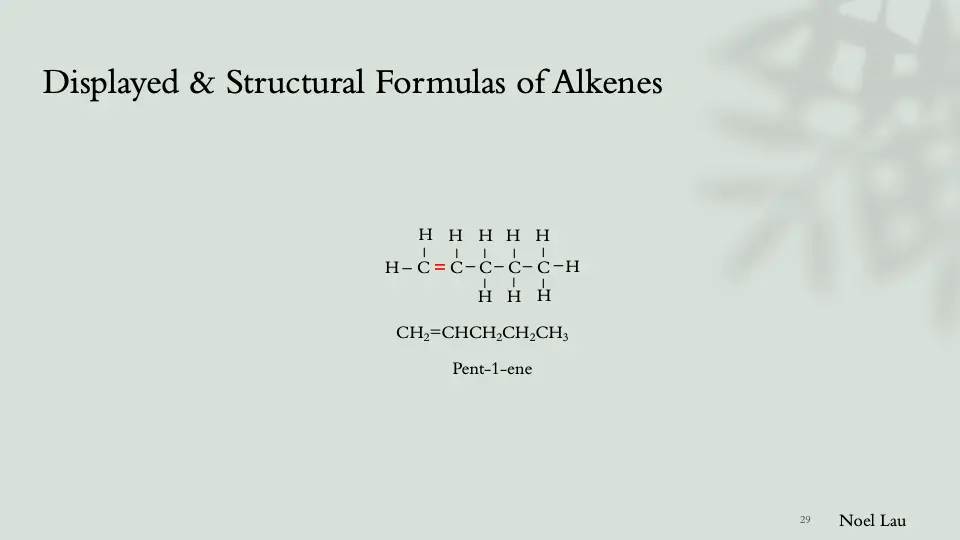
Then, we will look at structural isomerism where molecules can have the same number of atoms and elements, but different structures.
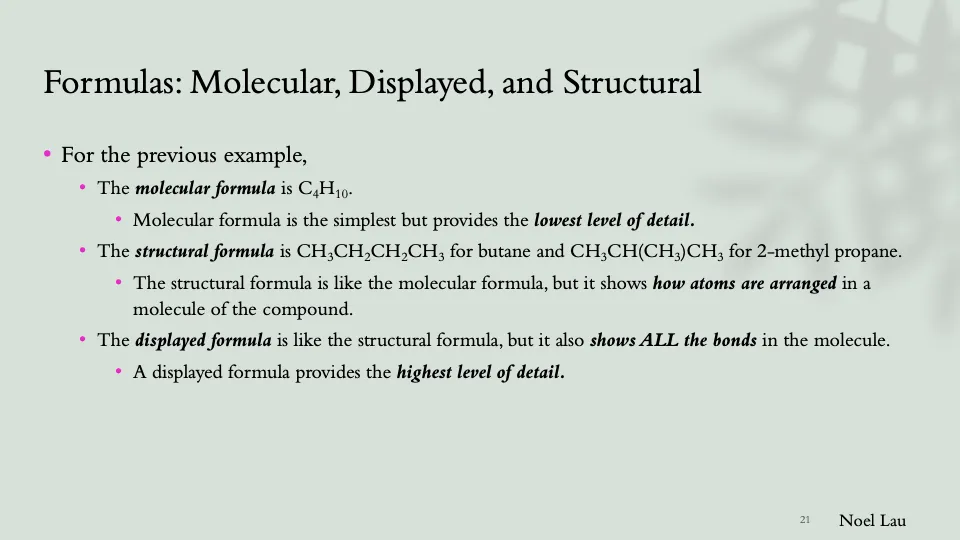
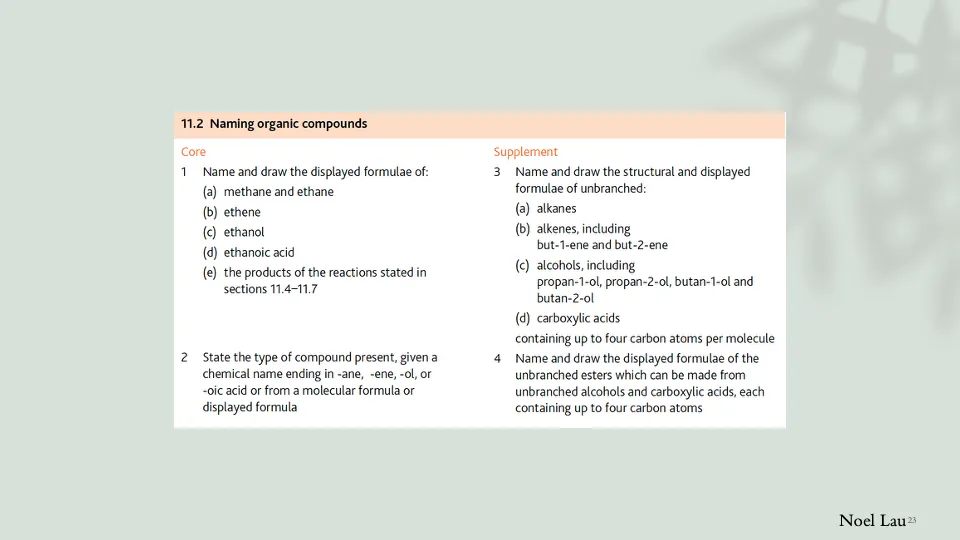
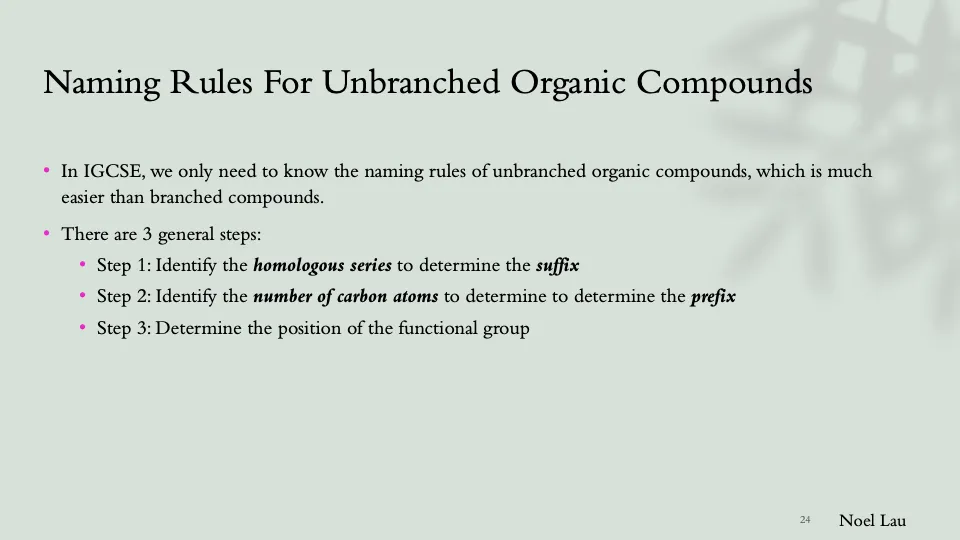
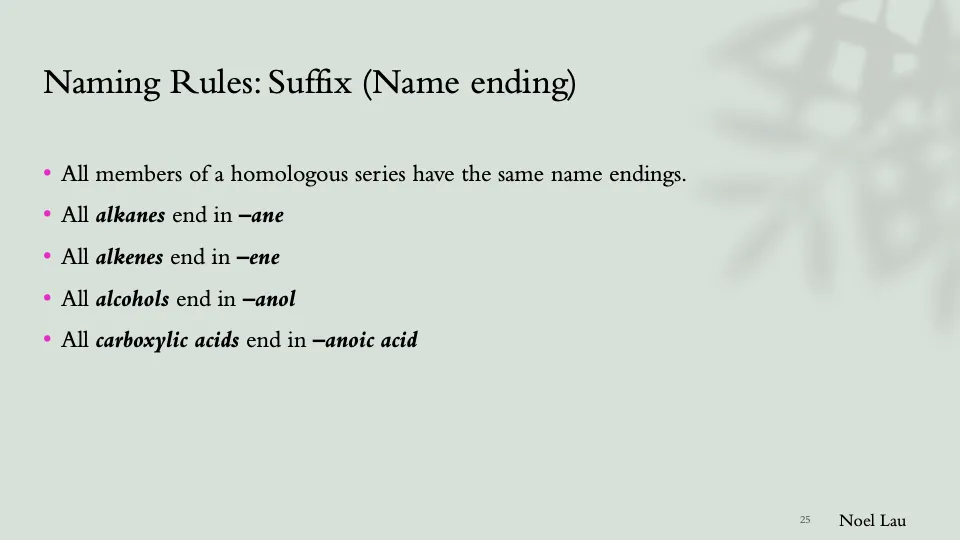
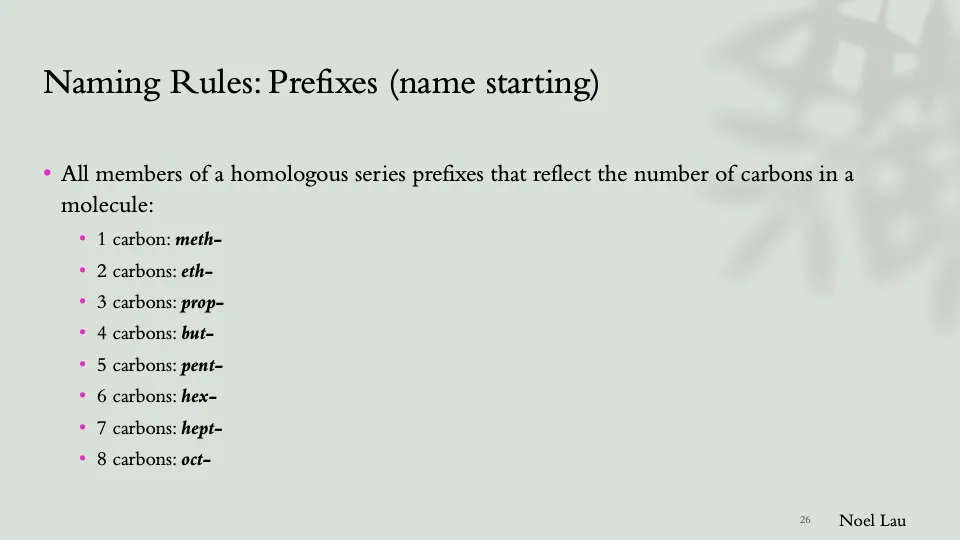
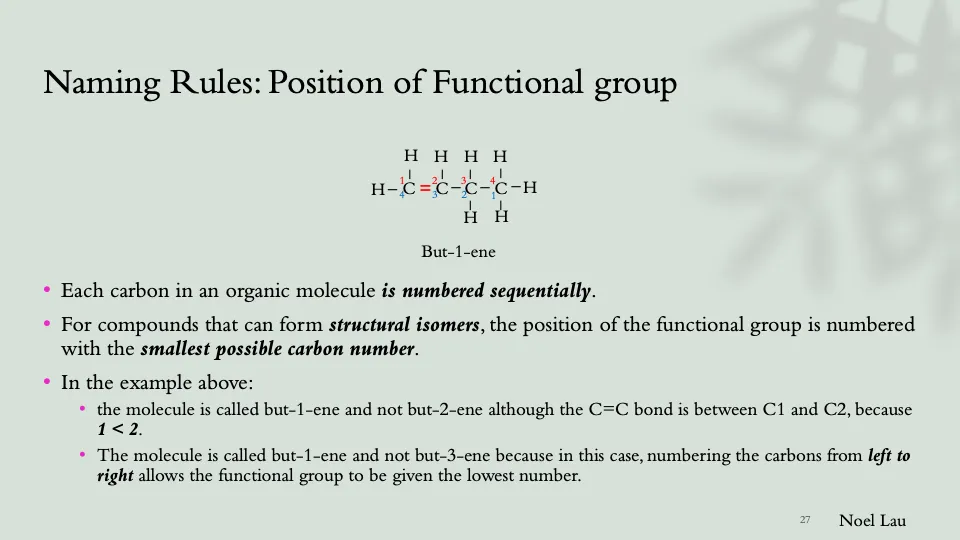
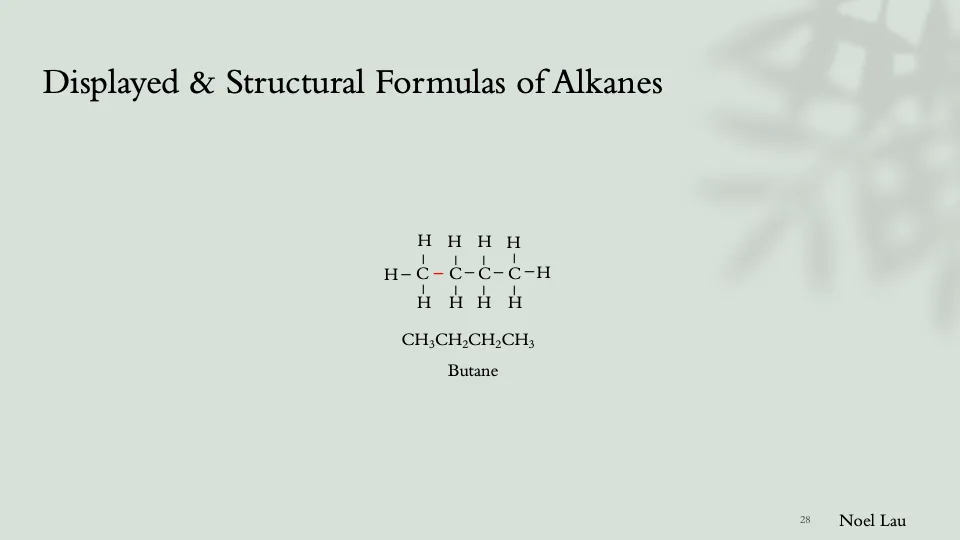
From there, we will learn the IUPAC rules for naming simple organic compounds and see how different isomers have different names despite having the same molecular formula.
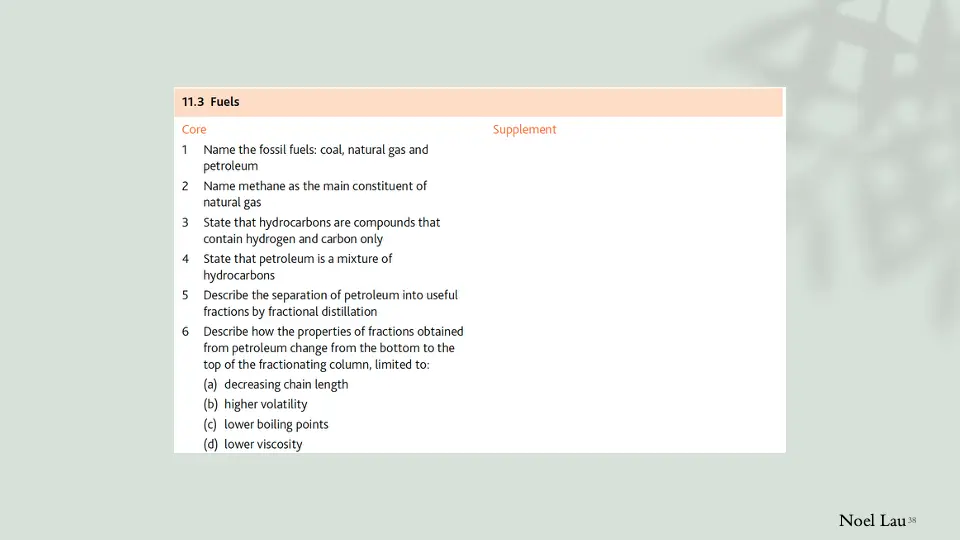
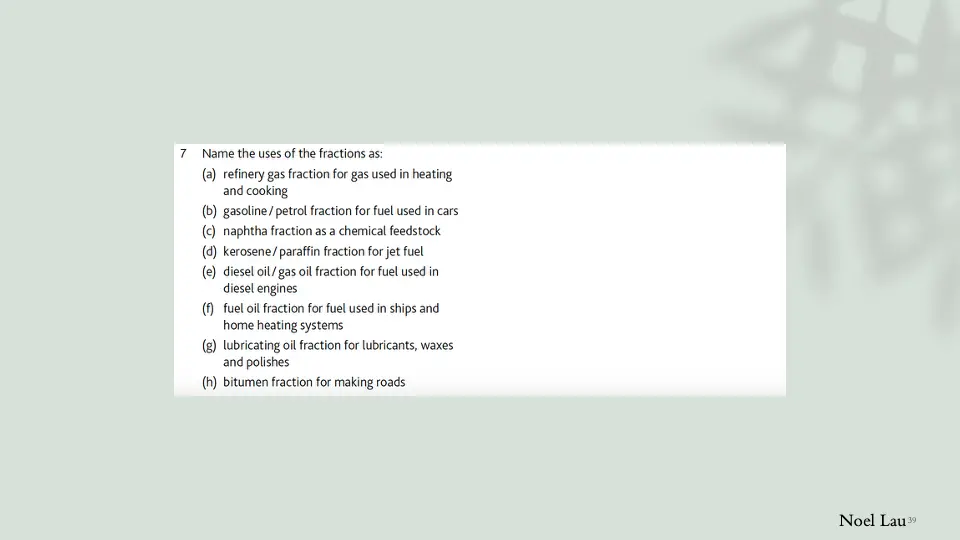
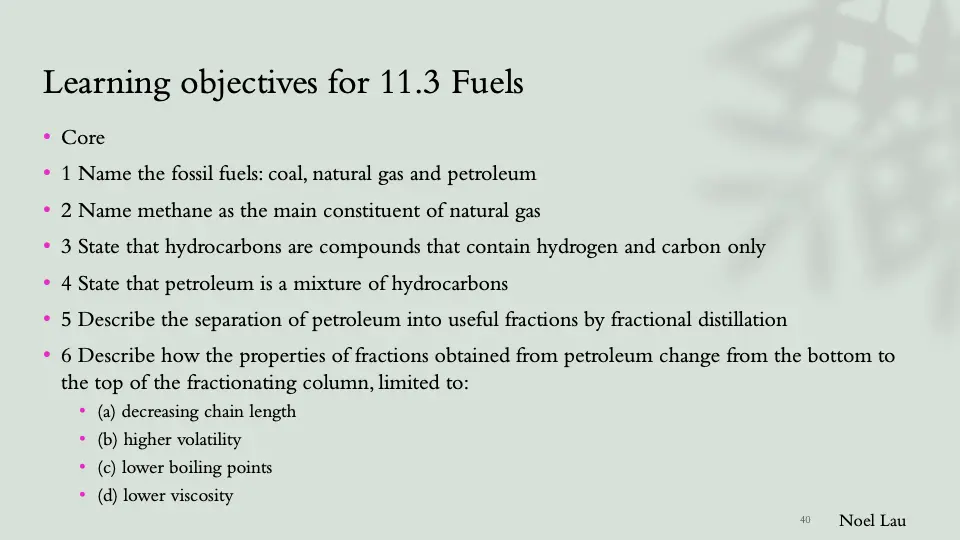
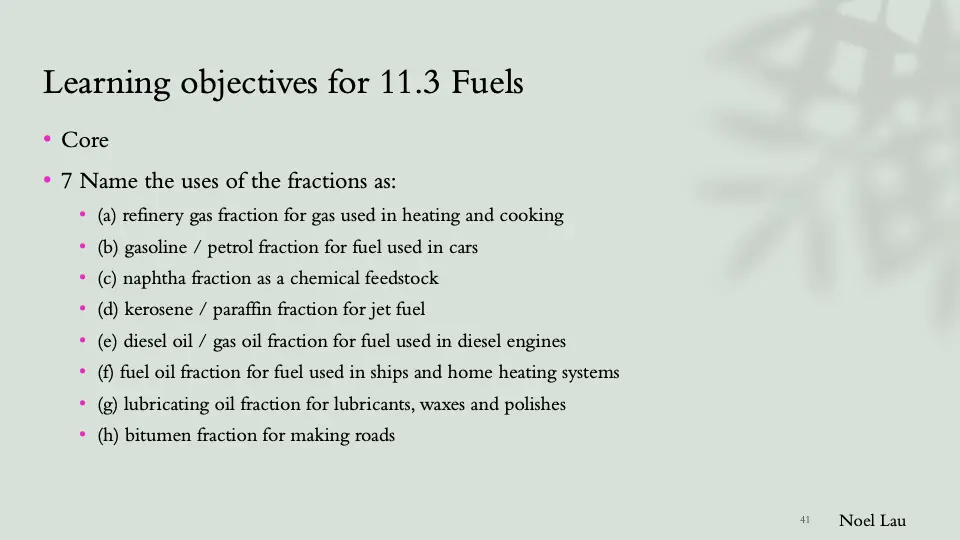
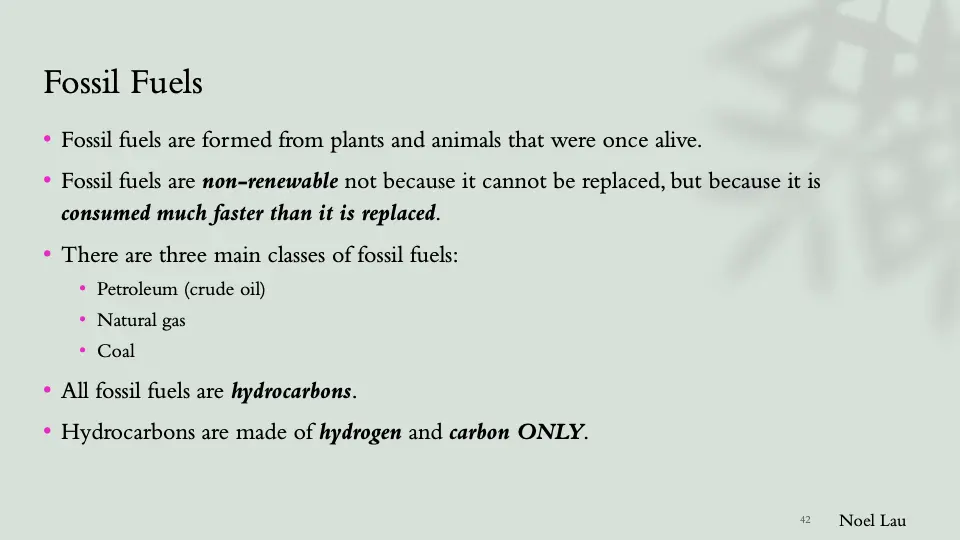
Next, we will discuss hydrocarbons in terms of the different types of fossil fuels, their origins, uses and how they are extracted.
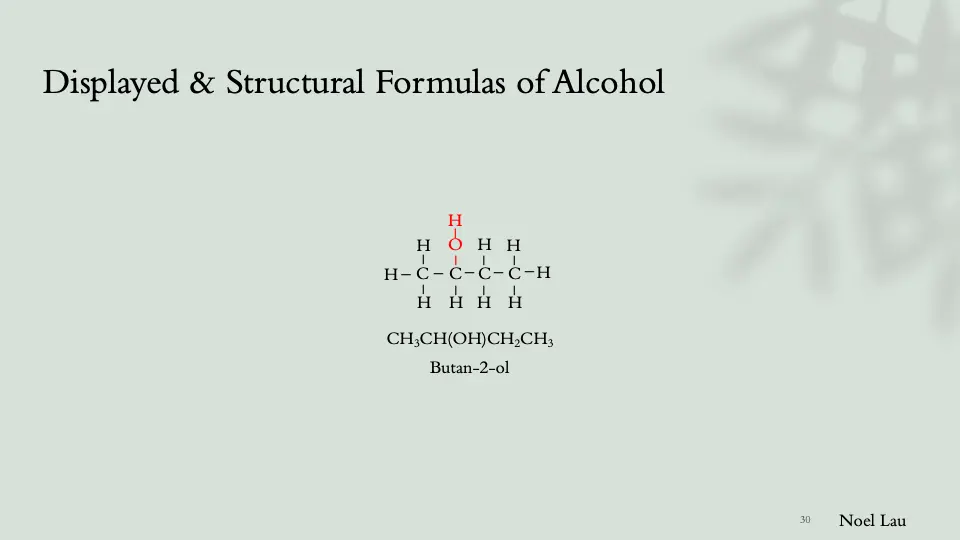
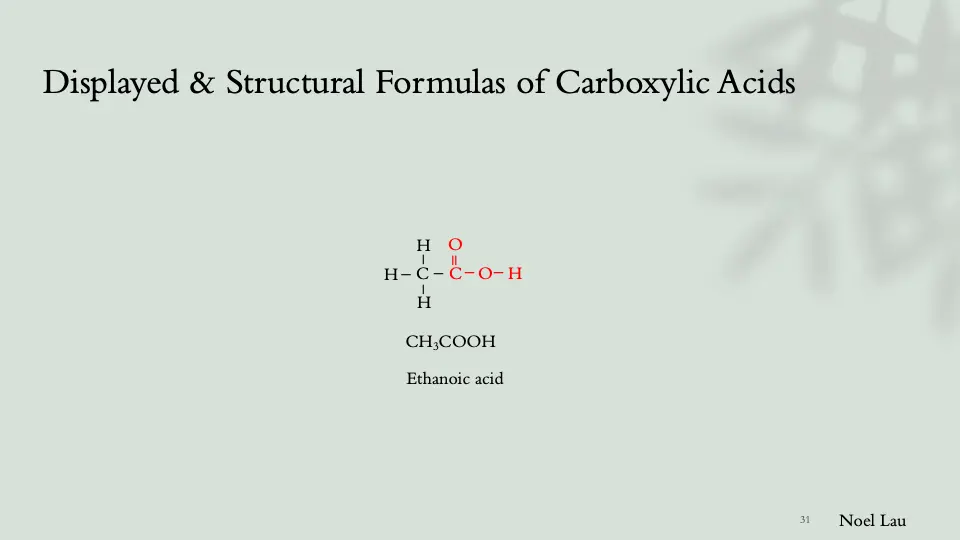
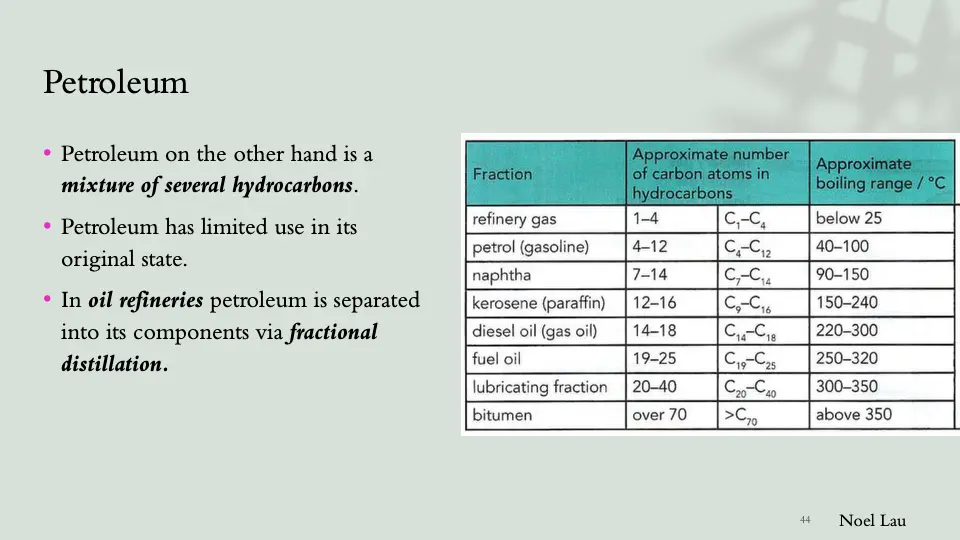
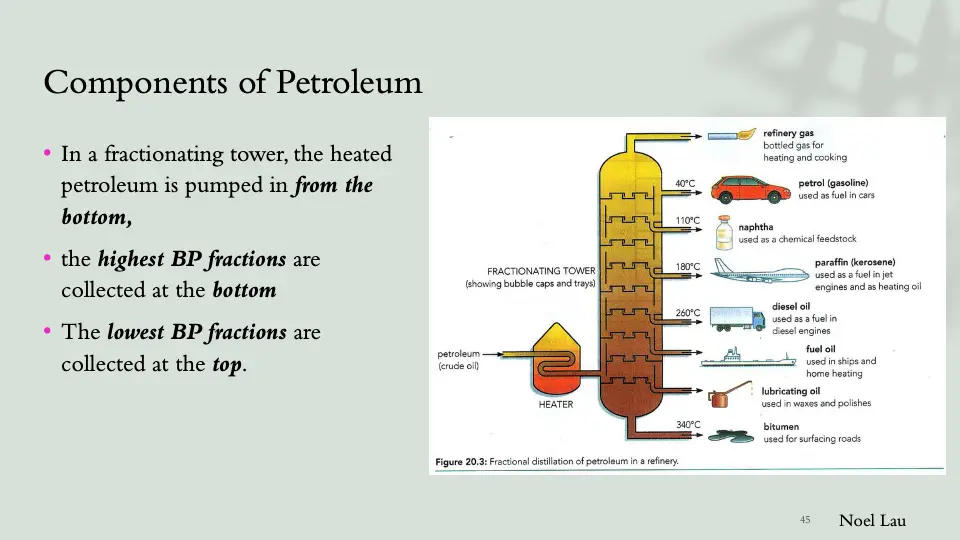
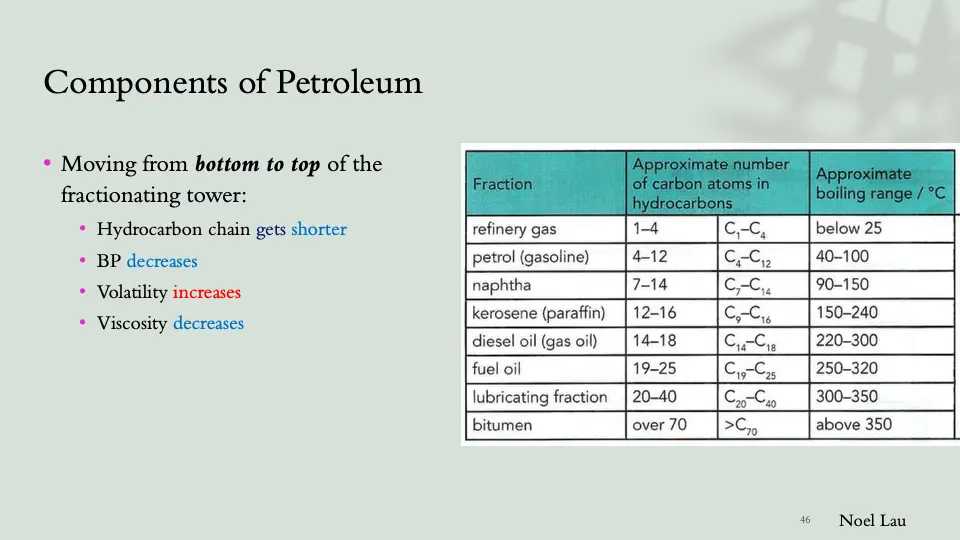
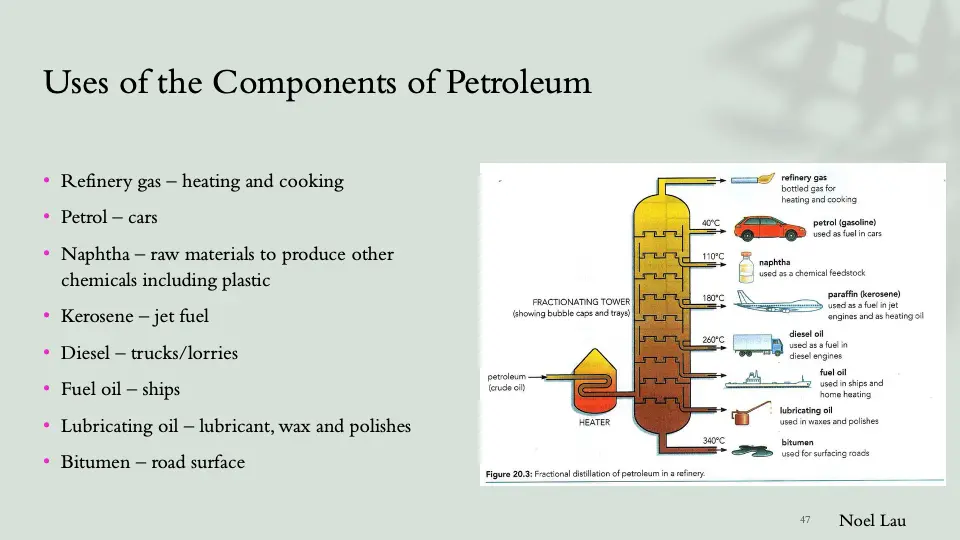
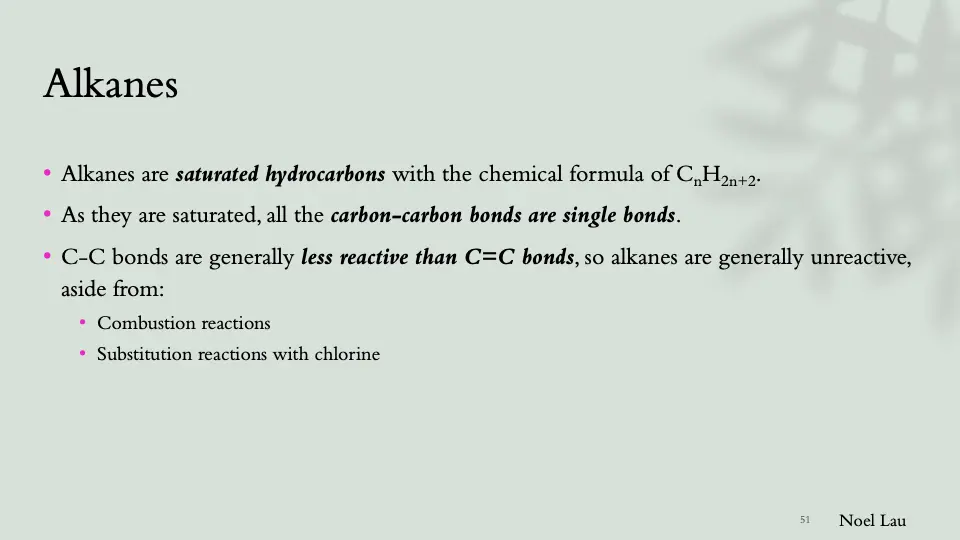
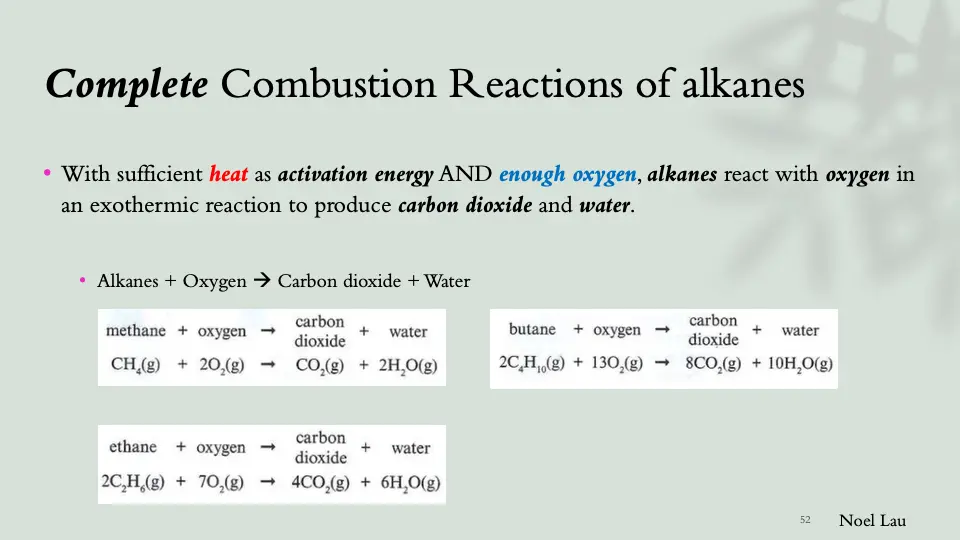
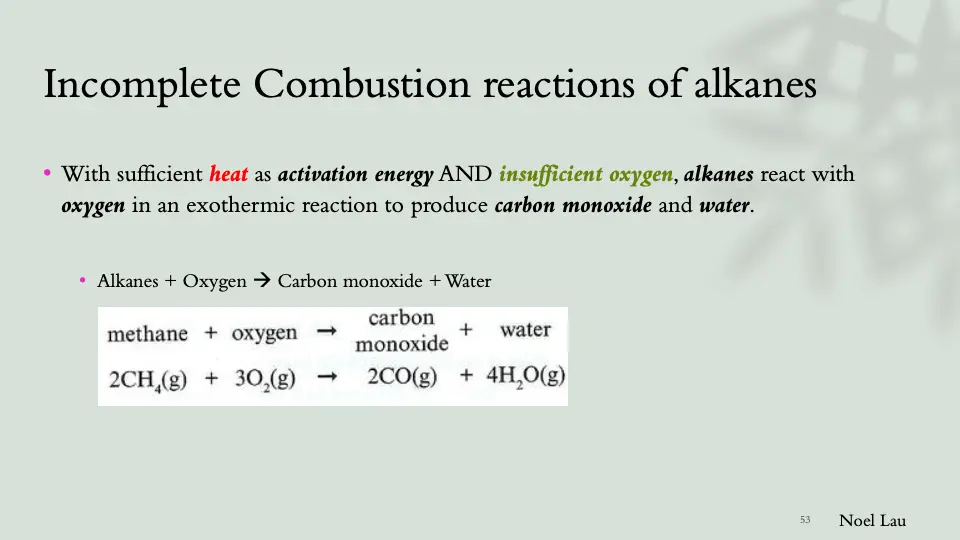
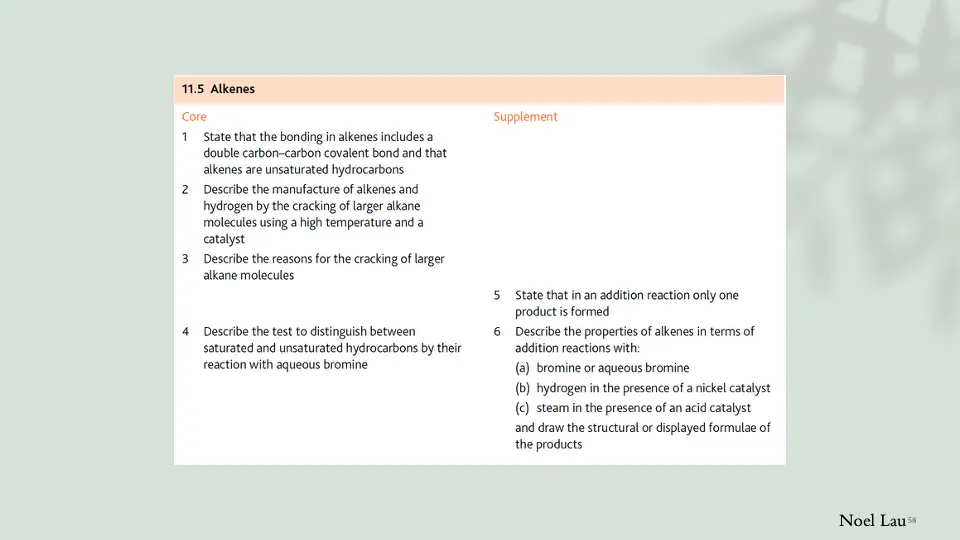
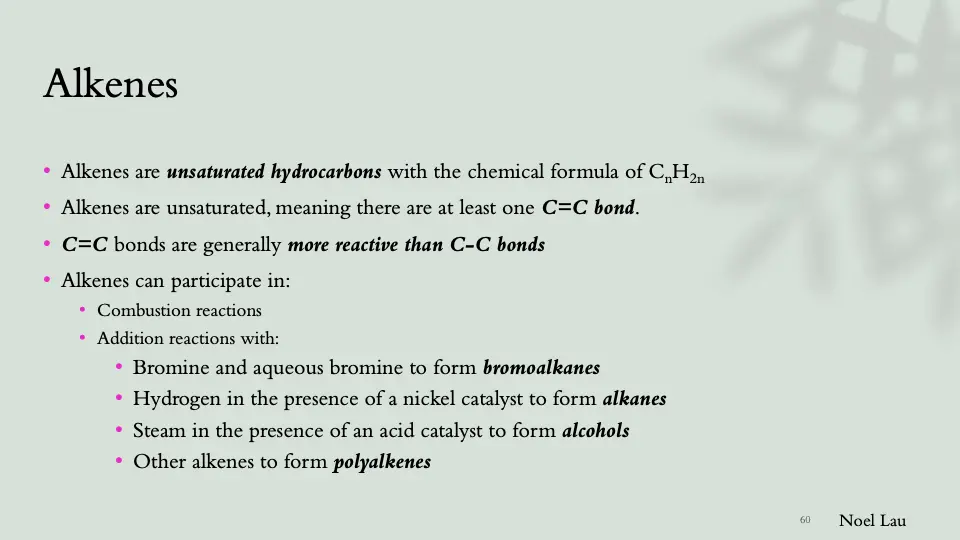
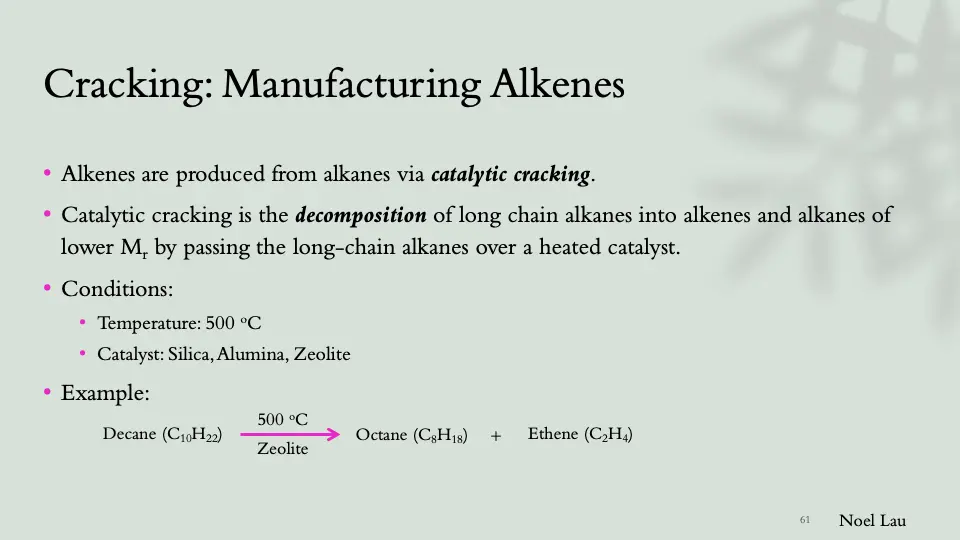
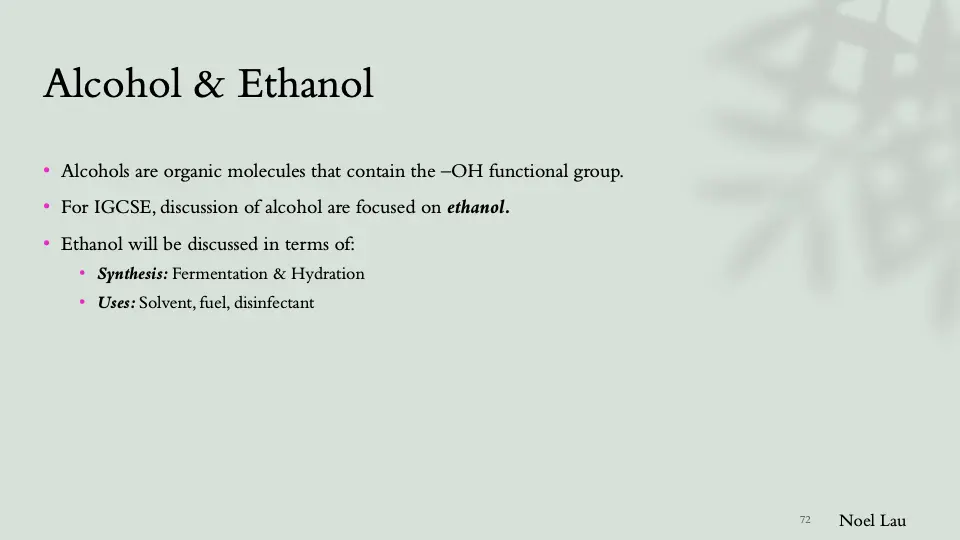
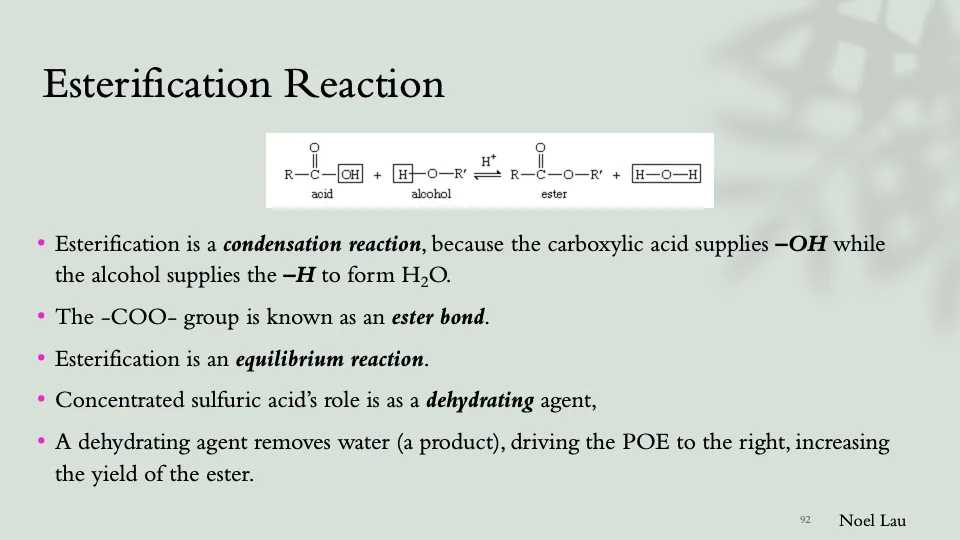
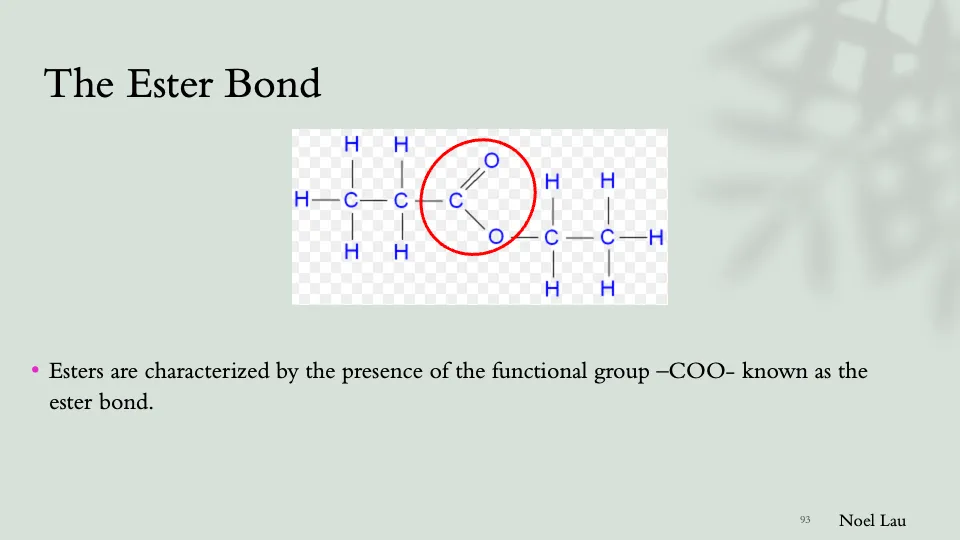
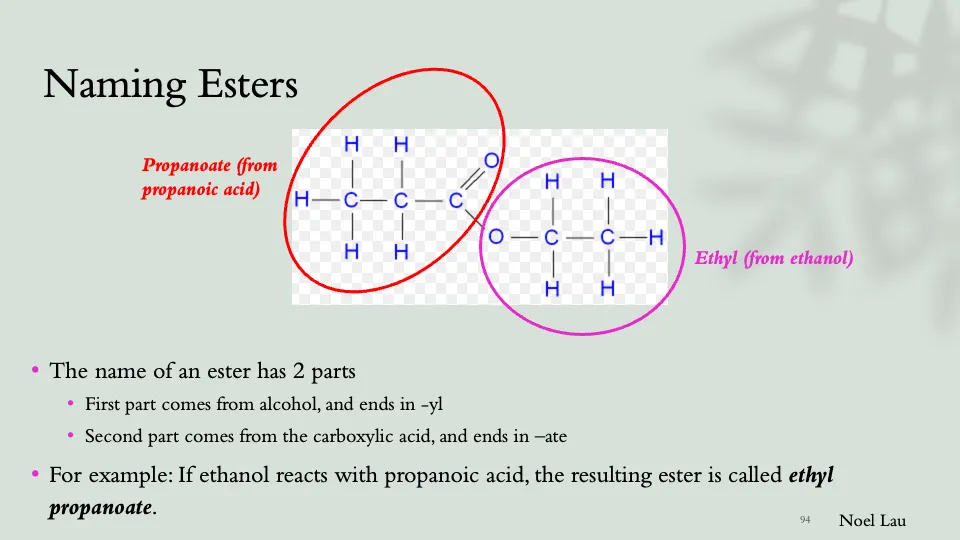
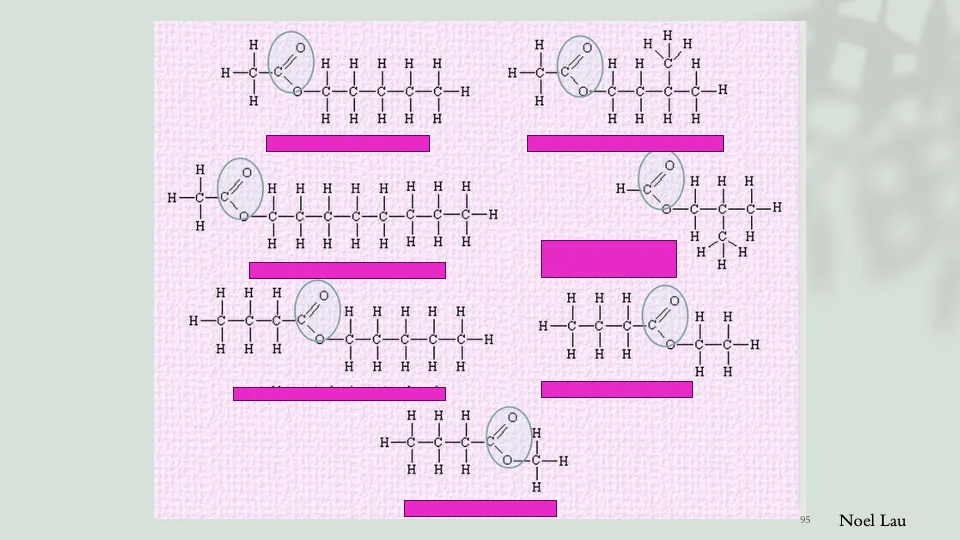
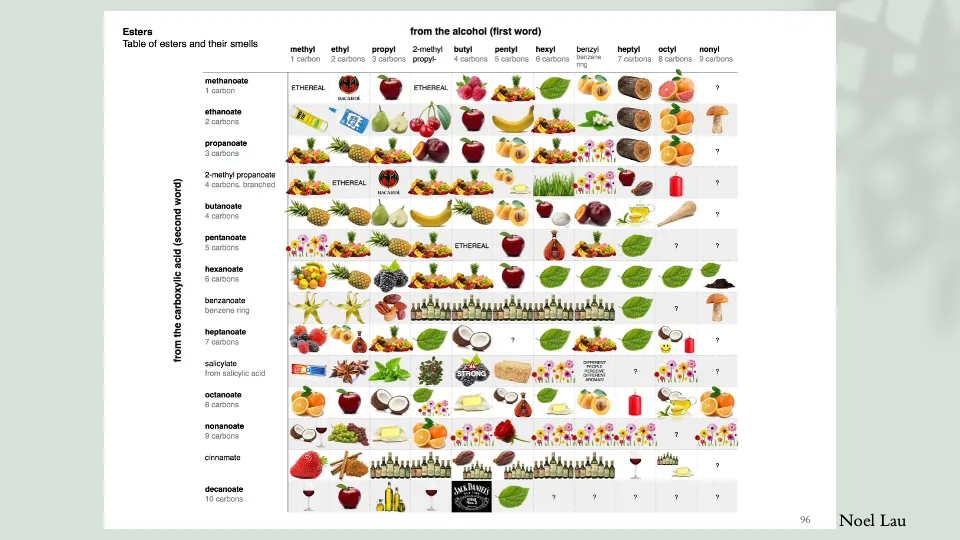
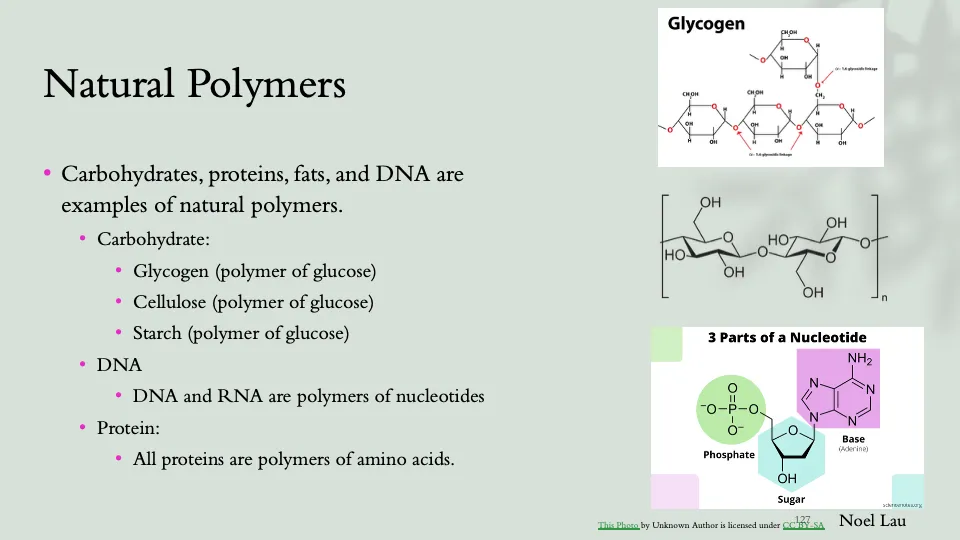
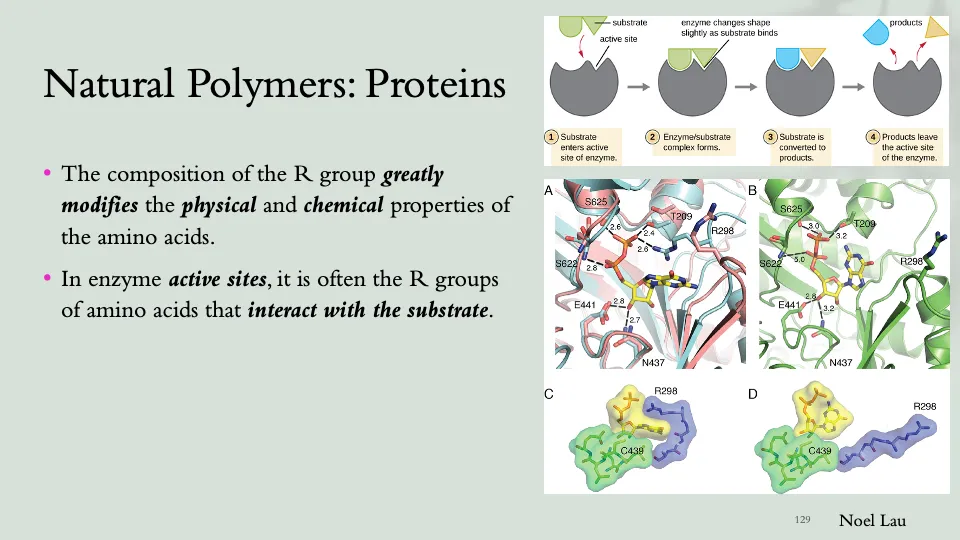
In particular, we will focus on the fractional distillation of crude oil. We then transition from a general high-level discussion of hydrocarbon to a specific types of hydrocarbon - alkanes and alkenes. We then move on to the homologous series of alcohols, carboxylic acids, esters, and polymers.
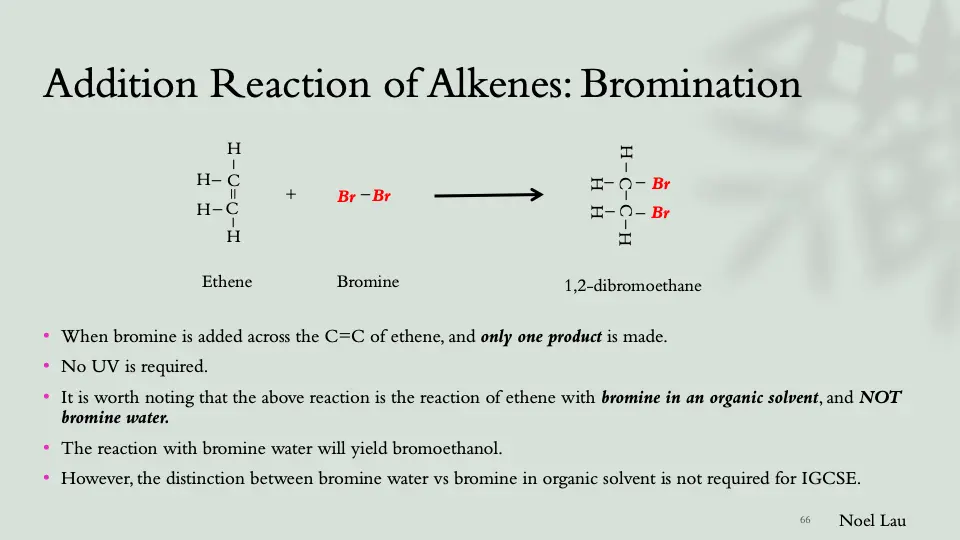
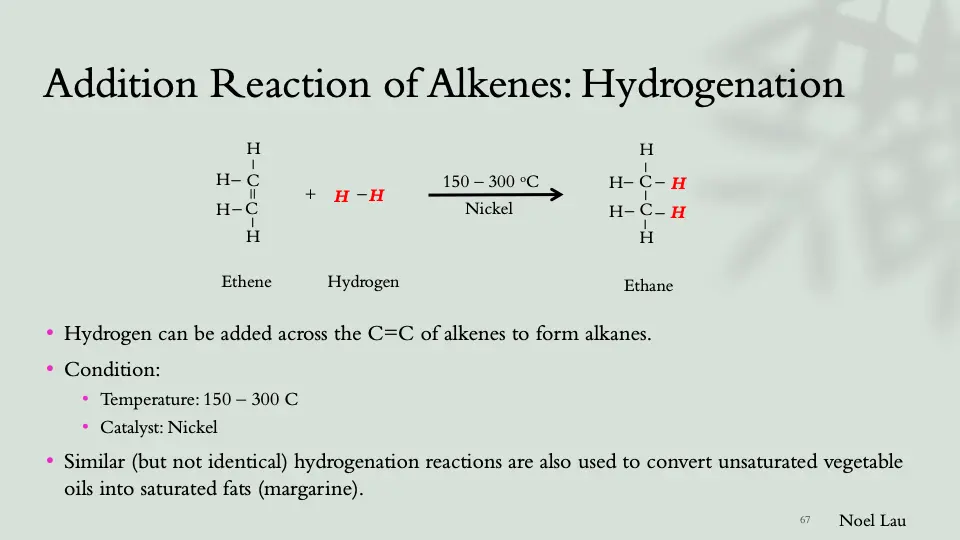
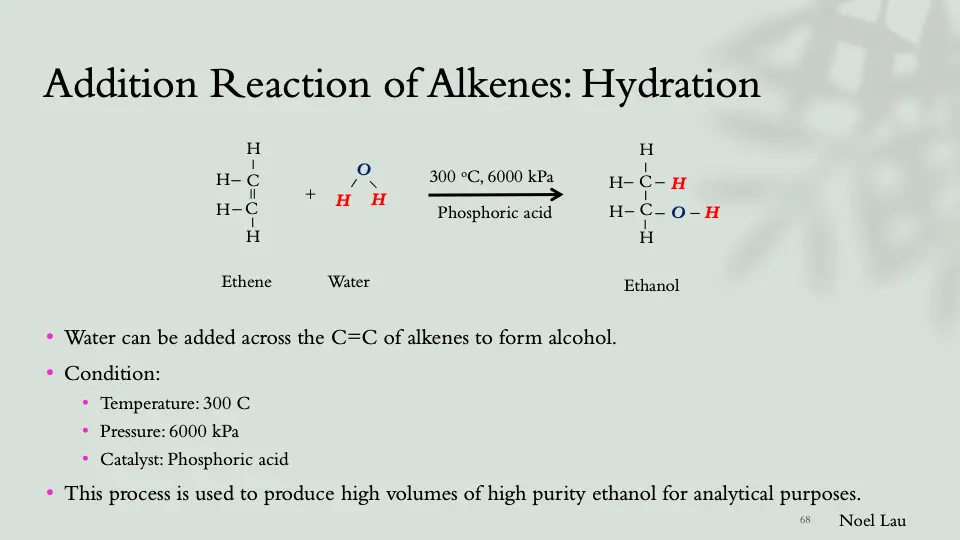
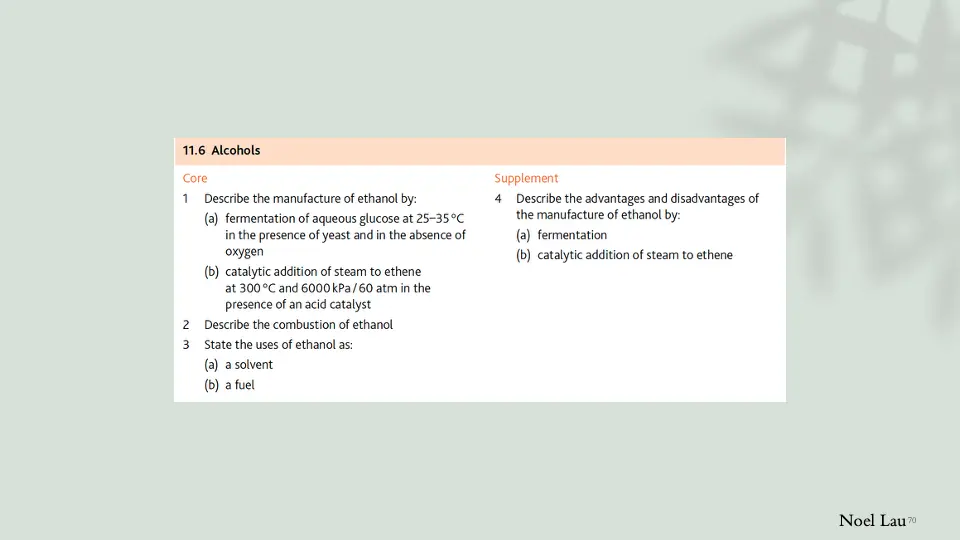
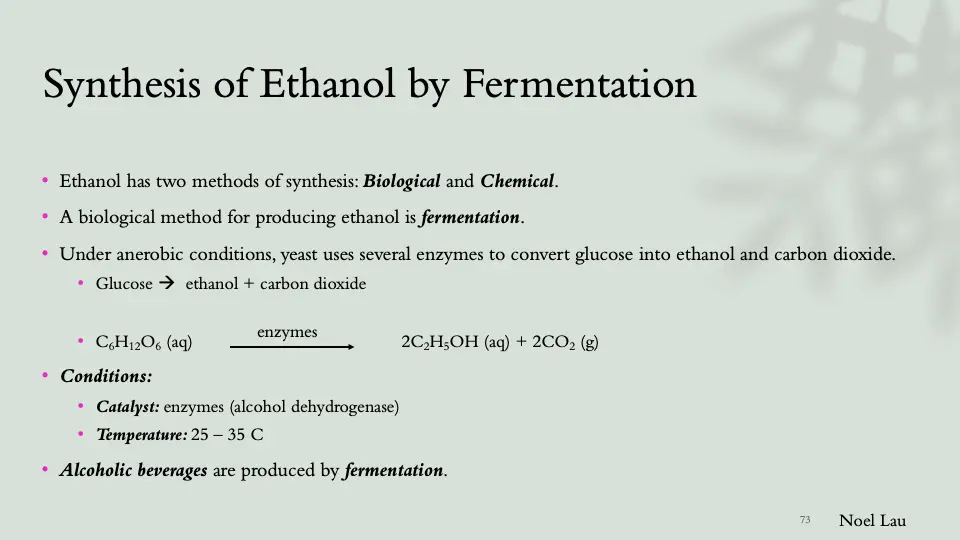
Each homologous series will be discussed in similar format - general formula of the series, how the series reacts and how the series is synthesized.
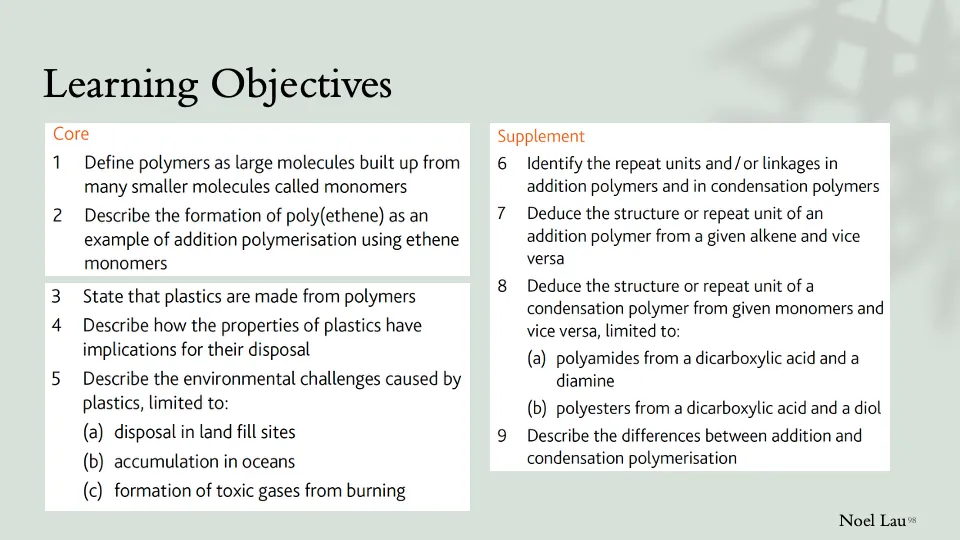
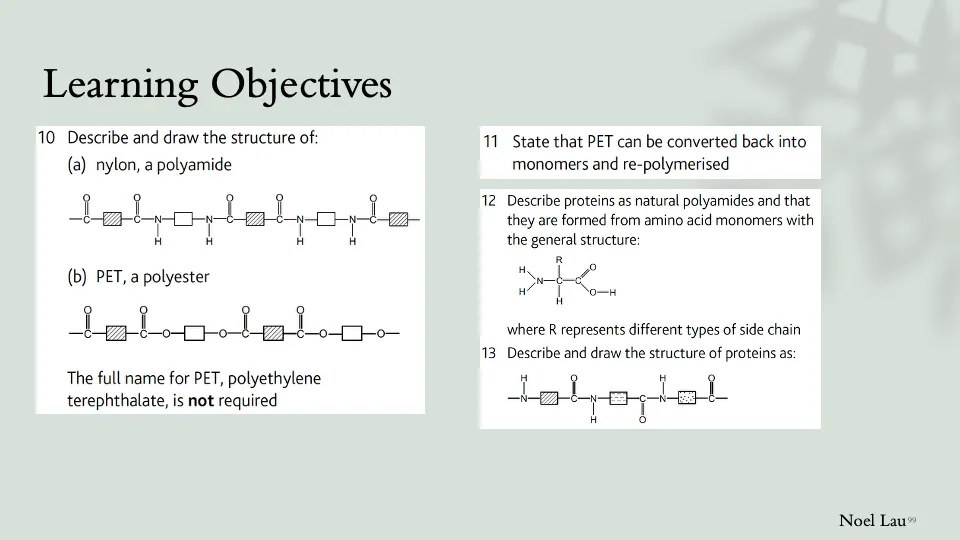
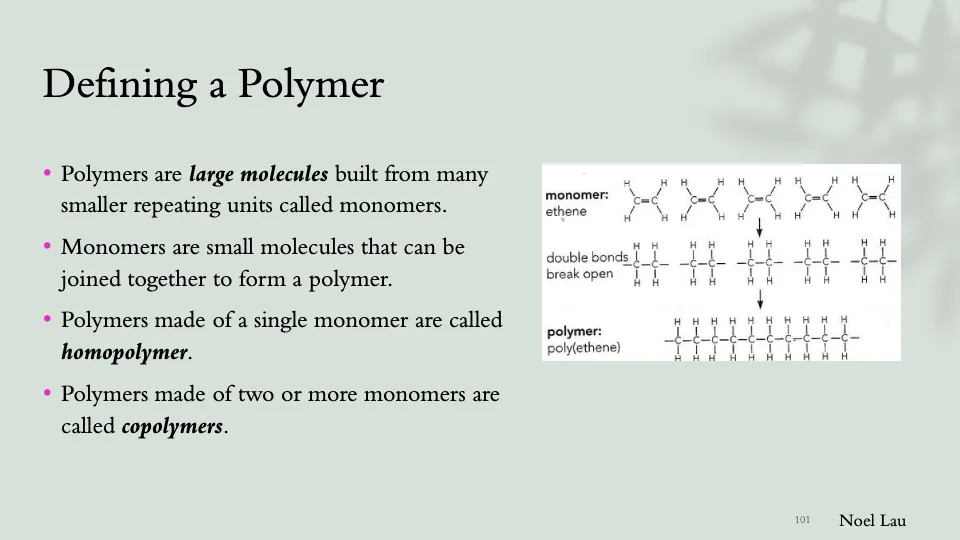
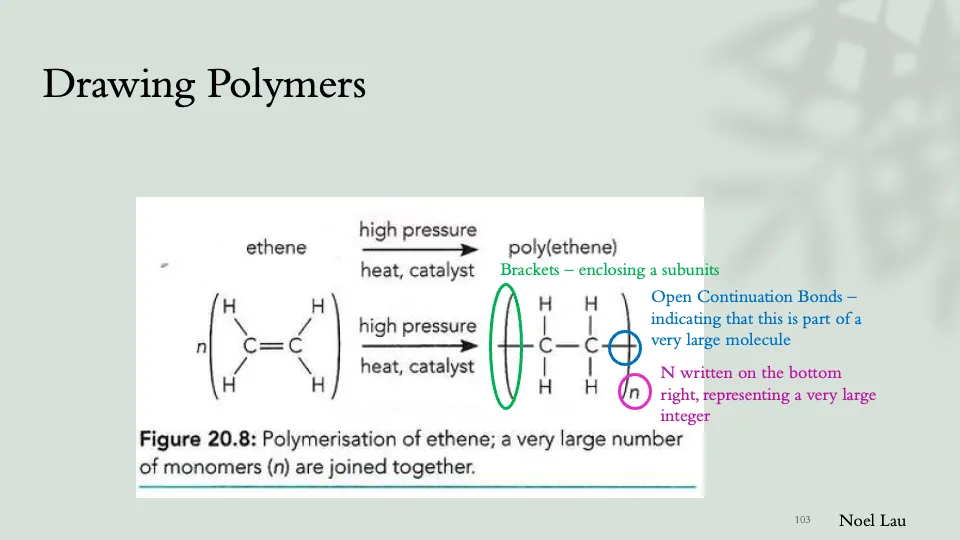
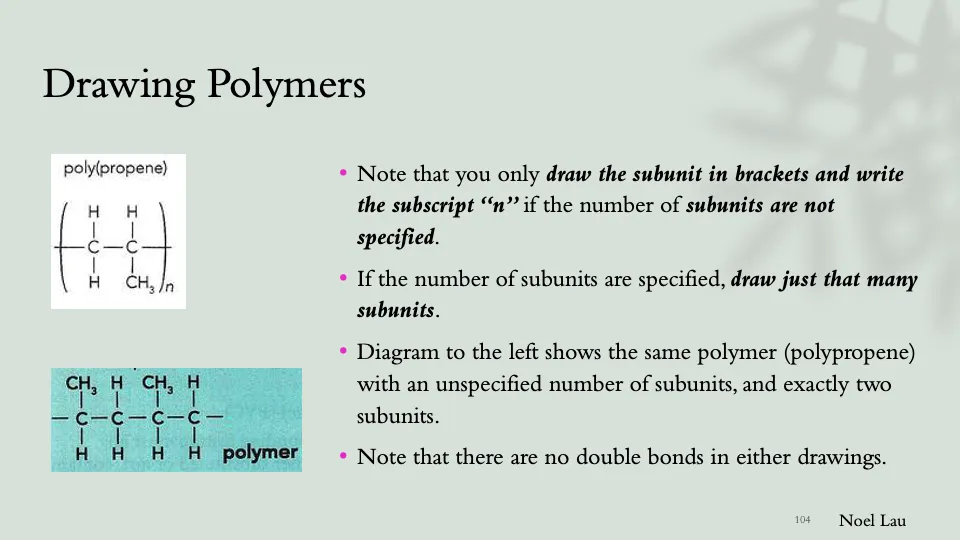
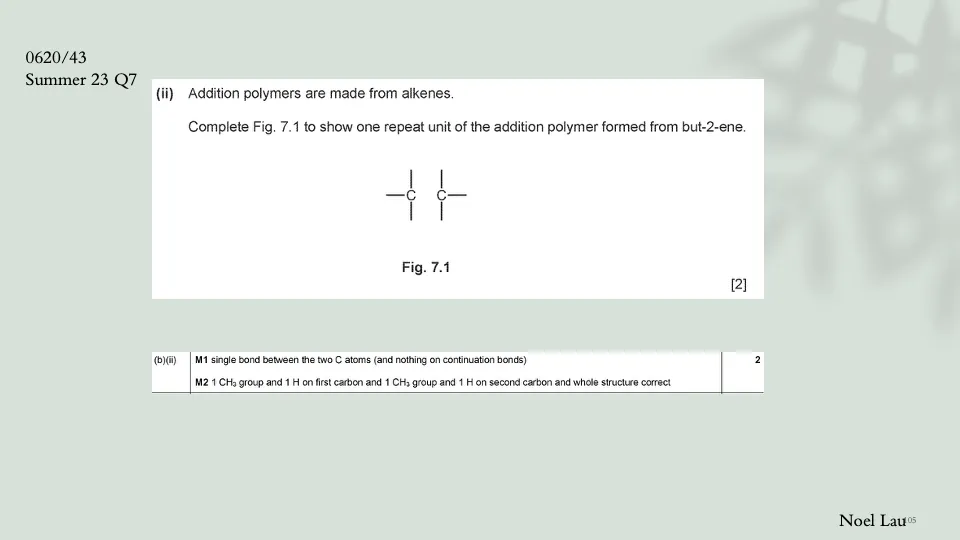
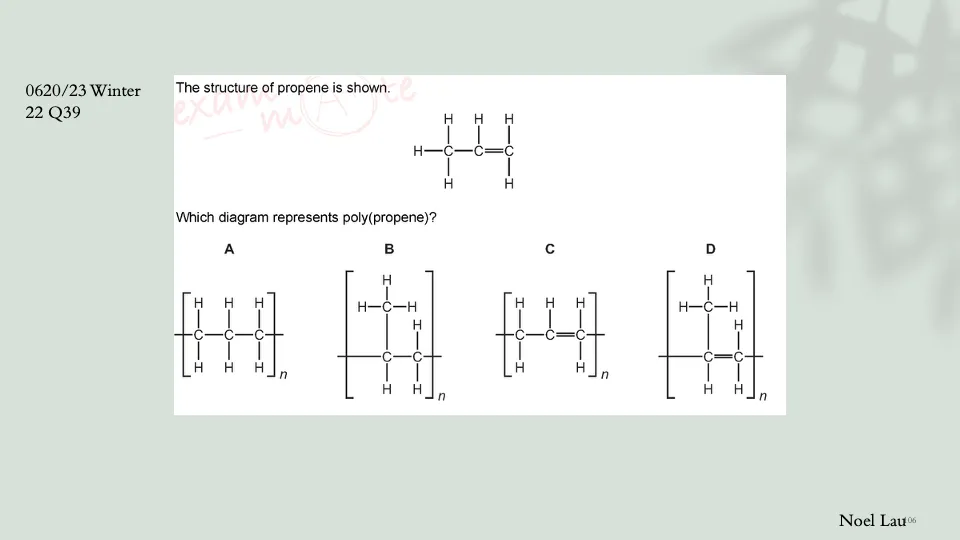
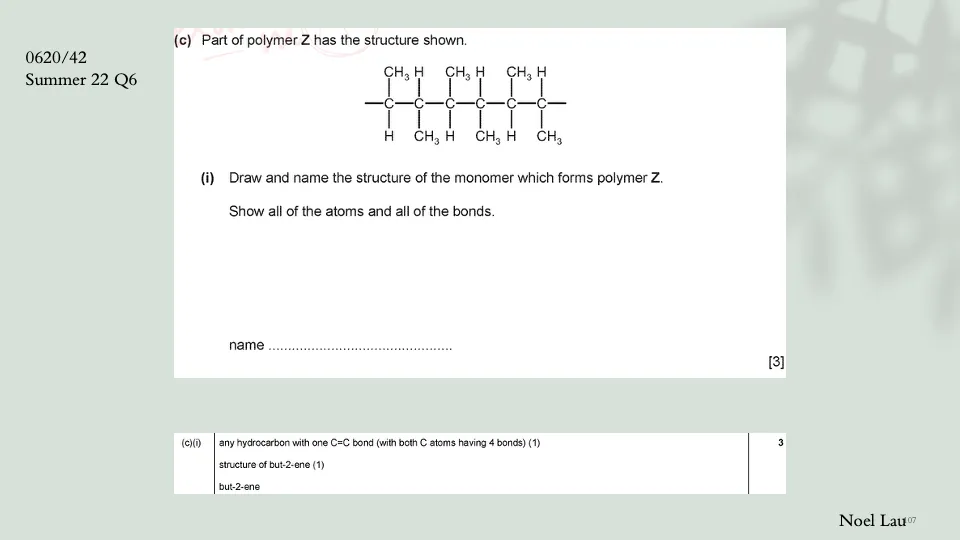
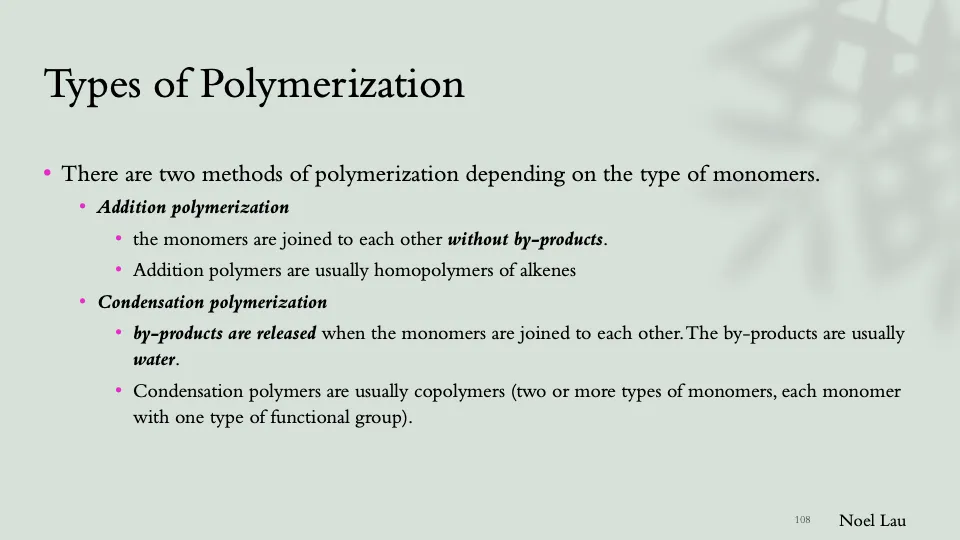
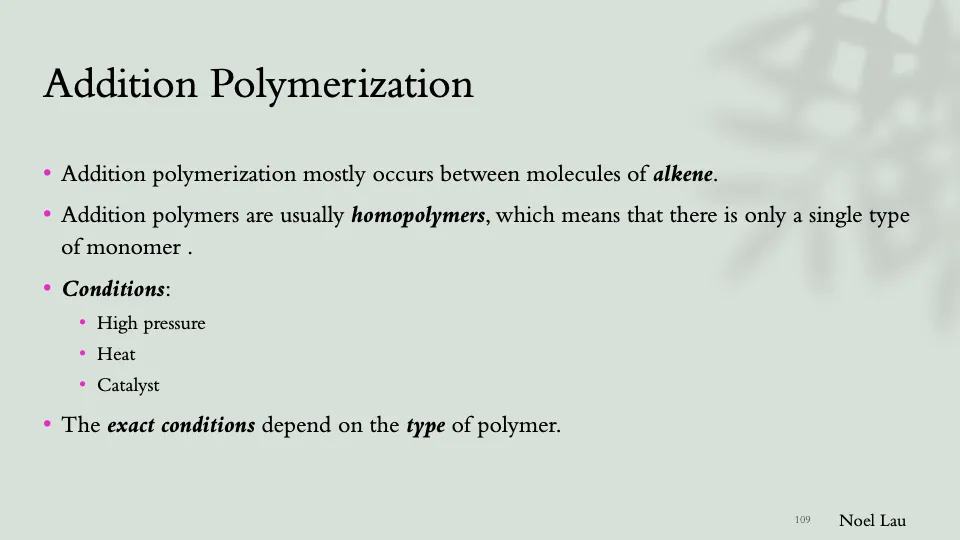
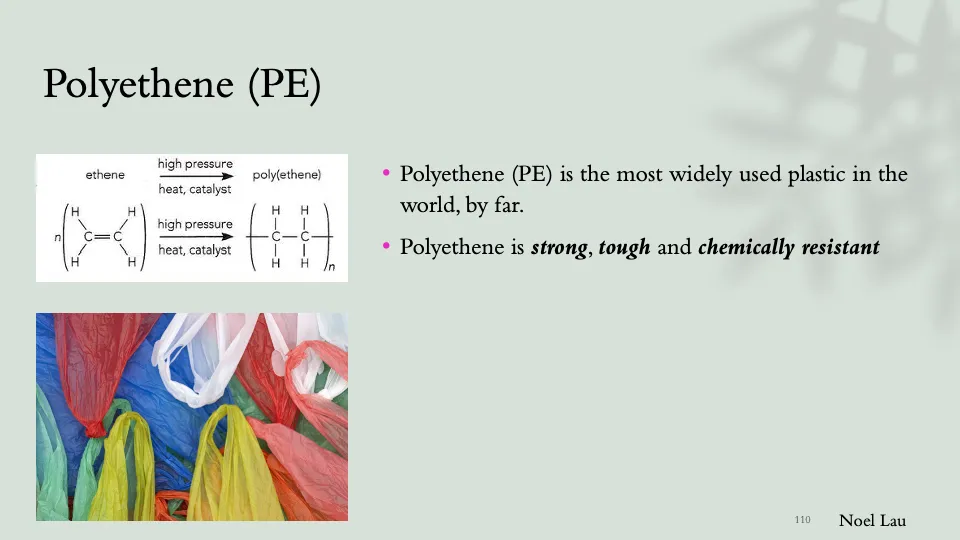
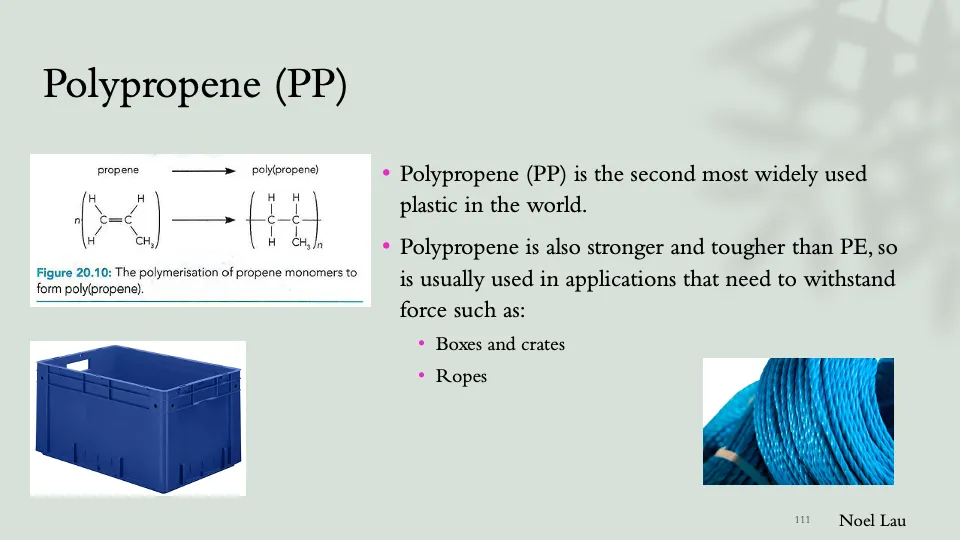
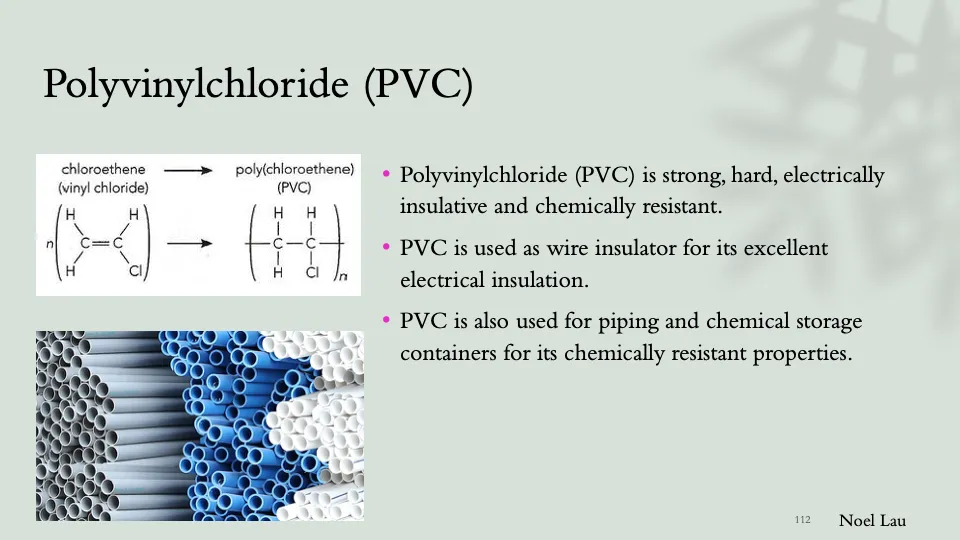
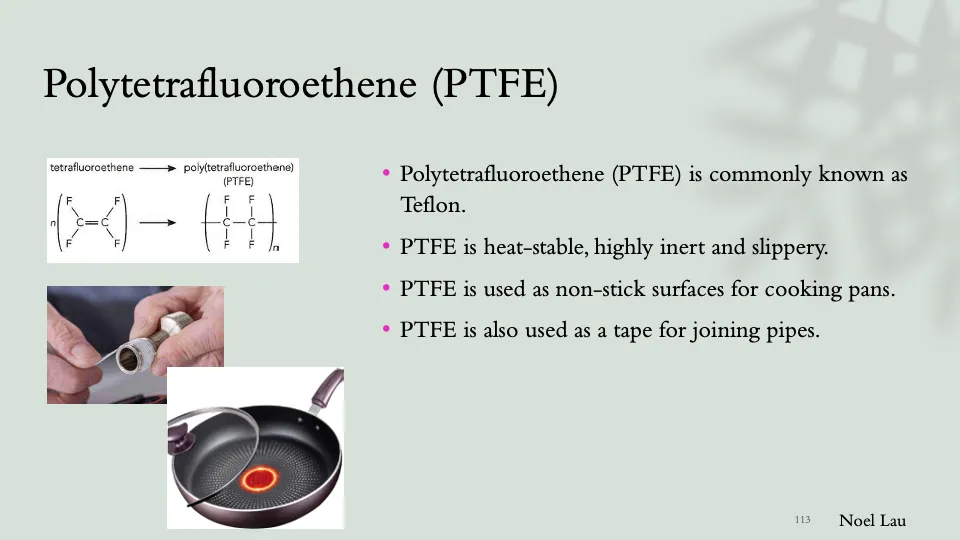
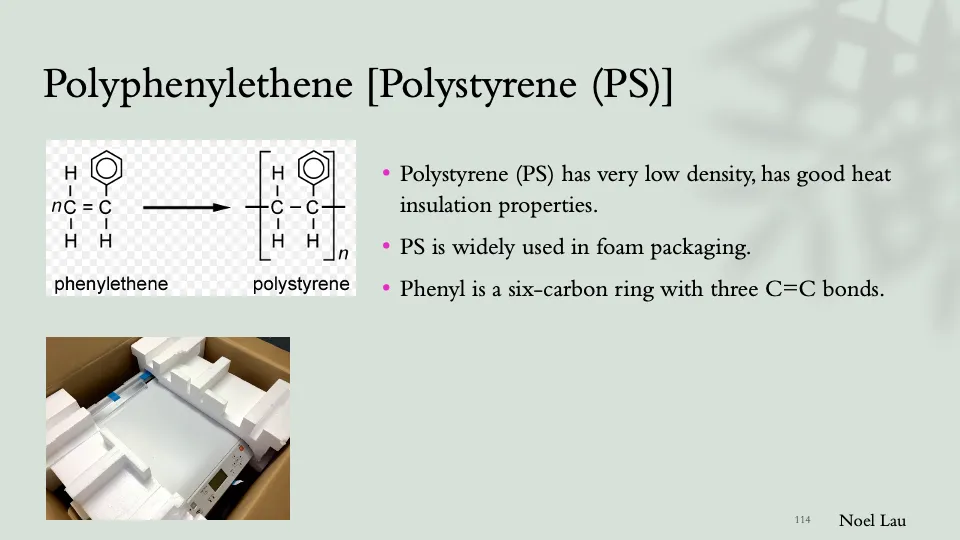
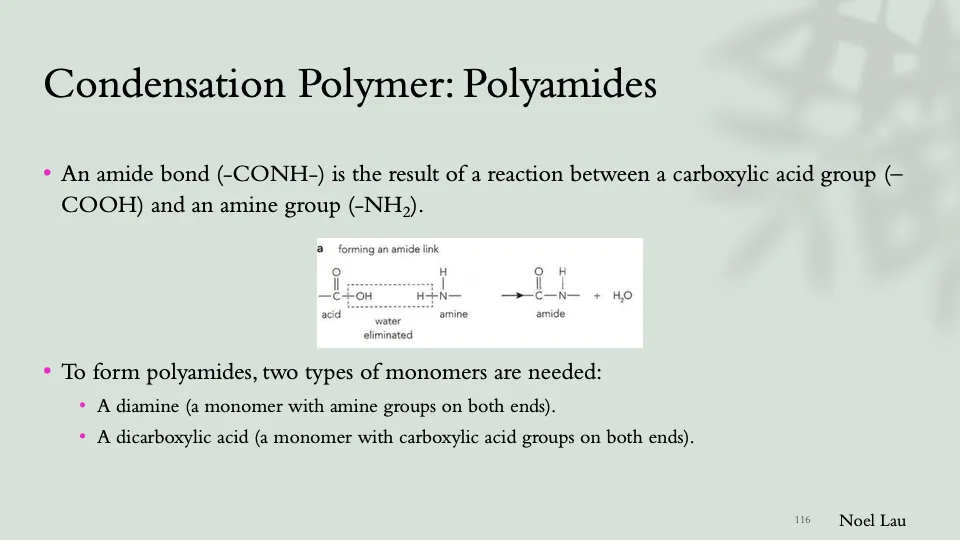
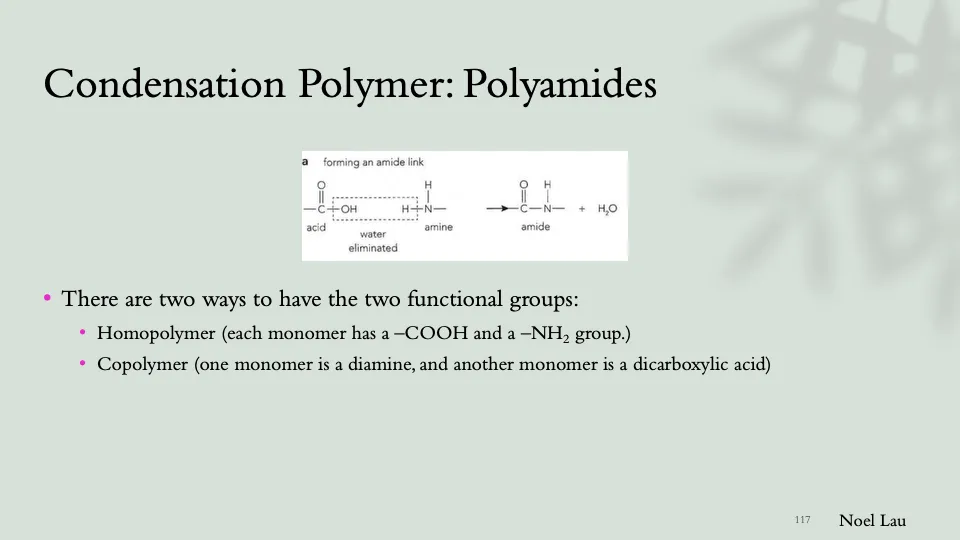
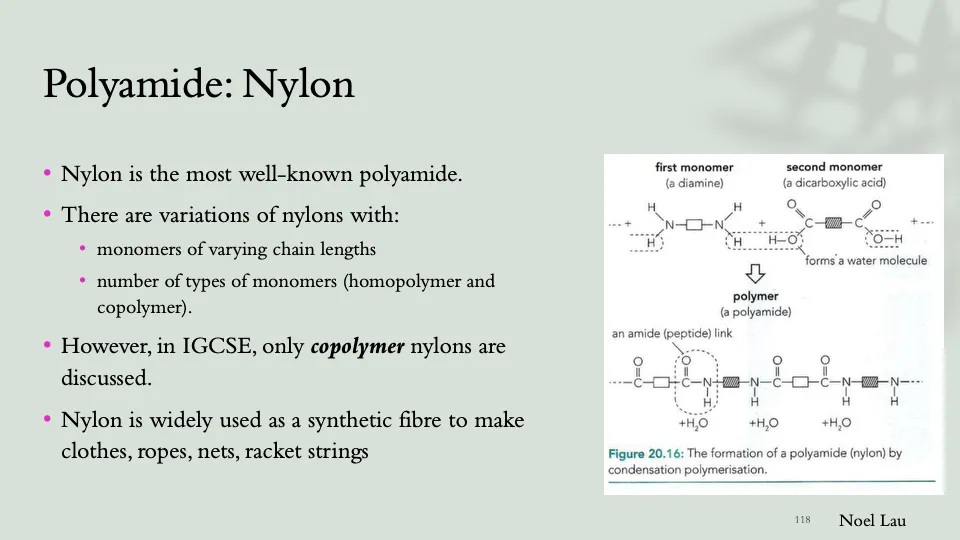
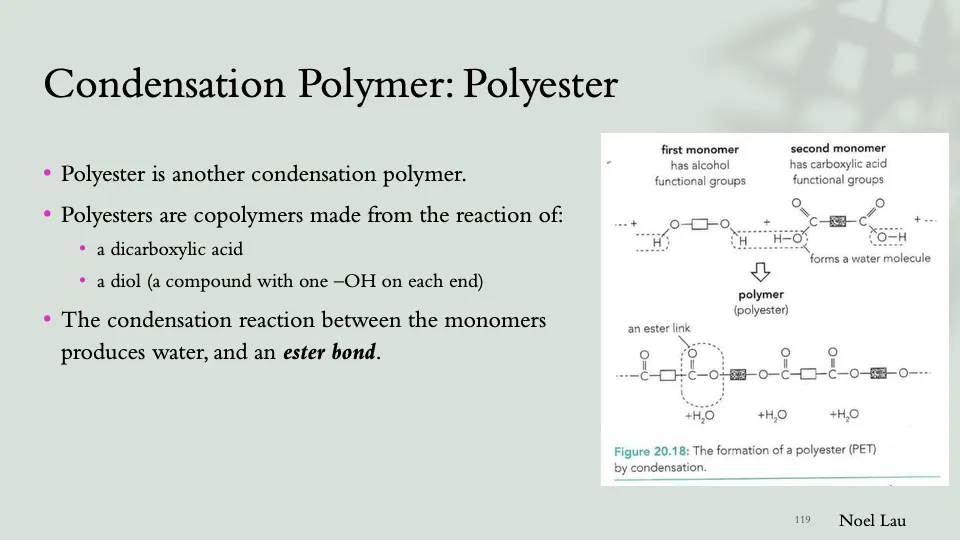
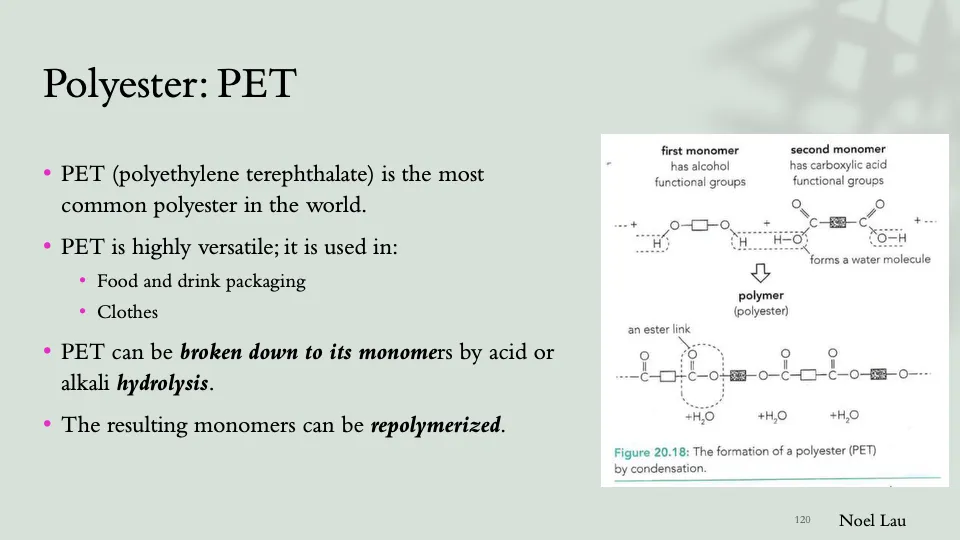
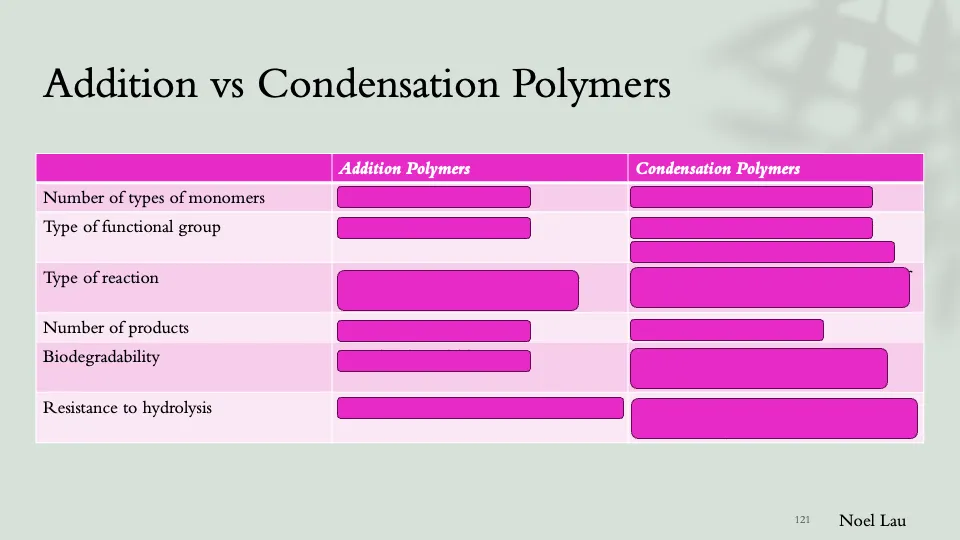
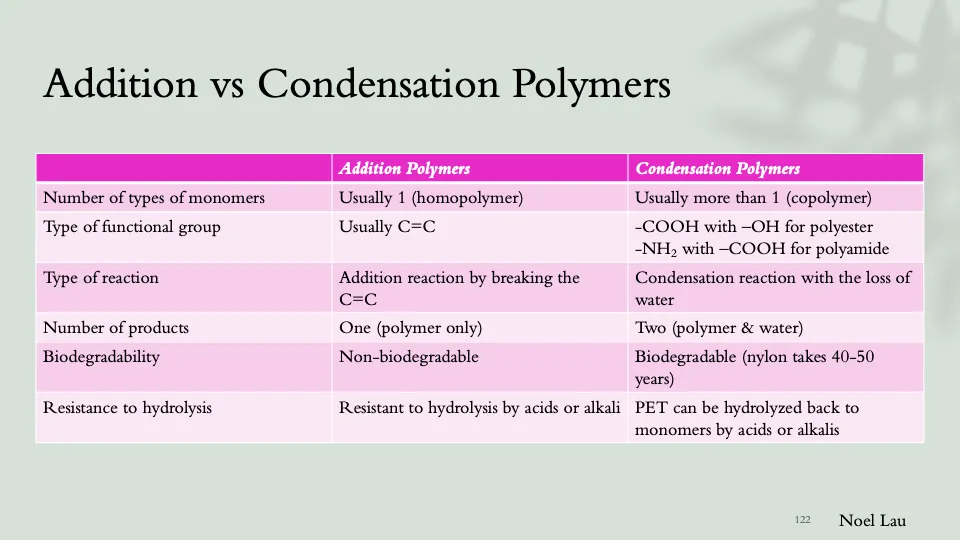
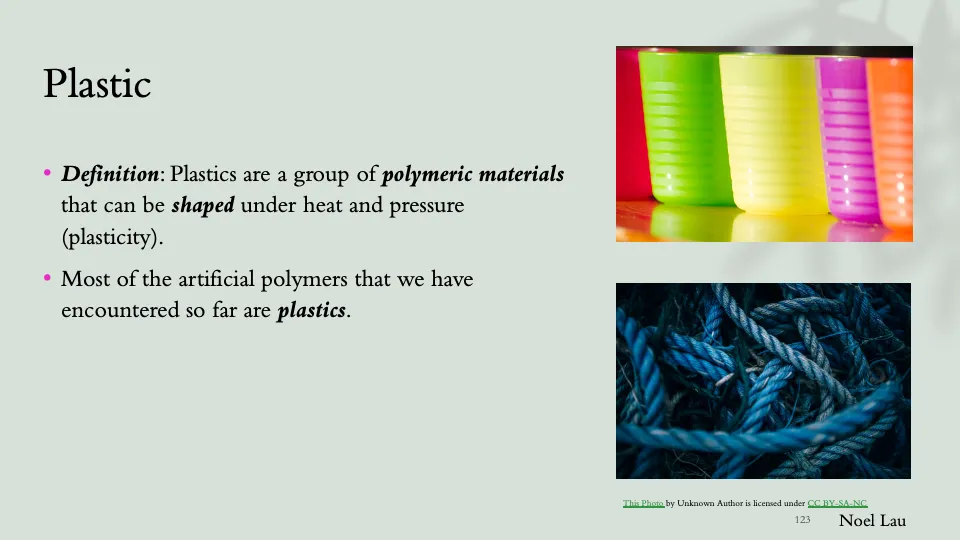
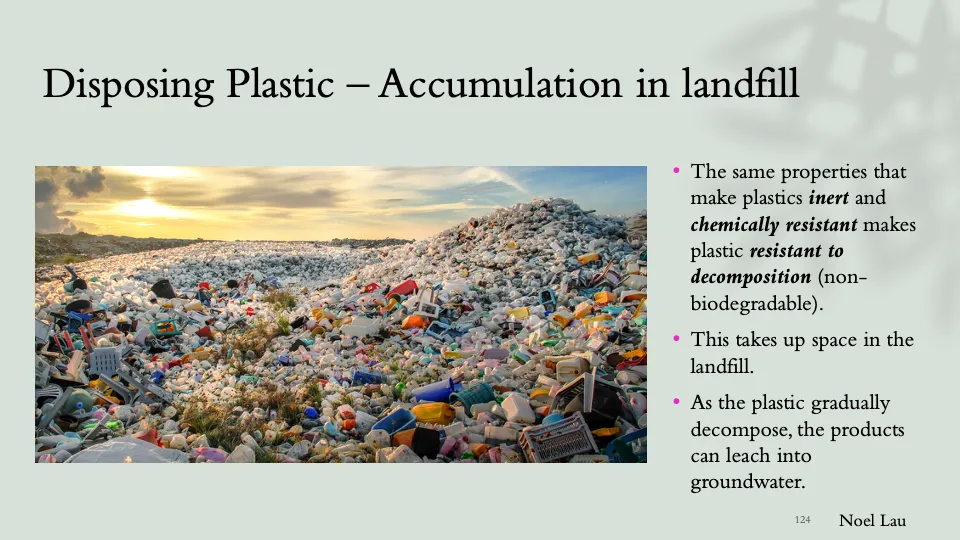
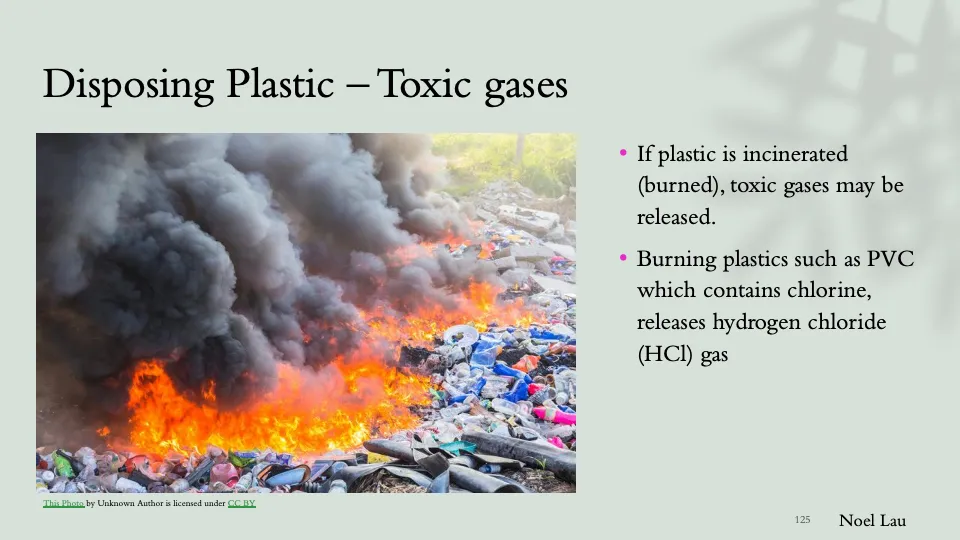
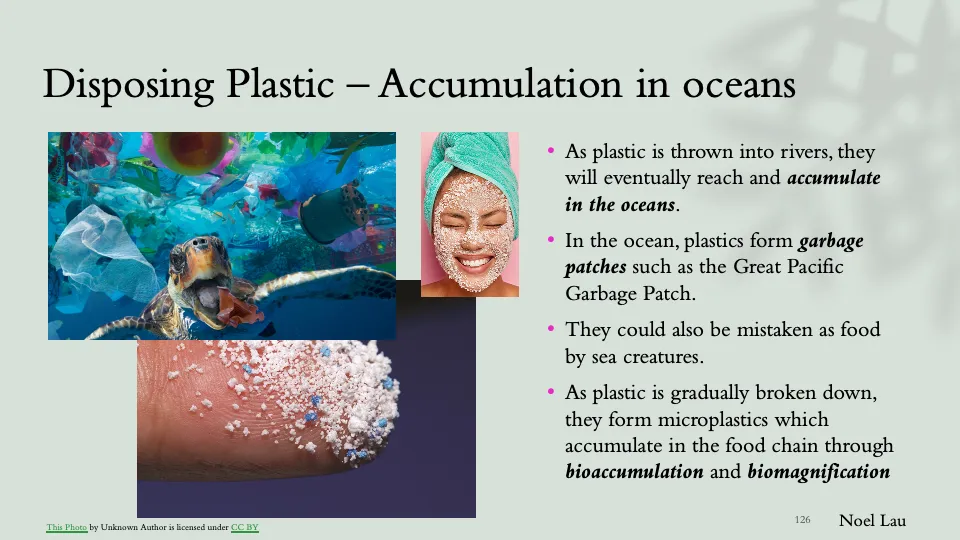
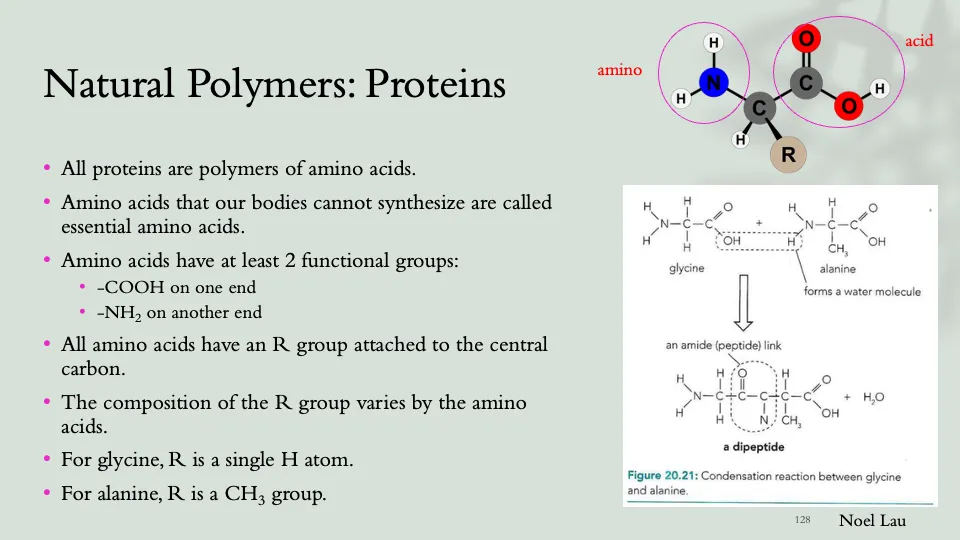
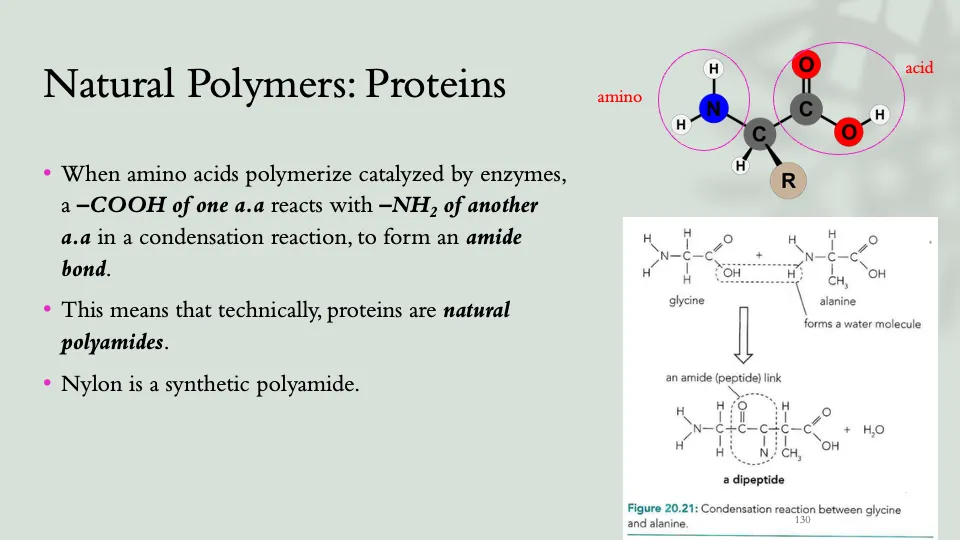
Lastly, we will discuss polymerisation in terms of addition polymerization involving alkenes and condensation involving esters and amides. We will explore the different properties of several common polymers, such as PE, PP, PVC, PTFE (Teflon), and PET, their uses, and the environmental problems that they cause.