Chapter 4 examines the relationship between the structure and bonding of substances and their macroscopic physical properties. By connecting the microscopic arrangement of particles to observable behaviour, the chapter develops a framework for understanding and predicting why different classes of substance behave so differently under the same conditions.
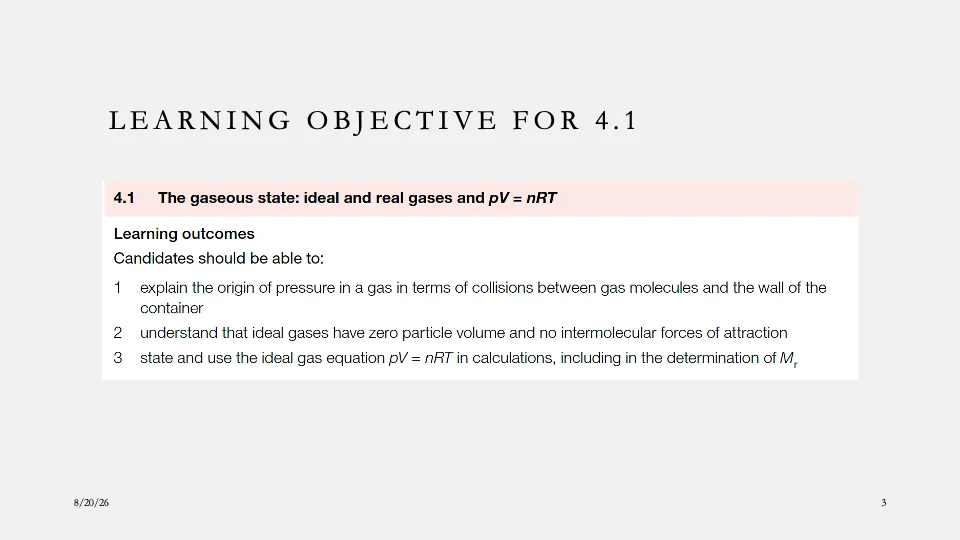
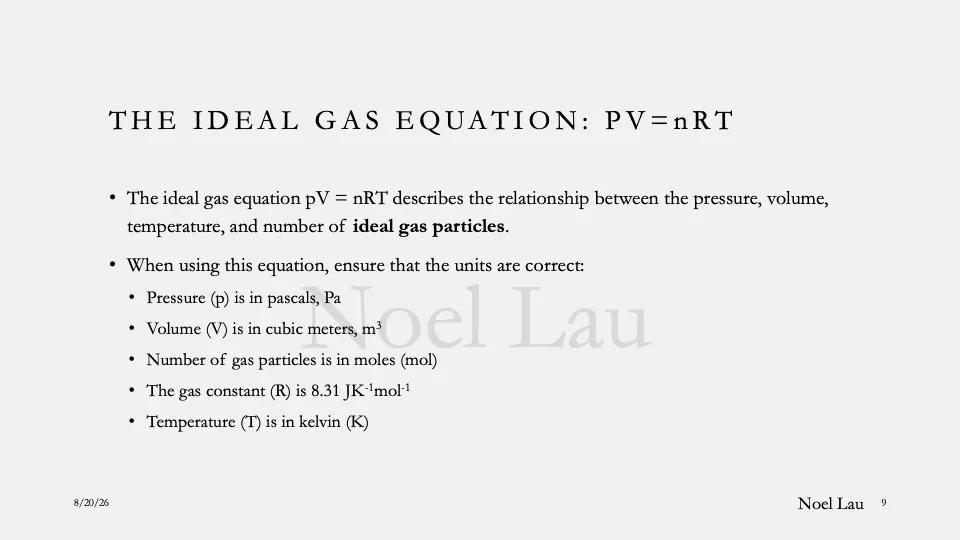
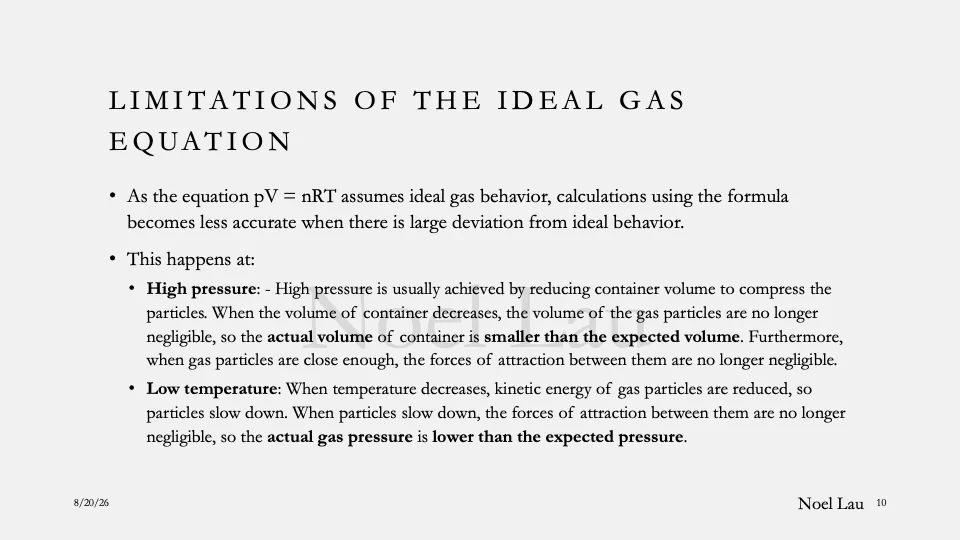
The chapter opens with the gaseous state, where the concept of an ideal gas is introduced and the ideal gas equation pV = nRT is derived and applied. The assumptions underlying ideal gas behaviour, namely zero particle volume and the absence of intermolecular forces, are stated explicitly, and the equation is used in calculations including the determination of molar mass from experimental data.
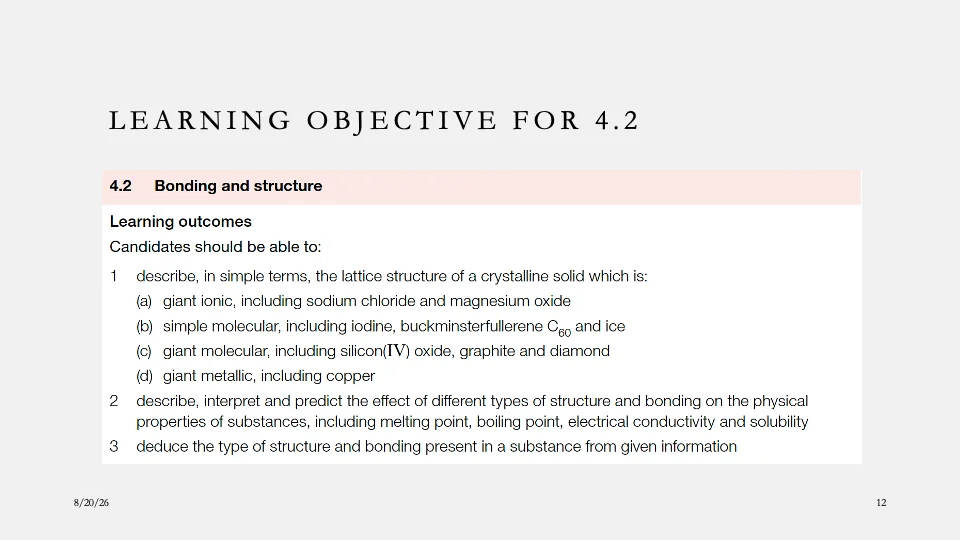
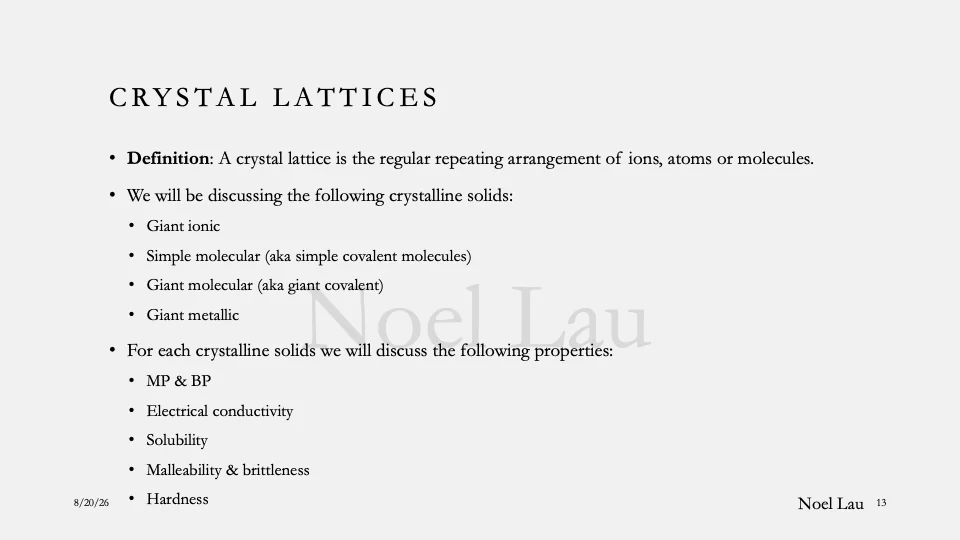
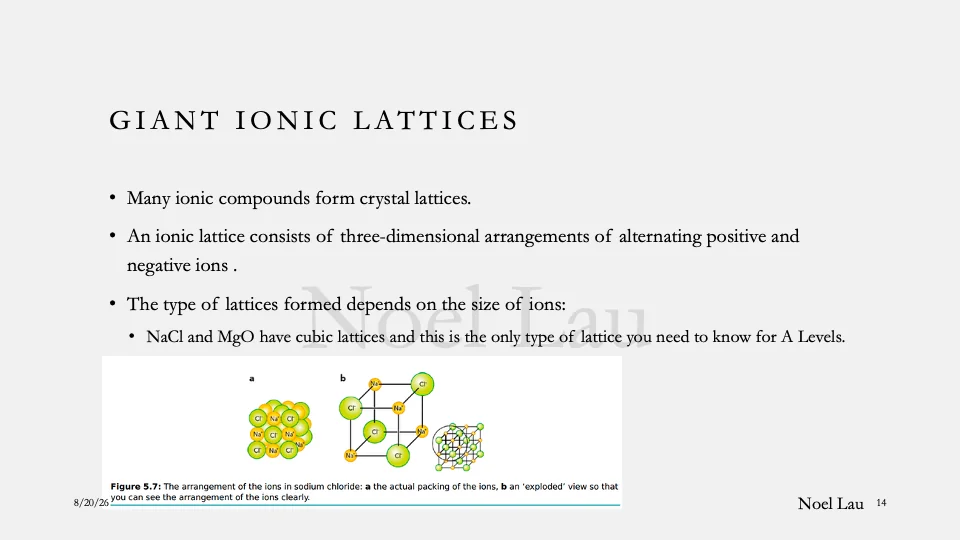
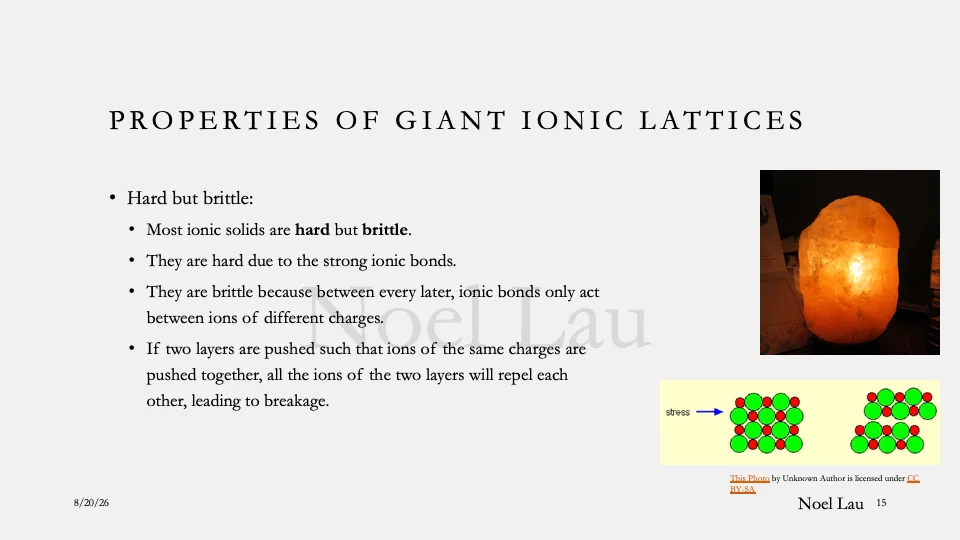
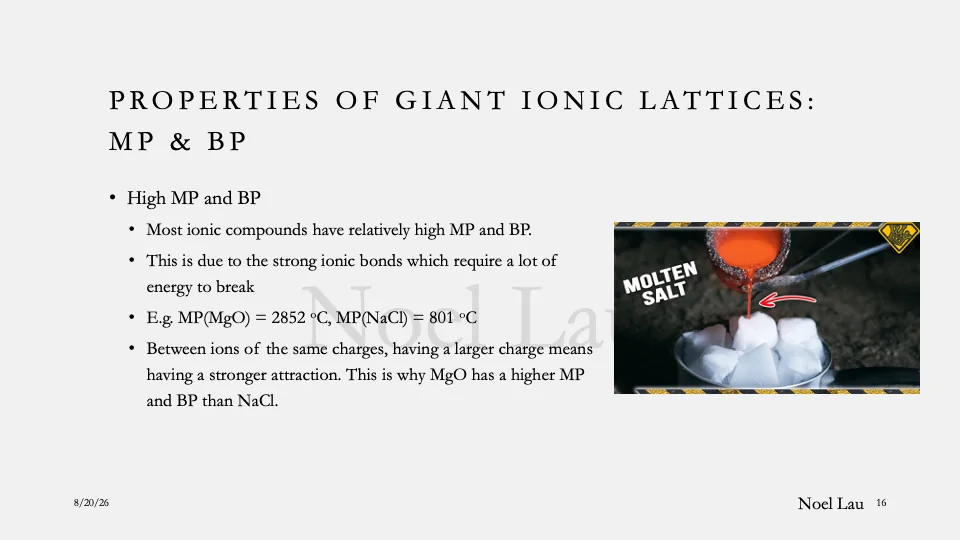
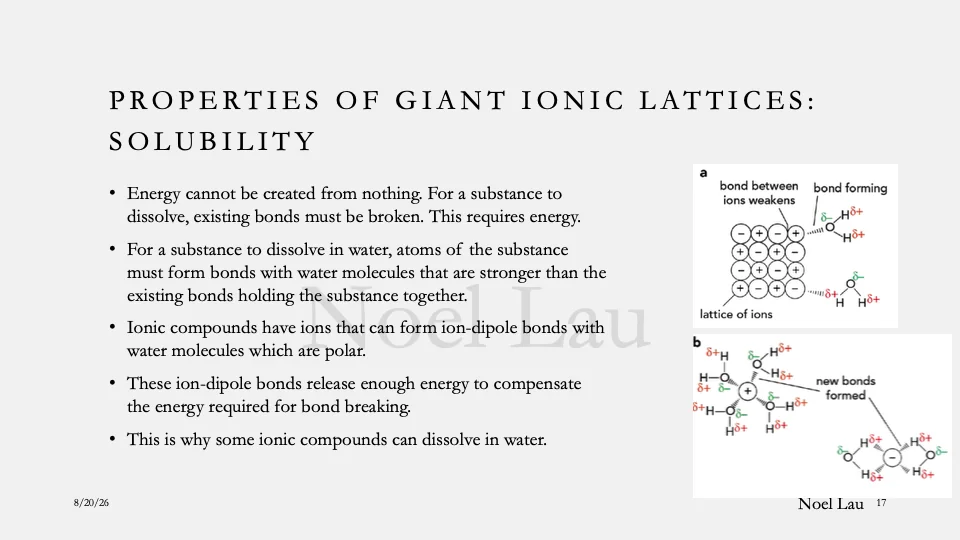
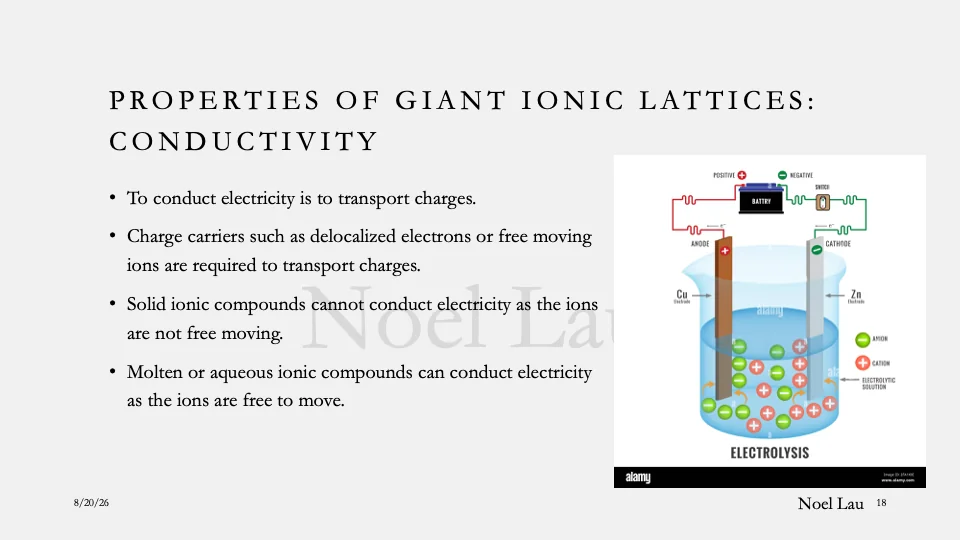
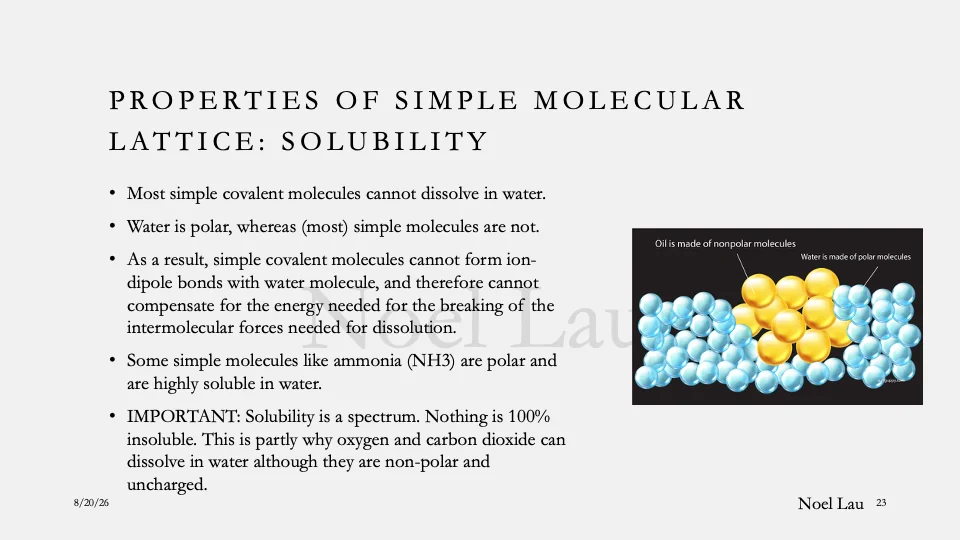
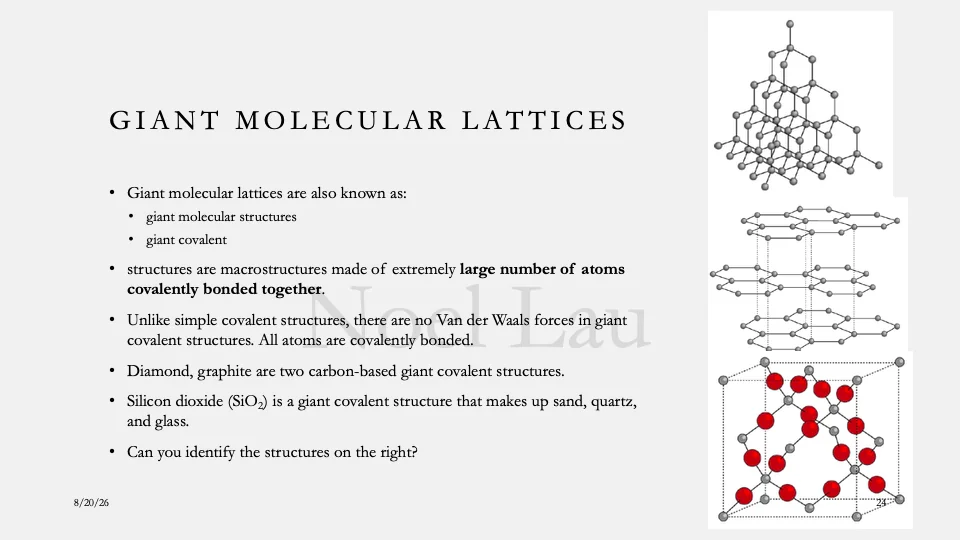
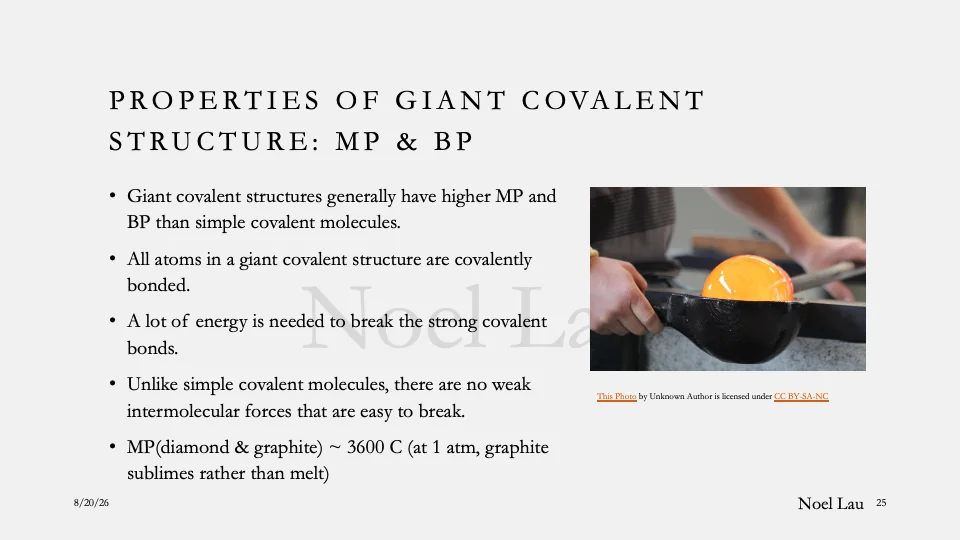
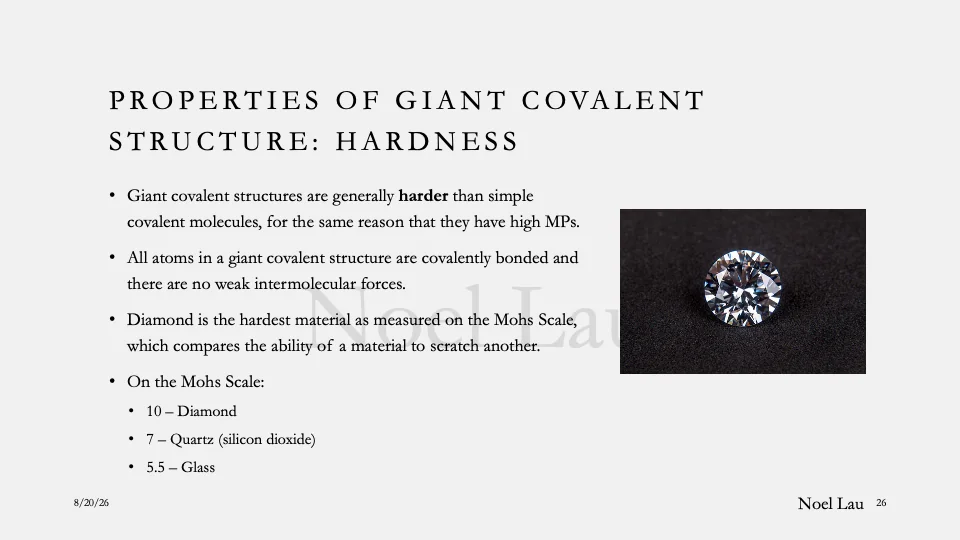
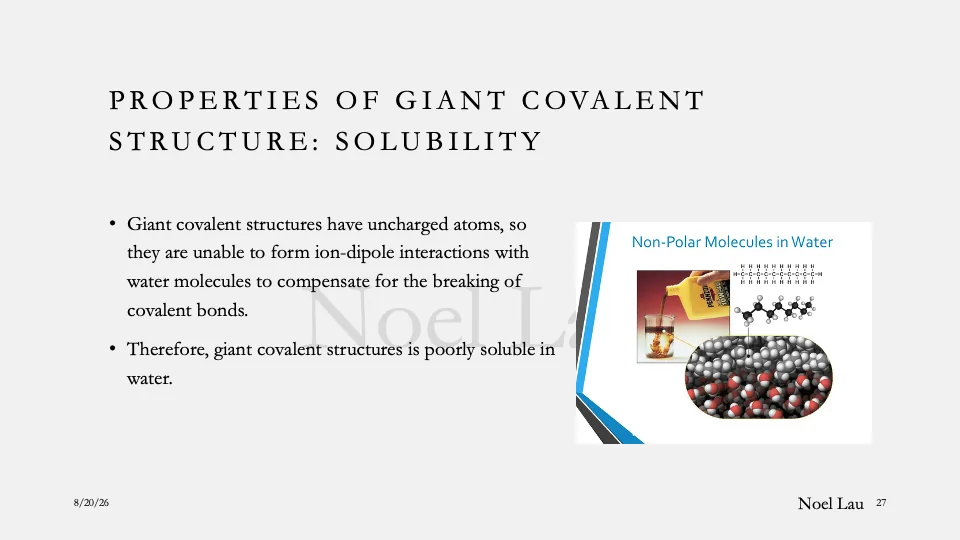
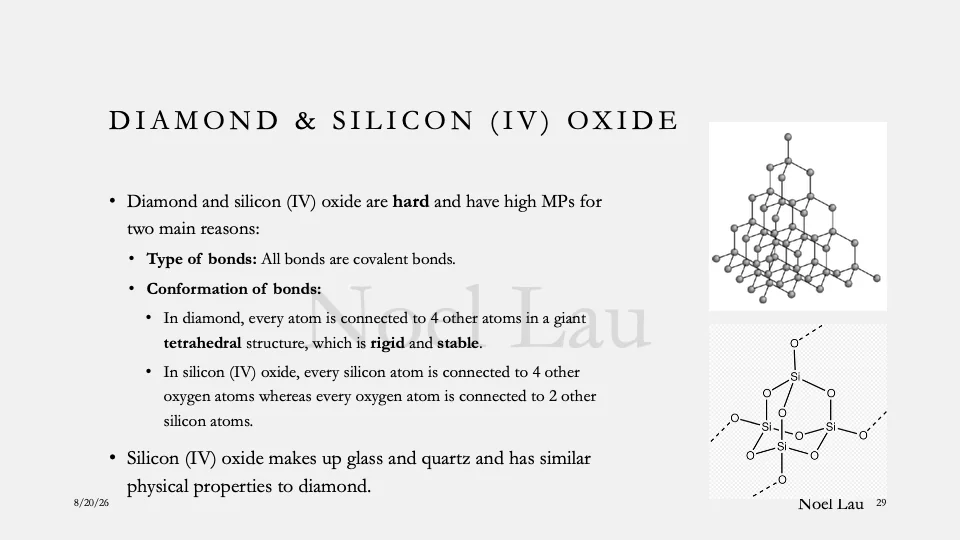
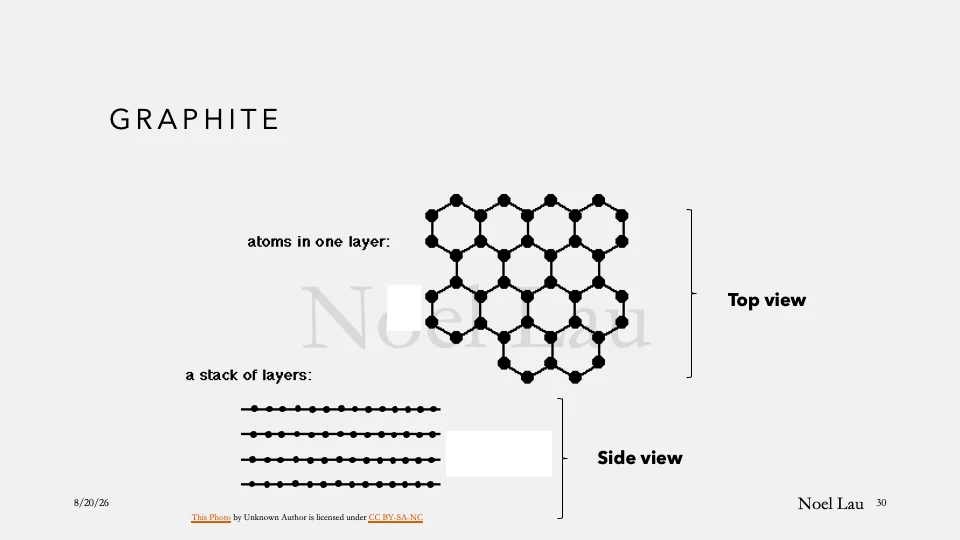
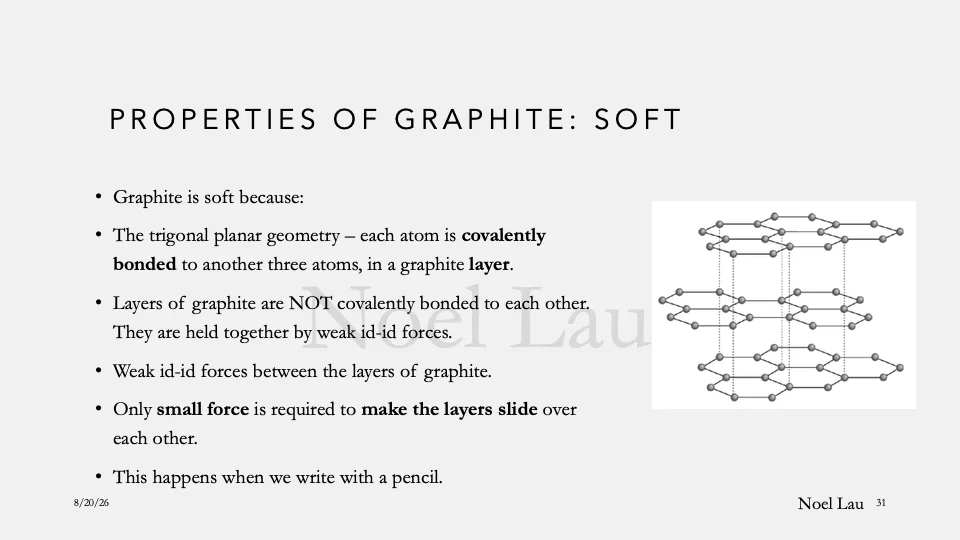
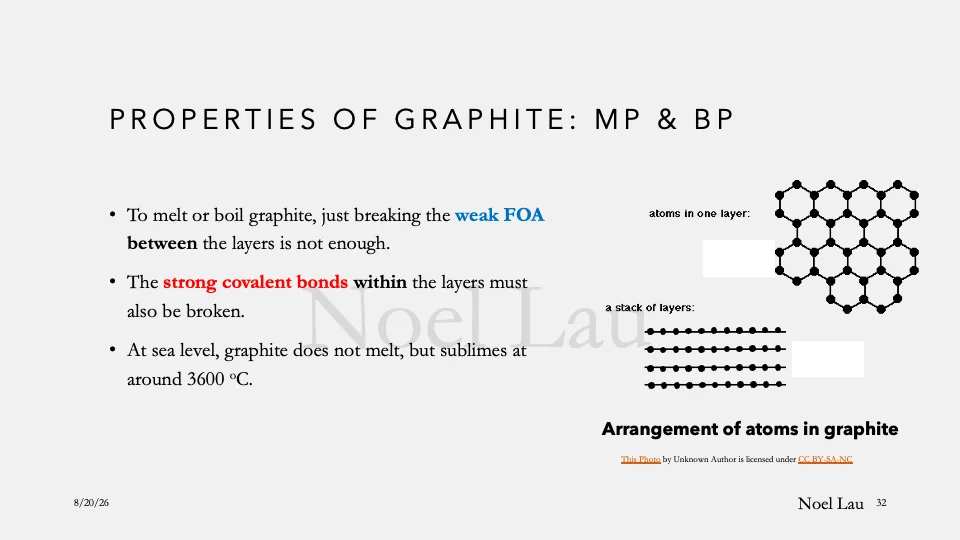
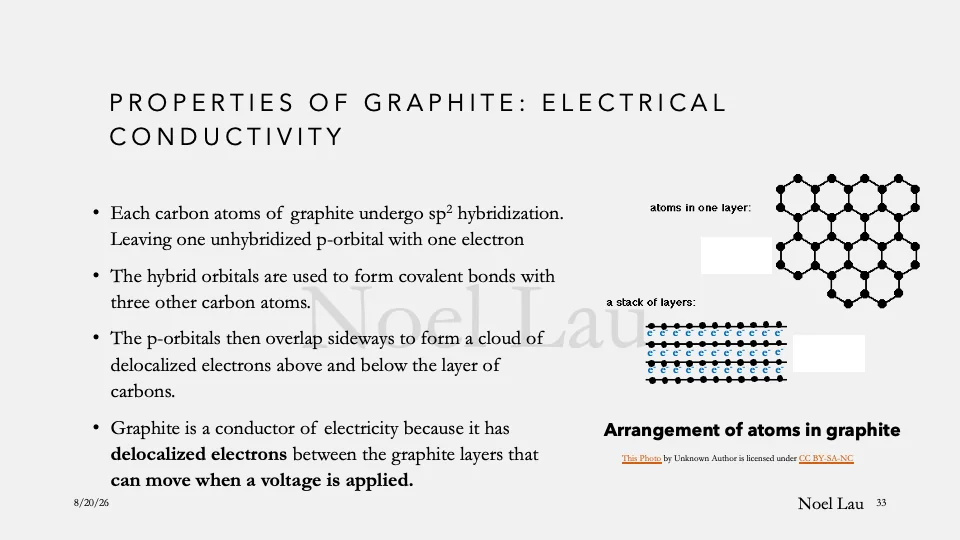
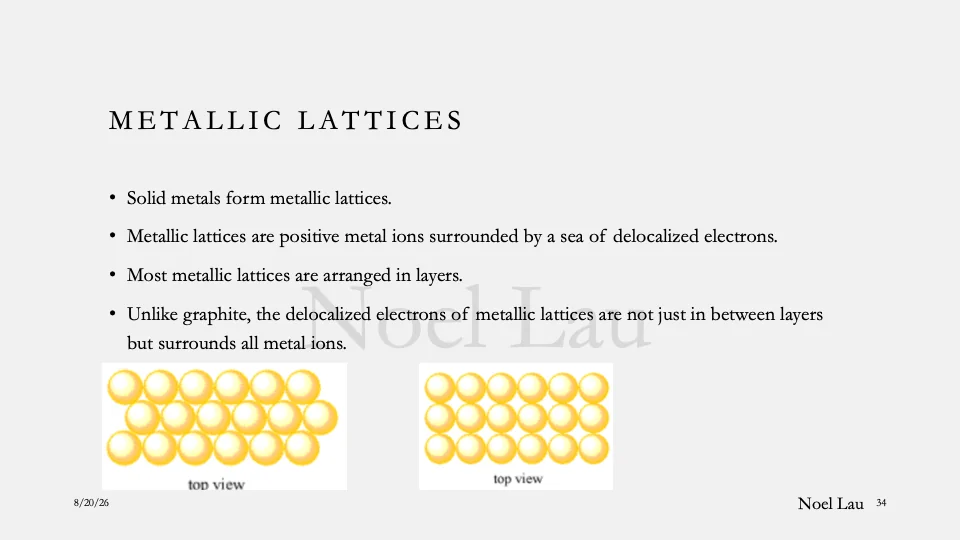
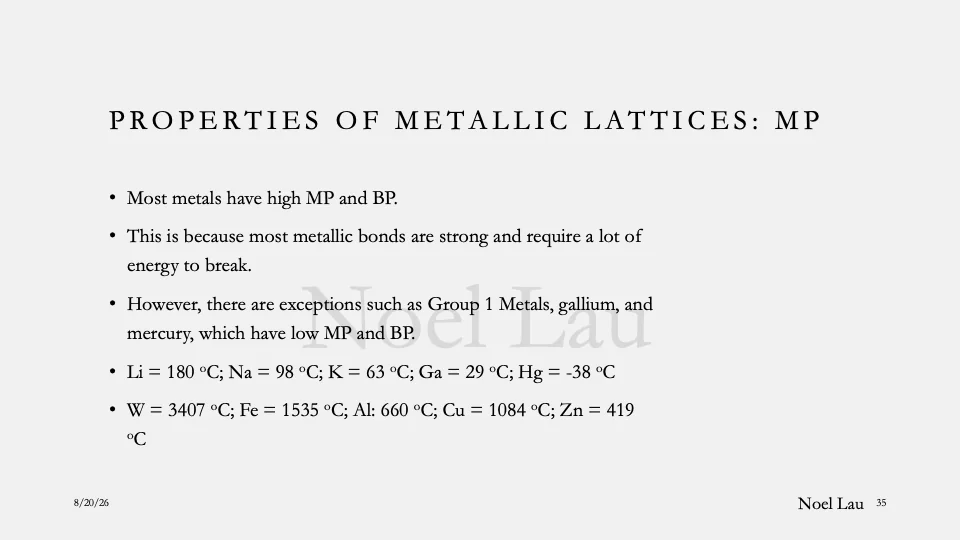
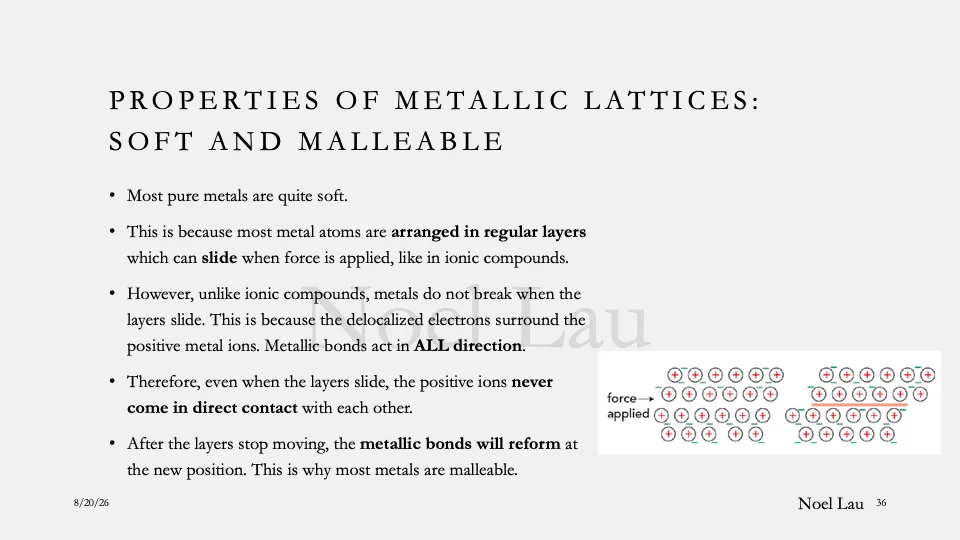
The remainder of the chapter addresses bonding and structure in the solid state. The four principal lattice types are examined in turn: giant ionic, simple molecular, giant molecular and giant metallic. For each, the nature of the bonding and the arrangement of particles are described, and the consequences for physical properties including melting point, boiling point, electrical conductivity and solubility are discussed. The chapter equips candidates with the ability to deduce the type of structure and bonding present in an unfamiliar substance from a given set of physical data.