A-Level 33. Carboxylic Acids and Derivatives (A2) (9701)
Introduction (33. Carboxylic Acids and Derivatives)
Chapter 33 extends the treatment of carboxylic acids from AS Level and introduces acyl chlorides as a new and highly reactive class of derivative. The chapter develops a comparative understanding of reactivity across acyl chlorides, alkyl chlorides and halogenoarenes, and covers a wider range of reactions and functional group interconversions than at AS Level.
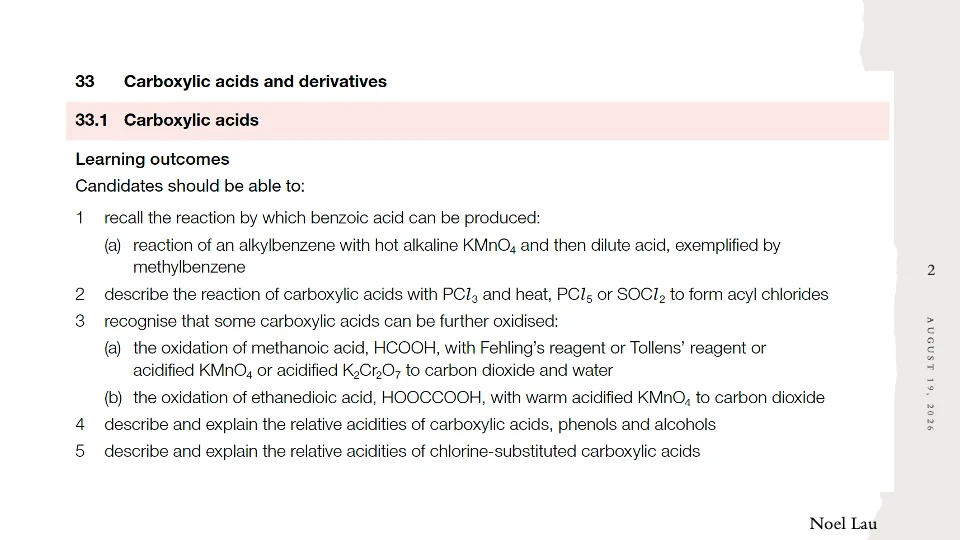
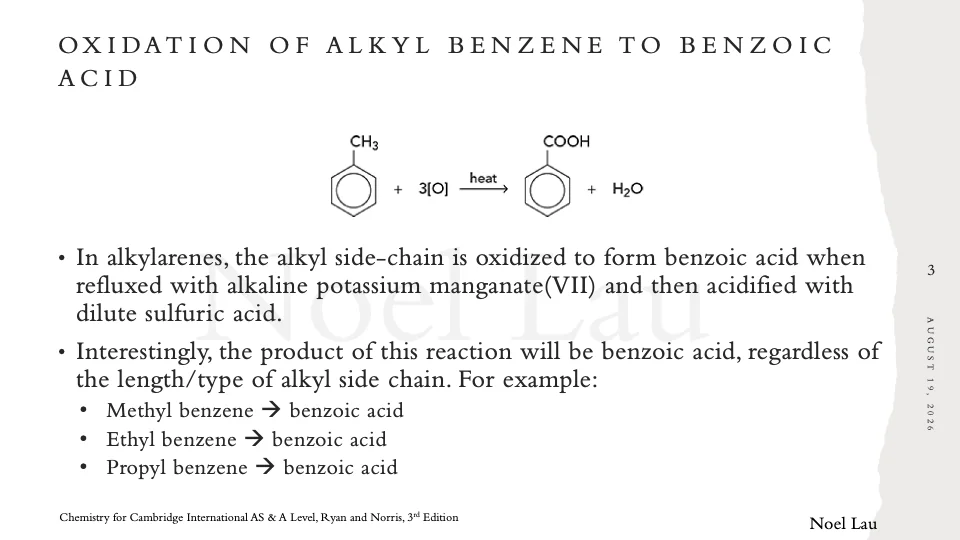
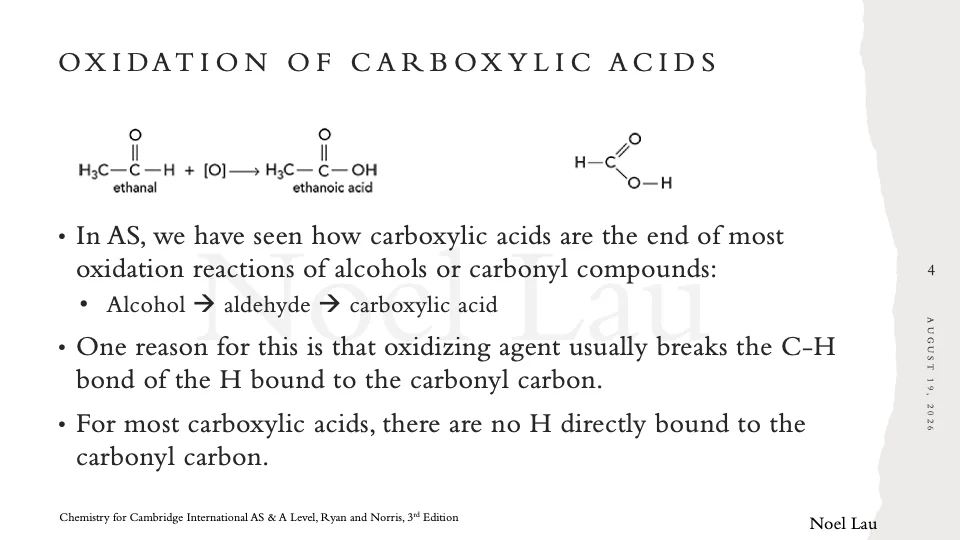
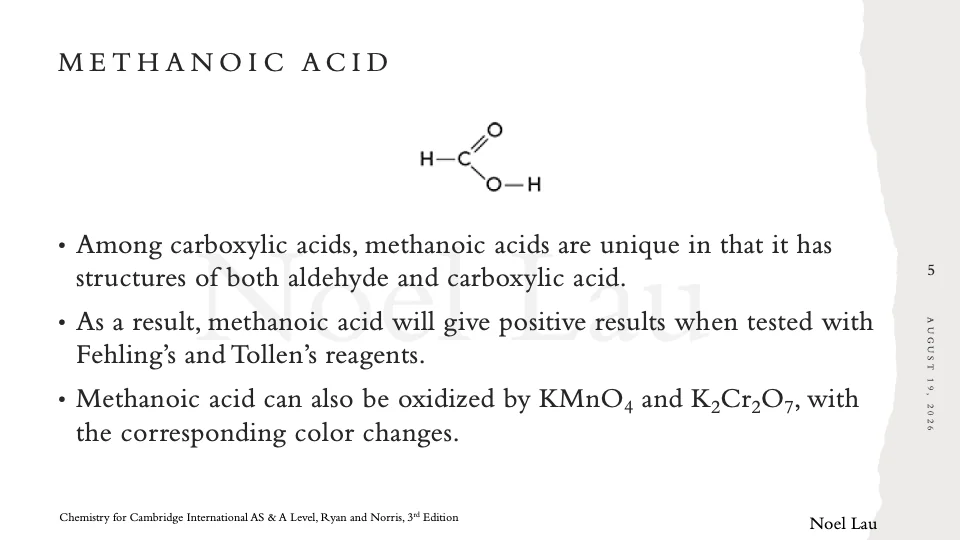
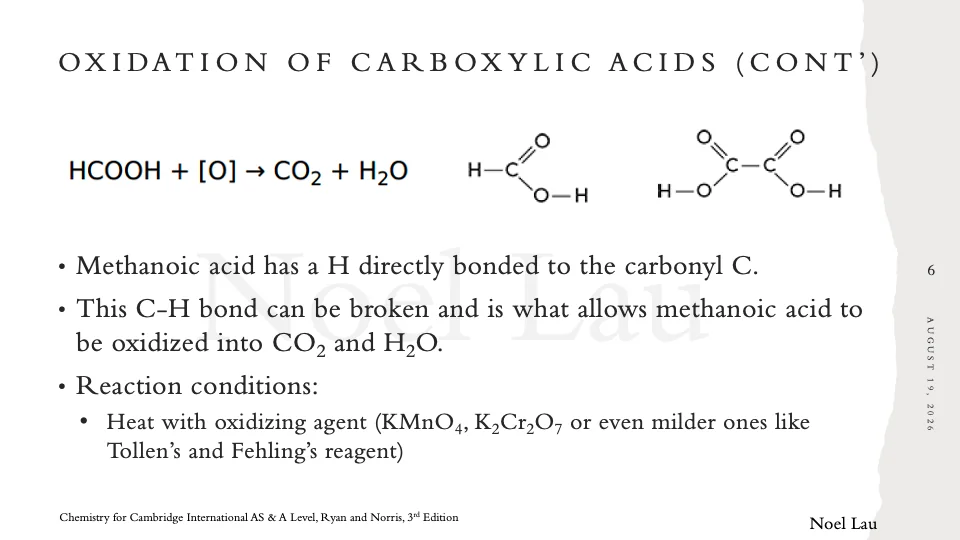
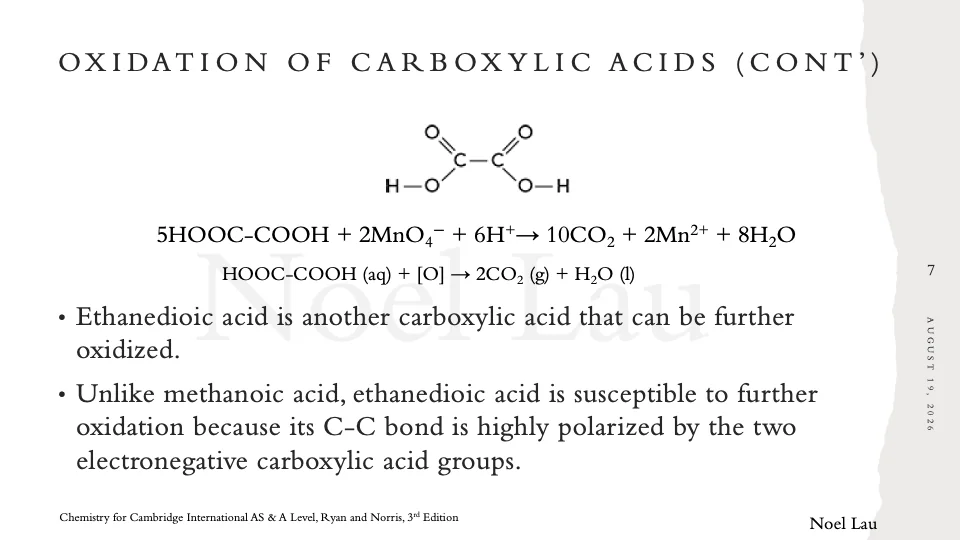
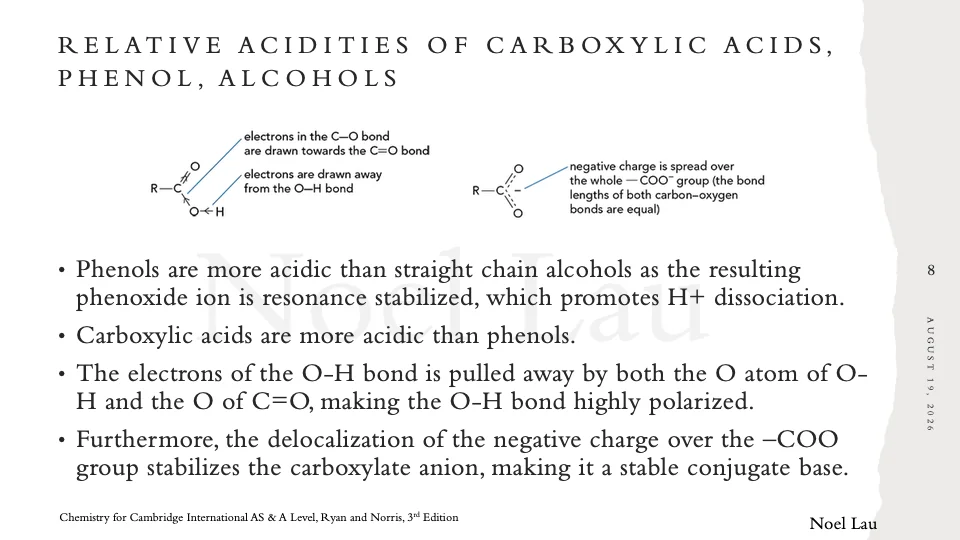
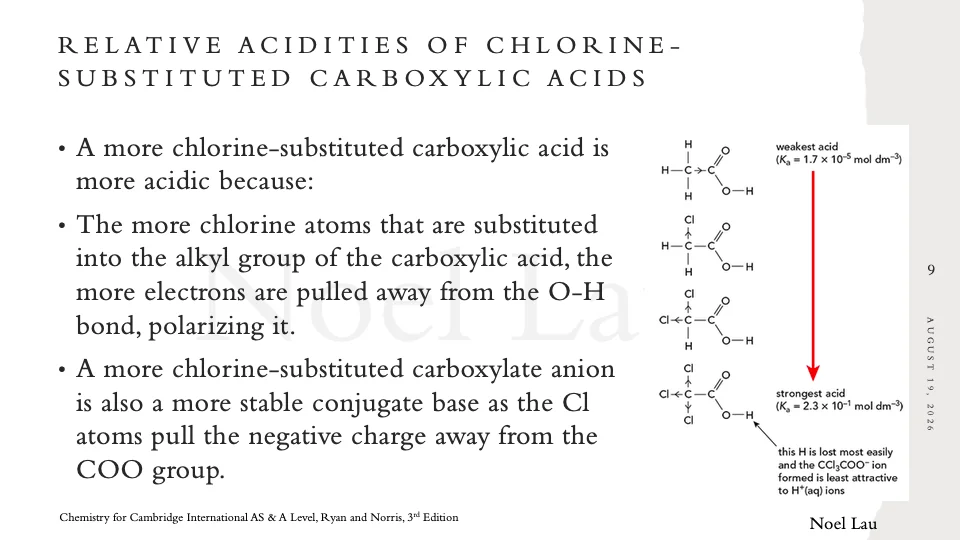
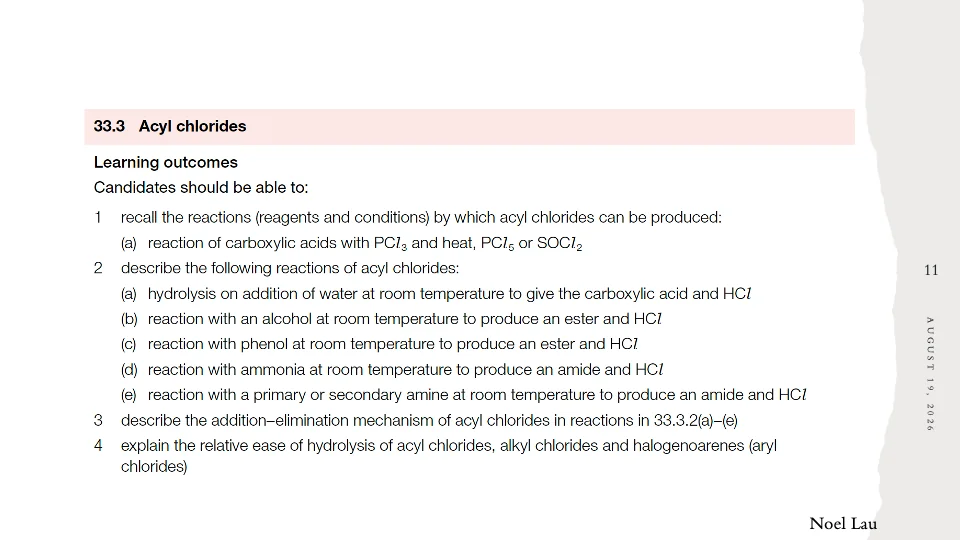
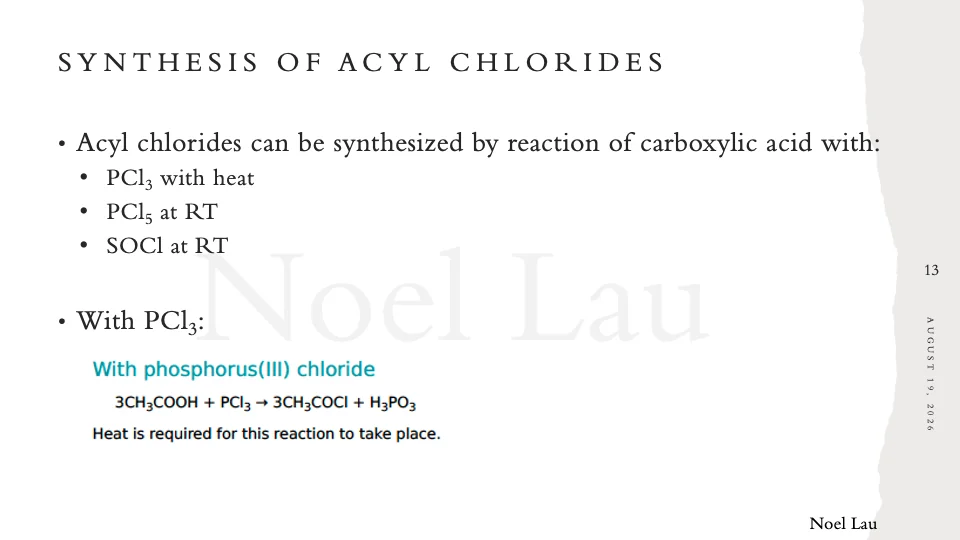
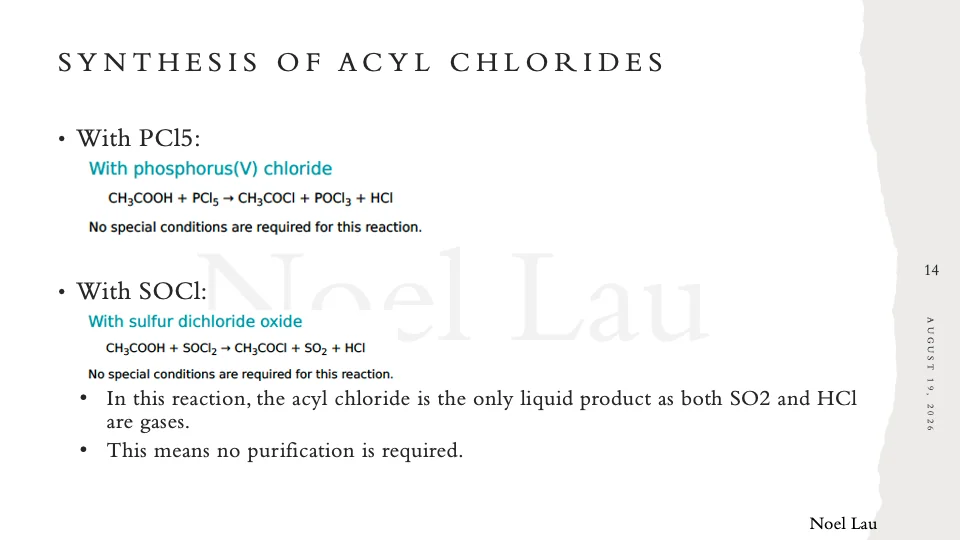
The chapter opens with the preparation of benzoic acid by oxidation of an alkylbenzene, and the conversion of carboxylic acids to acyl chlorides using phosphorus trichloride, phosphorus pentachloride or thionyl chloride. The further oxidation of methanoic acid and ethanedioic acid under appropriate conditions is also noted. The relative acidities of carboxylic acids, phenols and alcohols are compared and rationalised, as are the relative acidities of chlorine-substituted carboxylic acids.
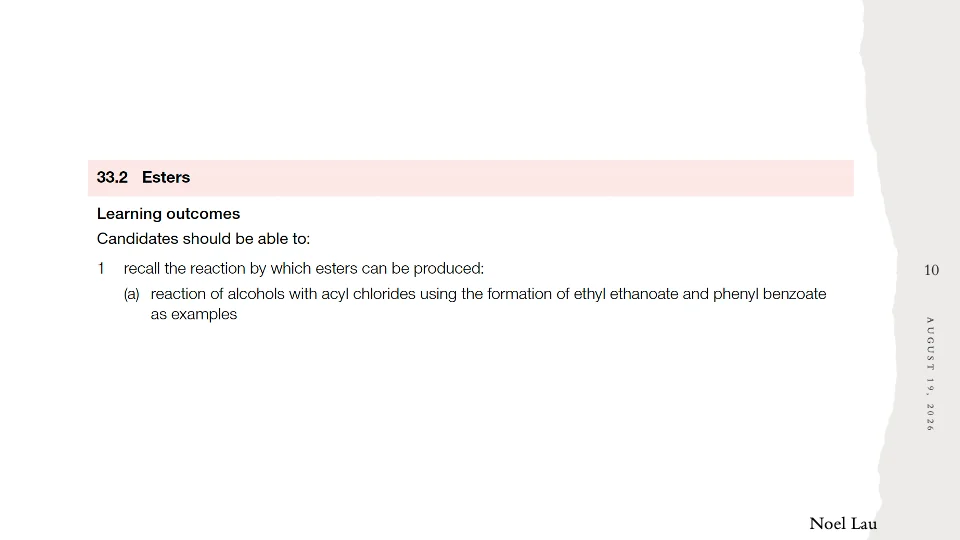
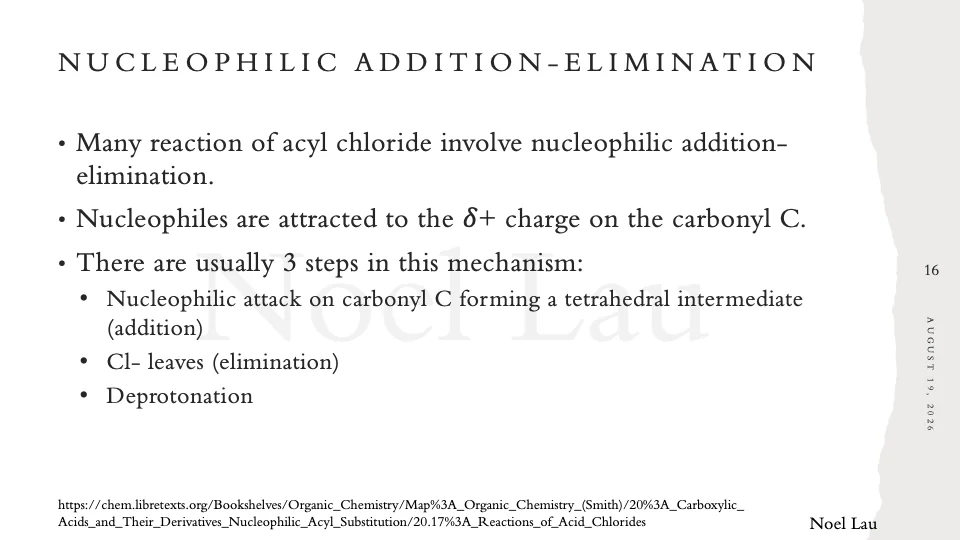
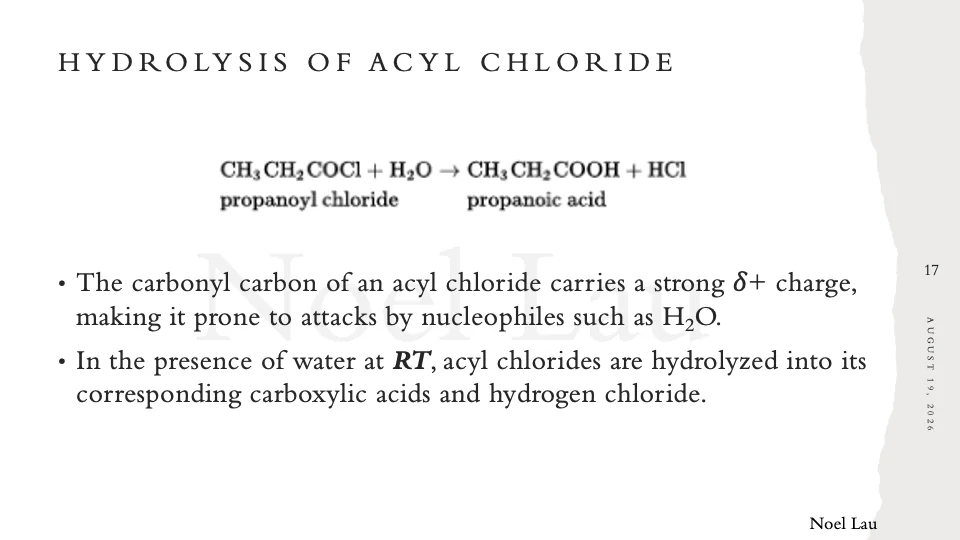
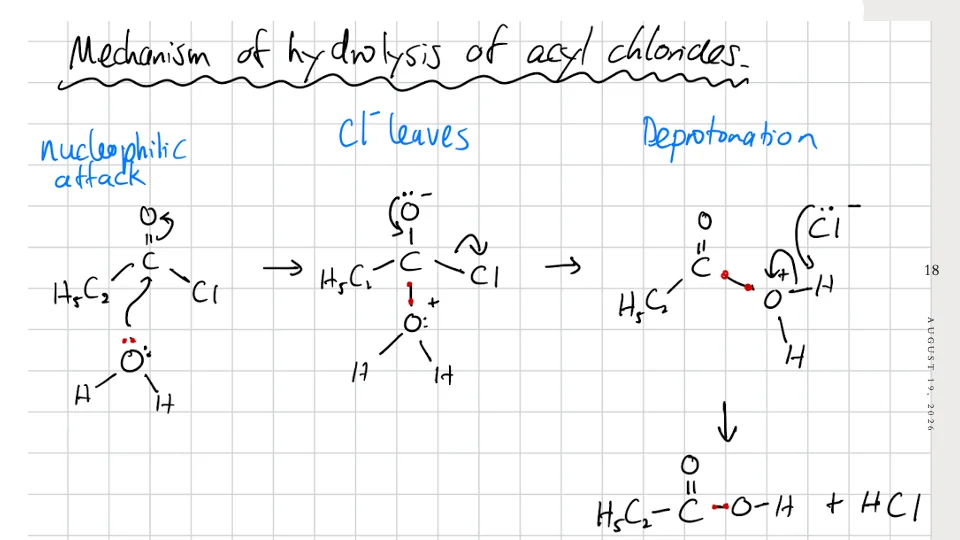
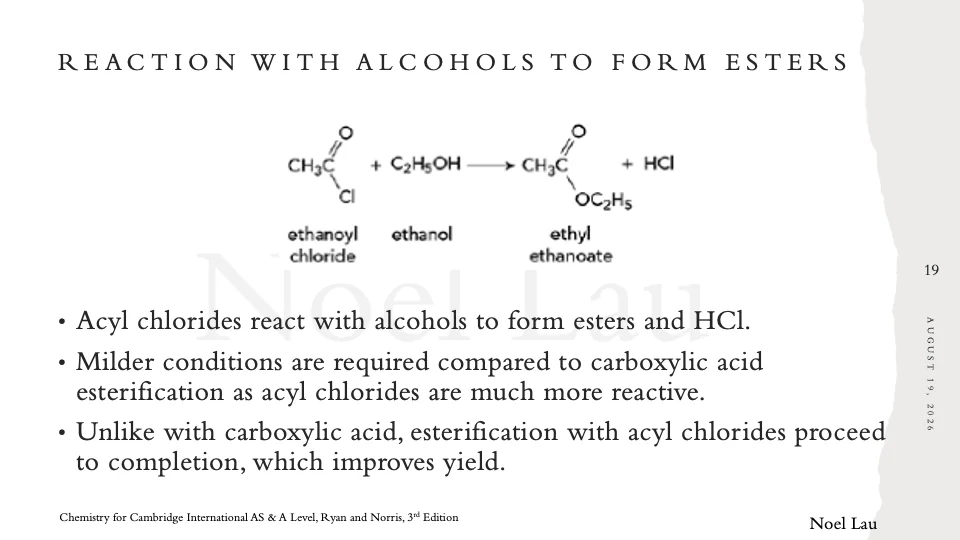
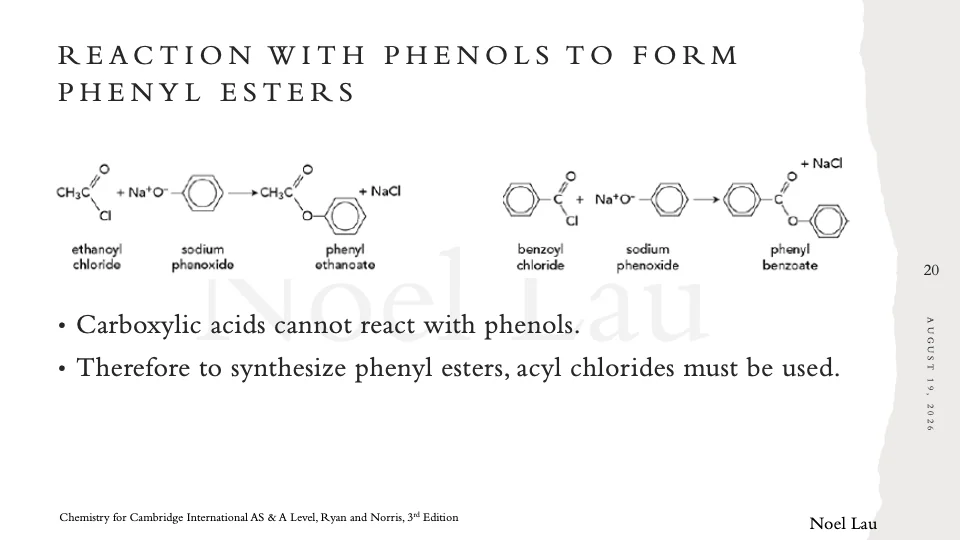
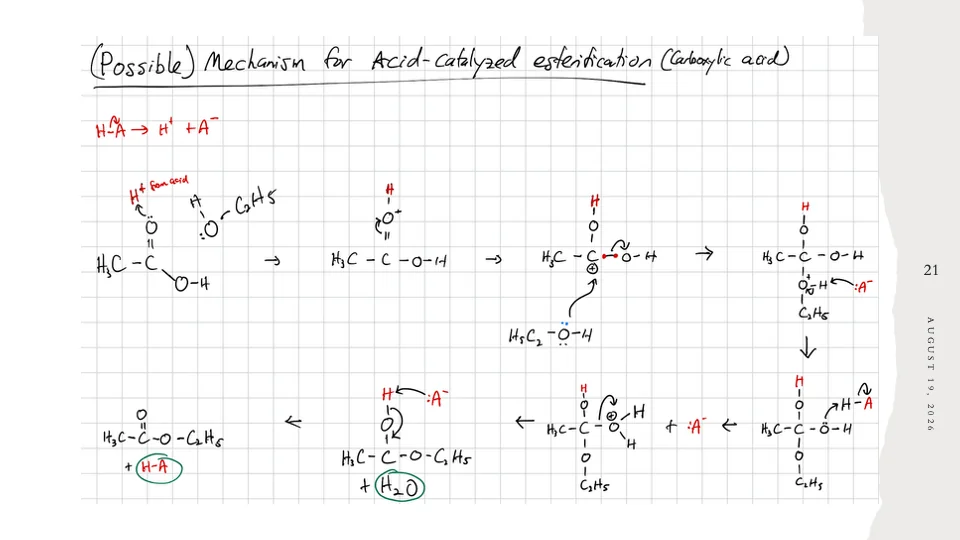
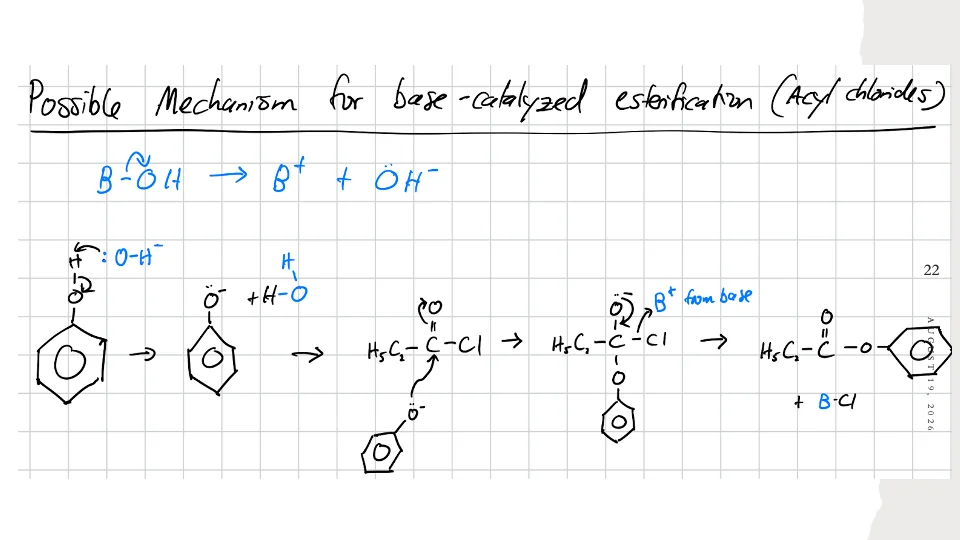
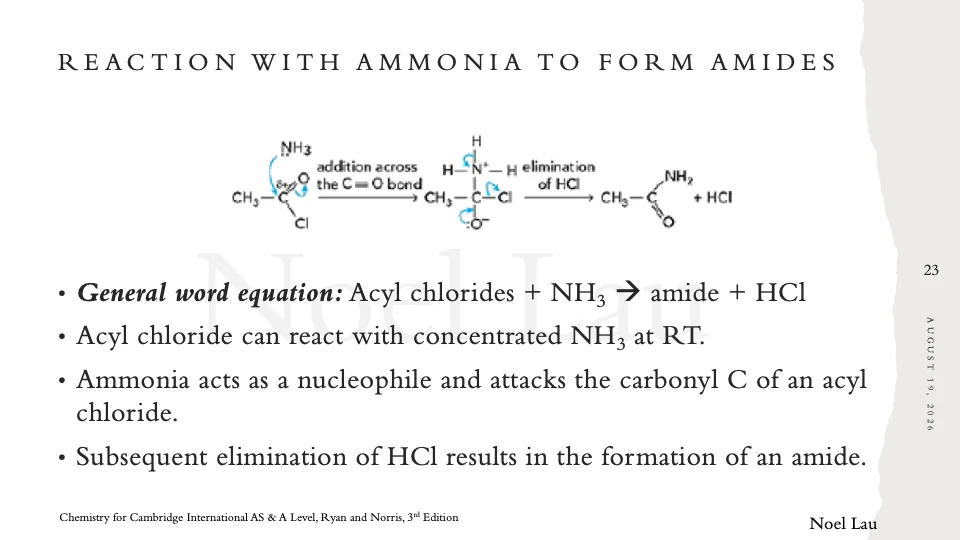
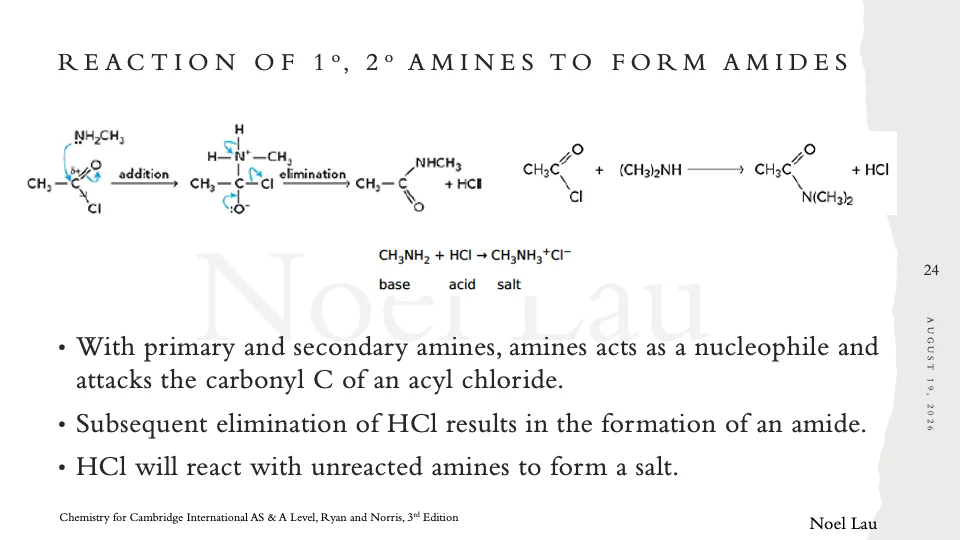
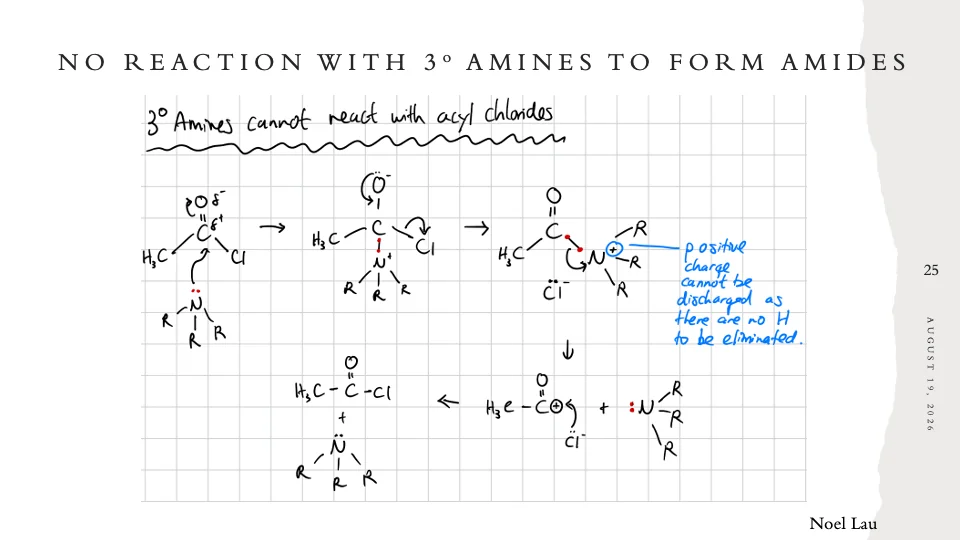
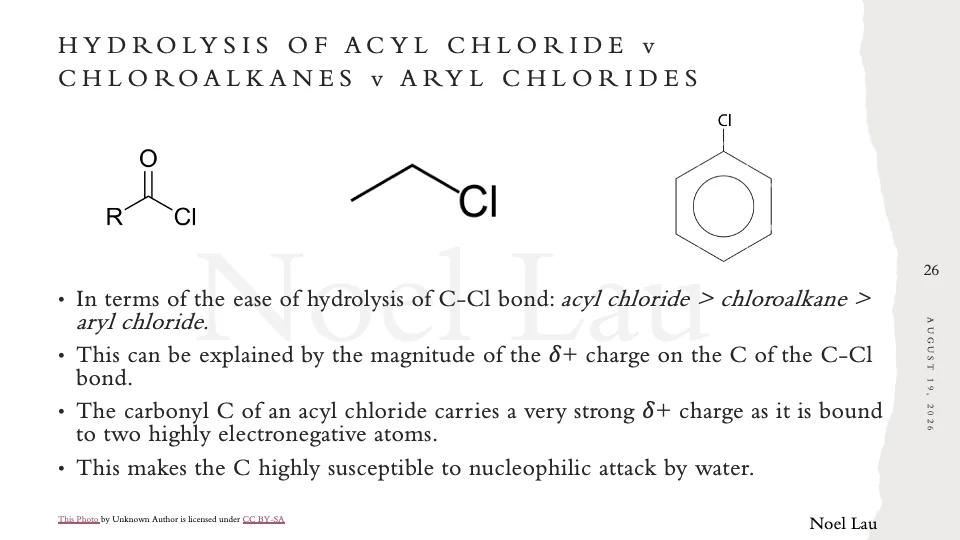
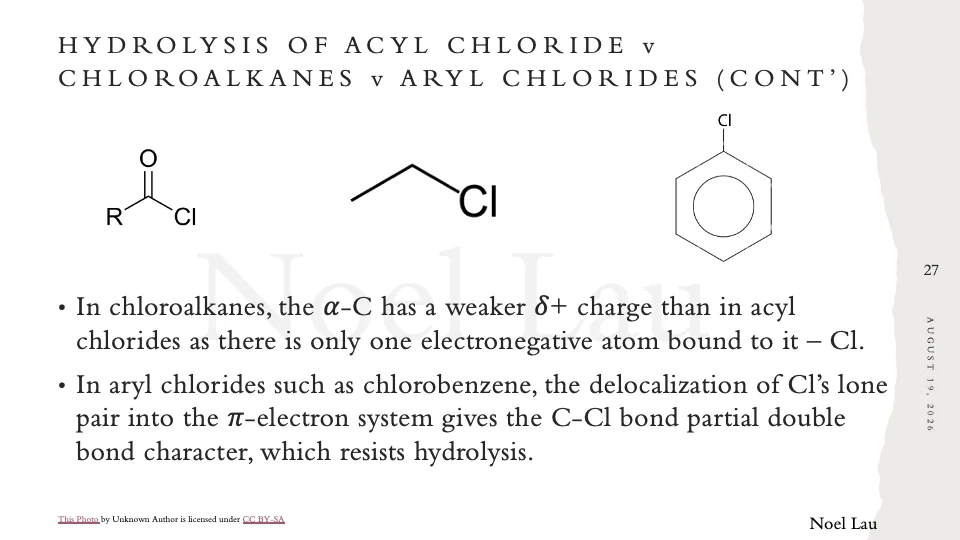
Acyl chlorides are then examined in detail. Their reactions with water, alcohols, phenols, ammonia, and primary and secondary amines are described, and the addition-elimination mechanism common to all these reactions is developed. The preparation of esters from alcohols and acyl chlorides is covered alongside the AS Level route via direct esterification. The chapter closes with a comparison of the ease of hydrolysis of acyl chlorides, alkyl chlorides and halogenoarenes, accounting for the differences in terms of bond polarity, bond strength and the availability of the carbon centre to nucleophilic attack.