Chapter 32 extends the treatment of hydroxy compounds from AS Level to include phenol, examining how the attachment of the hydroxyl group to an aromatic ring profoundly affects both its acidity and its reactivity towards electrophilic substitution.
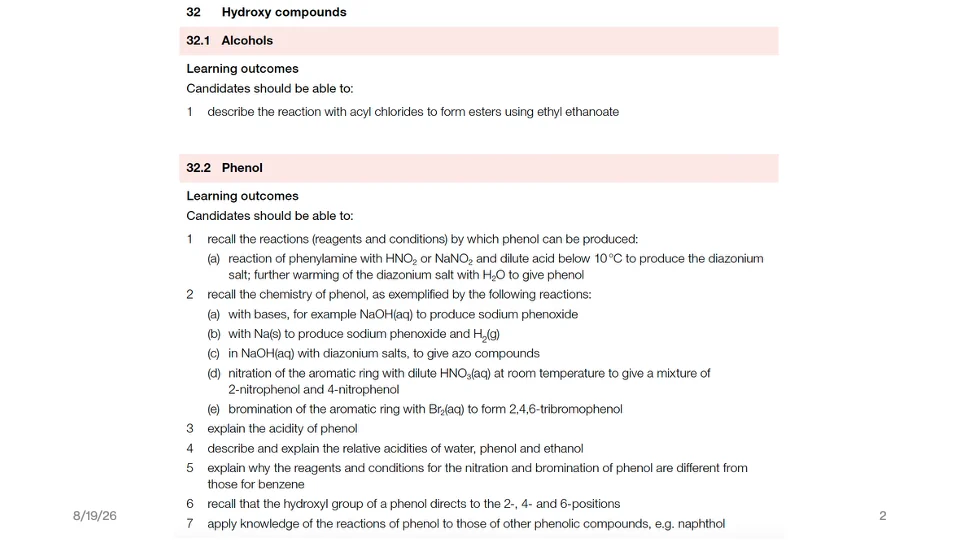
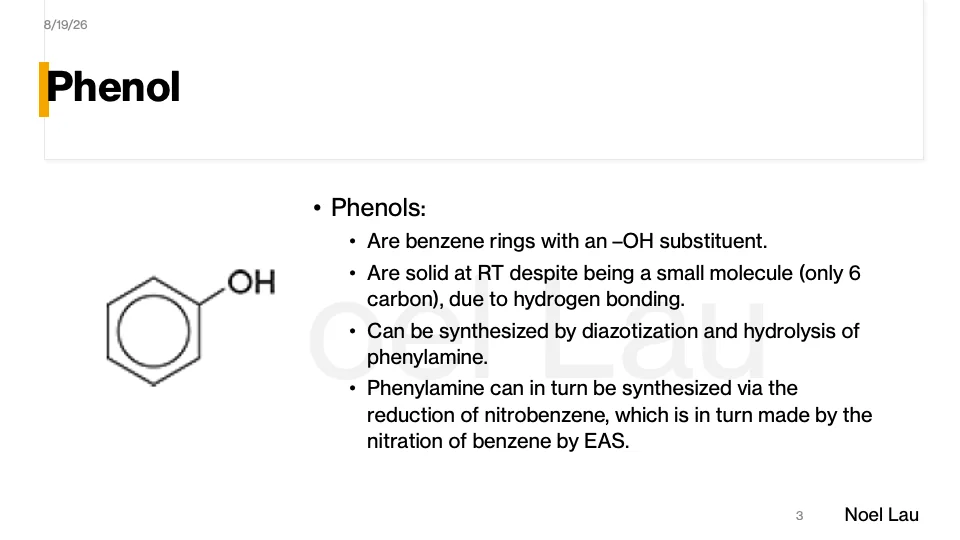
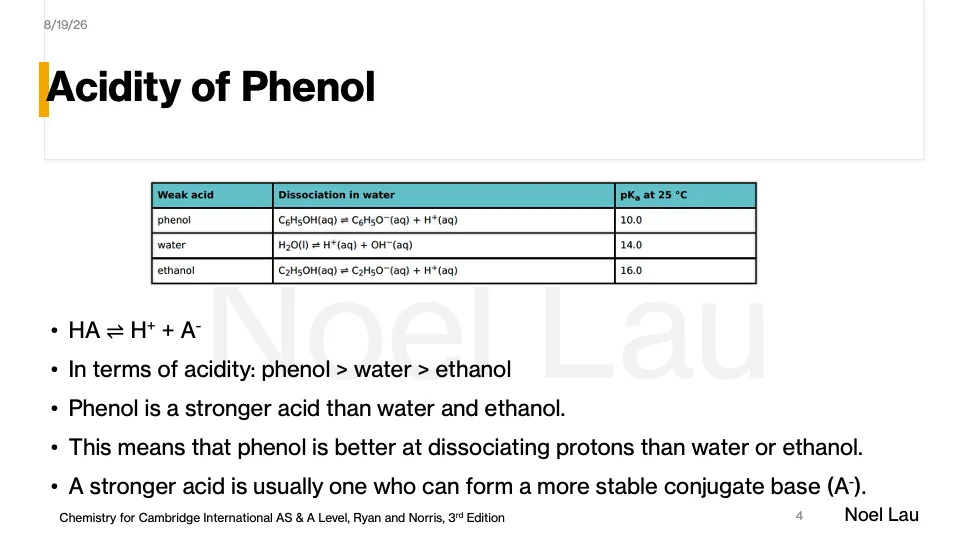
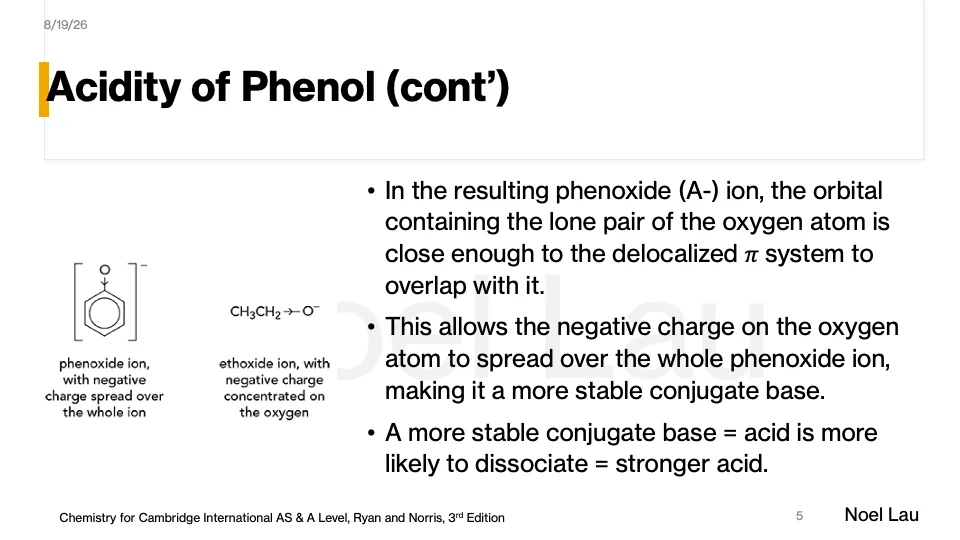
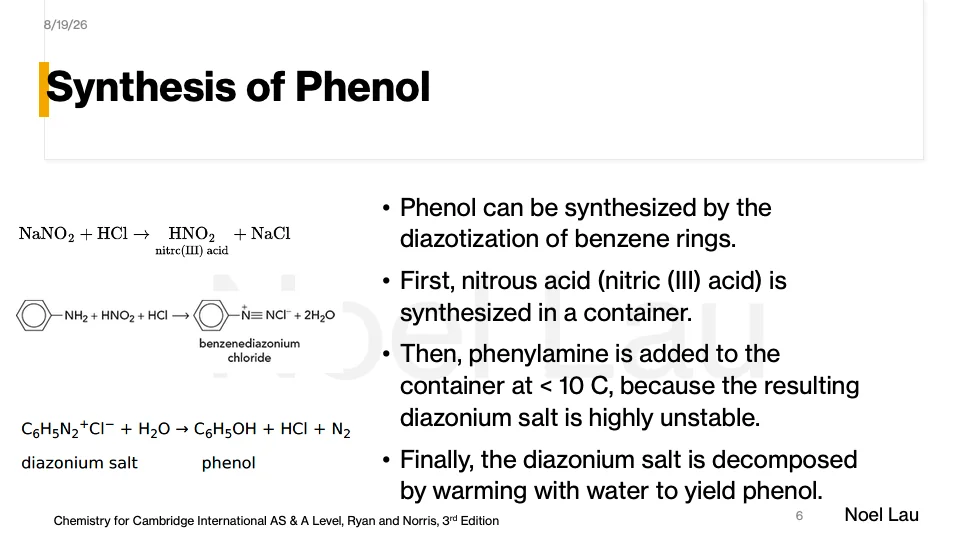
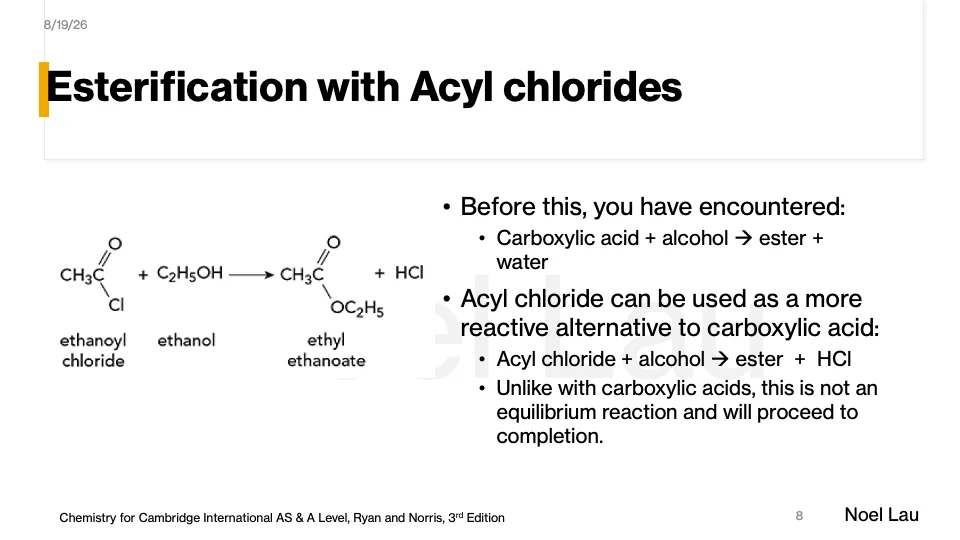
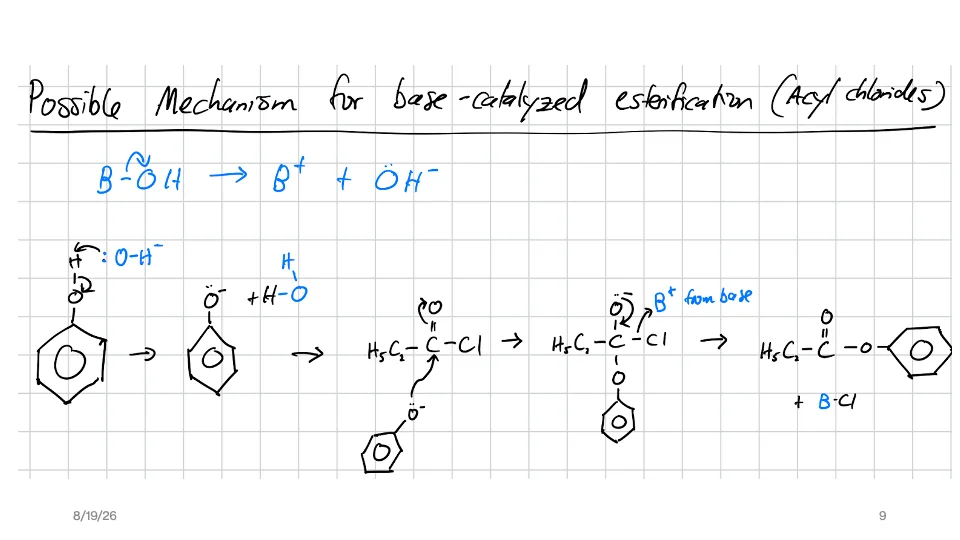
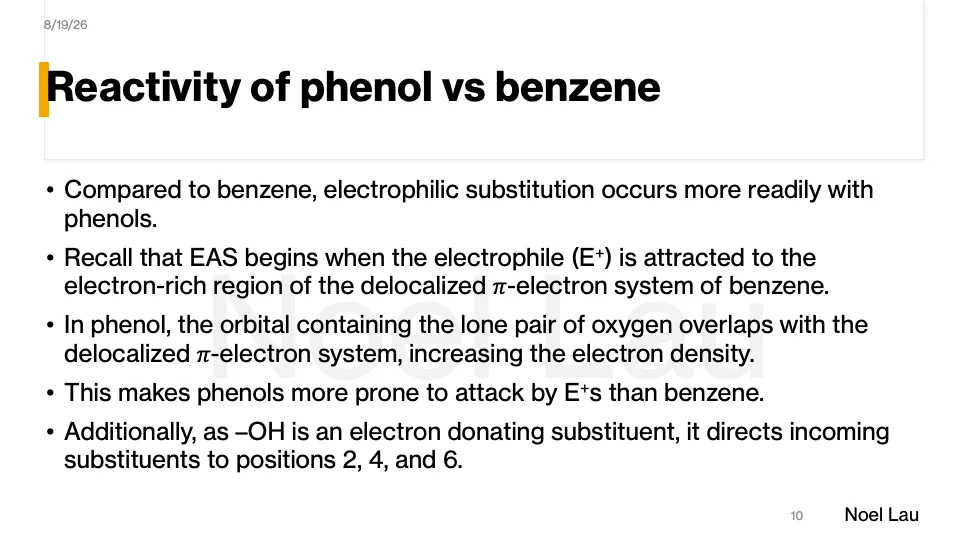
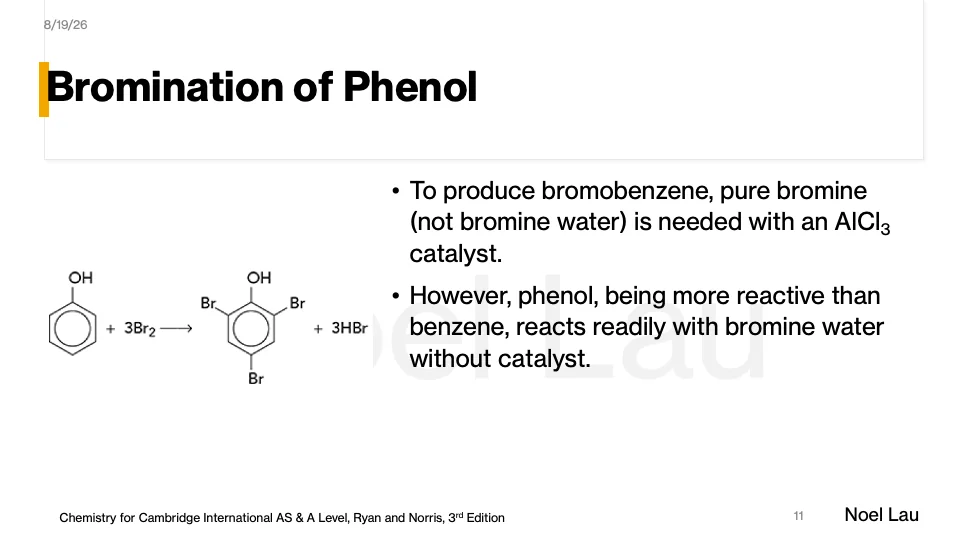
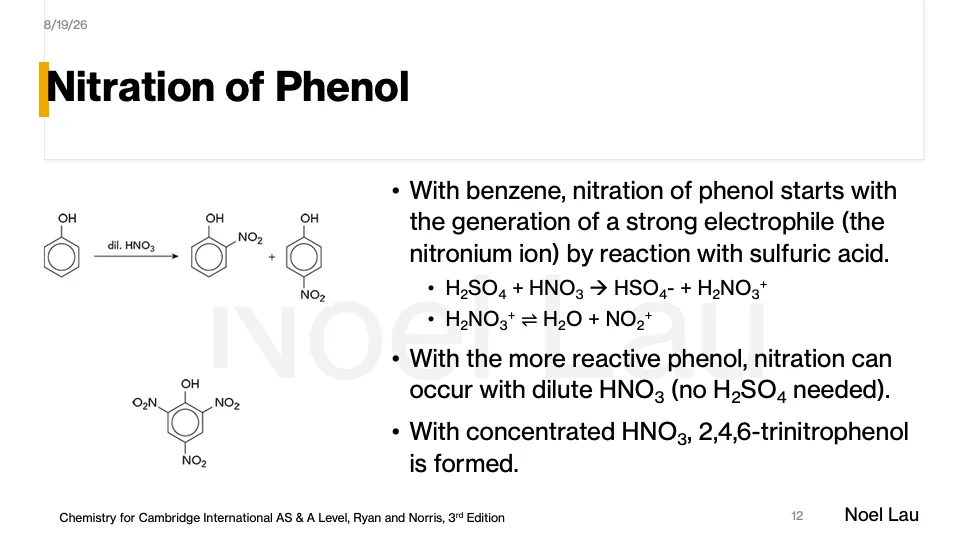
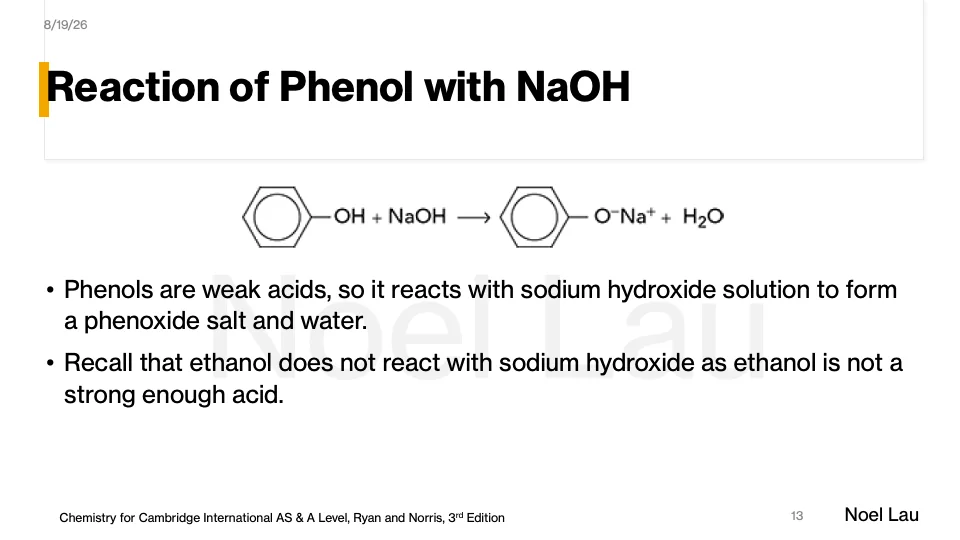
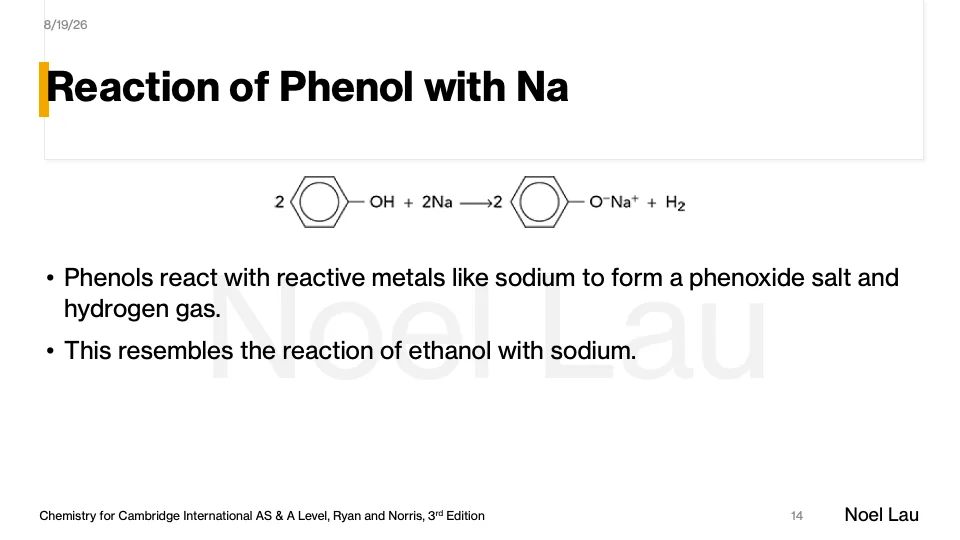
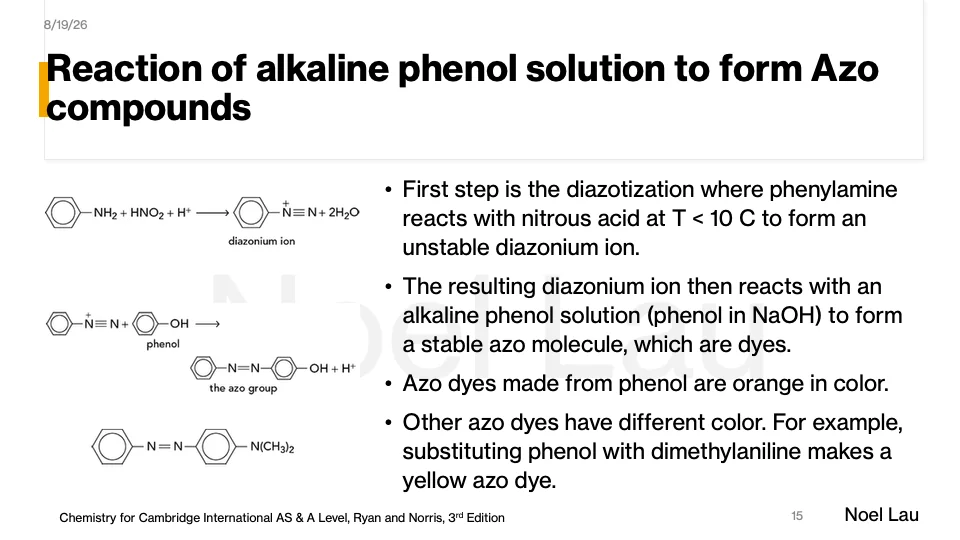
The chapter opens with the reaction of alcohols with acyl chlorides to form esters, before turning to phenol as the principal focus. The preparation of phenol via a diazonium salt intermediate is described, and its reactions with sodium hydroxide, sodium, diazonium salts, dilute nitric acid and aqueous bromine are covered. The acidity of phenol is explained in terms of the delocalisation of the oxygen lone pair into the aromatic ring, and the relative acidities of water, phenol and ethanol are compared and rationalised. The activation of the ring towards electrophilic substitution by the hydroxyl group is used to account for the milder conditions required for the nitration and bromination of phenol compared to benzene, and the directing effect of the hydroxyl group to the 2-, 4- and 6-positions is noted.