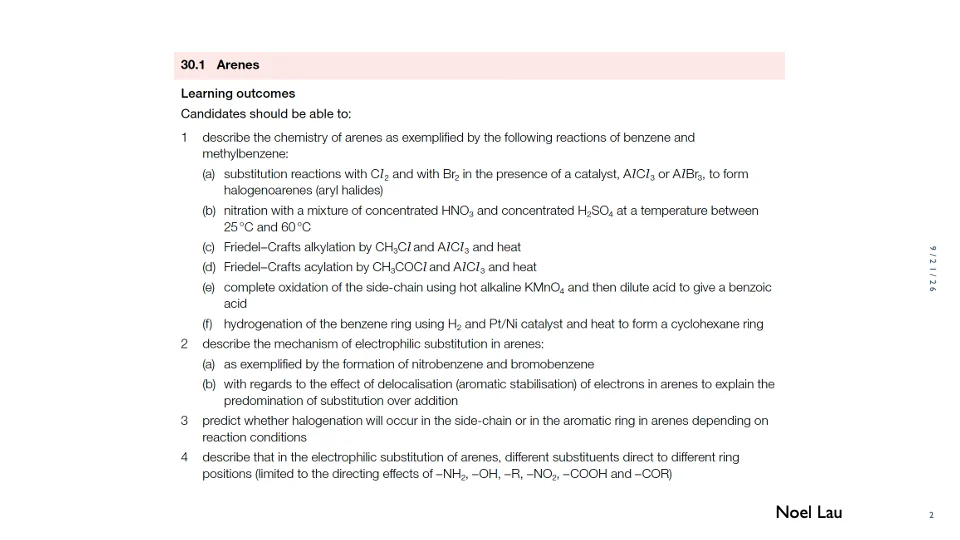
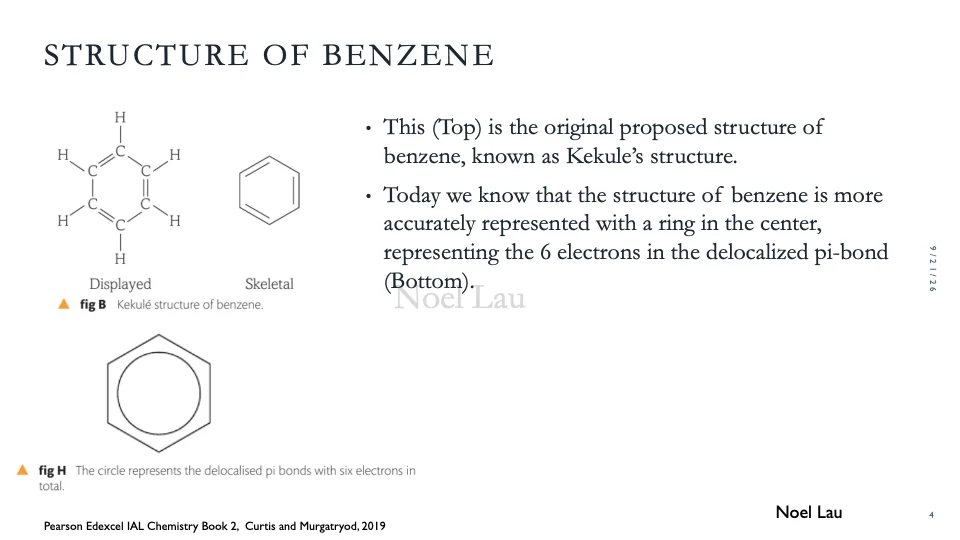
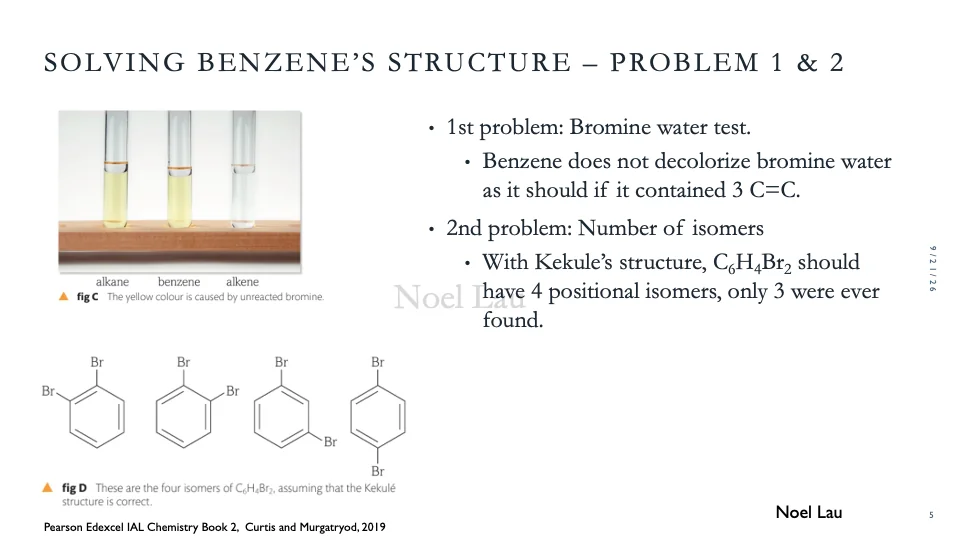
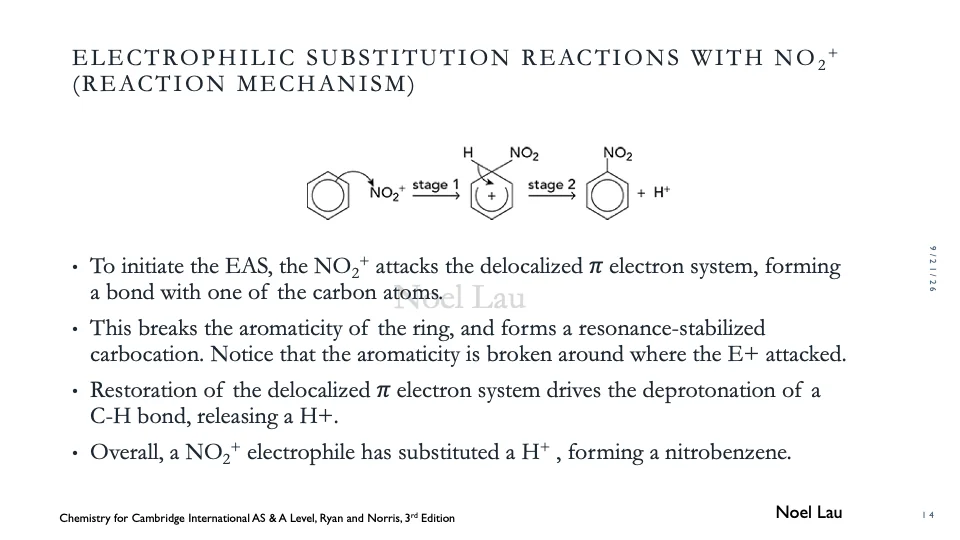
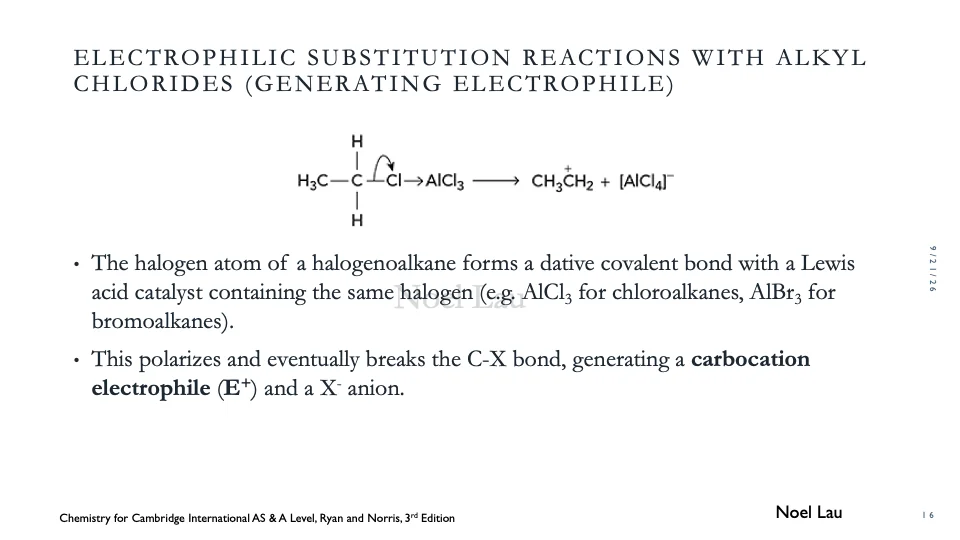
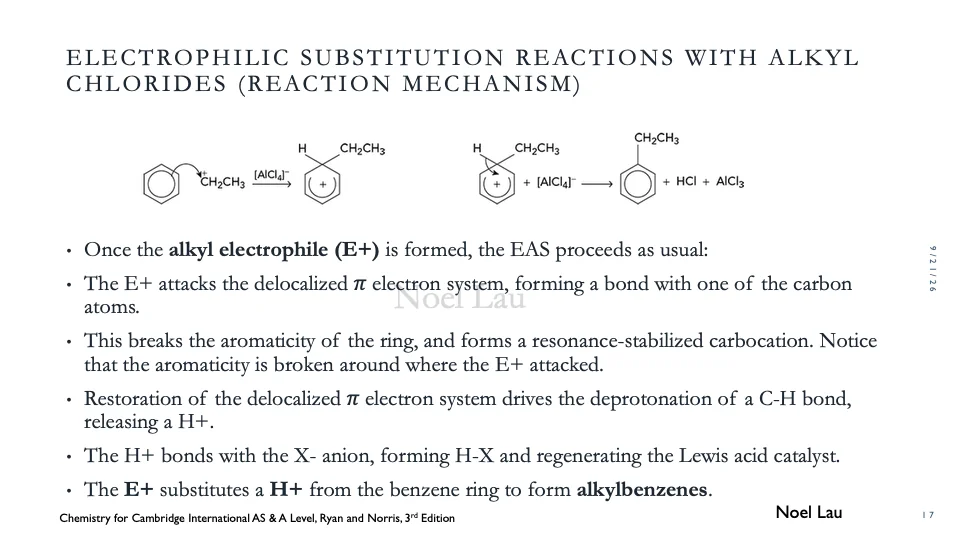
Chapter 30 examines the chemistry of arenes, extending the treatment of hydrocarbons from AS Level to include the distinctive reactivity of the benzene ring. The chapter develops the mechanistic basis of electrophilic substitution and applies it to a range of reactions of both benzene and methylbenzene.
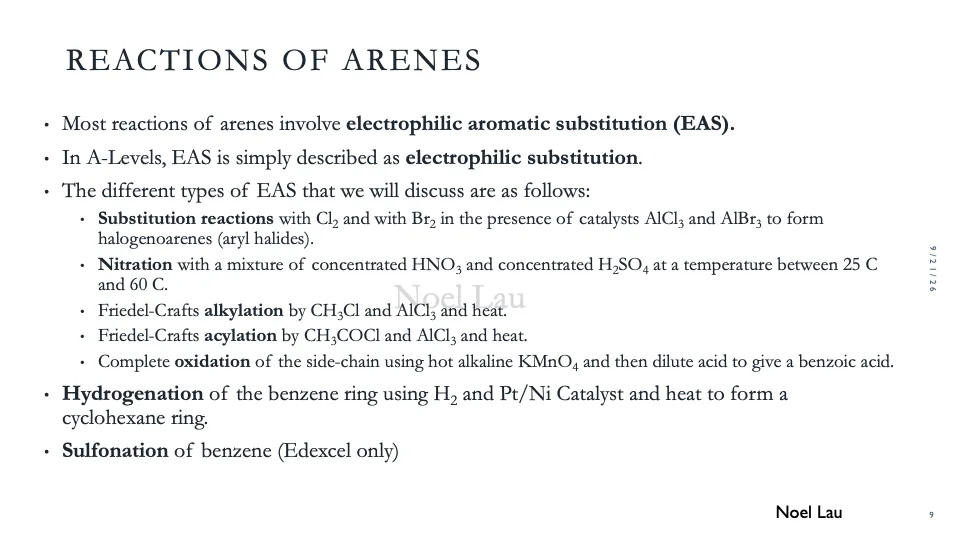
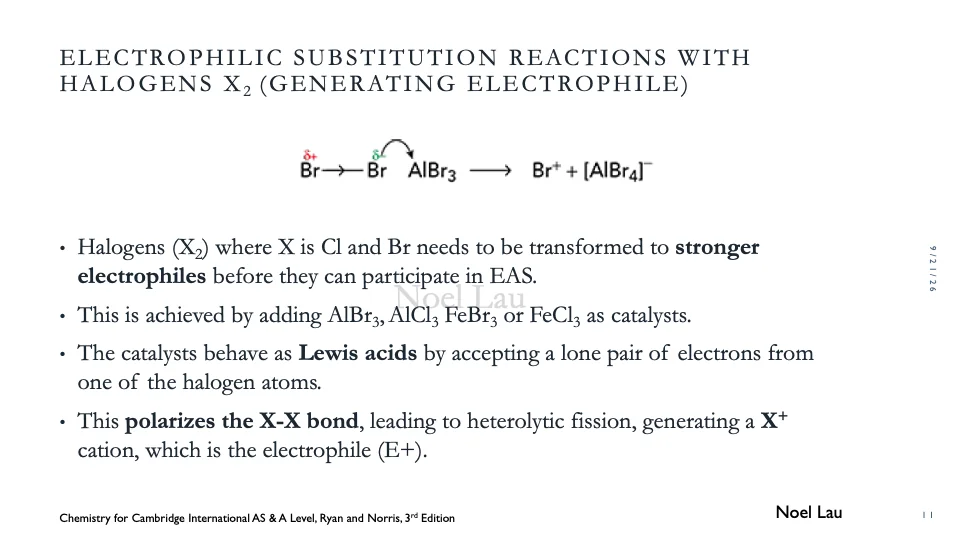
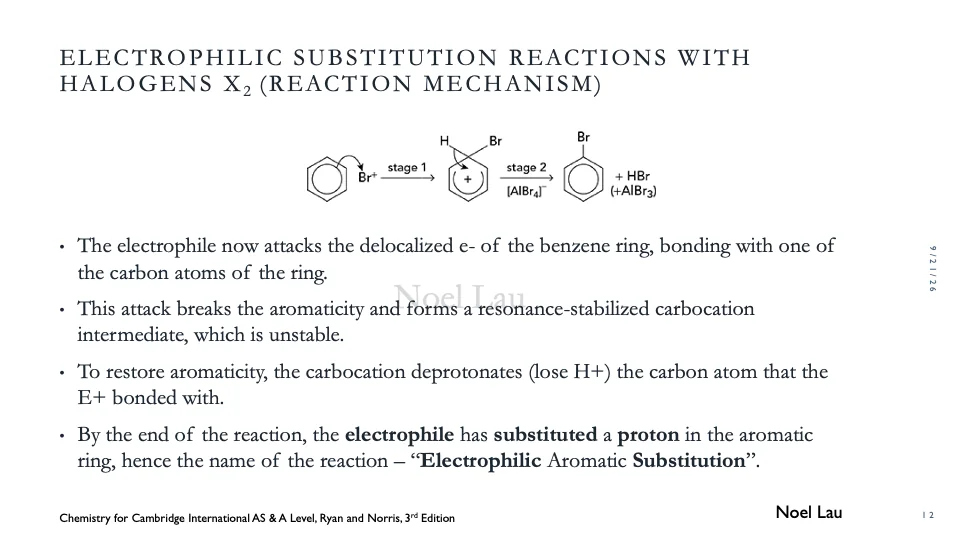
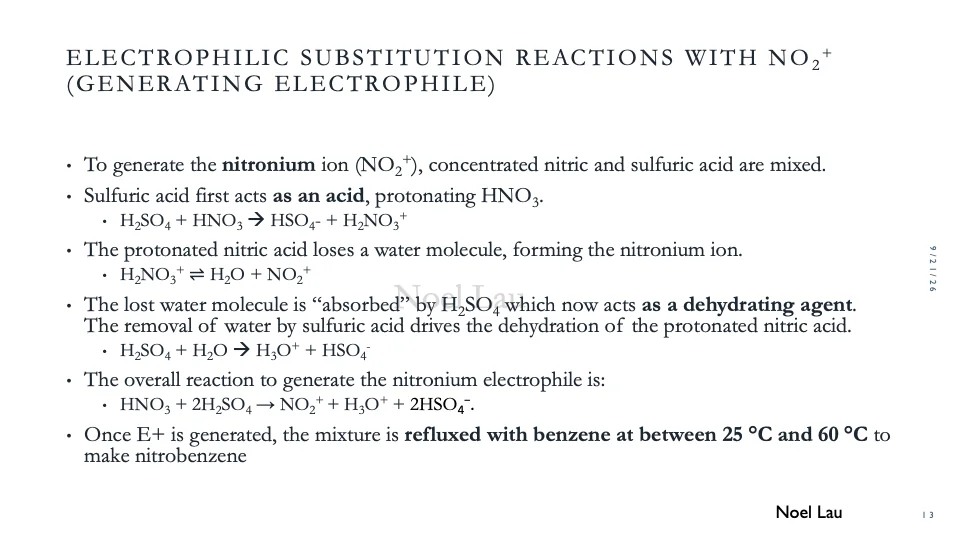
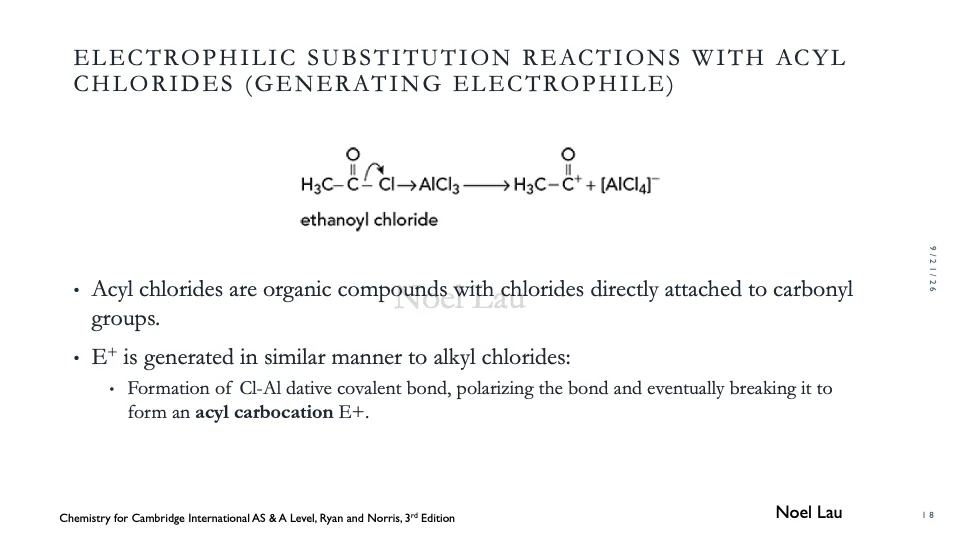
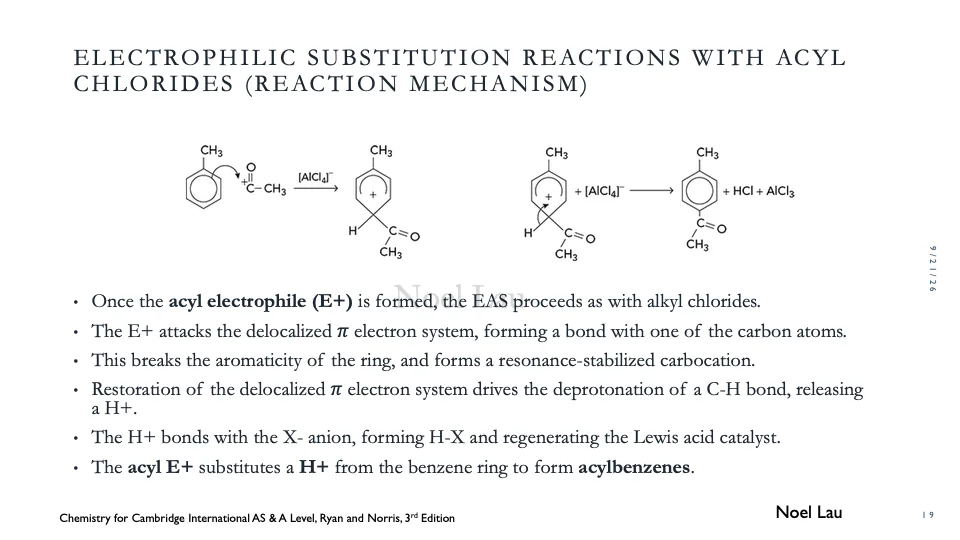
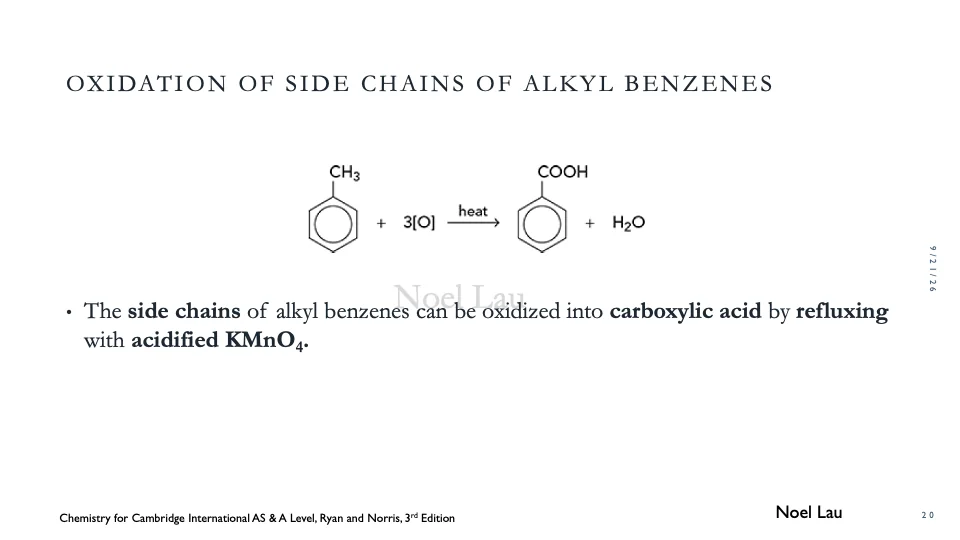
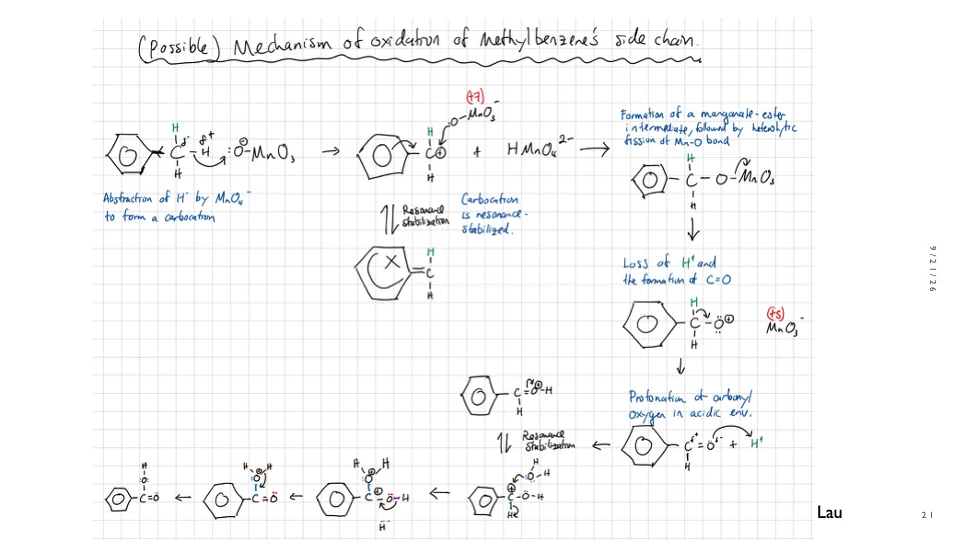
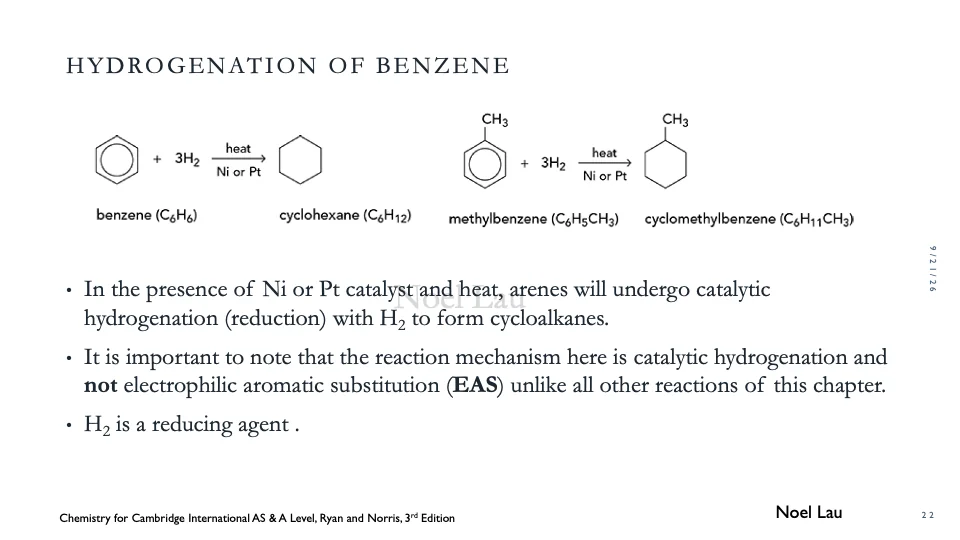
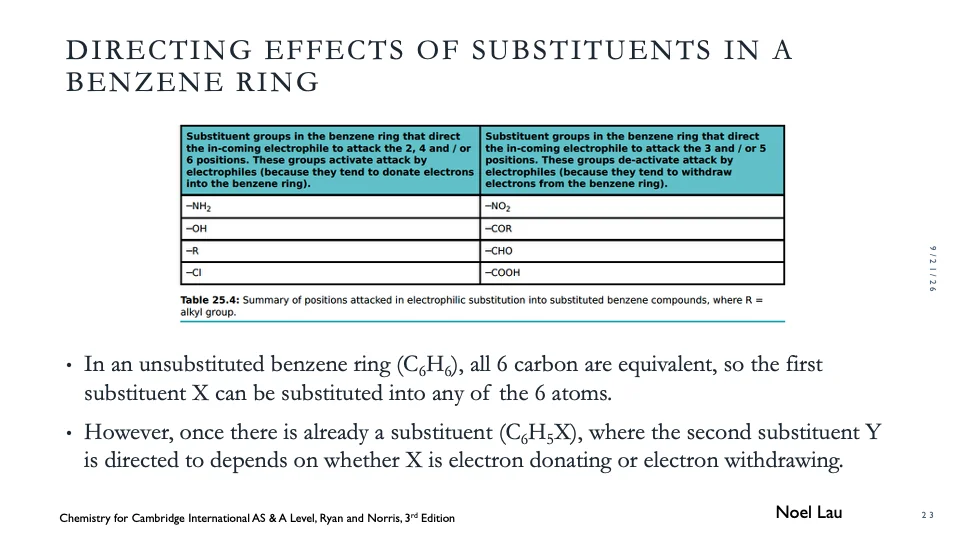
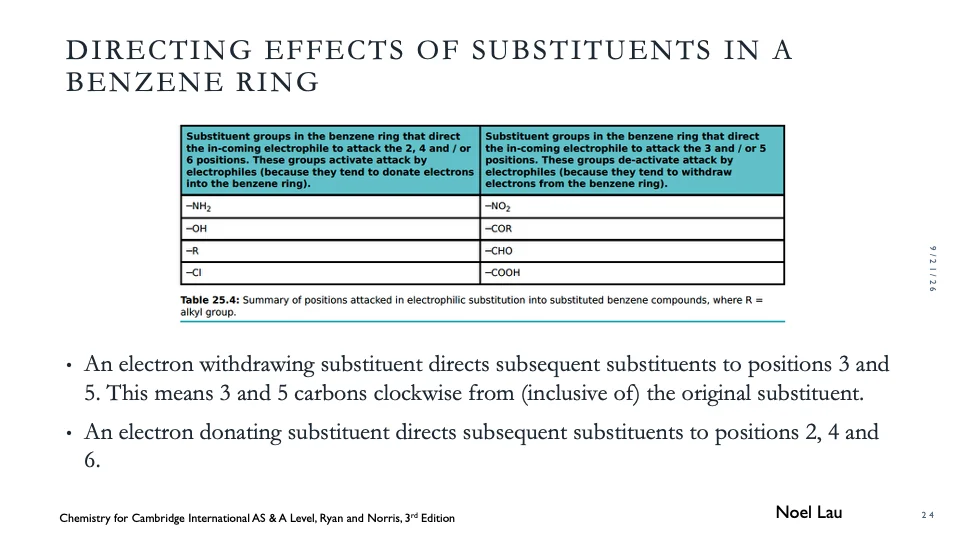
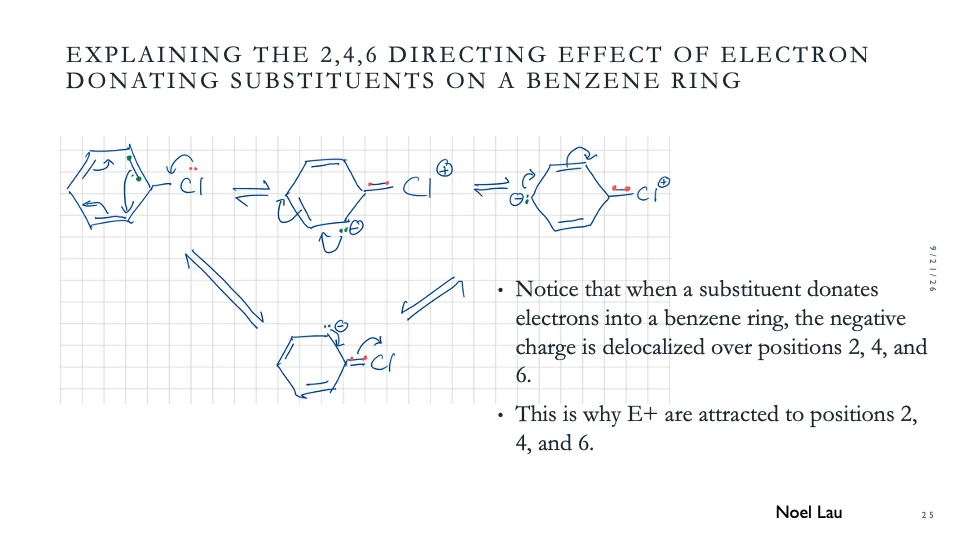
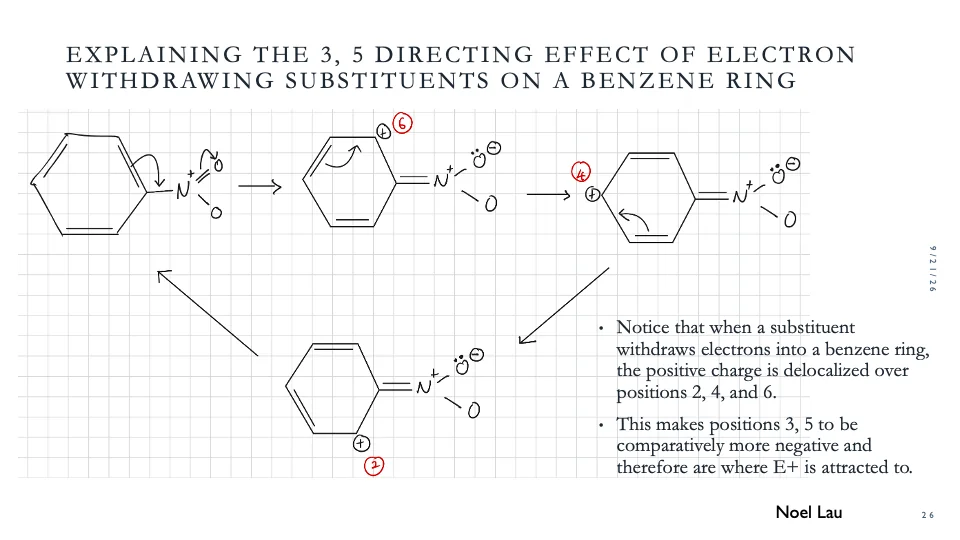
The reactions of benzene covered include halogenation in the presence of a Lewis acid catalyst, nitration with a mixture of concentrated nitric and sulfuric acids, Friedel-Crafts alkylation and acylation using aluminium chloride, and hydrogenation of the ring. The mechanism of electrophilic substitution is described in detail for nitration and bromination, and the preference for substitution over addition is accounted for in terms of aromatic stabilisation. The chemistry of methylbenzene is also examined, including the complete oxidation of the side chain to give benzoic acid, and the conditions that determine whether halogenation occurs at the ring or in the side chain. The chapter closes with a treatment of the directing effects of ring substituents, covering the ortho/para direction of electron-donating groups and the meta direction of electron-withdrawing groups.