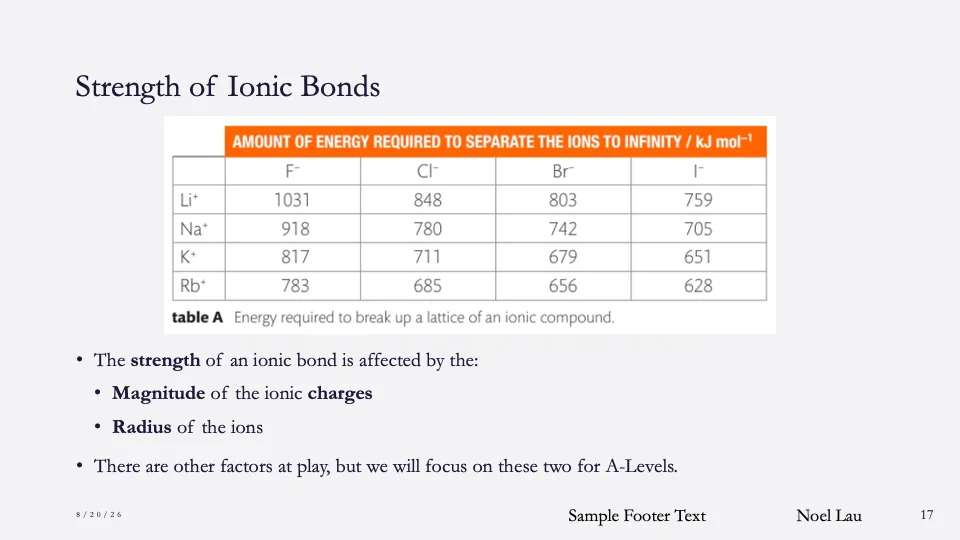
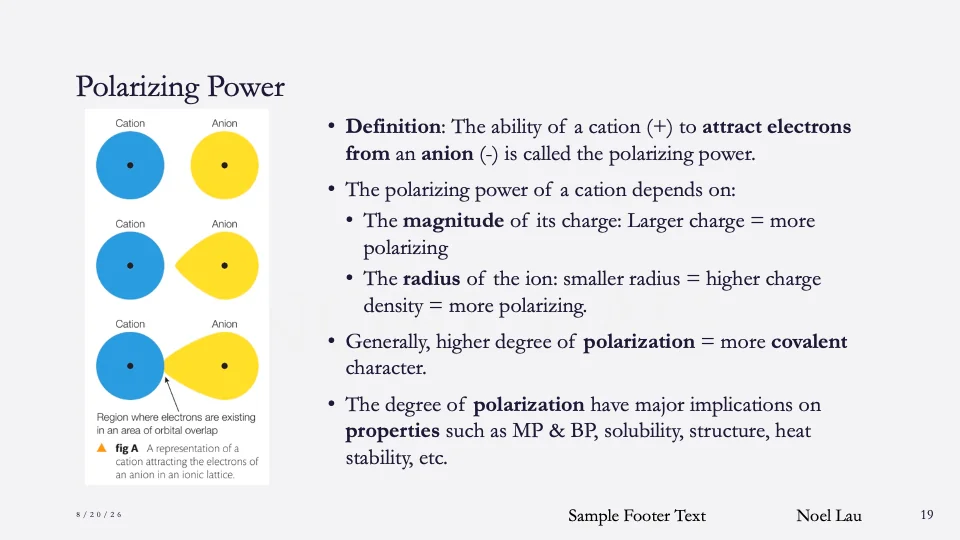
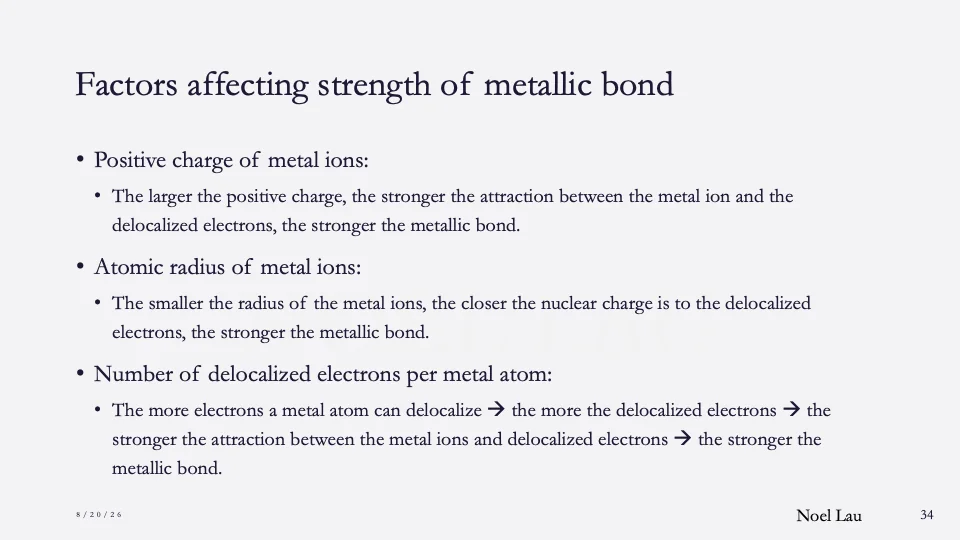
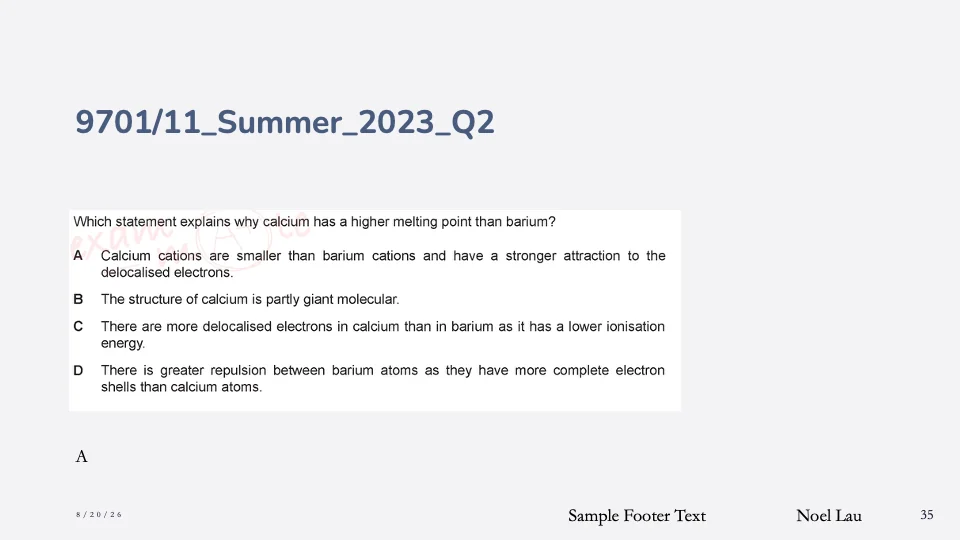
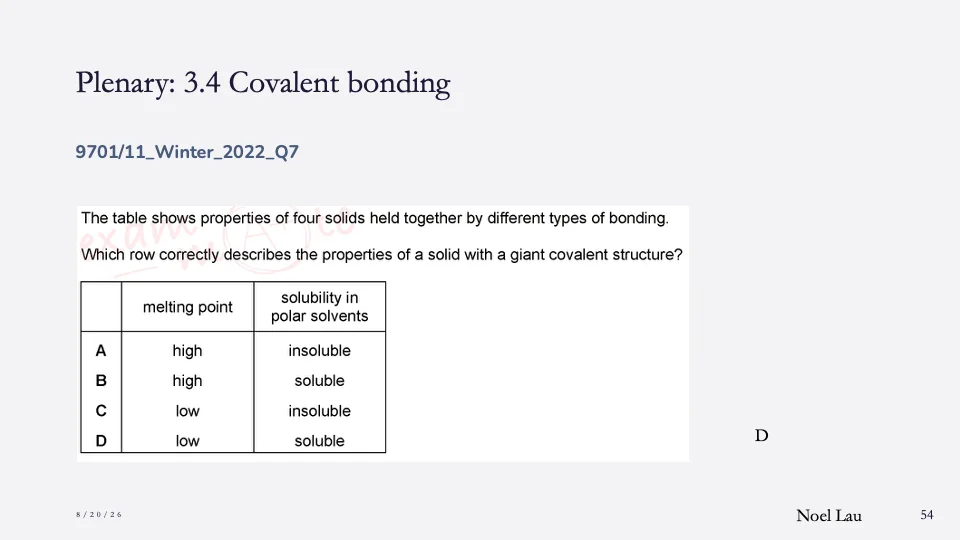
Chapter 3 provides a systematic treatment of the forces that hold matter together, examining the nature, origin and consequences of ionic, covalent, coordinate and metallic bonding. The conceptual framework established here is fundamental to understanding the physical properties of substances and the reactivity patterns explored throughout the rest of the course.
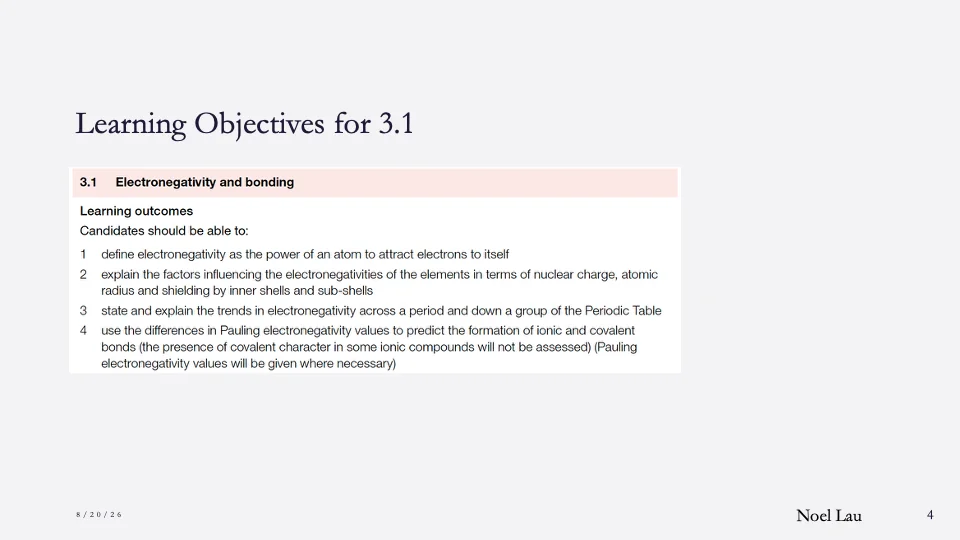
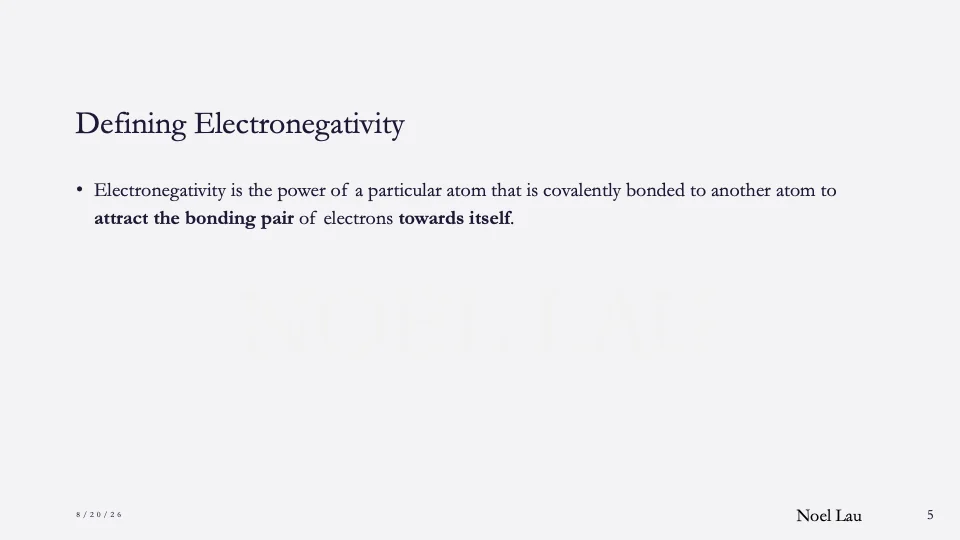
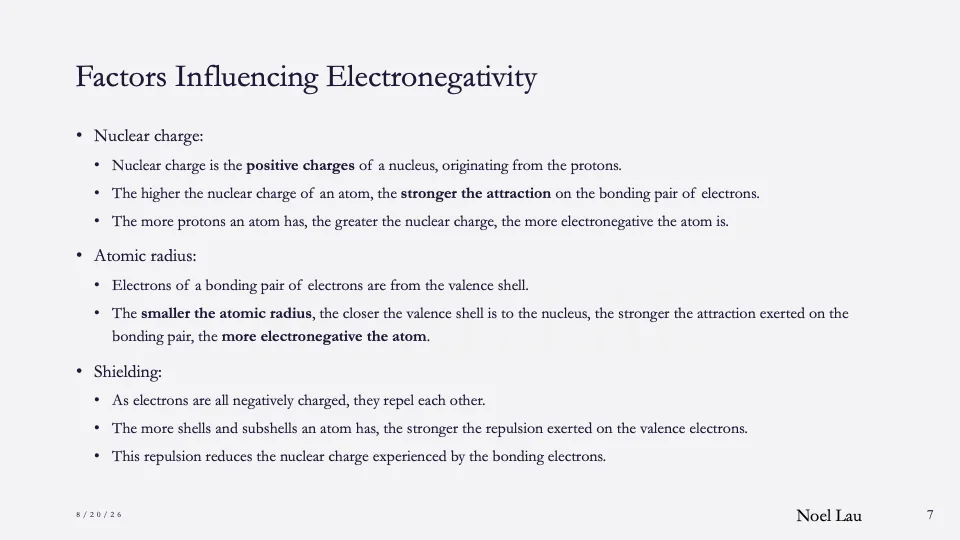
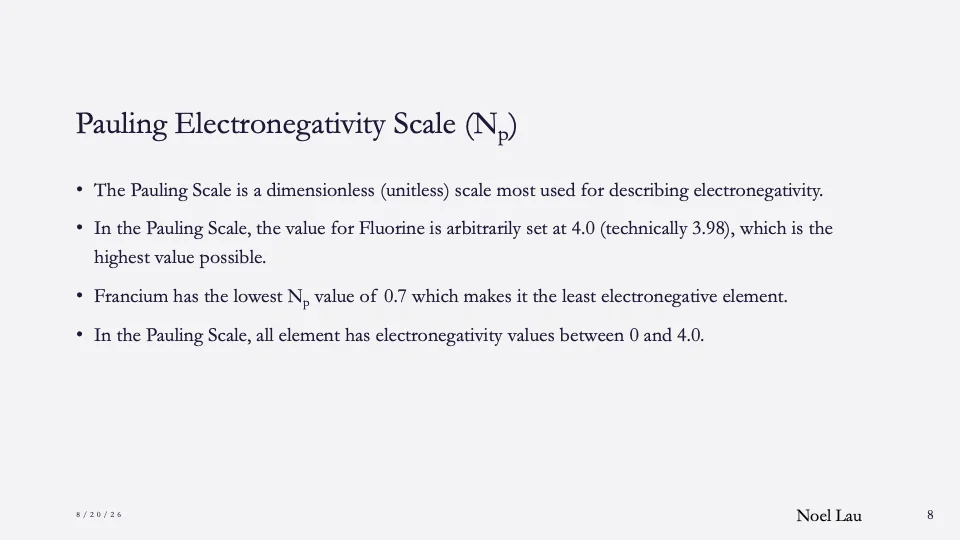
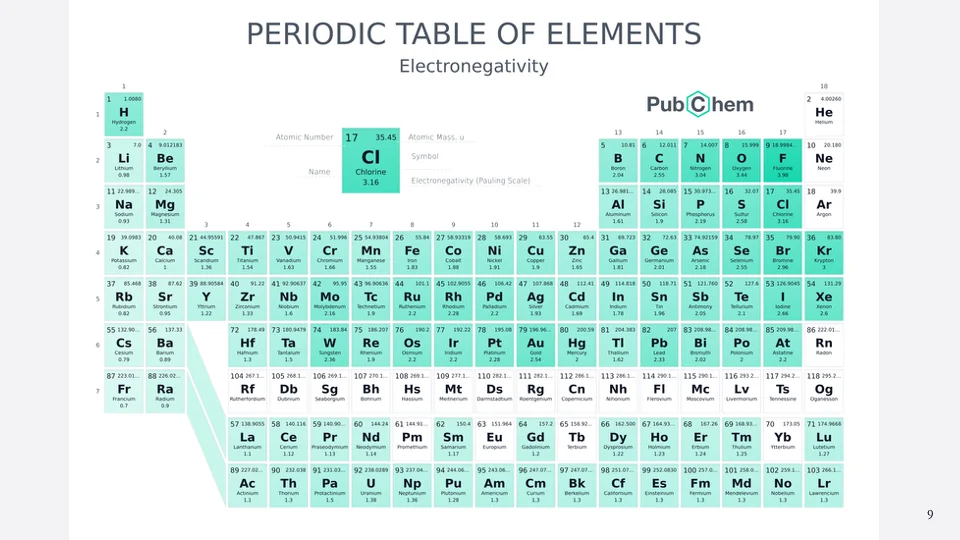
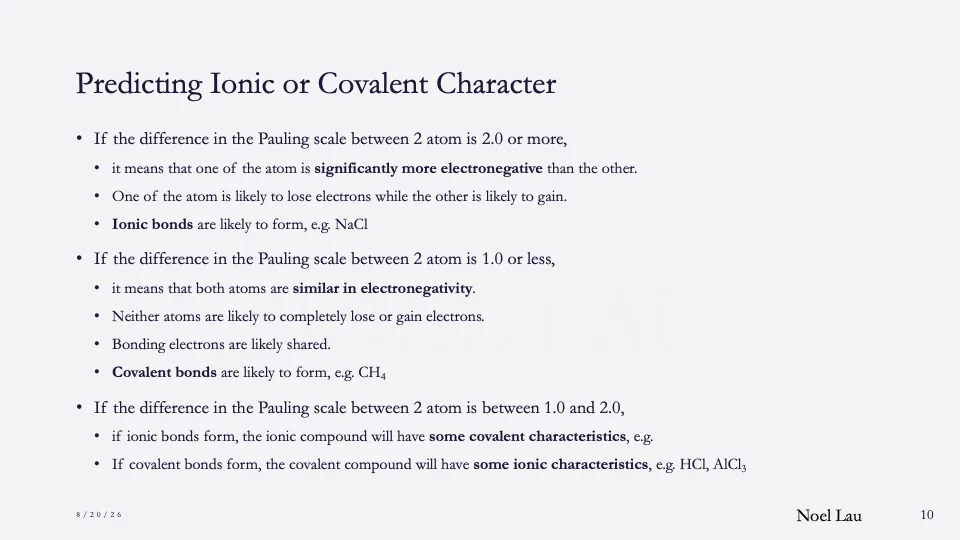
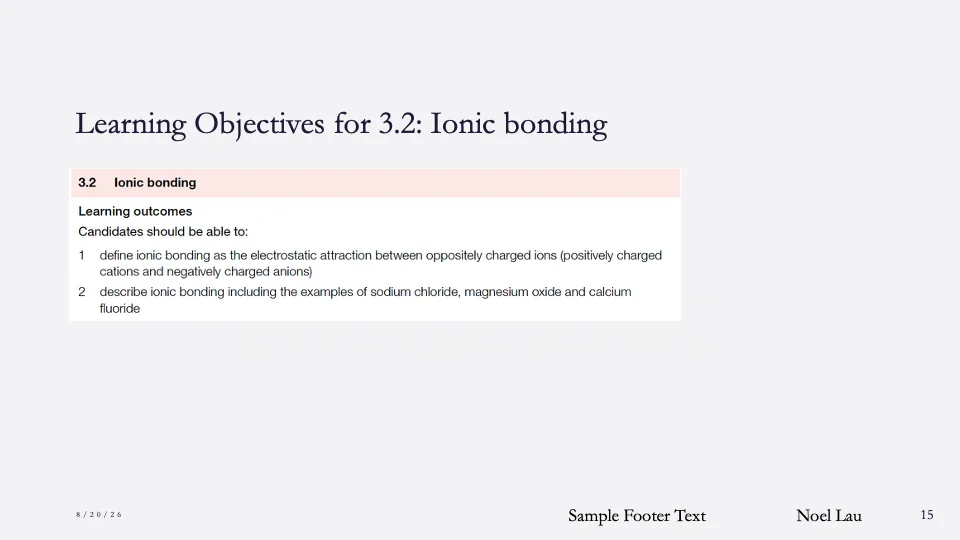
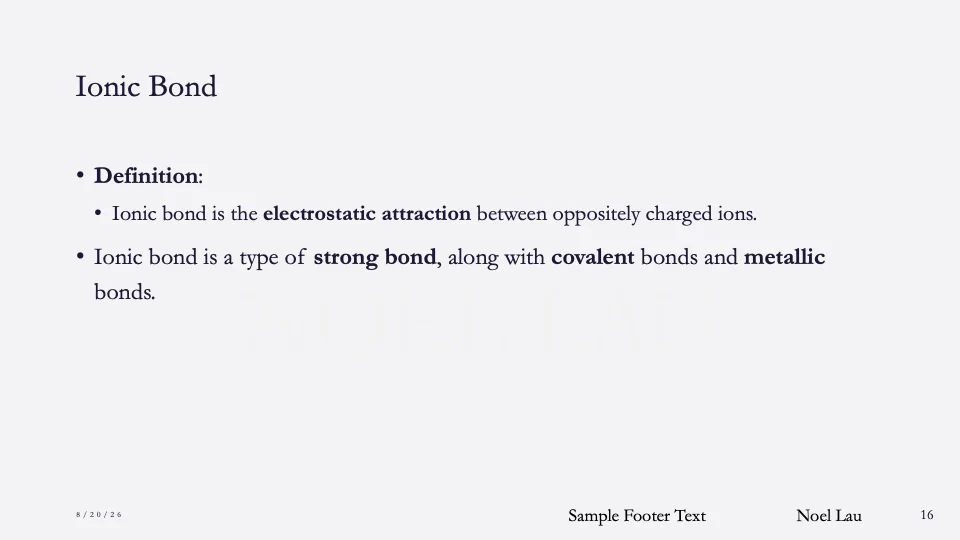
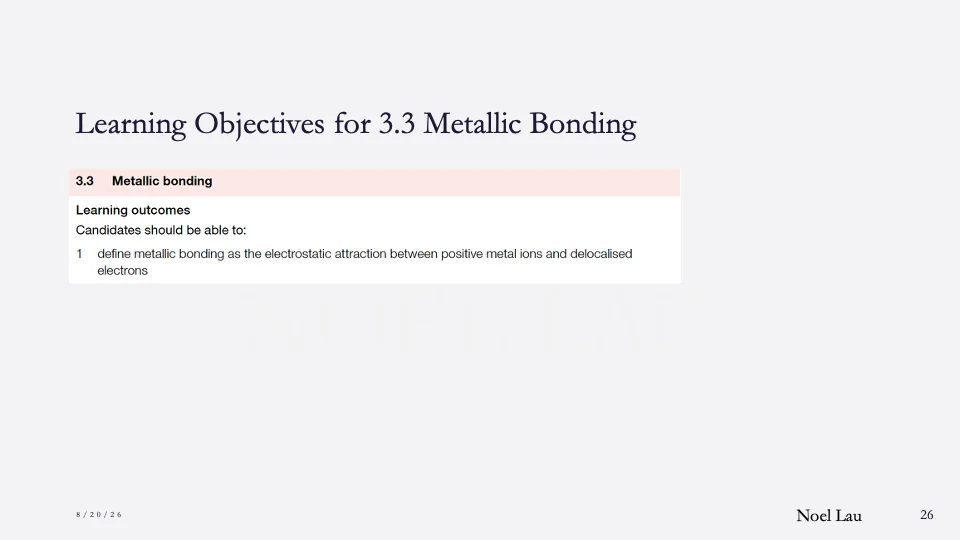
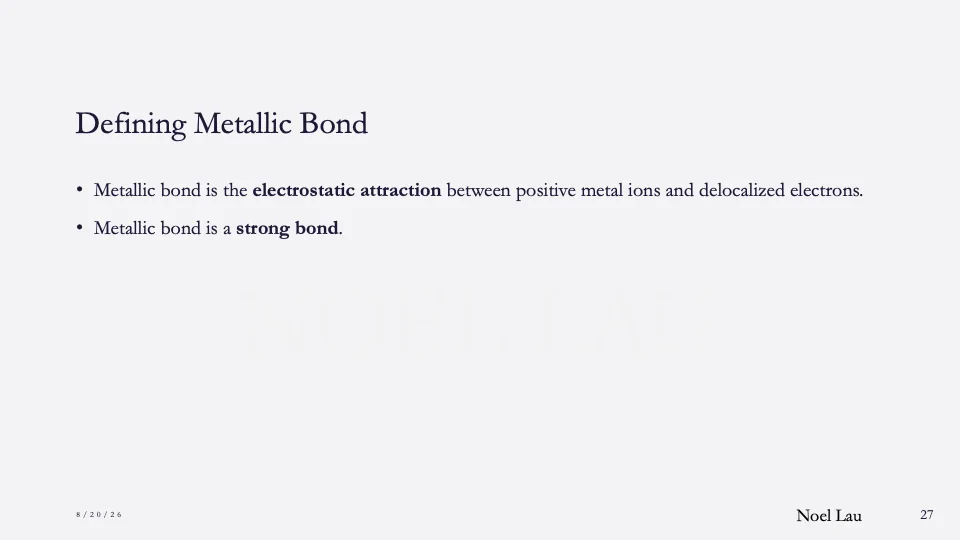
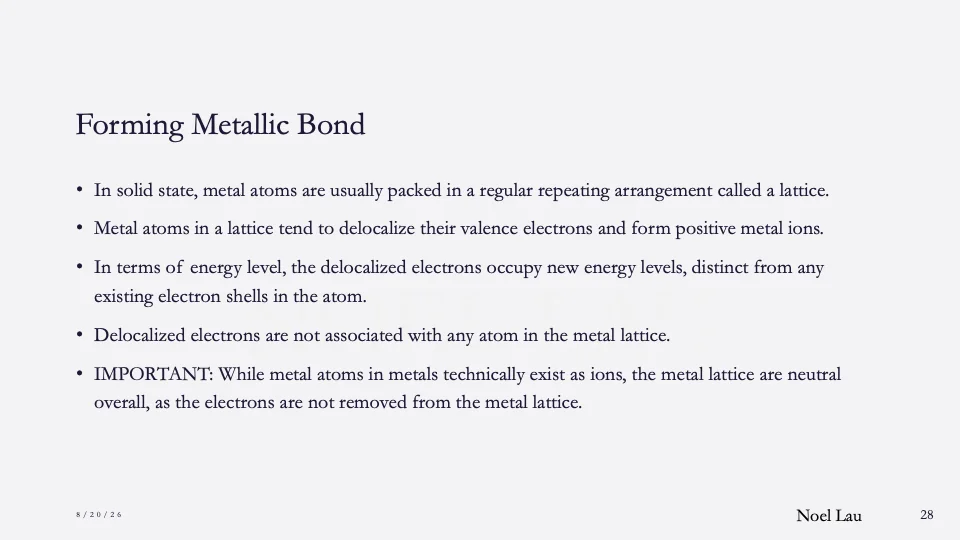
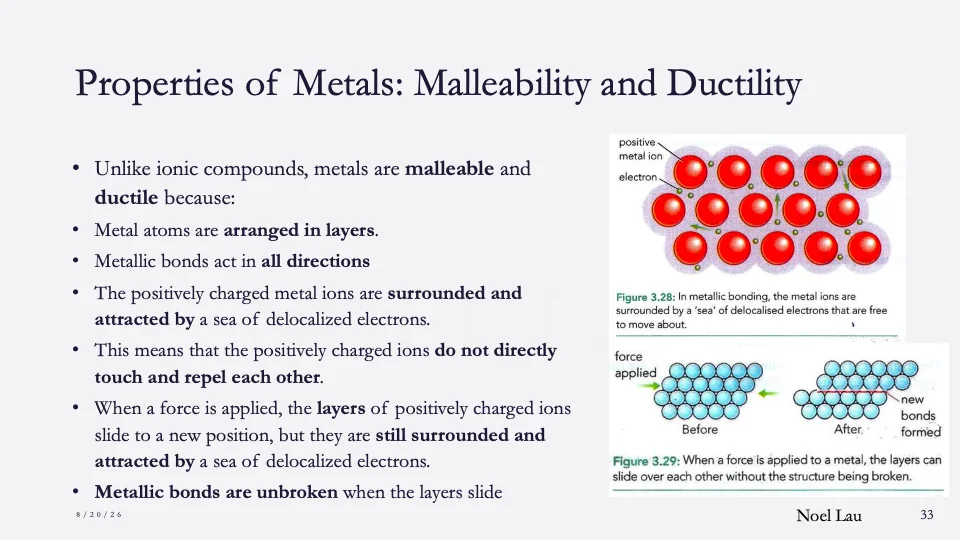
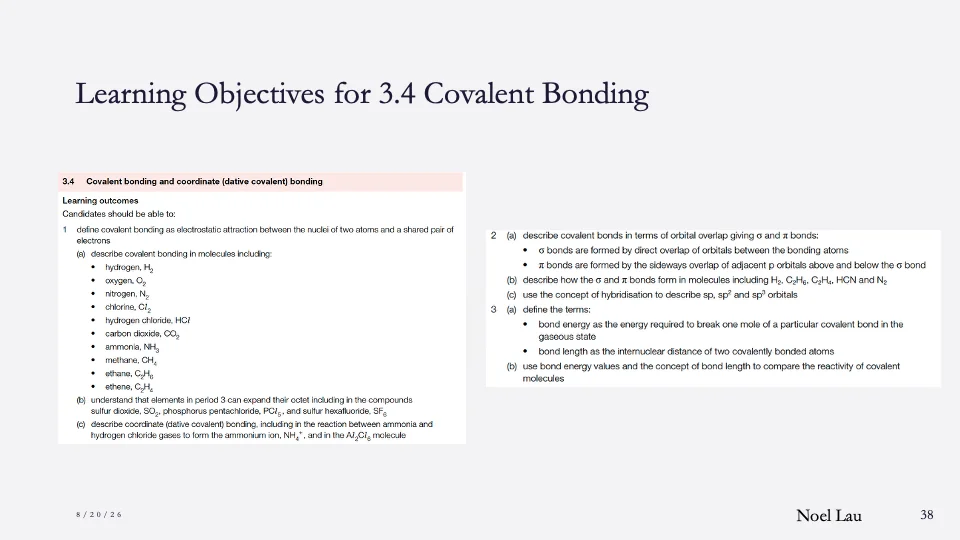
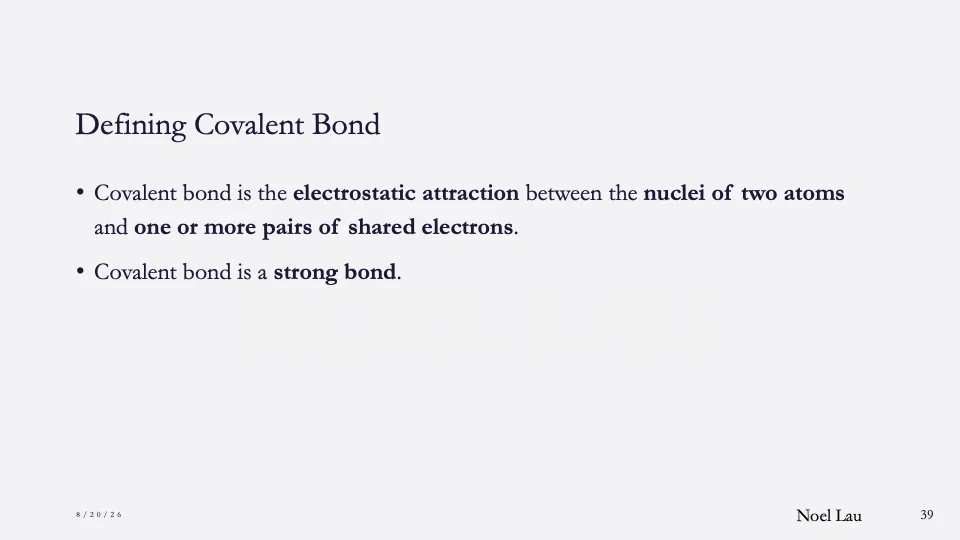
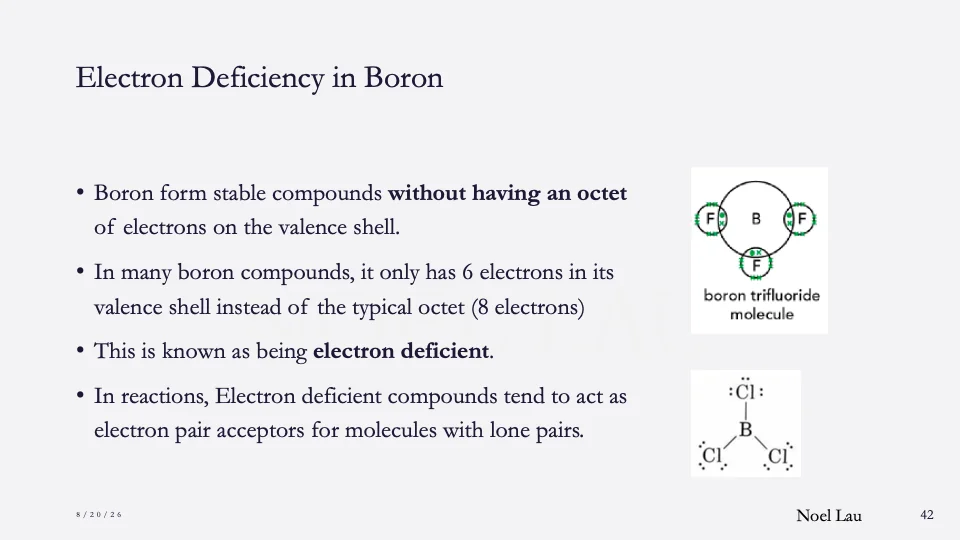
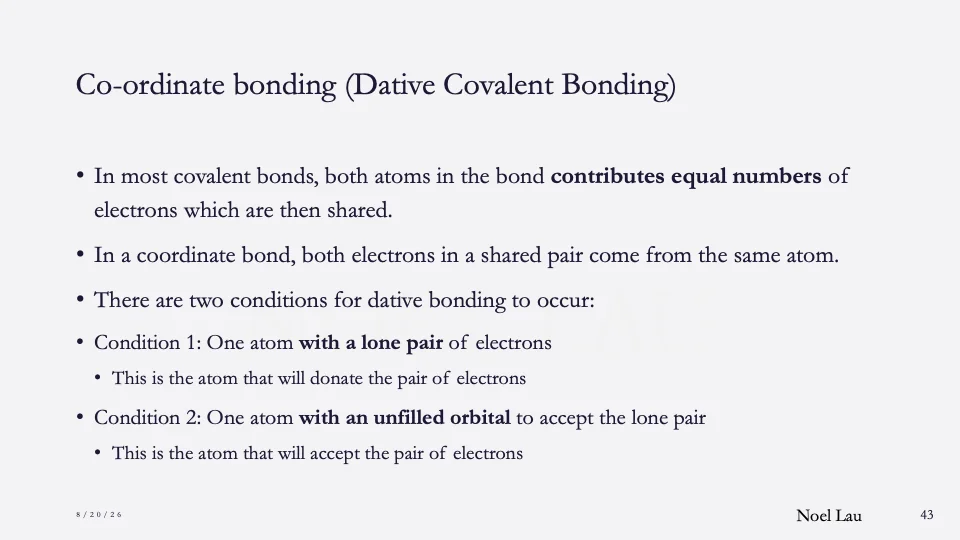
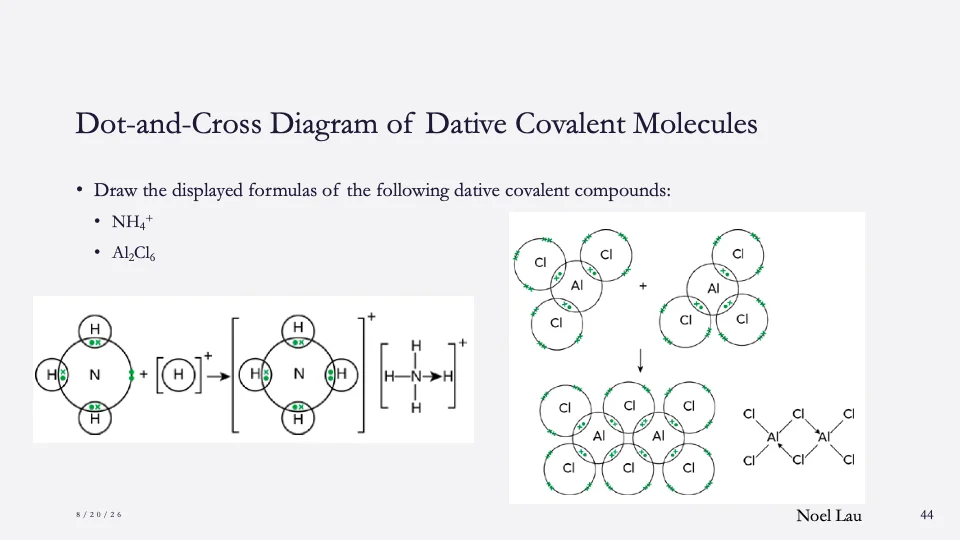
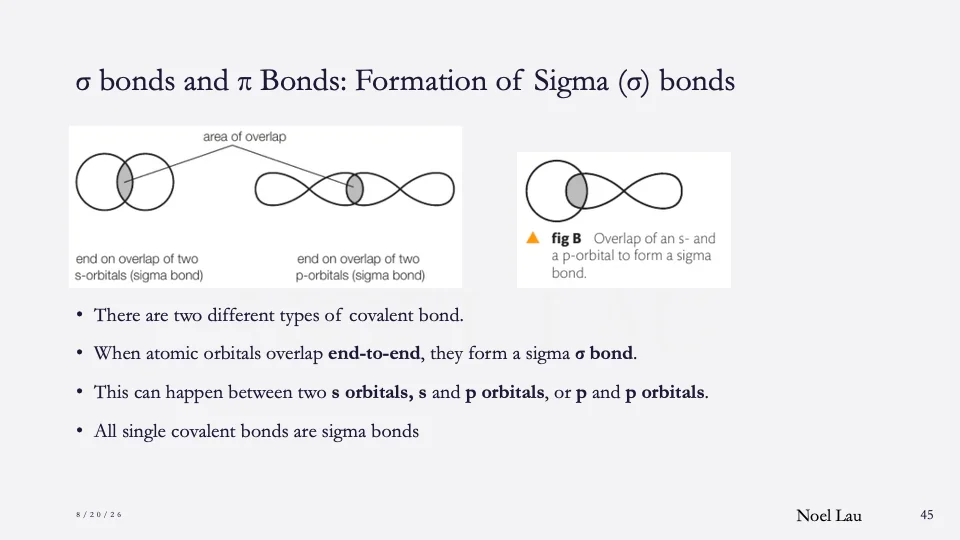
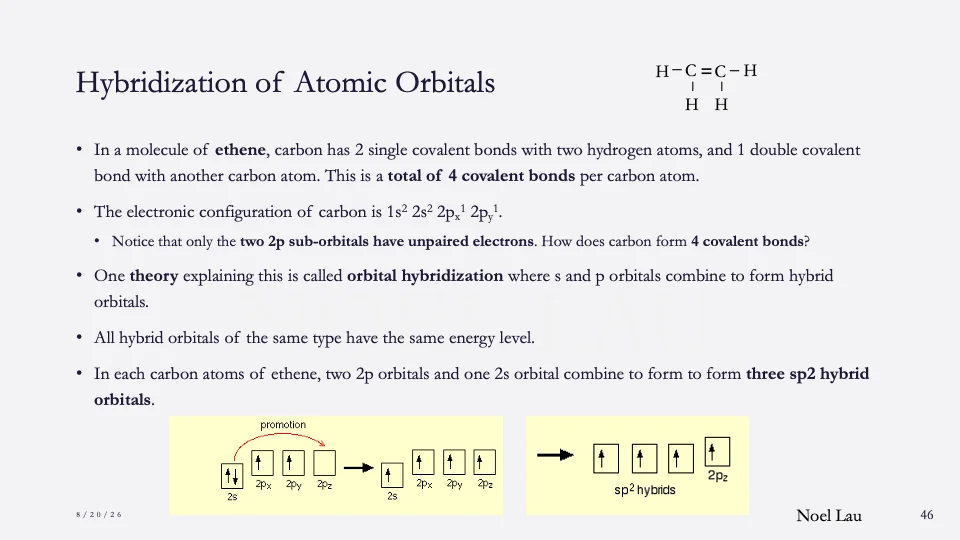
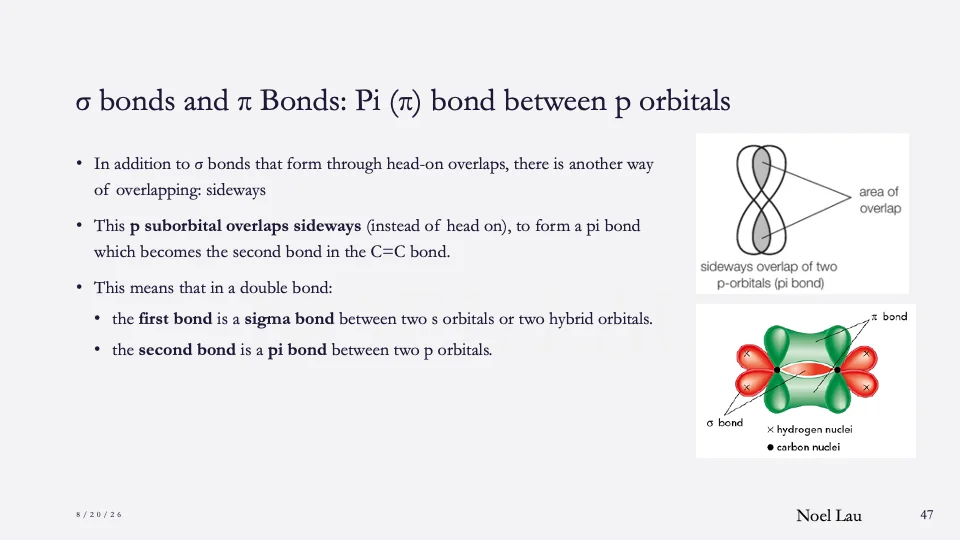
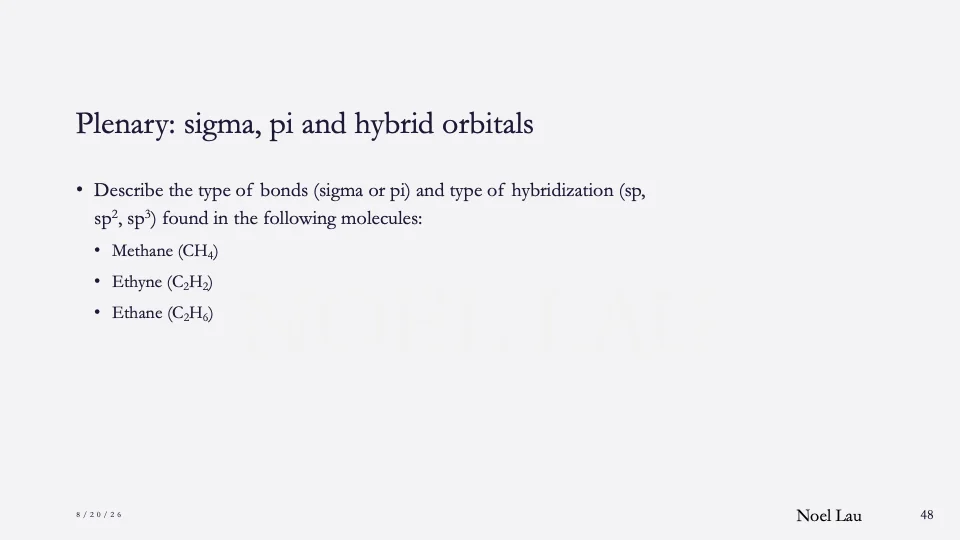
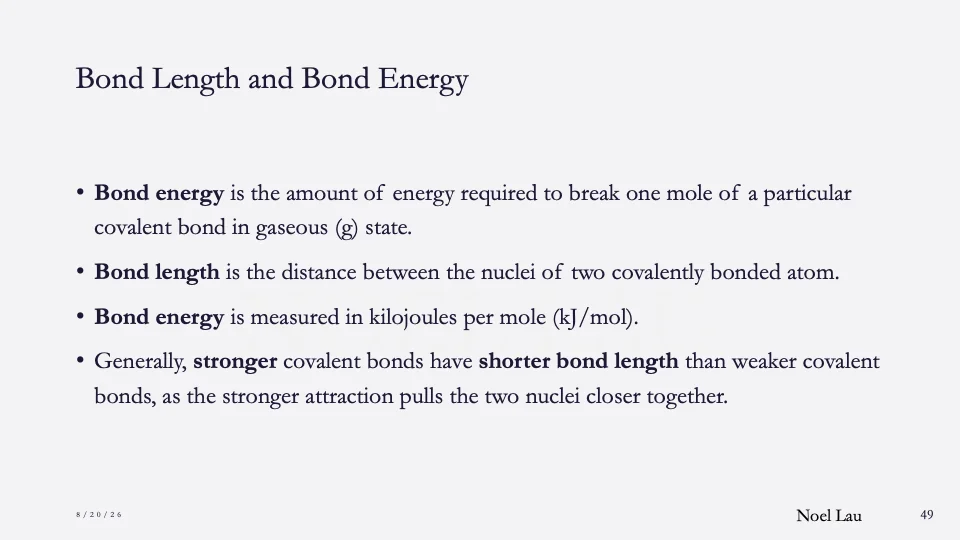
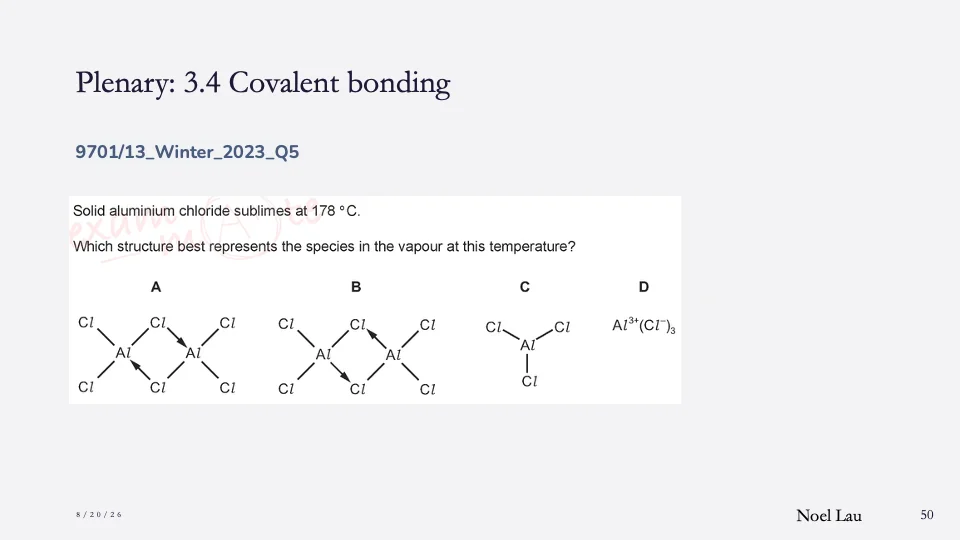
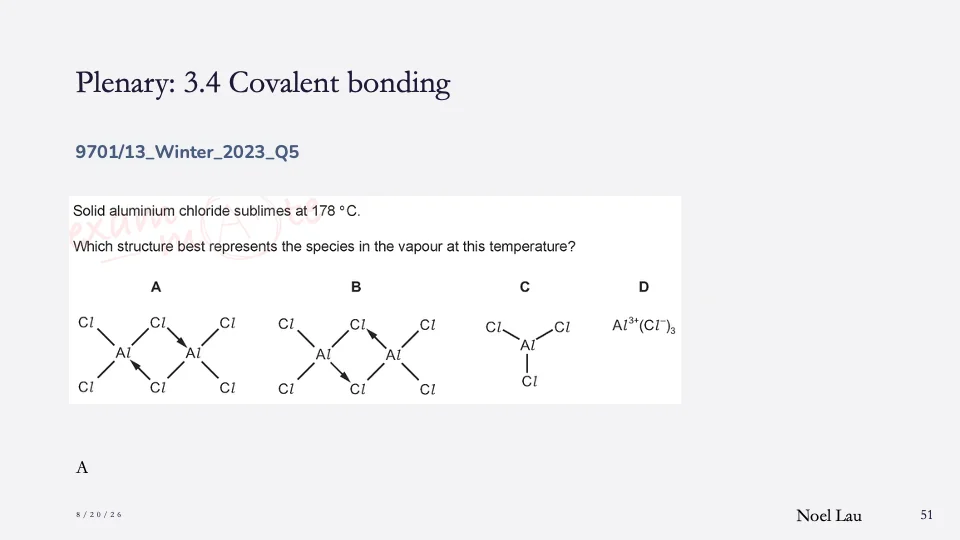
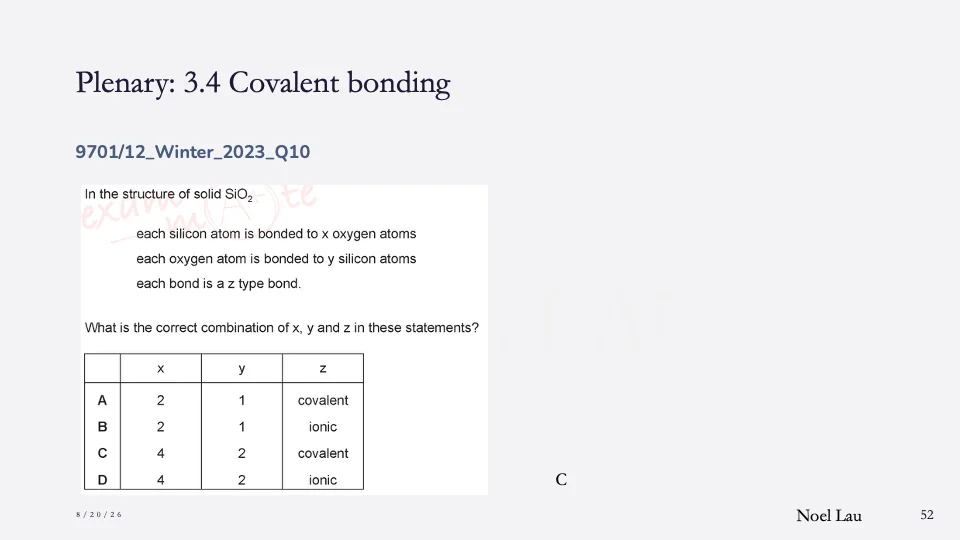
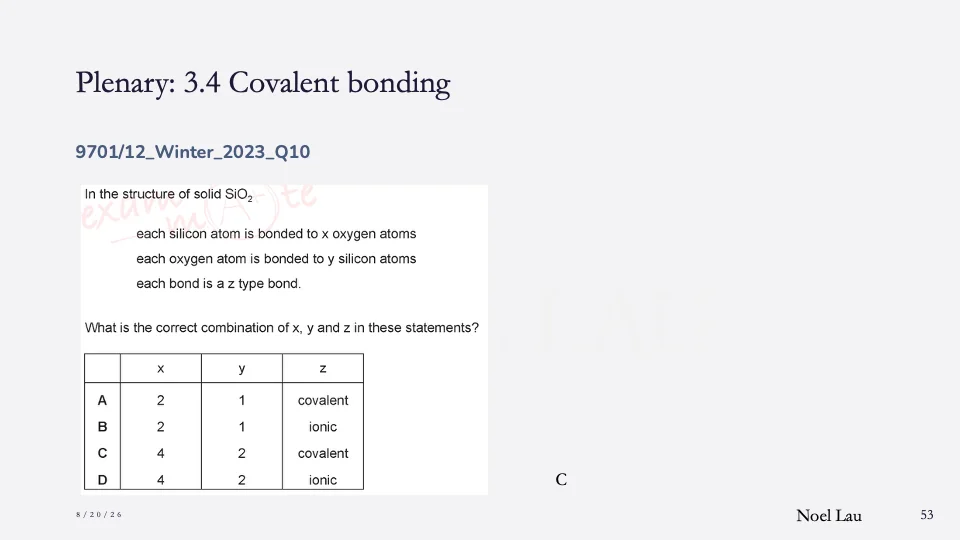
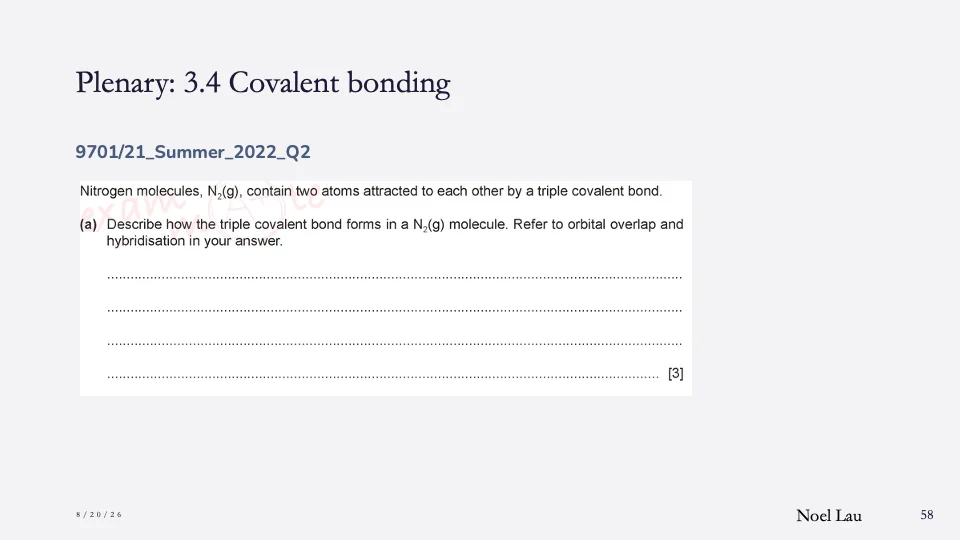
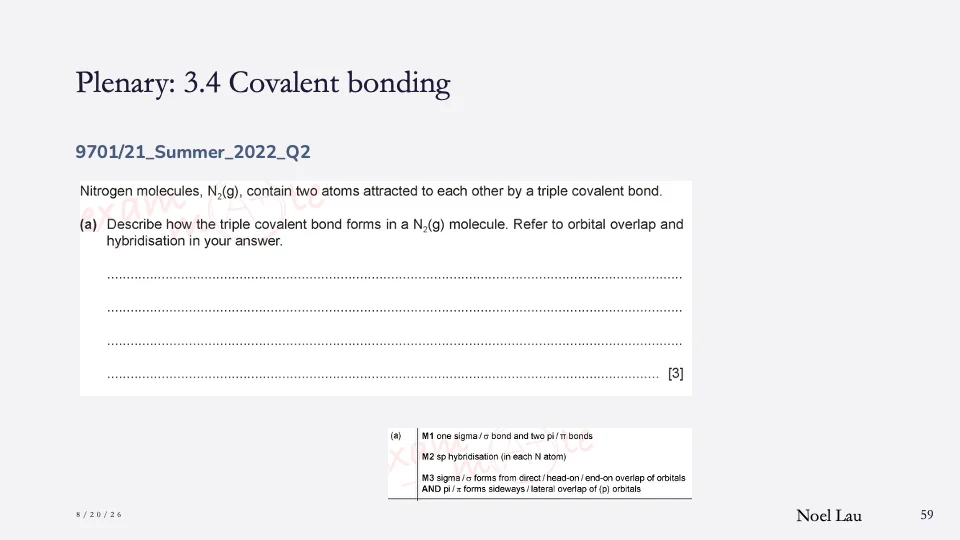
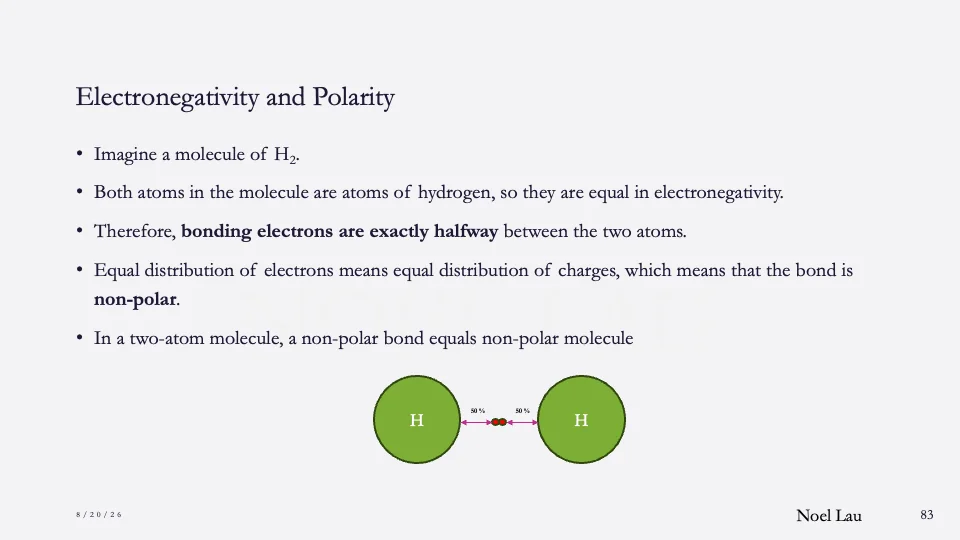
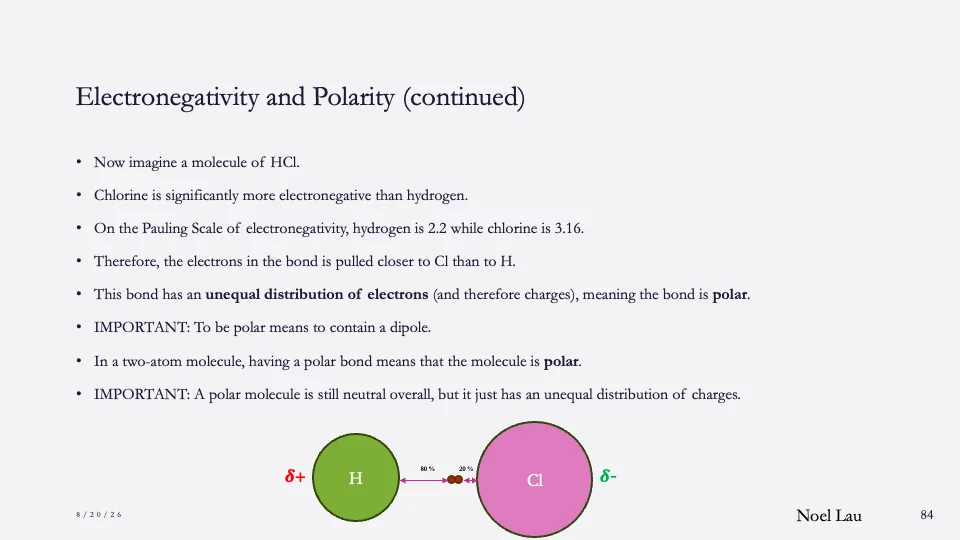
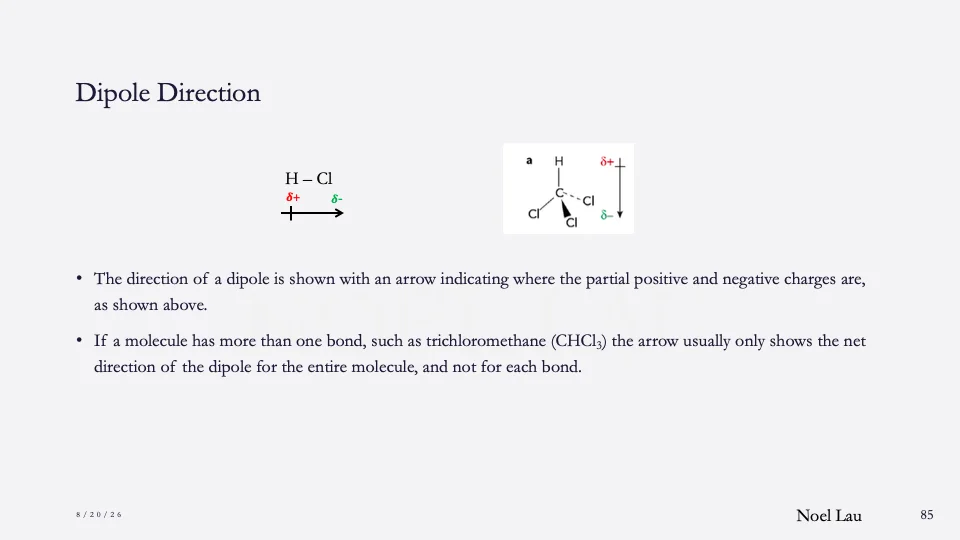
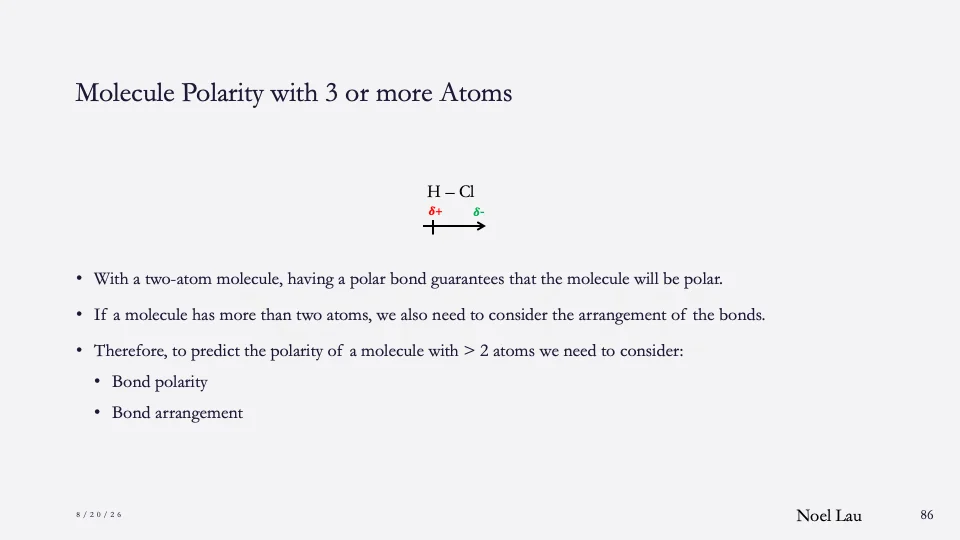
The chapter opens with electronegativity, which is defined precisely and used to rationalise the formation of ionic and covalent bonds from differences in Pauling electronegativity values. Ionic, metallic and covalent bonding are each defined in terms of electrostatic interactions, and covalent bonding is developed in considerable depth. This includes the description of sigma and pi bond formation through orbital overlap, the concept of hybridisation at sp, sp2 and sp3 centres, and the treatment of coordinate bonding as a special case in which both electrons of the shared pair are donated by one atom. Bond energy and bond length are defined and used to compare the reactivity of covalent molecules.
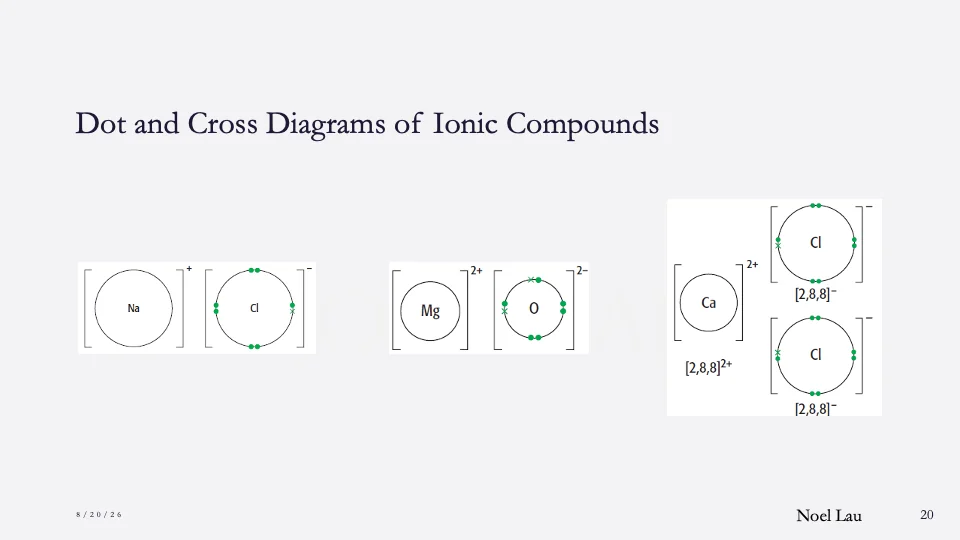
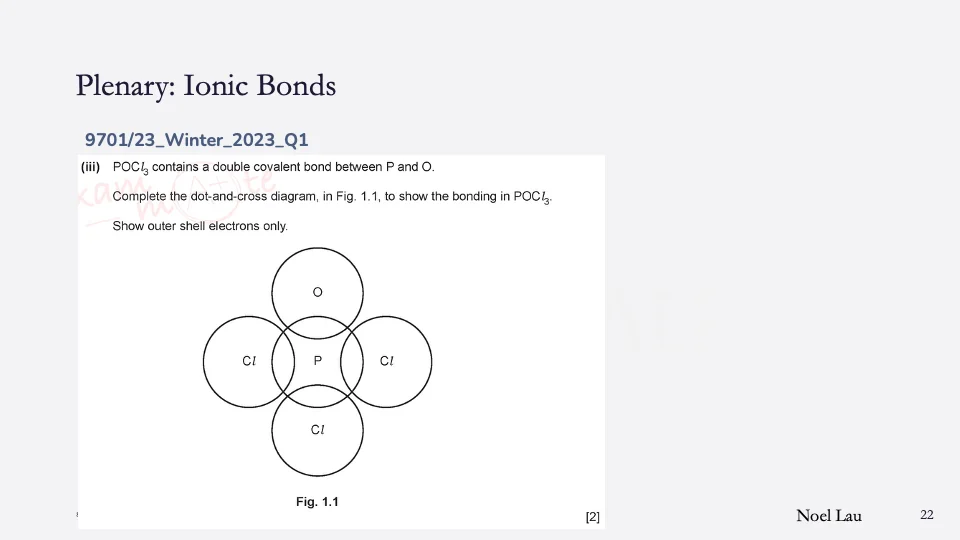
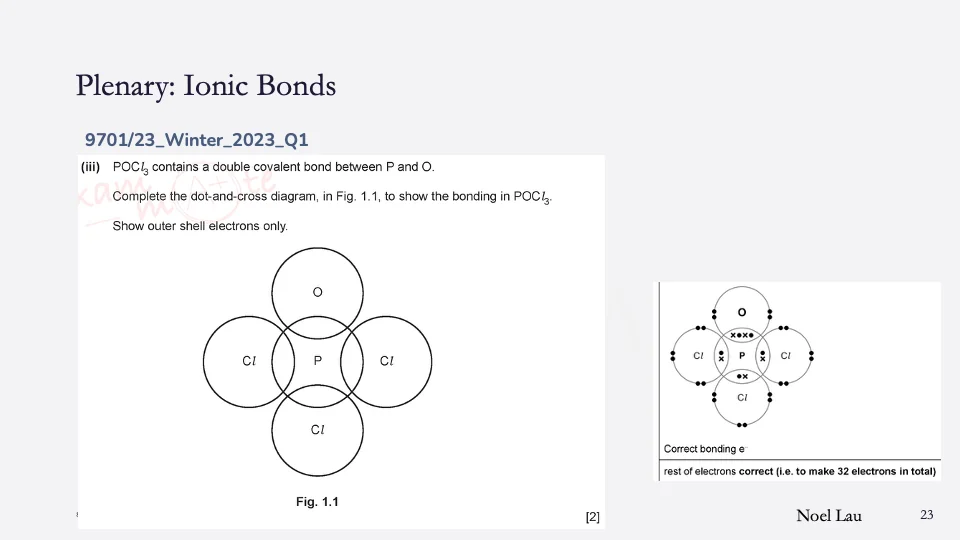
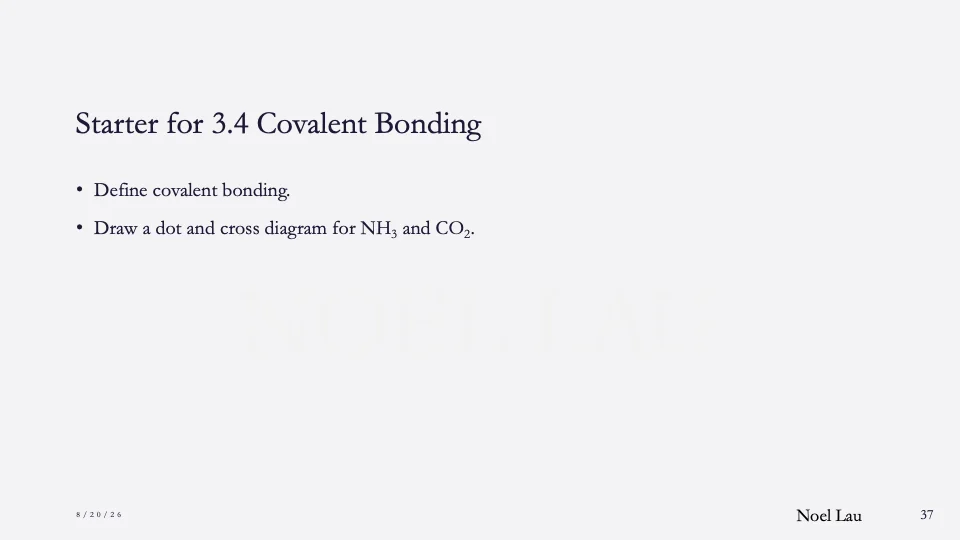
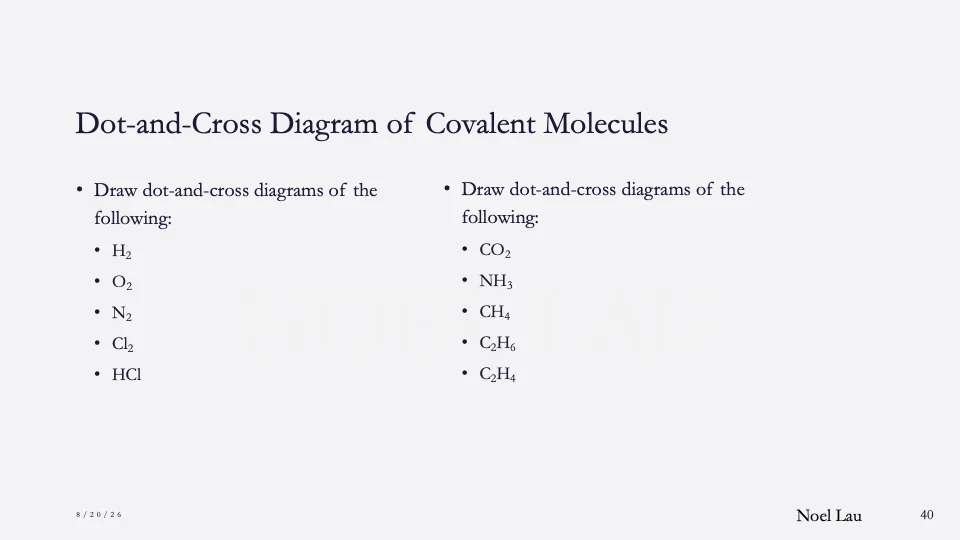
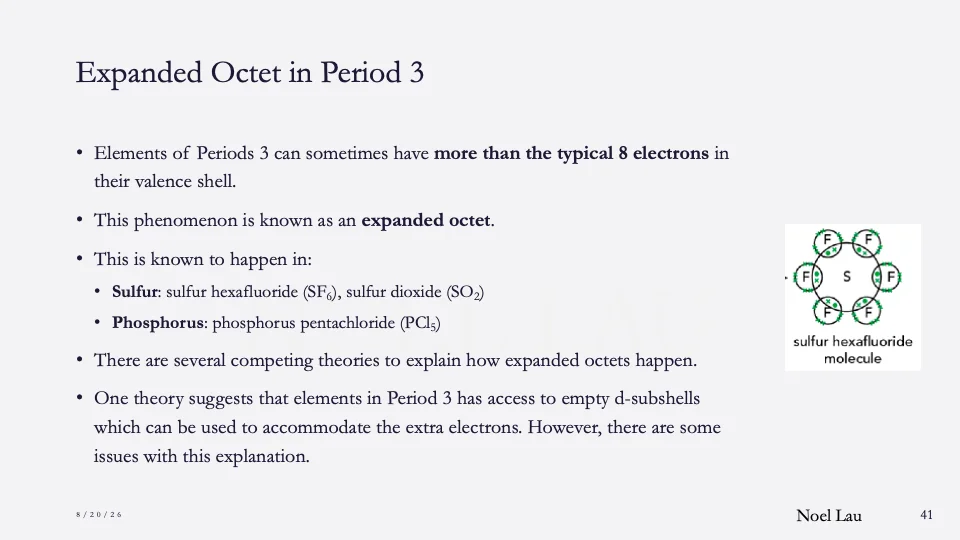
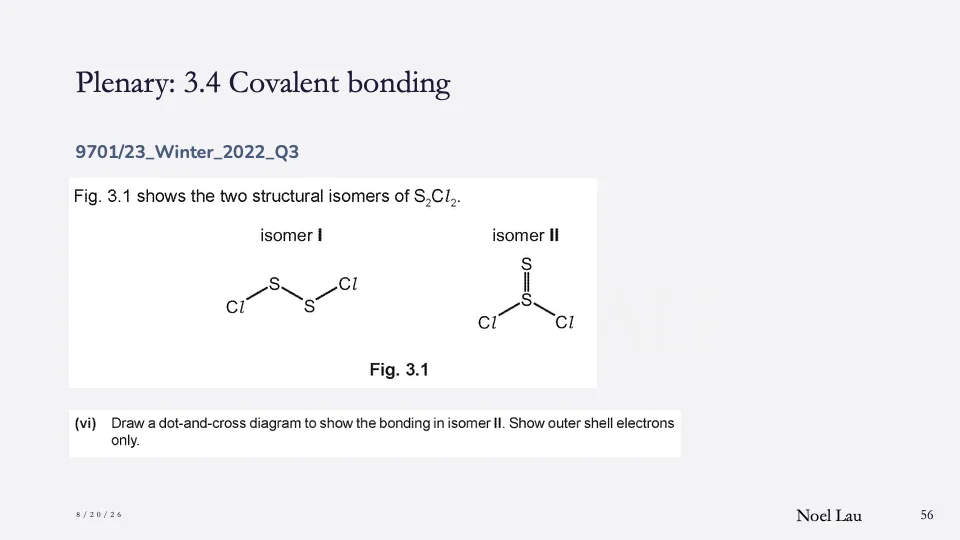
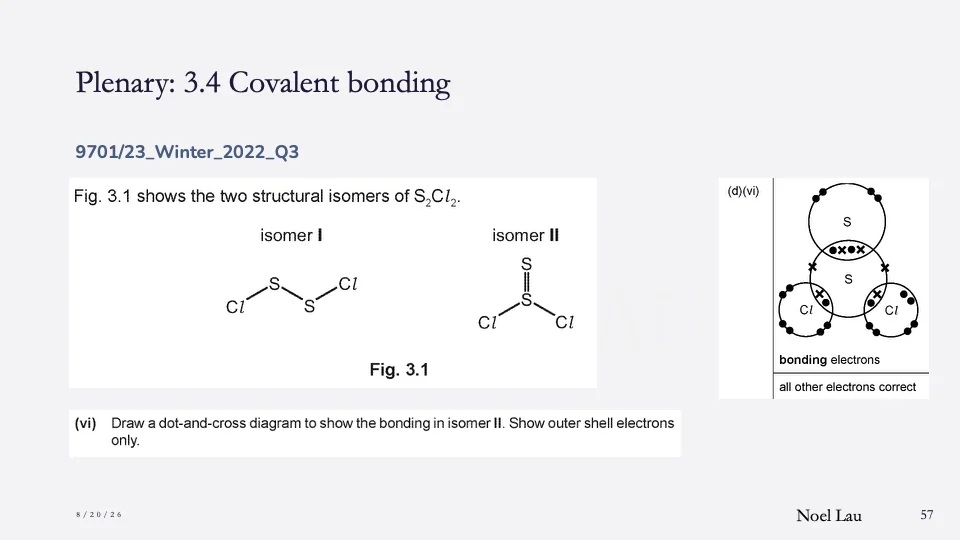
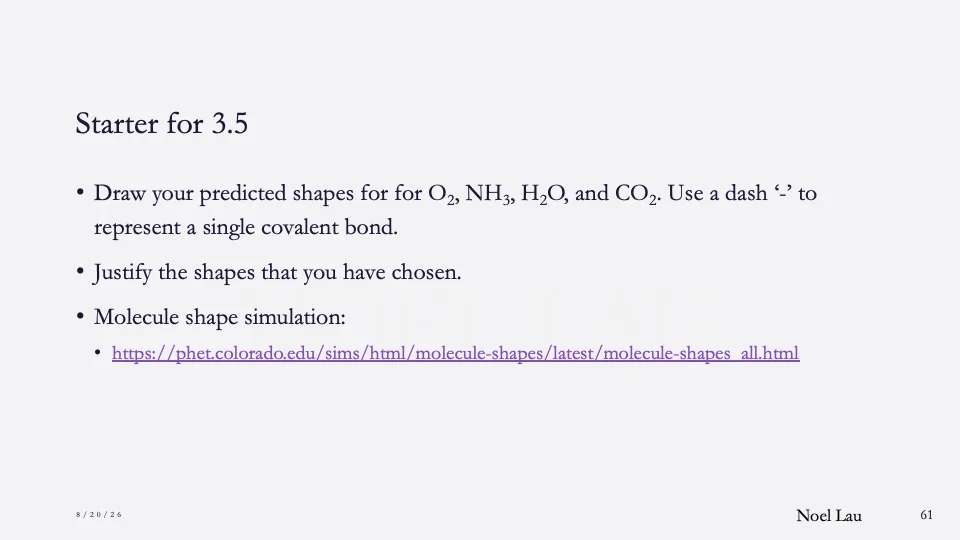
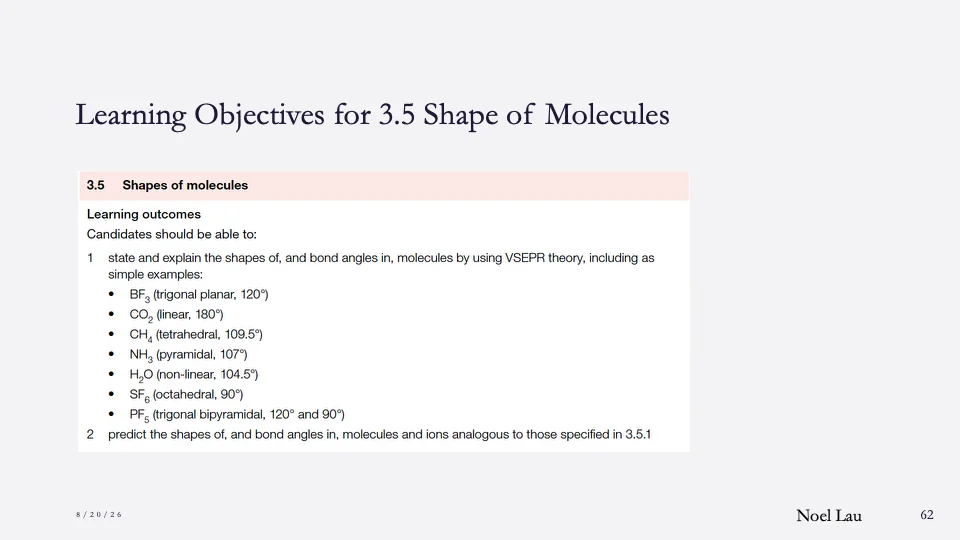
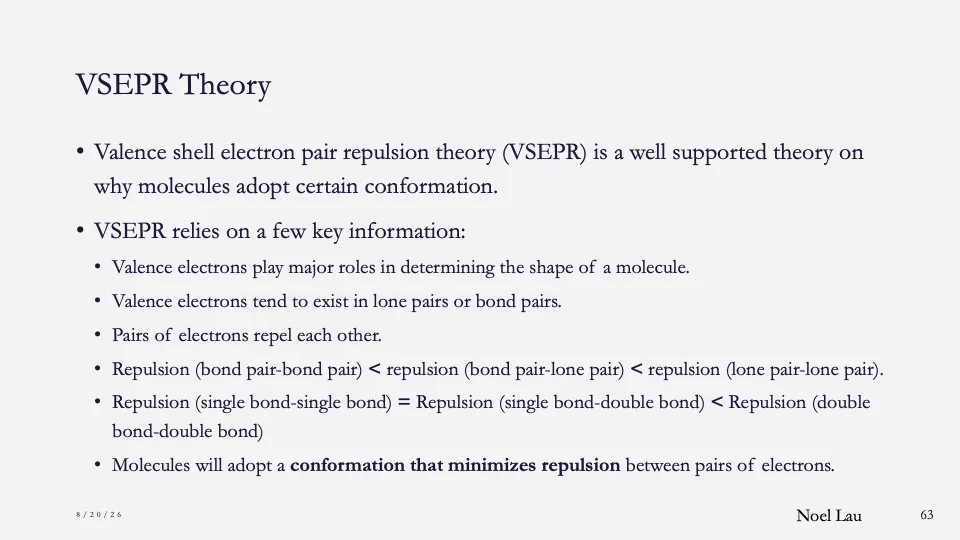
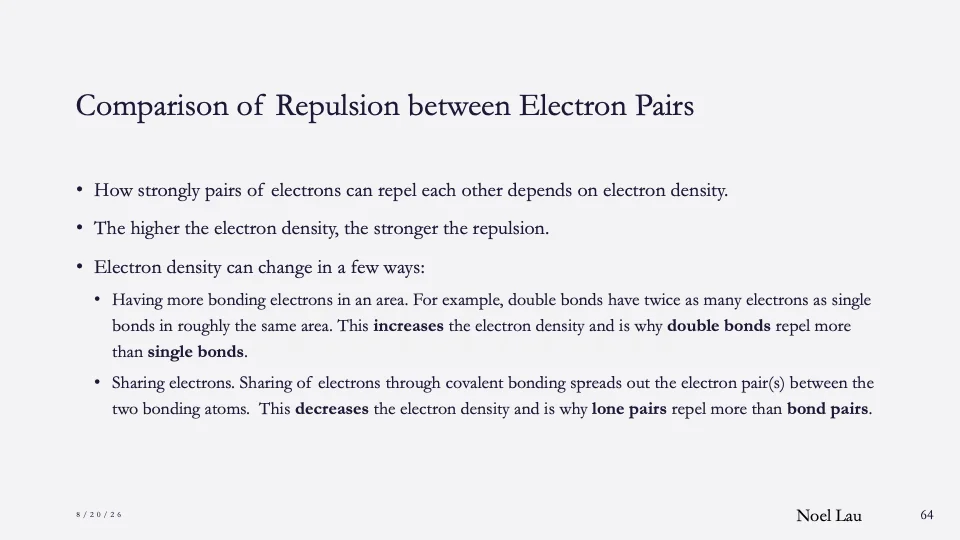
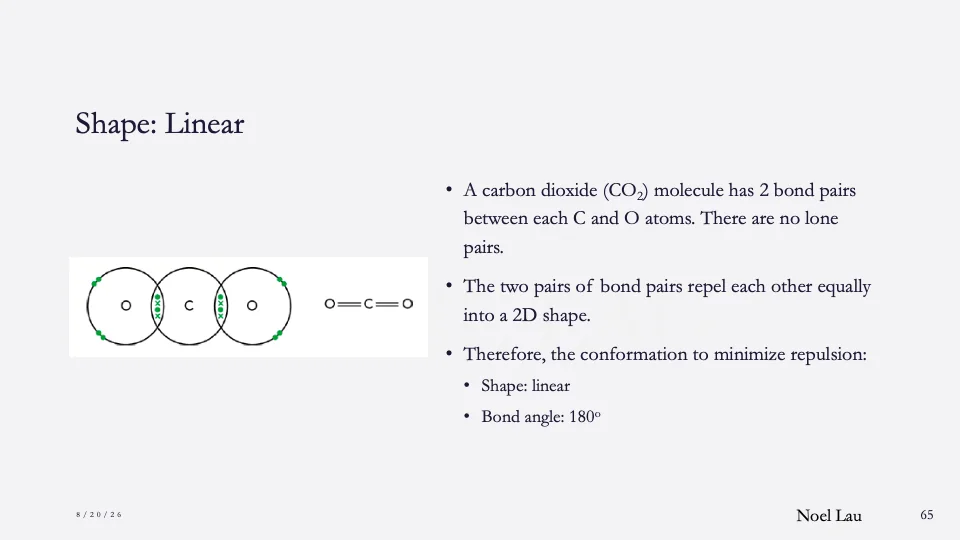
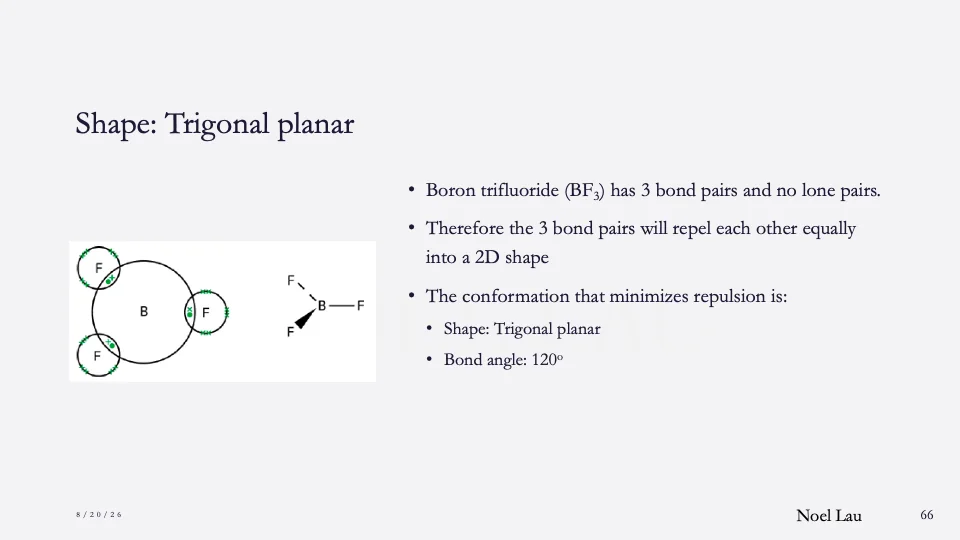
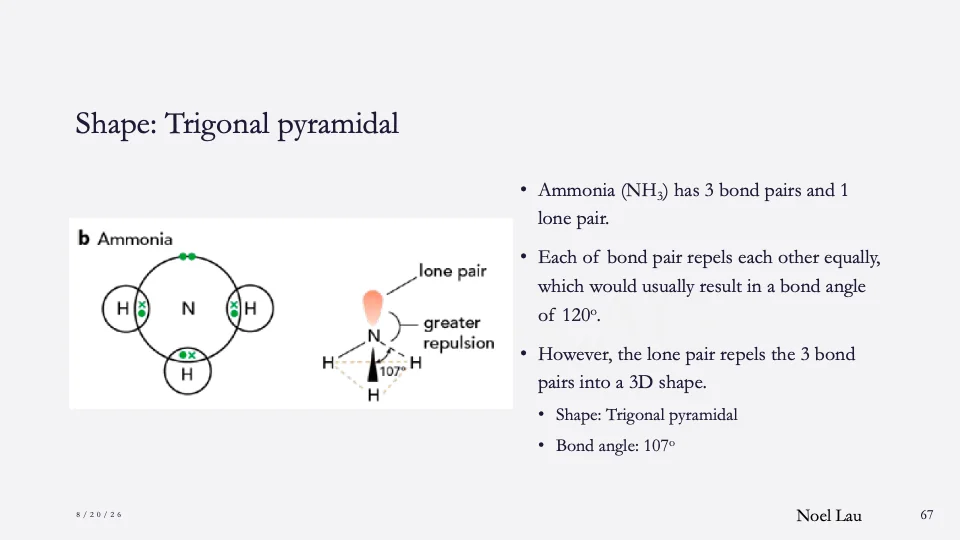
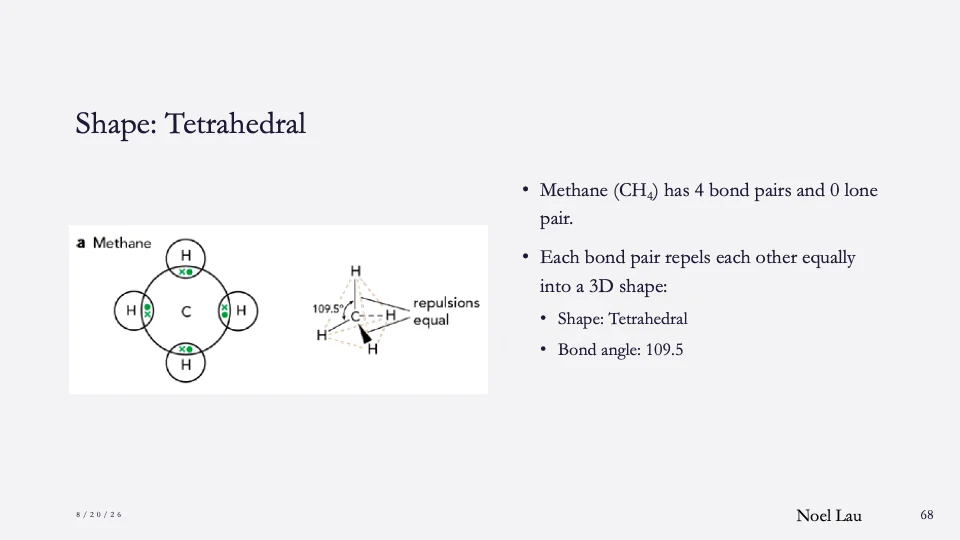
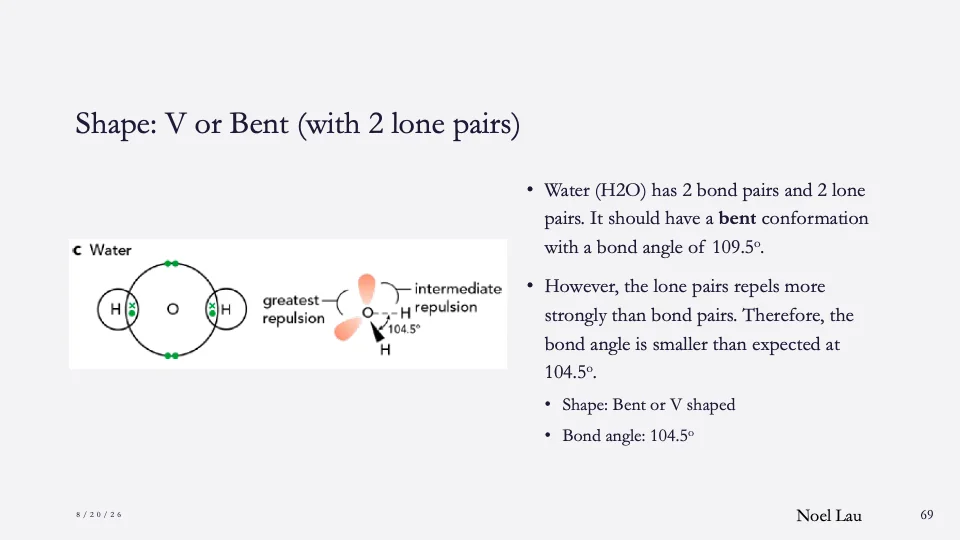
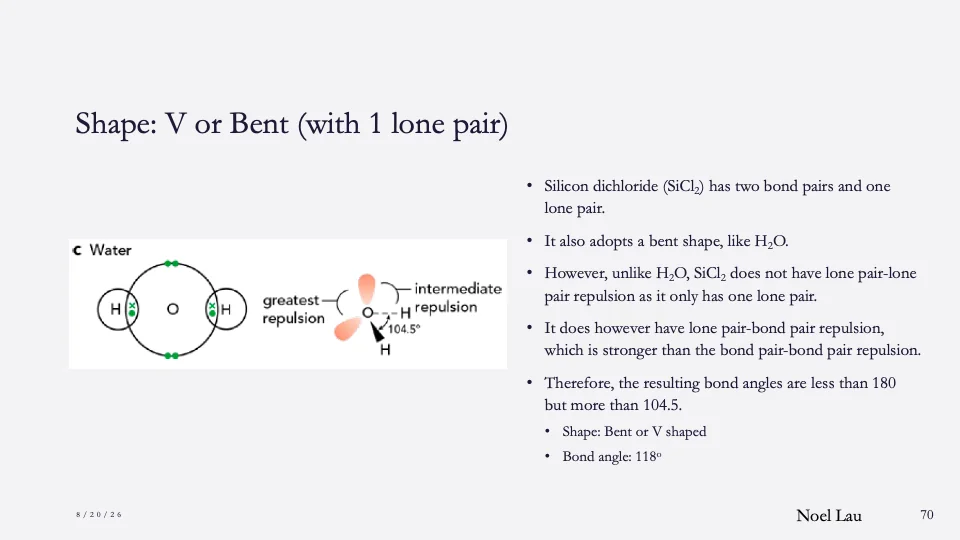
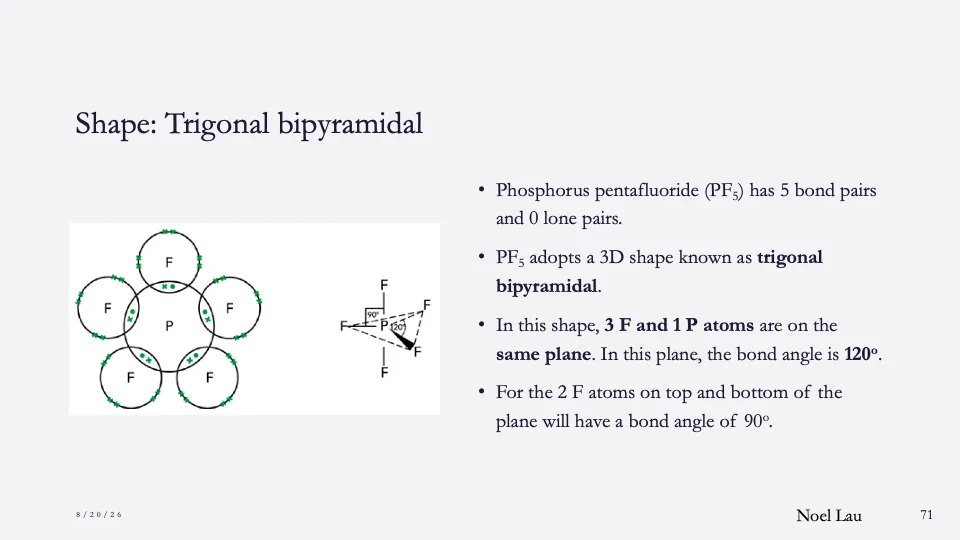
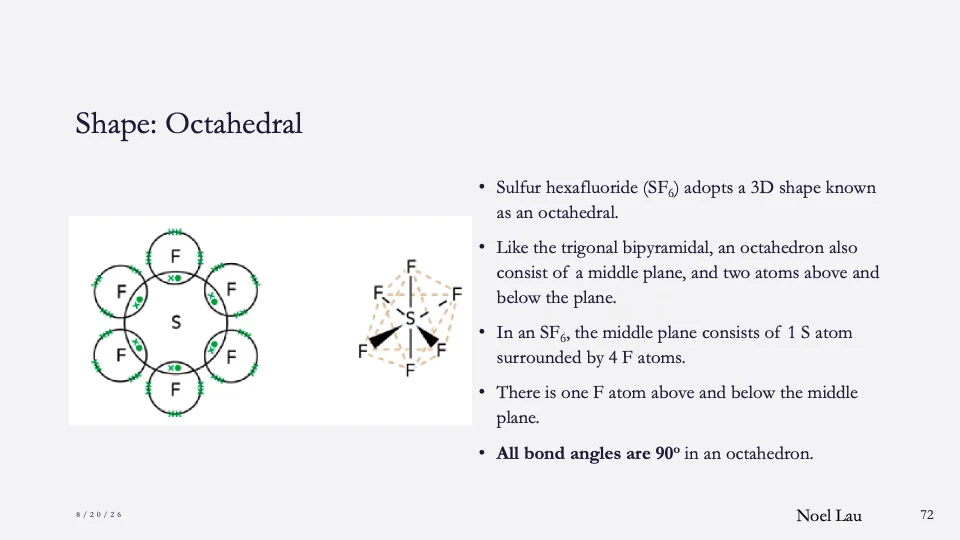
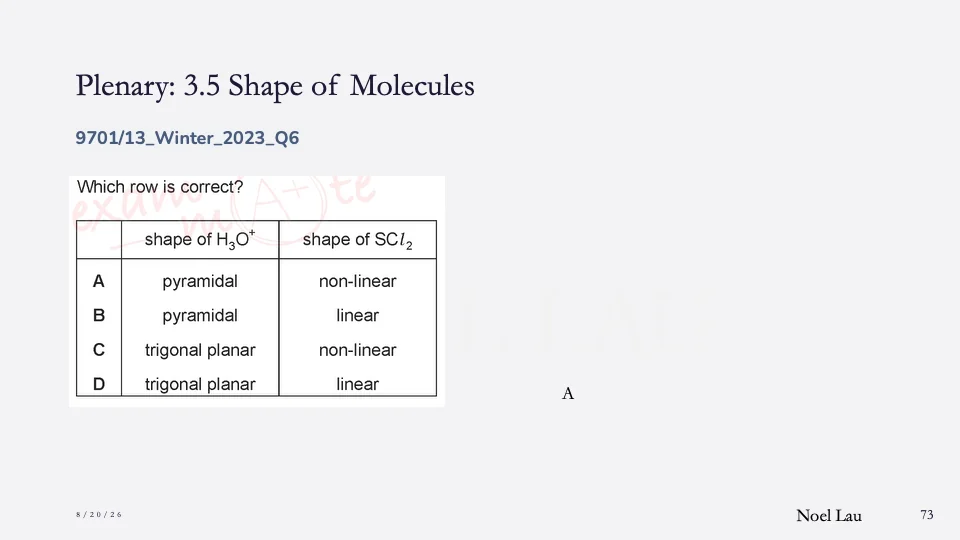
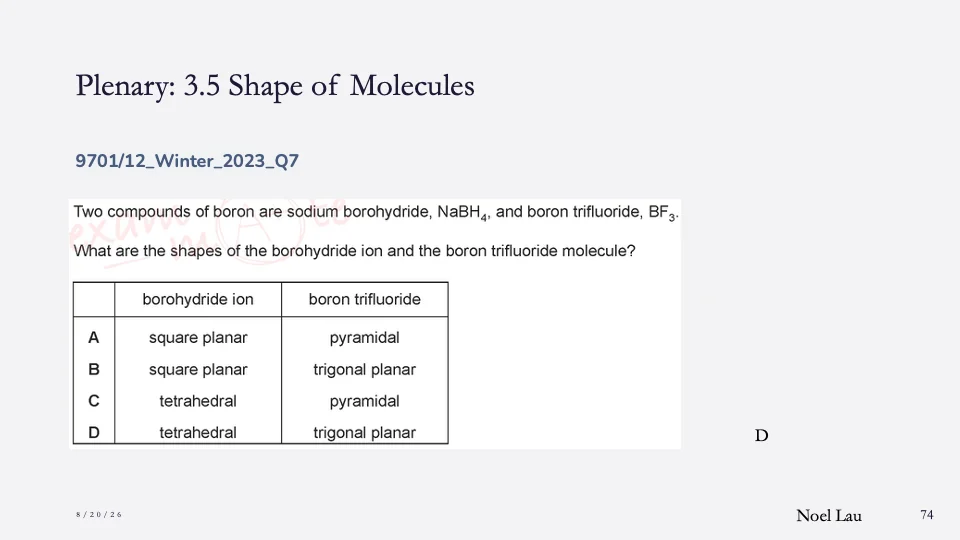
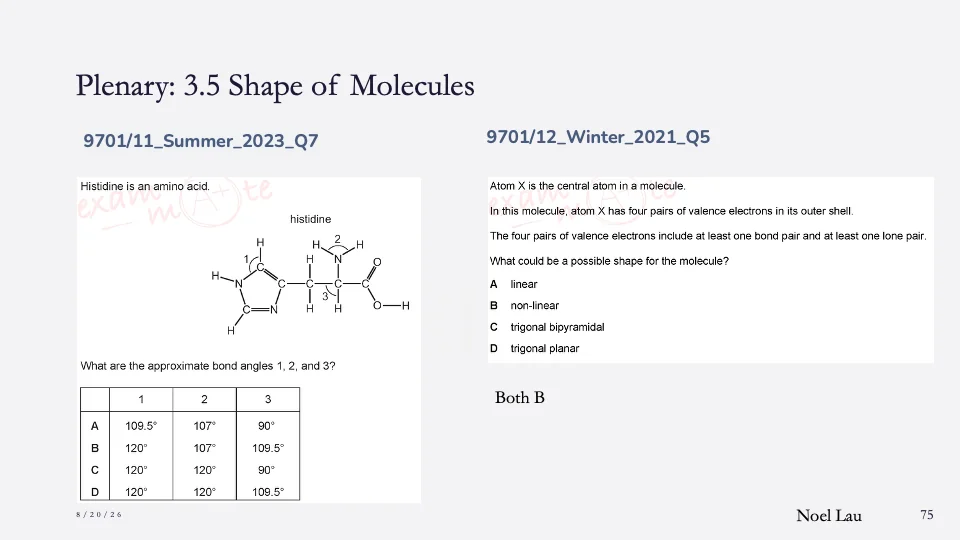
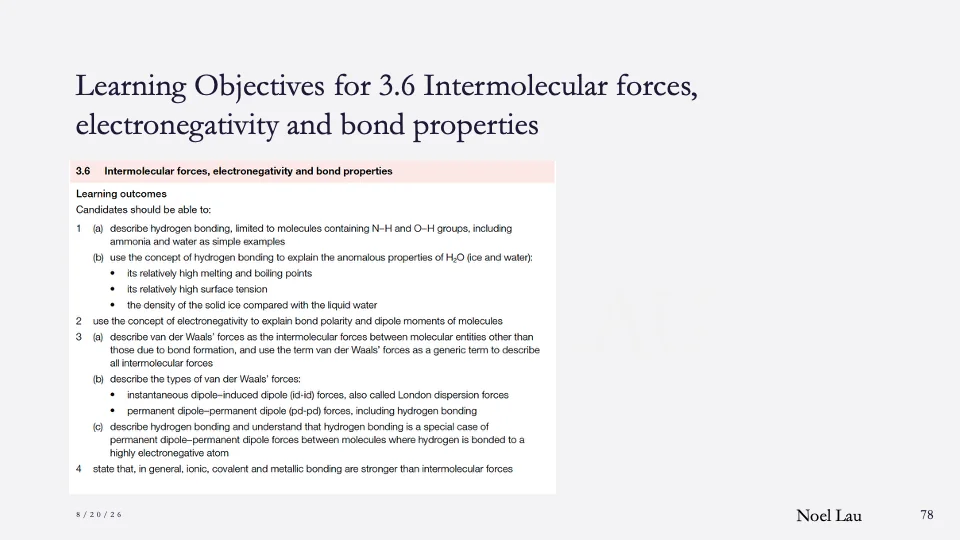
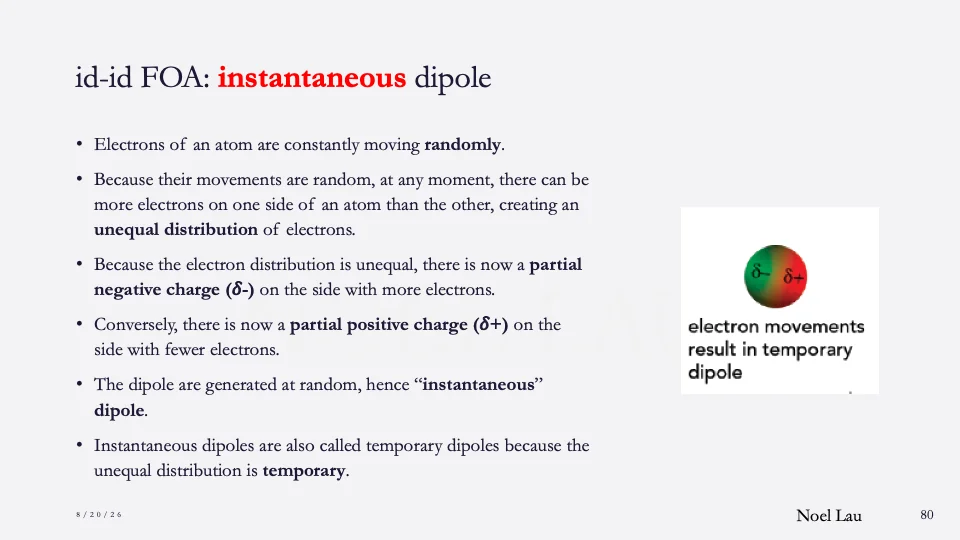
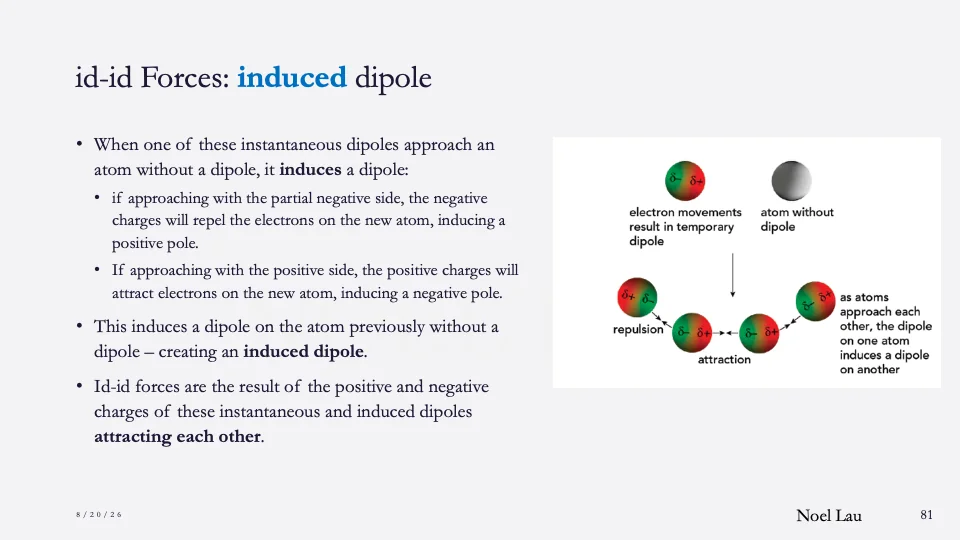
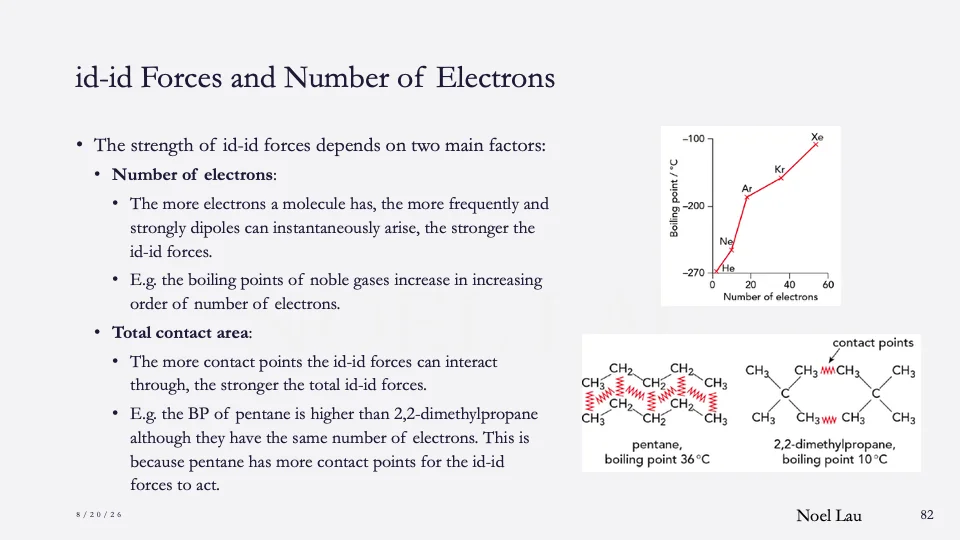
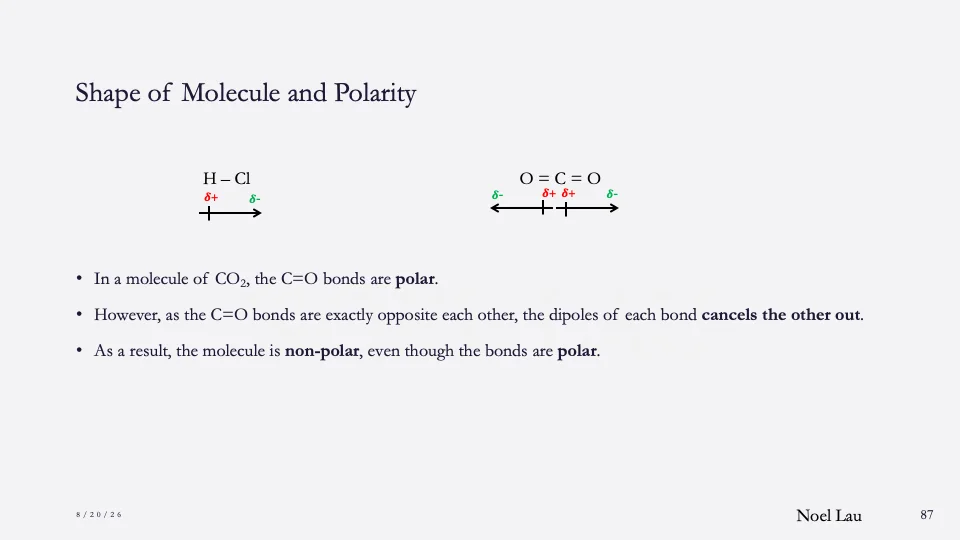
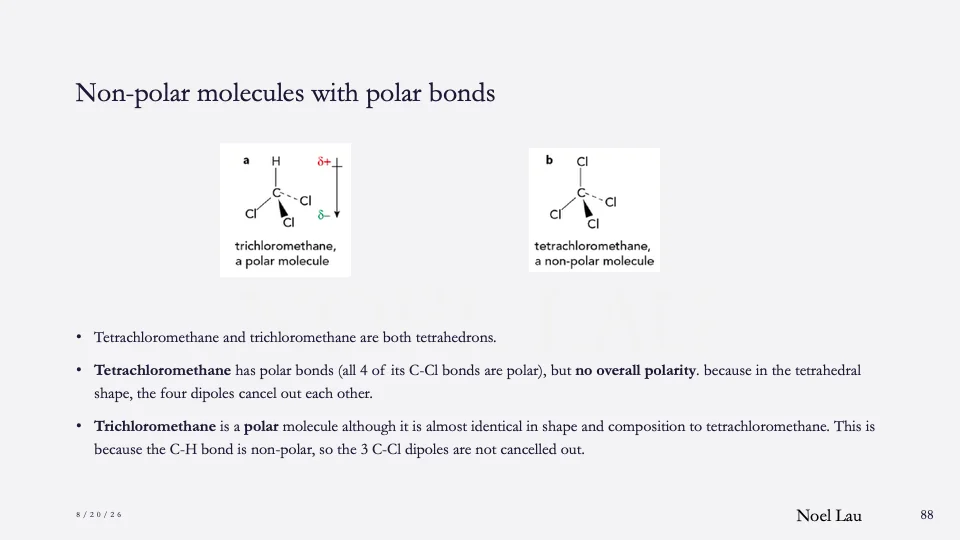
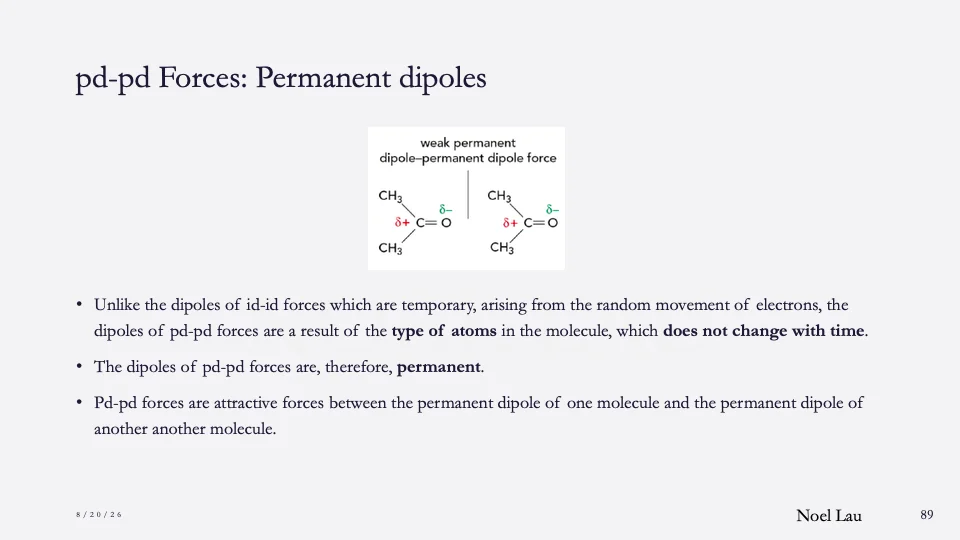
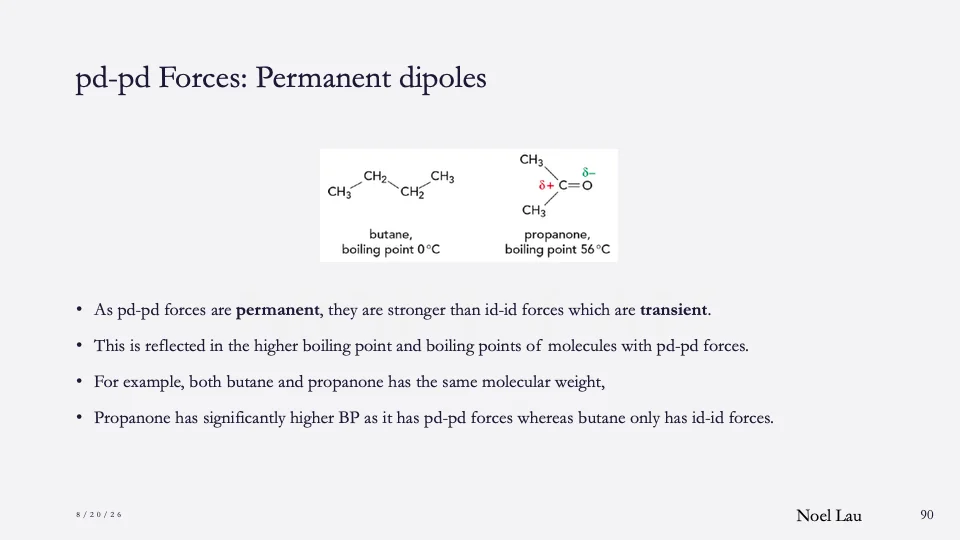
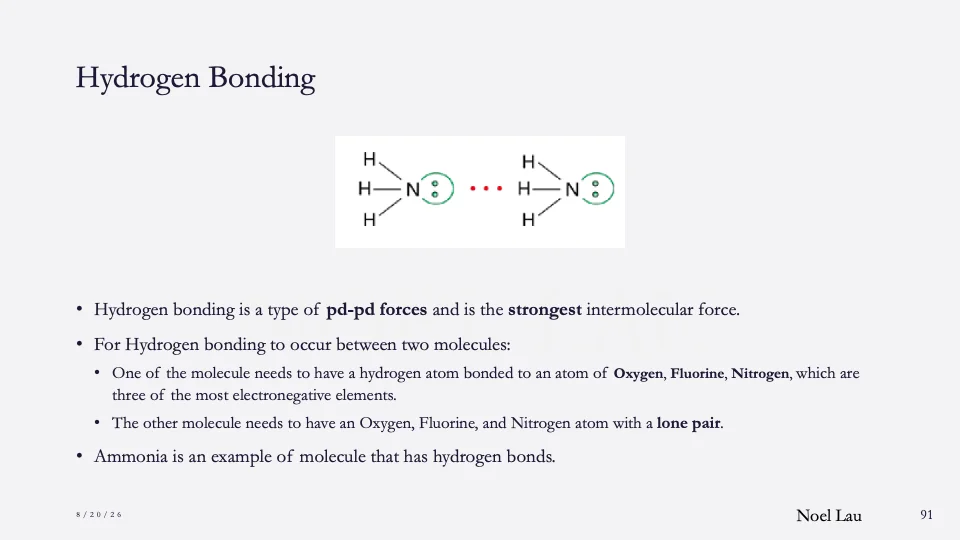
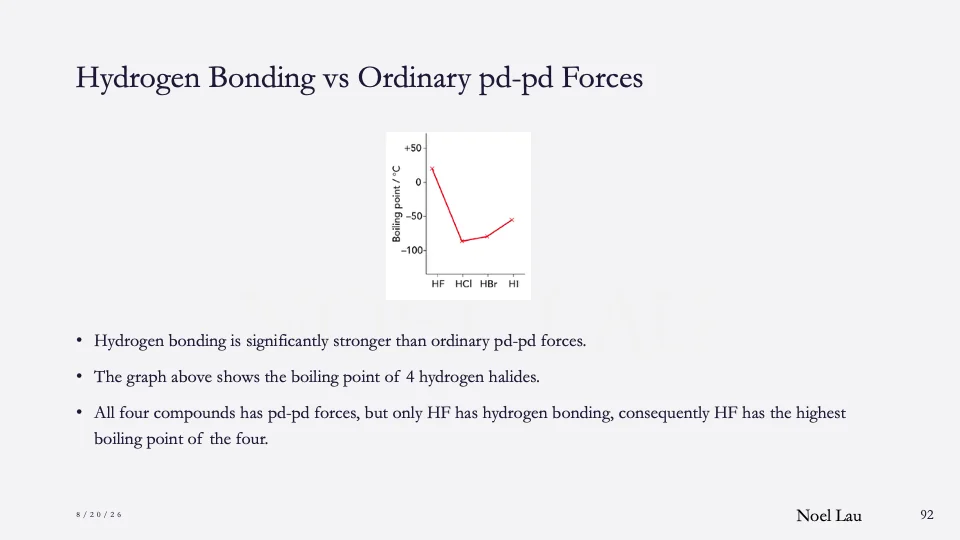
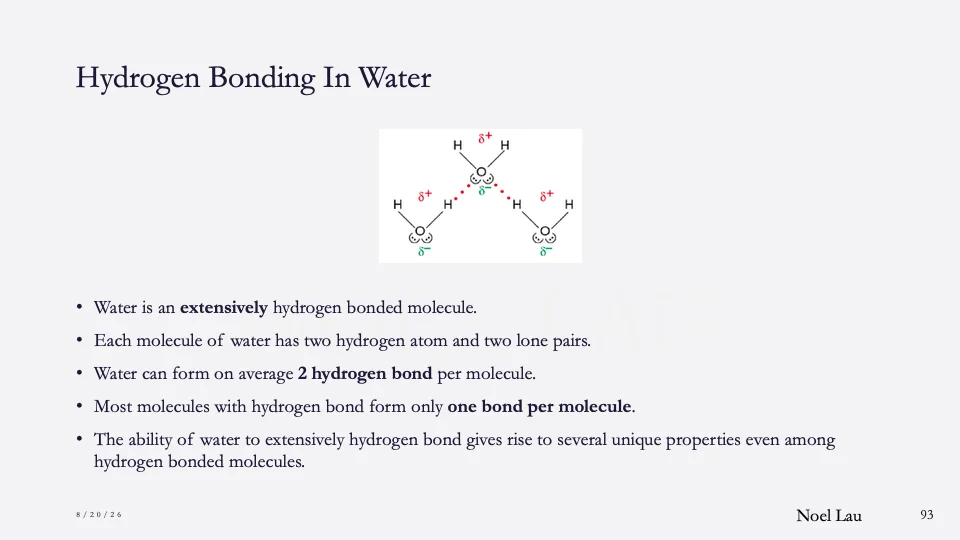
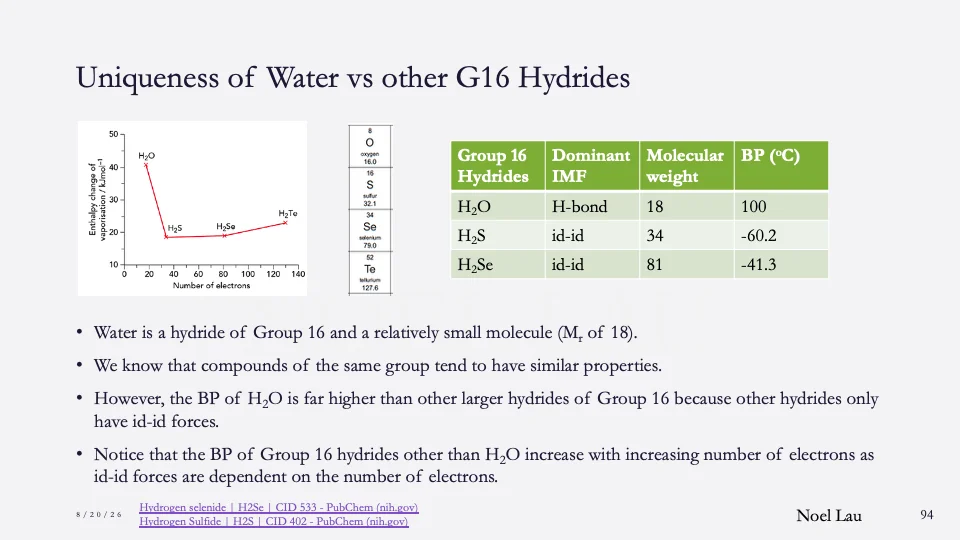
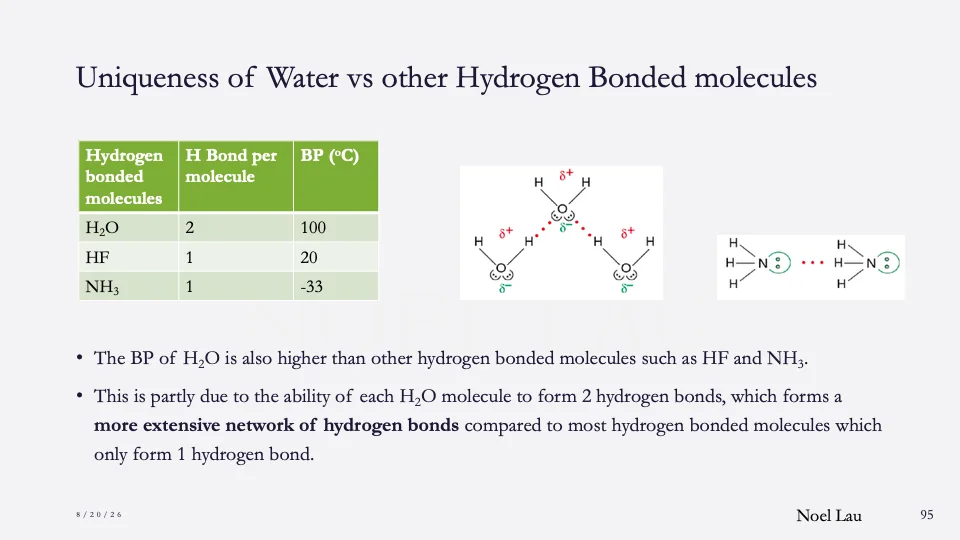
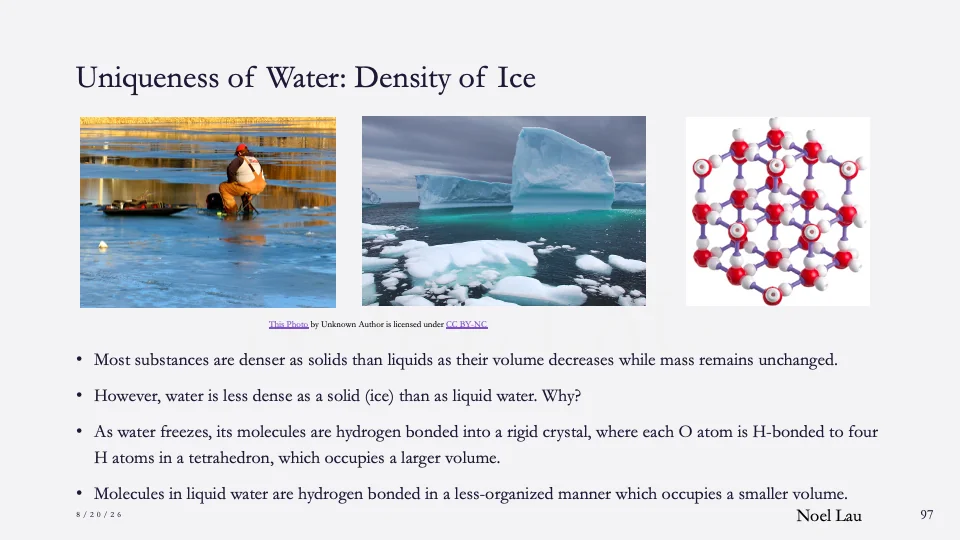
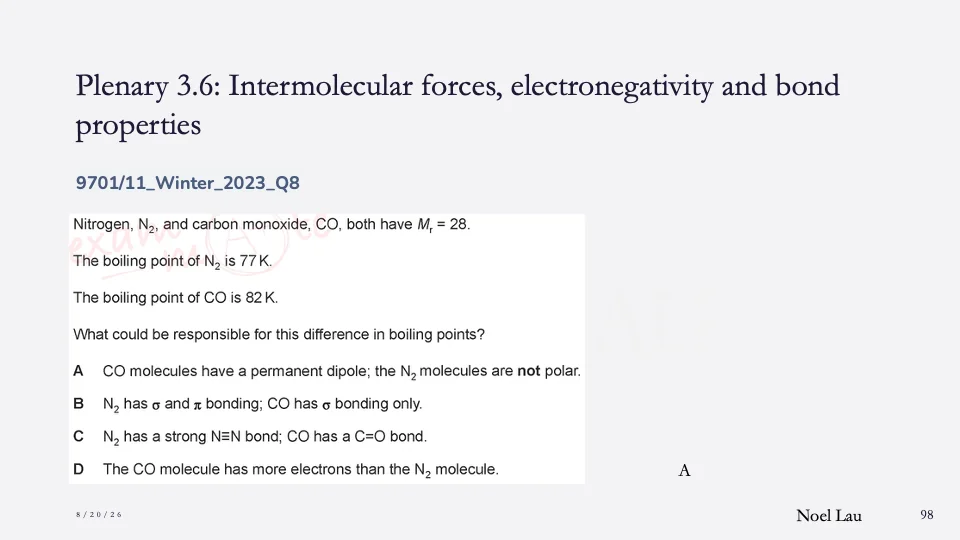
Molecular geometry is addressed through VSEPR theory, which is applied to a range of molecules and ions to predict and explain shapes and bond angles. The chapter then turns to intermolecular forces, where van der Waals' forces are treated as a generic category encompassing instantaneous dipole-induced dipole interactions, permanent dipole-permanent dipole interactions, and hydrogen bonding. The anomalous properties of water are rationalised in terms of hydrogen bonding. The chapter concludes with dot-and-cross diagrams, which provide a visual representation of bonding across all bond types covered, including species with expanded octets and odd numbers of electrons.