Introduction (2. Atoms, Molecules and Stoichiometry)
Chapter 2 develops the quantitative language of chemistry, providing the mathematical and conceptual tools required to describe chemical composition and to perform calculations involving reactions. The chapter bridges the atomic scale, where chemistry occurs, and the macroscopic scale, where measurements are made.
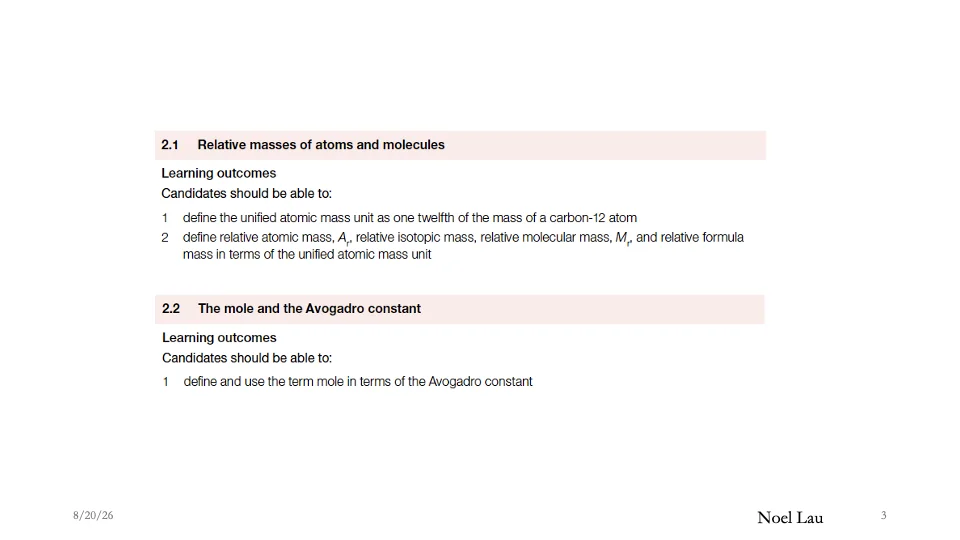
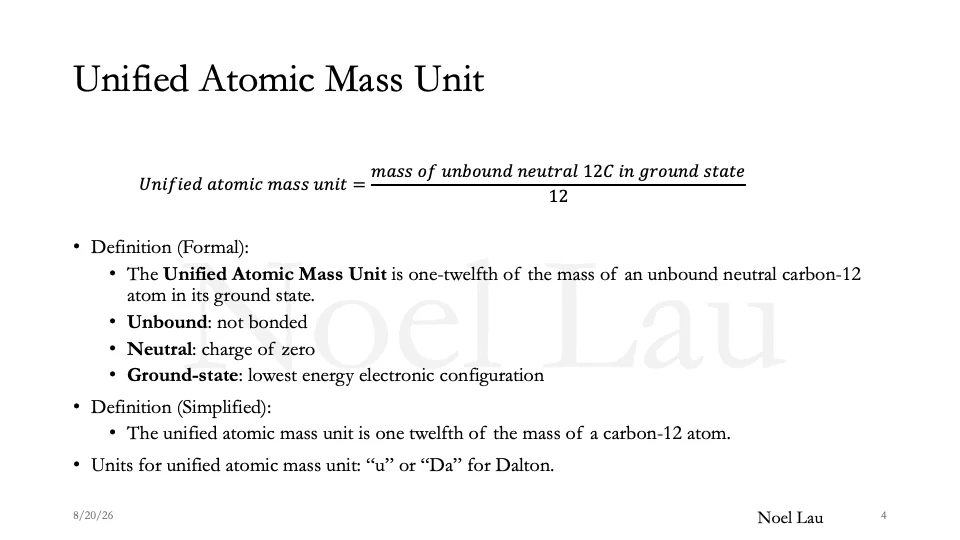
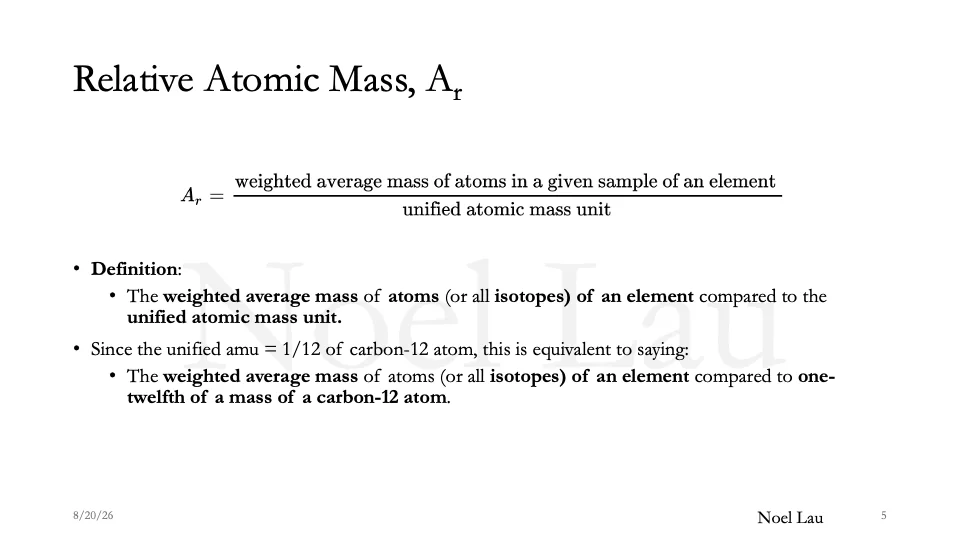
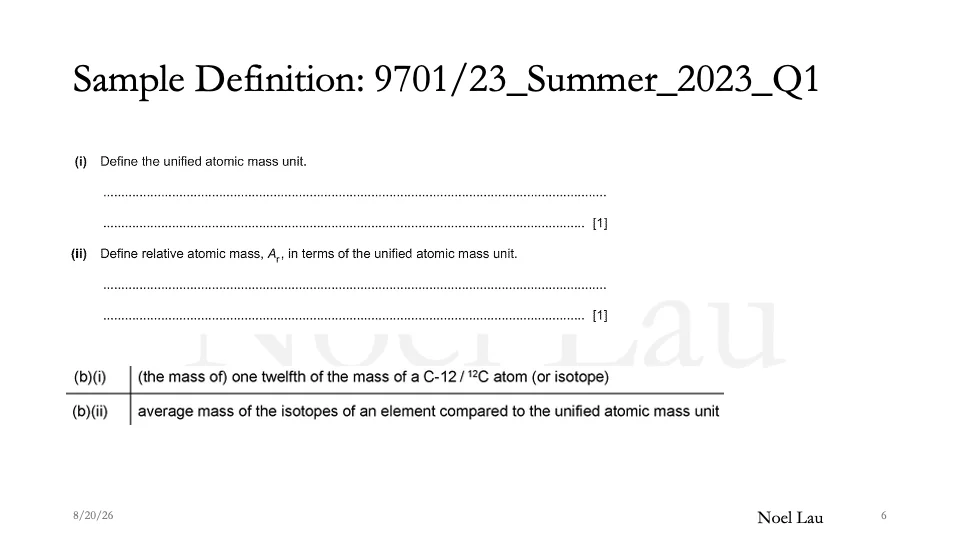
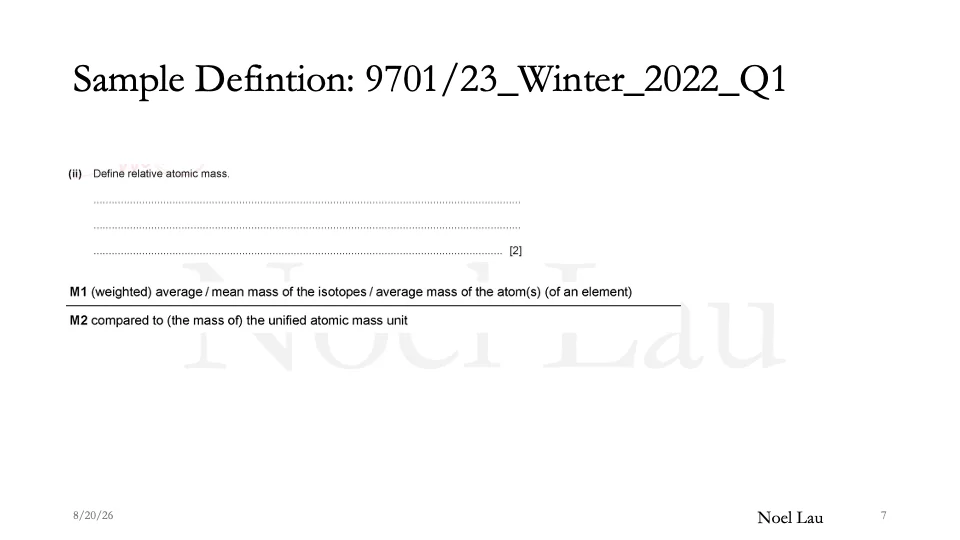
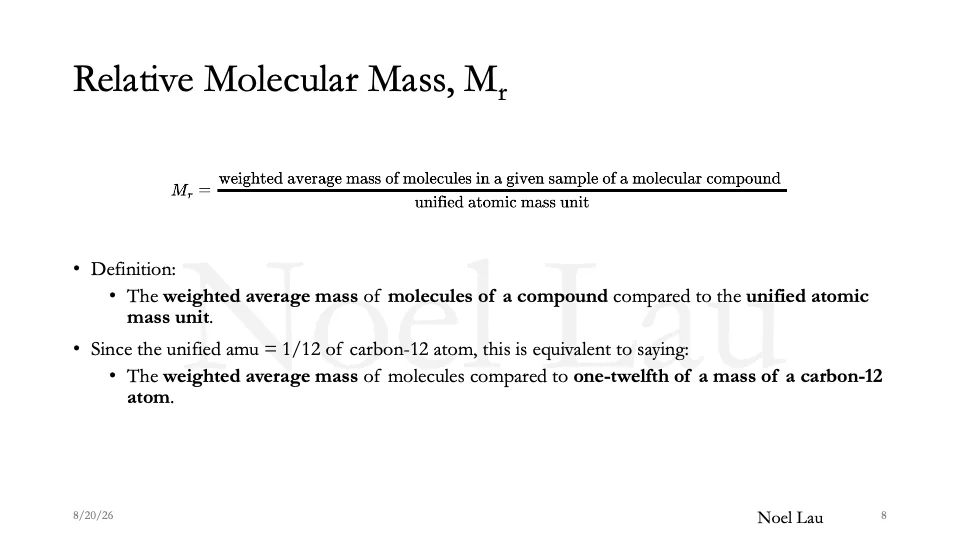
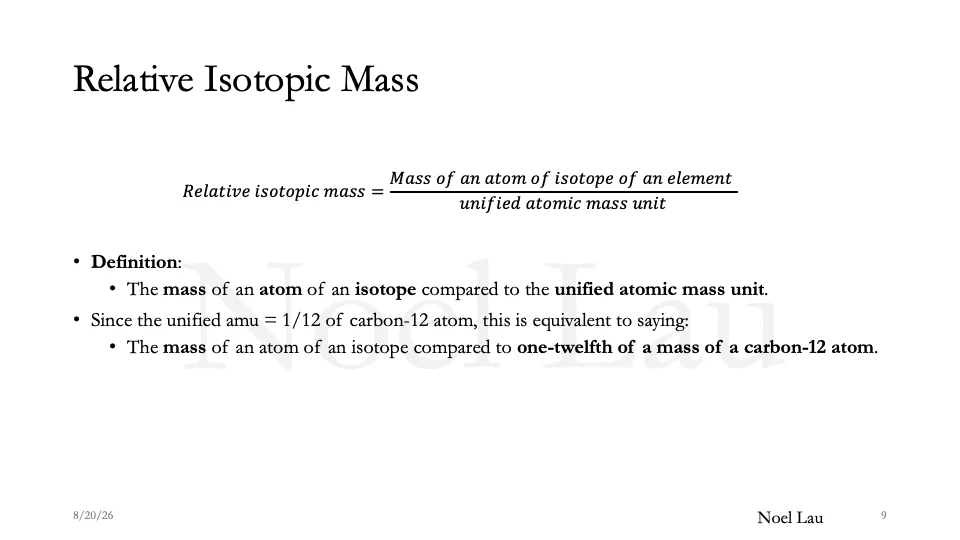
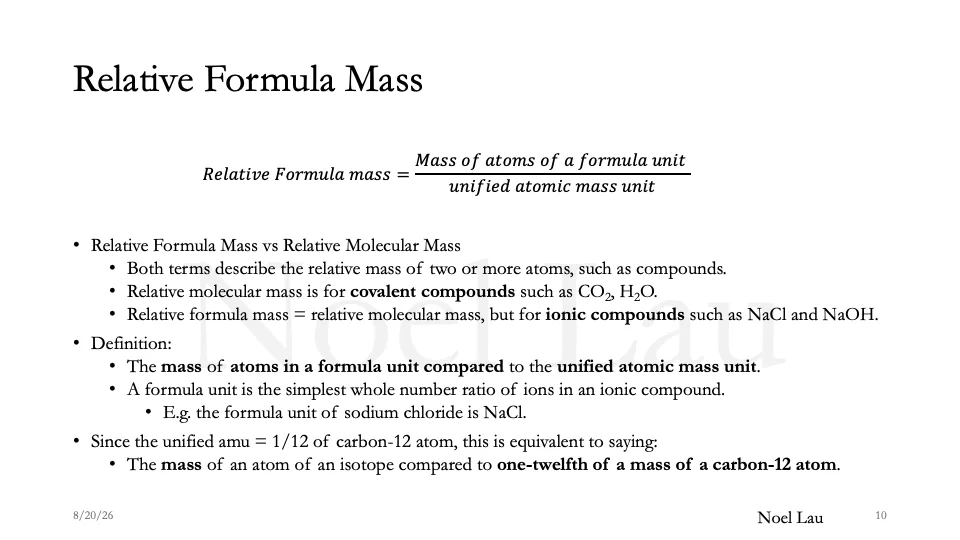
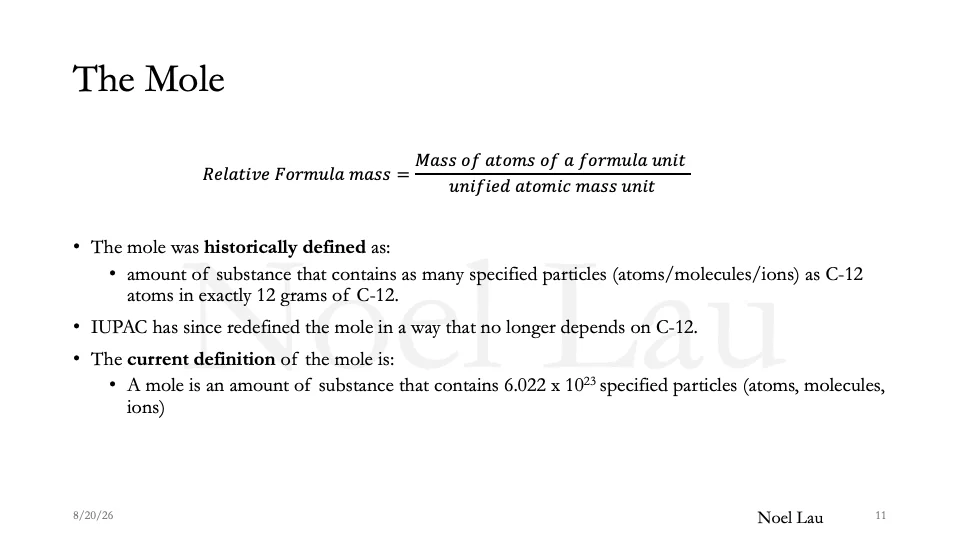
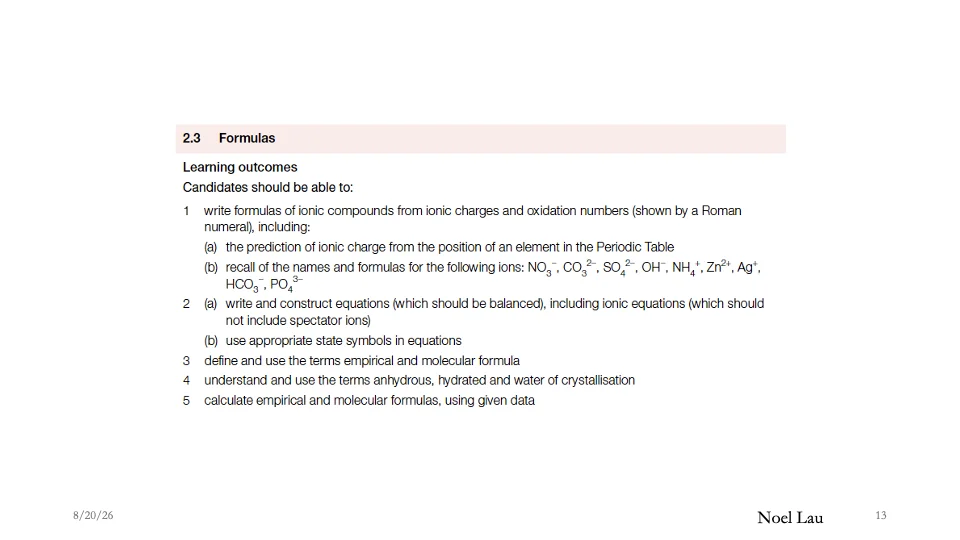
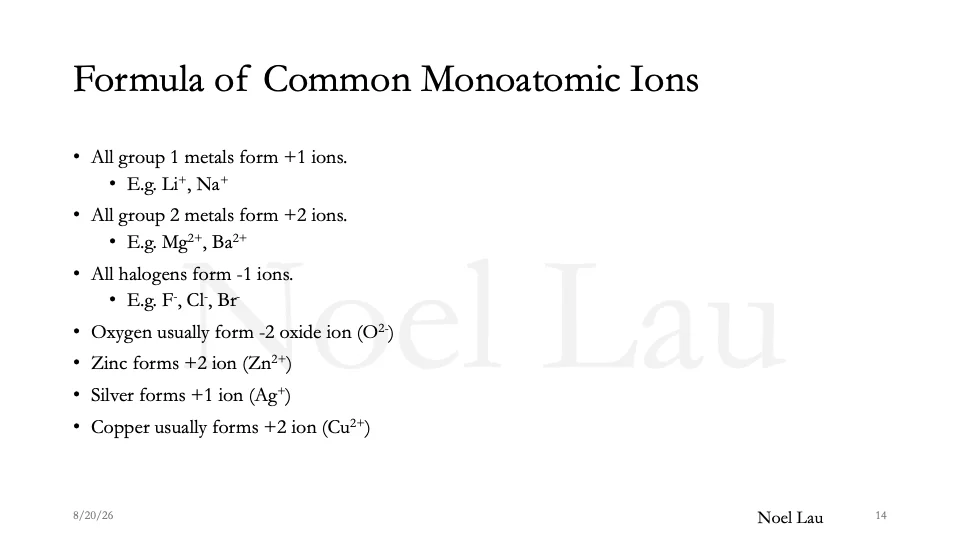
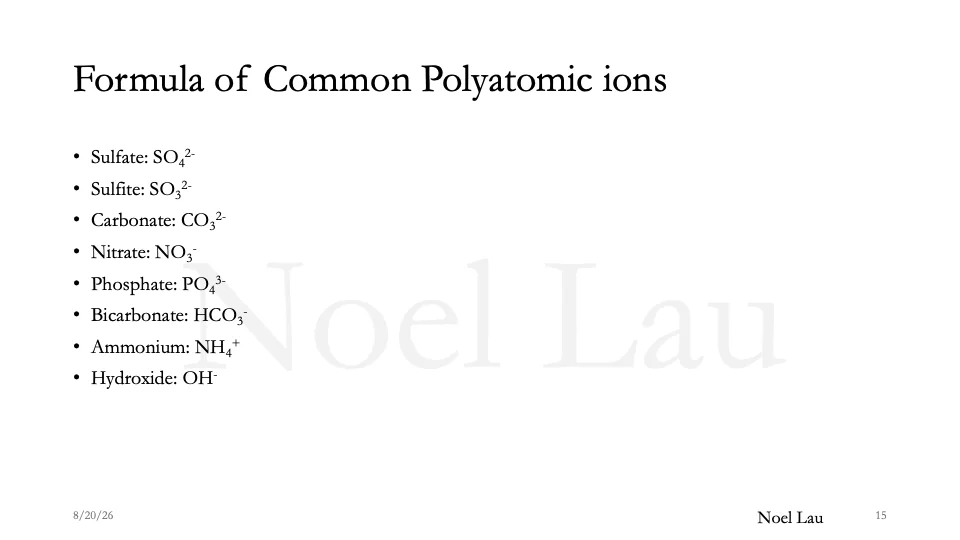
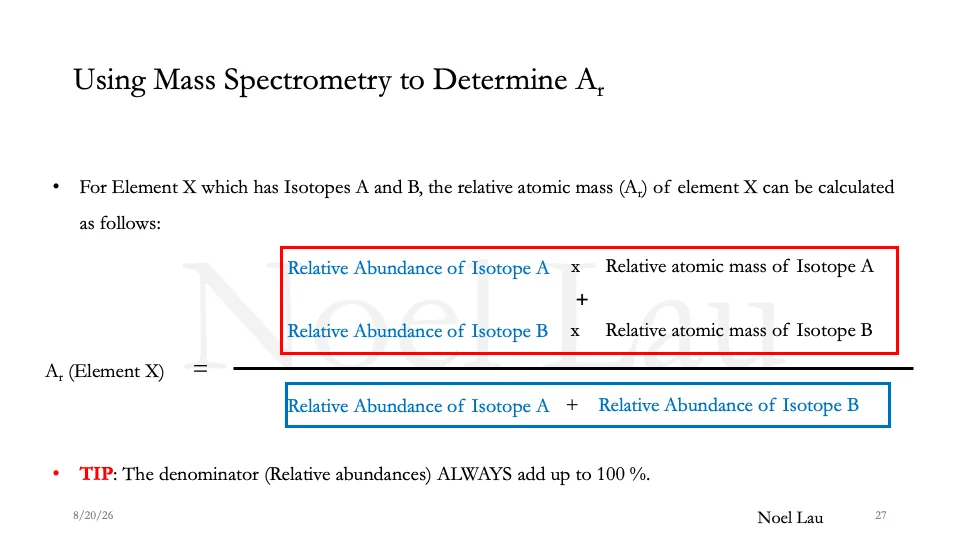
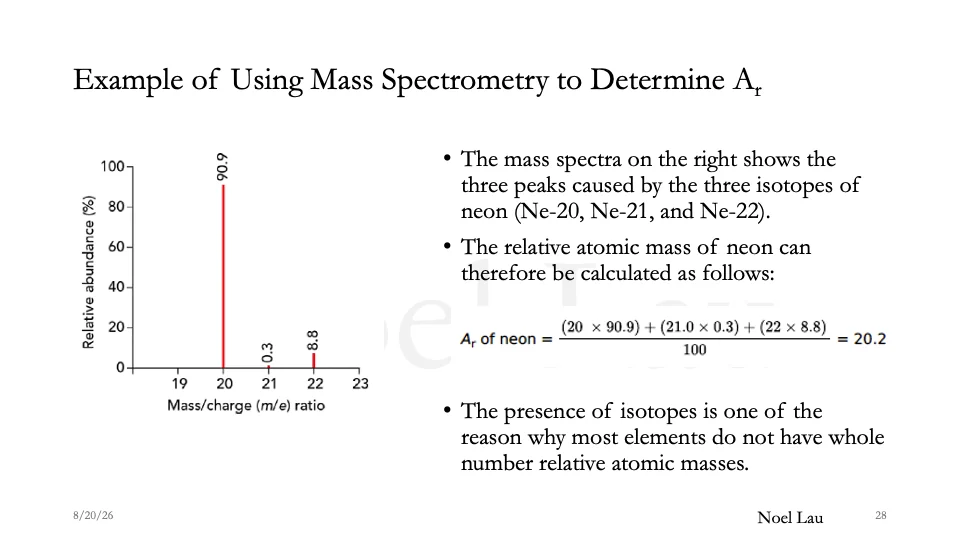
The chapter begins by defining the unified atomic mass unit and establishing the related quantities of relative atomic mass, relative isotopic mass, relative molecular mass and relative formula mass. The mole concept is then introduced as the central unit connecting the number of particles to measurable mass, with the Avogadro constant providing the quantitative link between these scales. The writing and interpretation of chemical formulas is treated in detail, covering ionic compounds, empirical and molecular formulas, and the use of state symbols and ionic equations. The terms anhydrous, hydrated and water of crystallisation are also defined and applied.
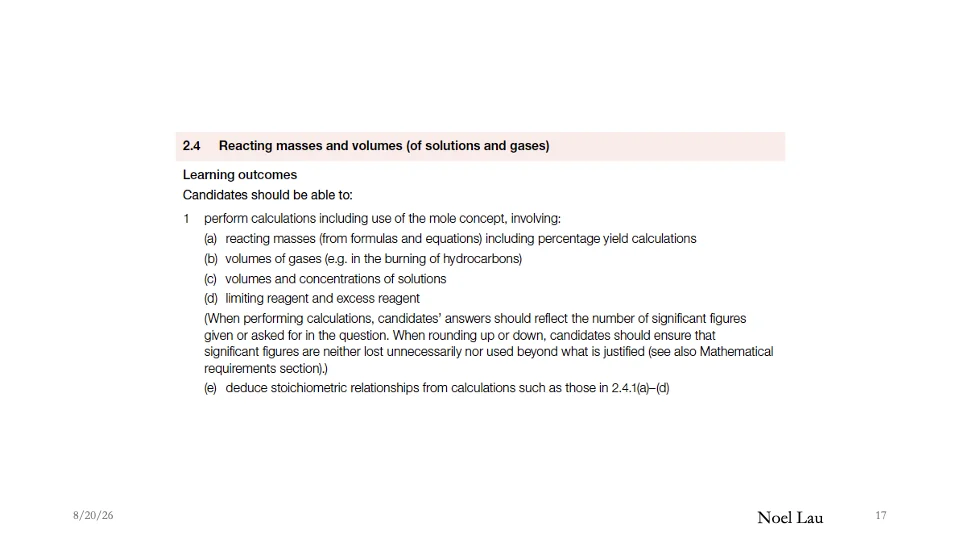
The chapter concludes with a comprehensive treatment of reacting masses and volumes, in which the mole concept is applied to calculations involving reacting masses, gas volumes, and solution concentrations. The identification of limiting and excess reagents, the calculation of percentage yield, and the deduction of stoichiometric relationships from experimental data are all covered. Proficiency in these calculations is an essential requirement throughout the remainder of the course and in the practical assessments.