A-Level 17. Carbonyl Compounds (Aldehydes and Ketones) (9701)
Introduction (17. Carbonyl Compounds)
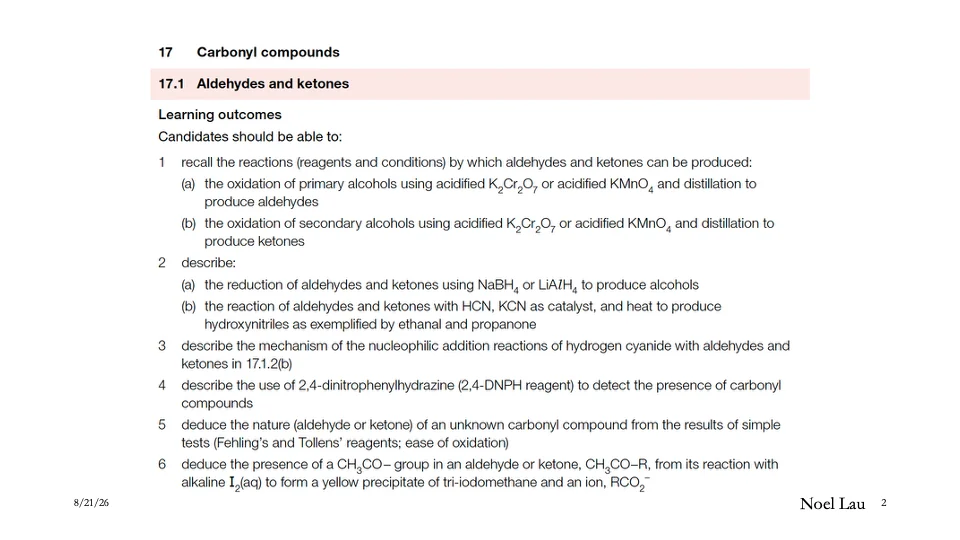
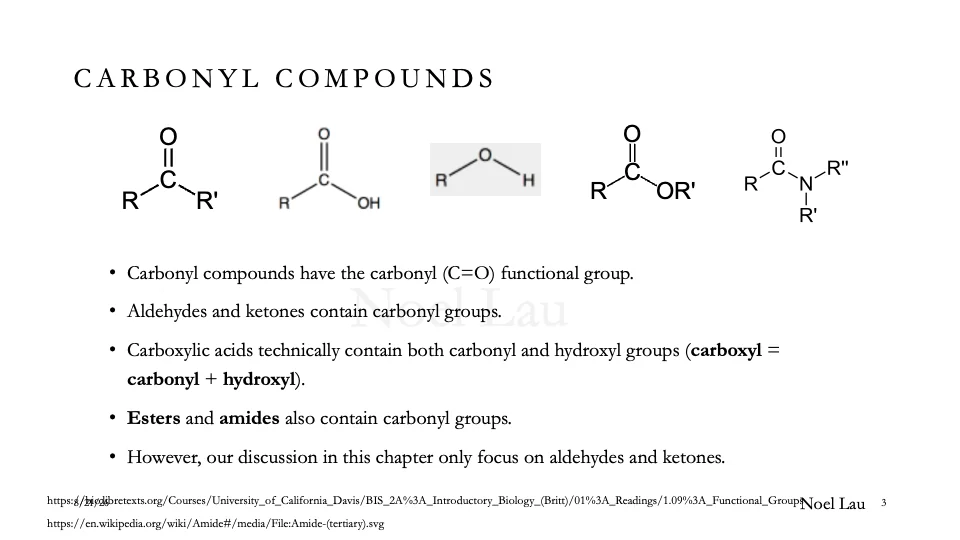
Chapter 17 examines the chemistry of aldehydes and ketones, two classes of compound that share the carbonyl functional group but differ significantly in their reactivity. The chapter develops both the analytical tests used to distinguish between them and the mechanistic basis of their principal reactions.
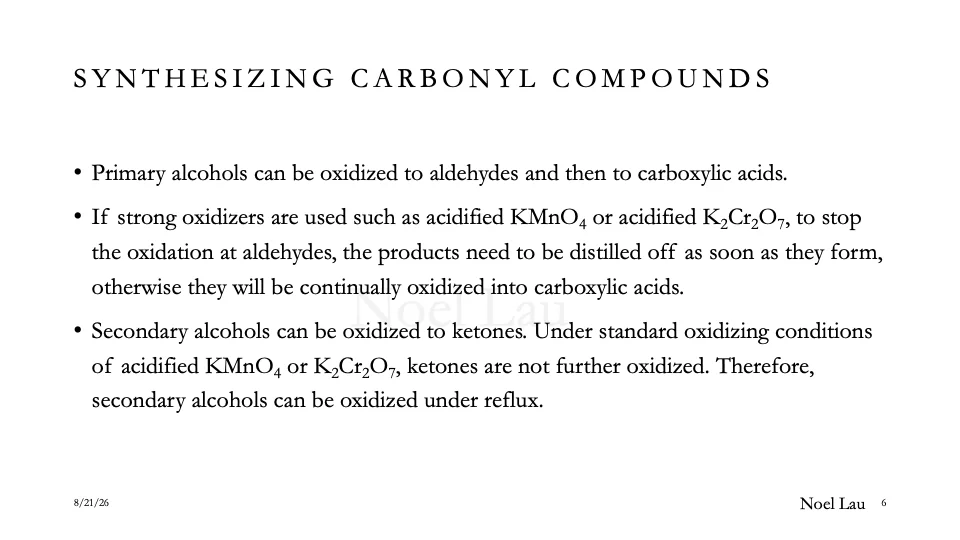
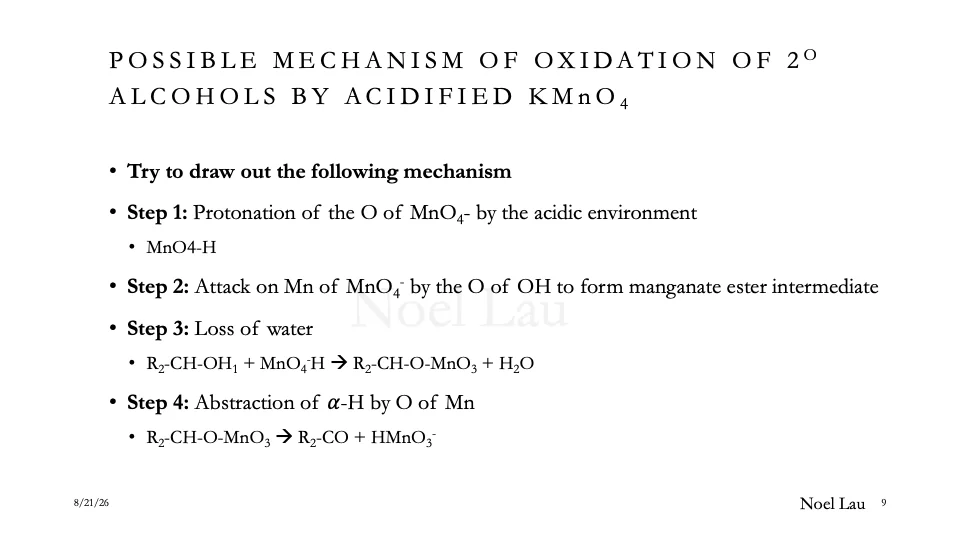
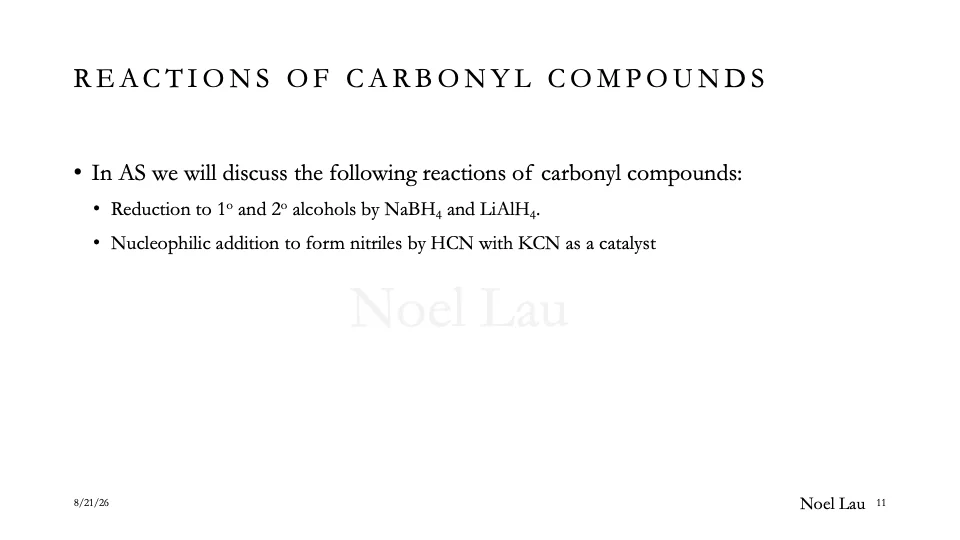
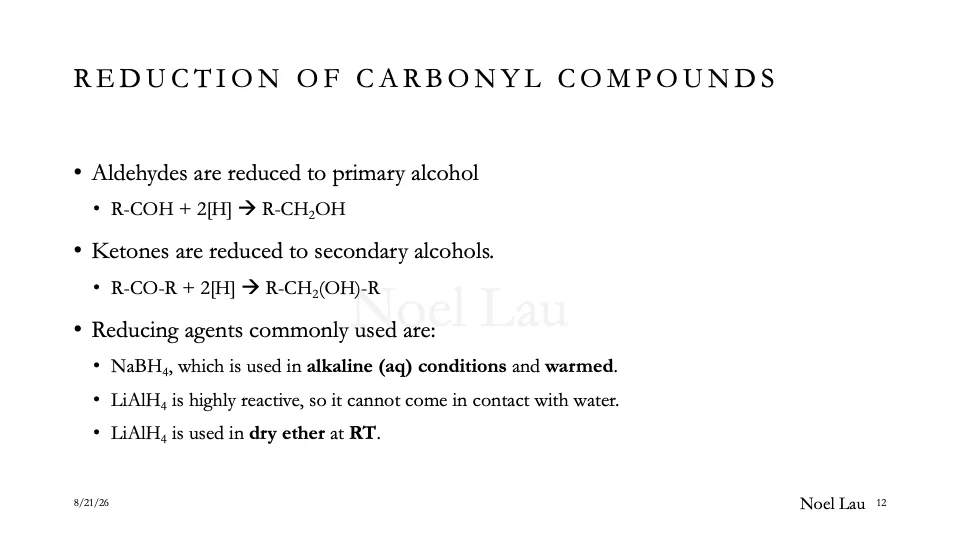
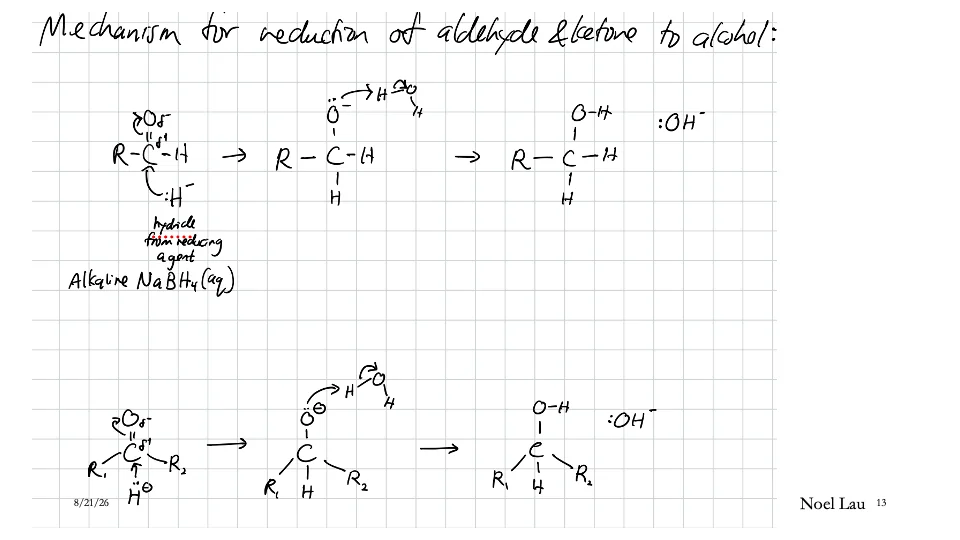
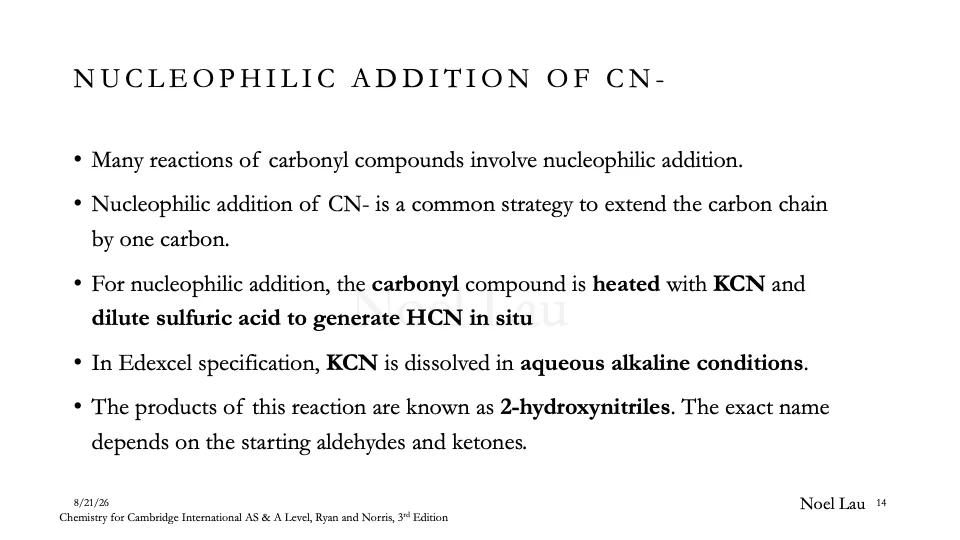
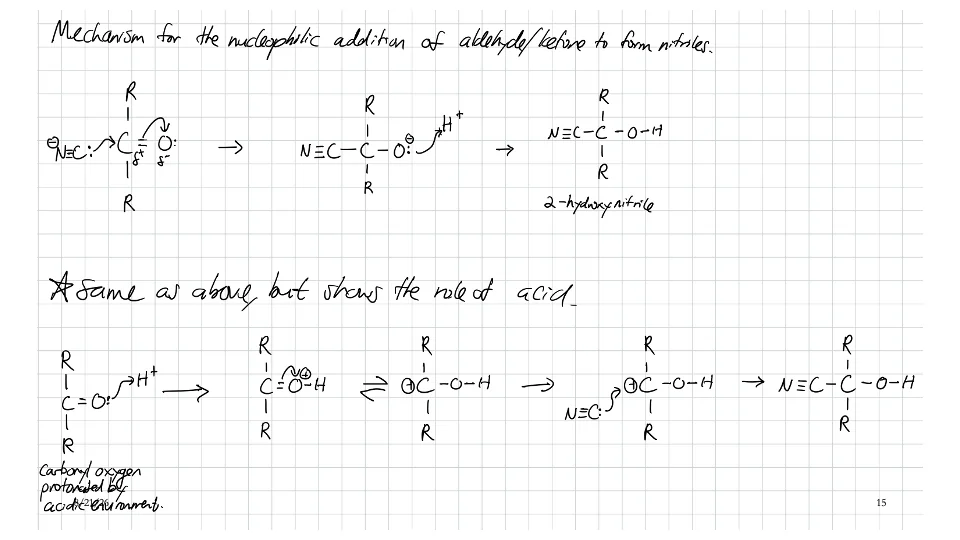
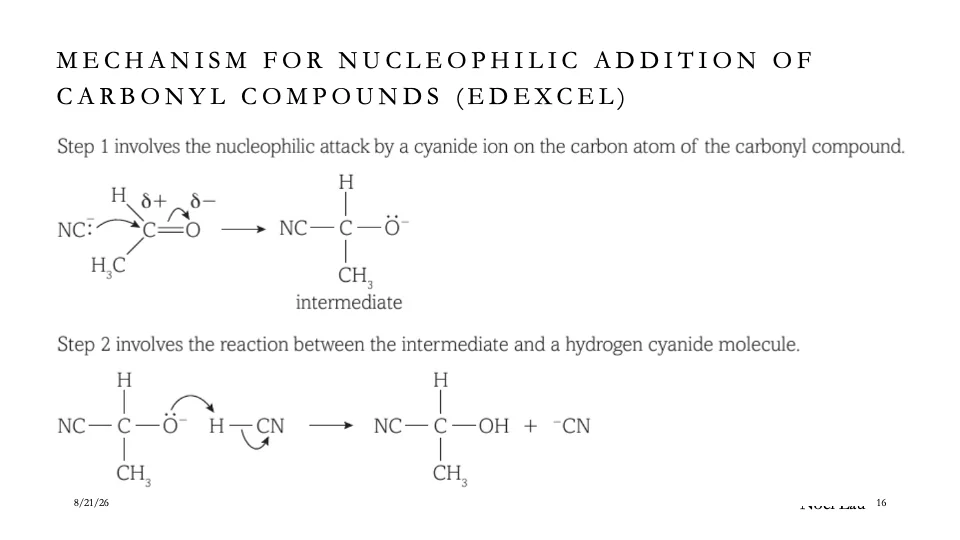
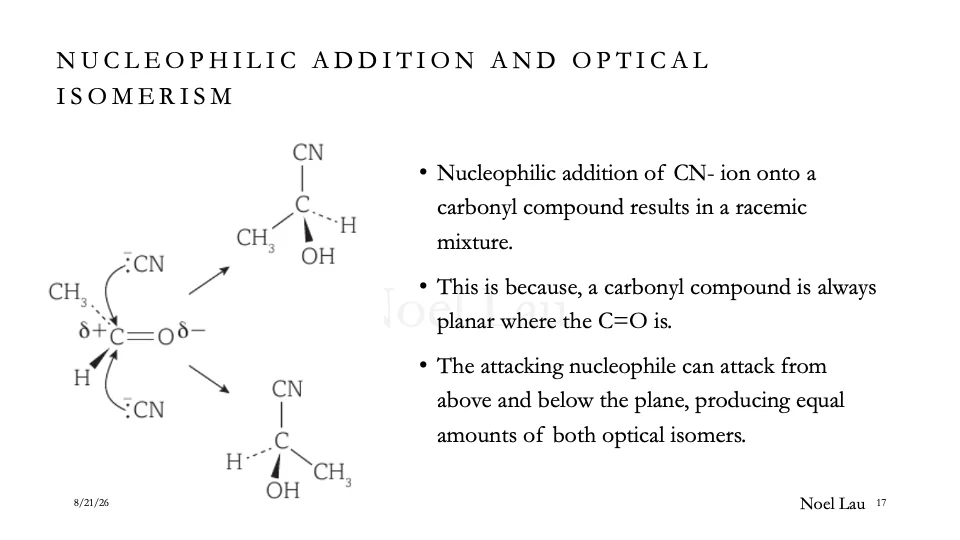
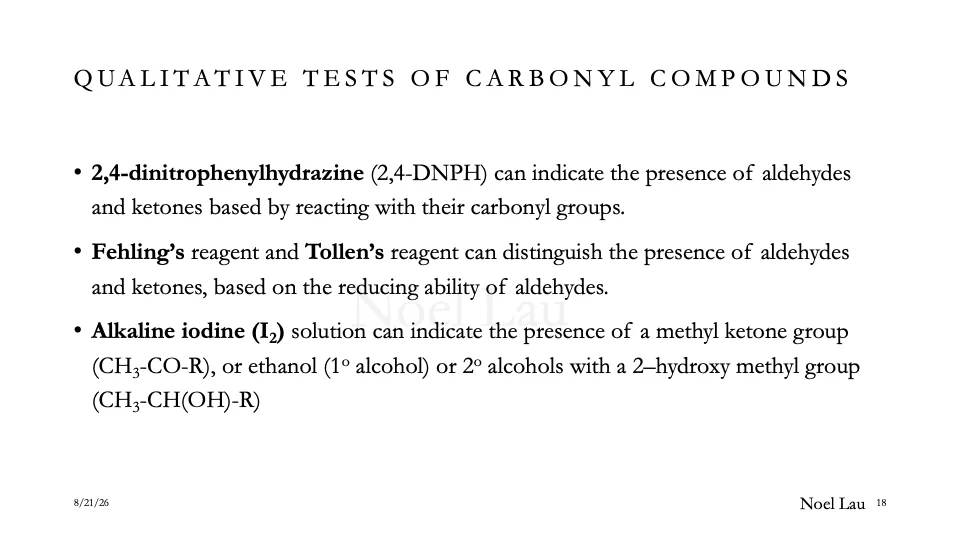
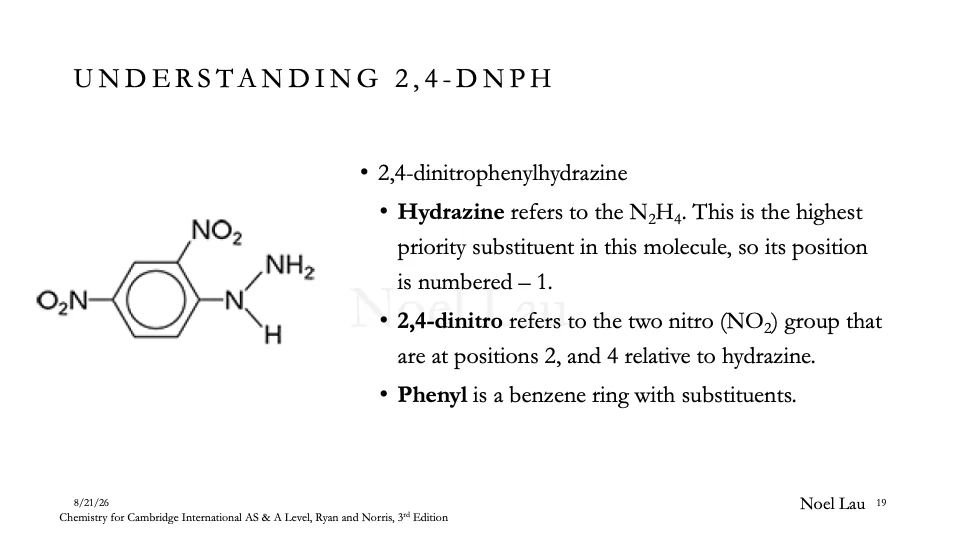
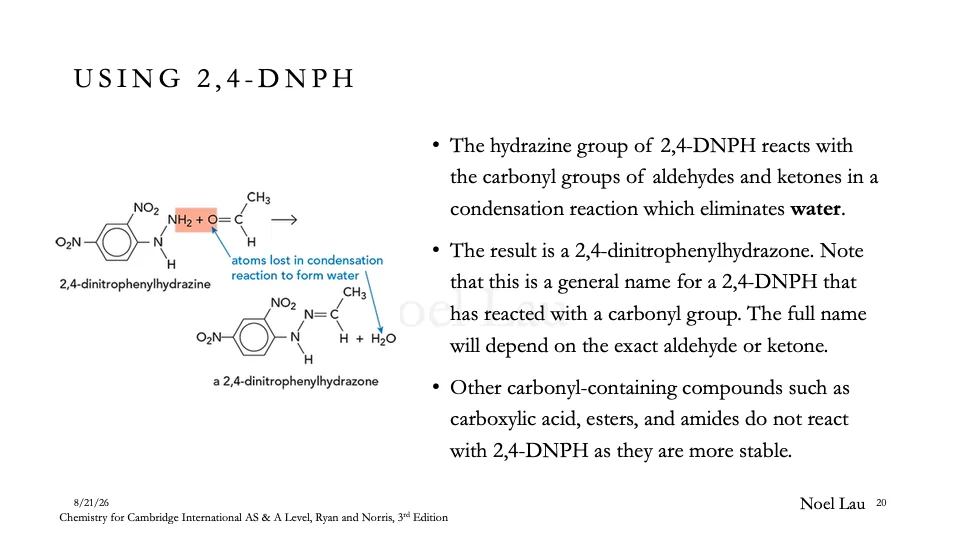
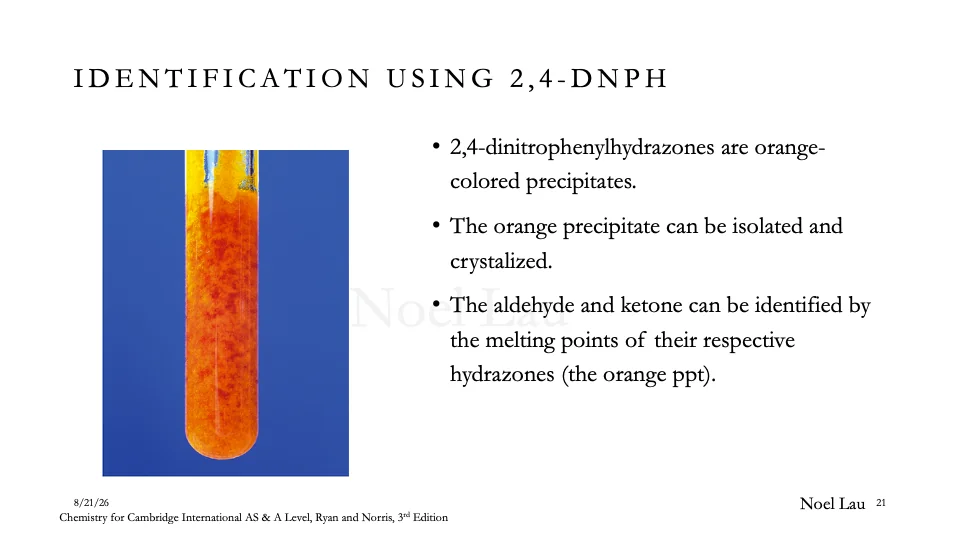
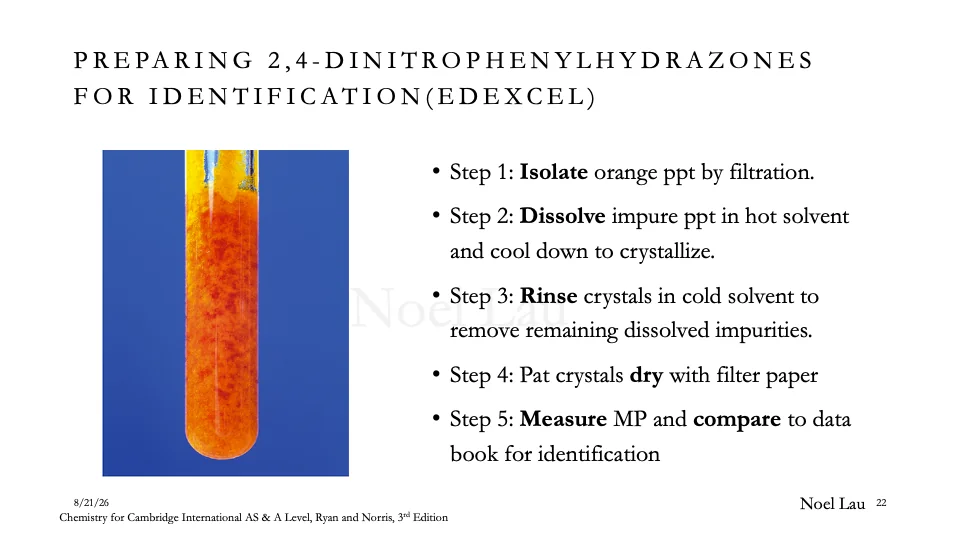
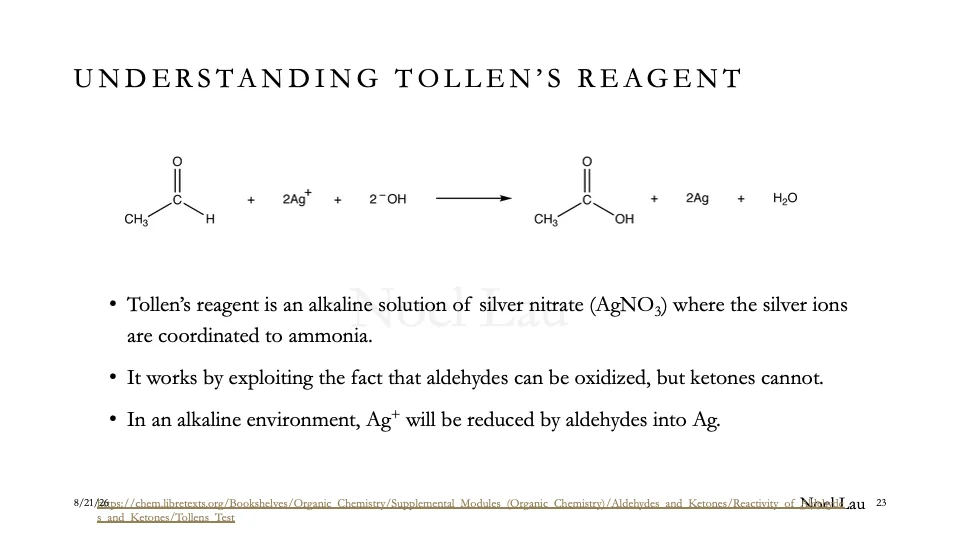
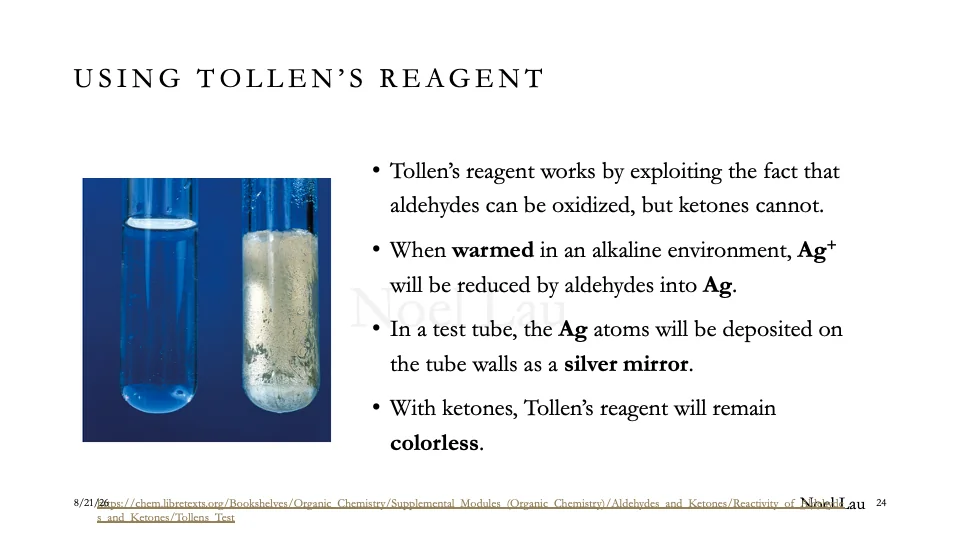
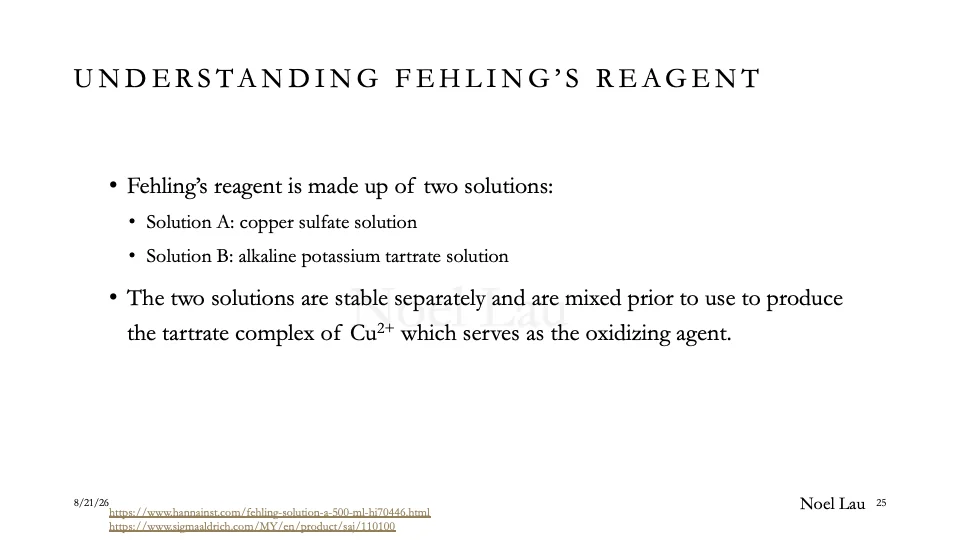
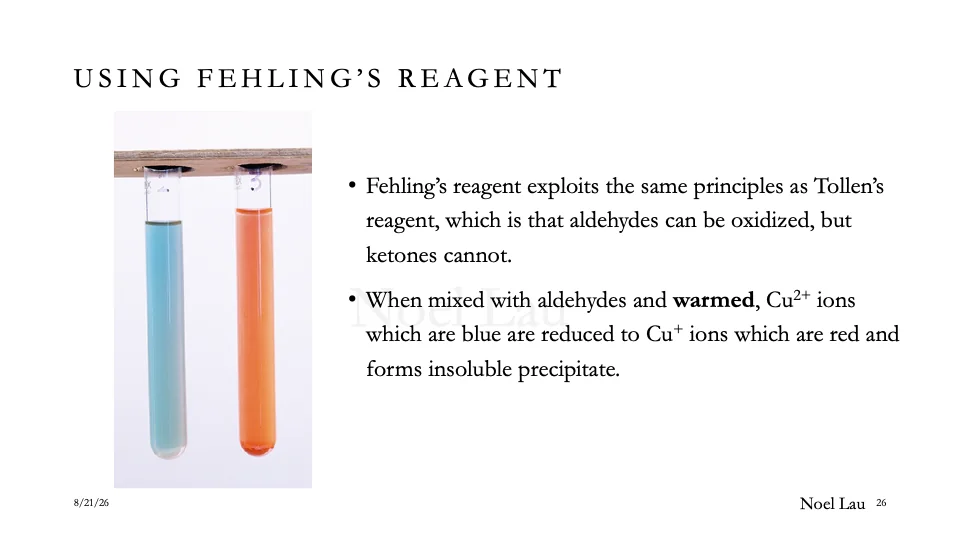
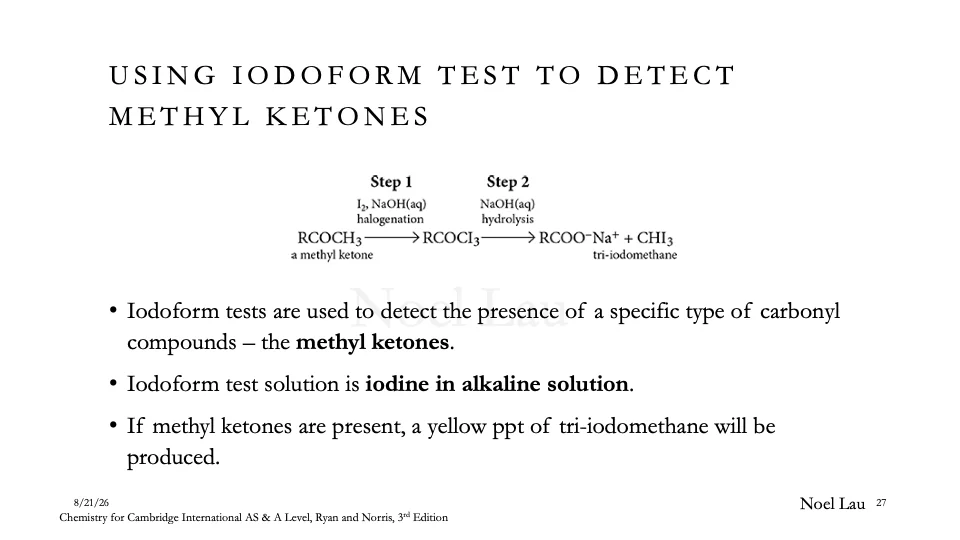
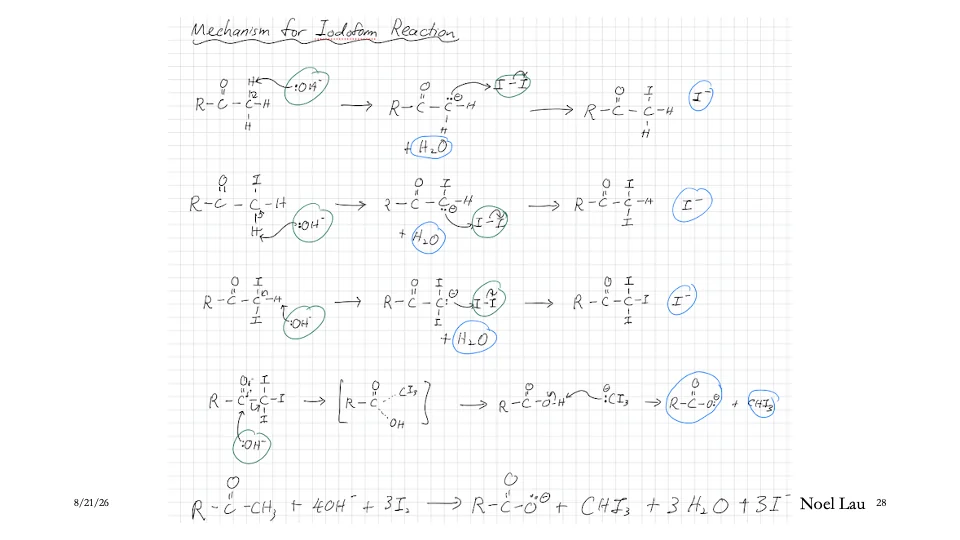
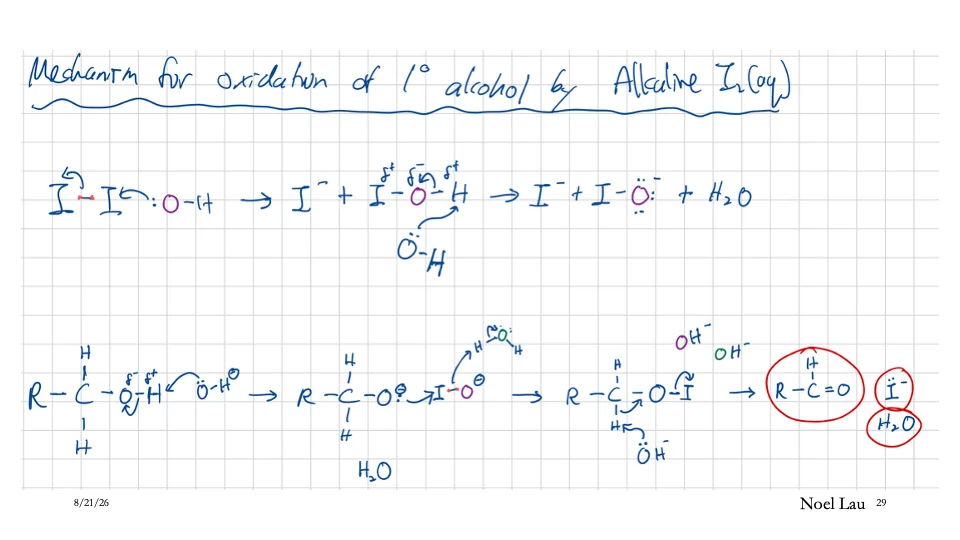
The preparation of aldehydes and ketones by controlled oxidation of primary and secondary alcohols respectively is covered first. Their reduction back to alcohols using sodium borohydride or lithium aluminium hydride is then described, followed by their reaction with hydrogen cyanide in the presence of potassium cyanide to give hydroxynitriles, for which the nucleophilic addition mechanism is developed in detail. The chapter also covers the use of 2,4-dinitrophenylhydrazine to detect the presence of a carbonyl group, the use of Fehling's and Tollens' reagents to distinguish aldehydes from ketones, and the iodoform reaction as a means of identifying the CH3CO group.