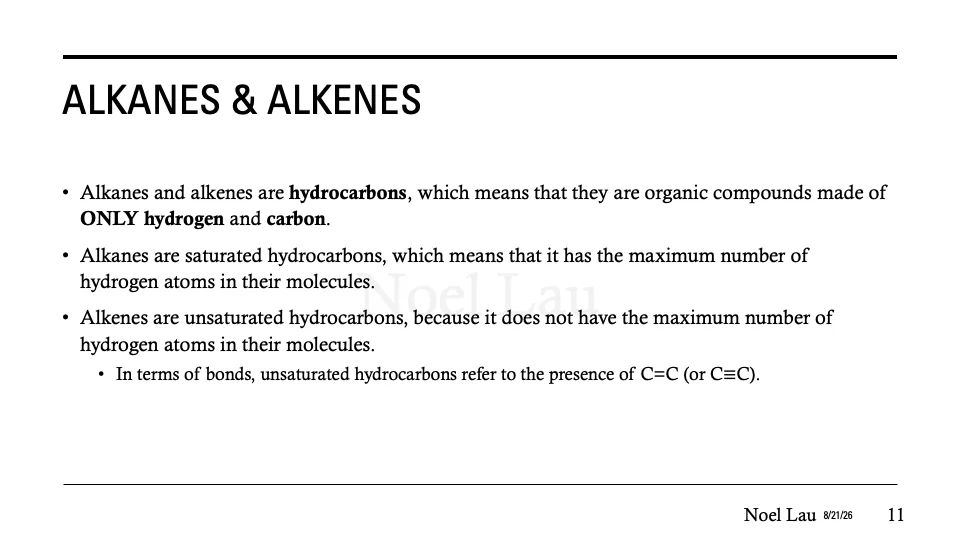
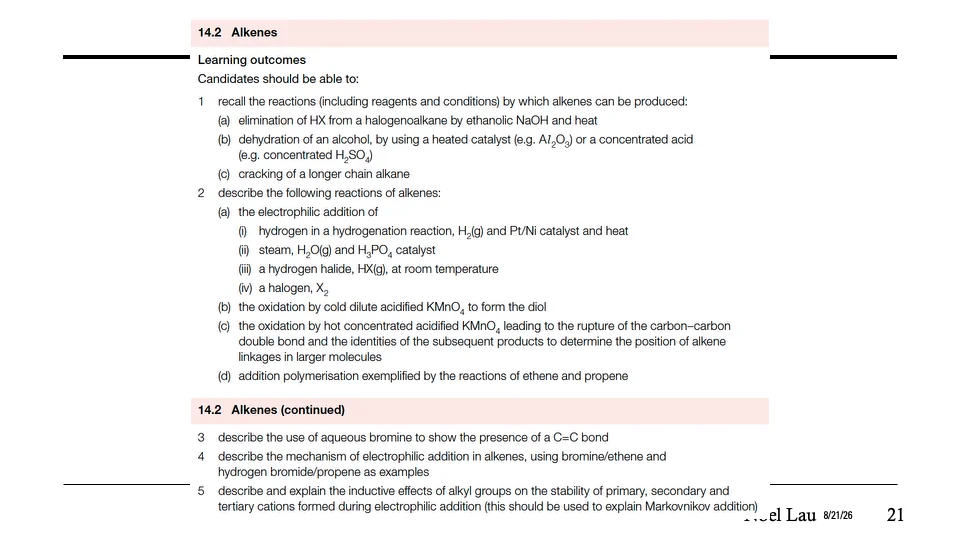
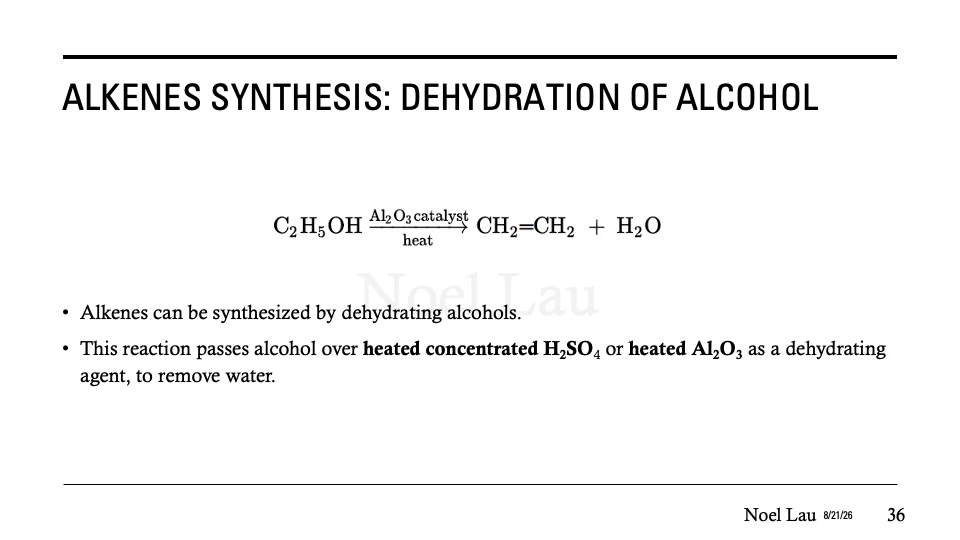
Chapter 14 examines the chemistry of alkanes and alkenes, the two principal classes of hydrocarbon encountered at AS Level. The chapter develops both the synthetic routes by which these compounds are prepared and the mechanistic reasoning that underlies their reactivity.
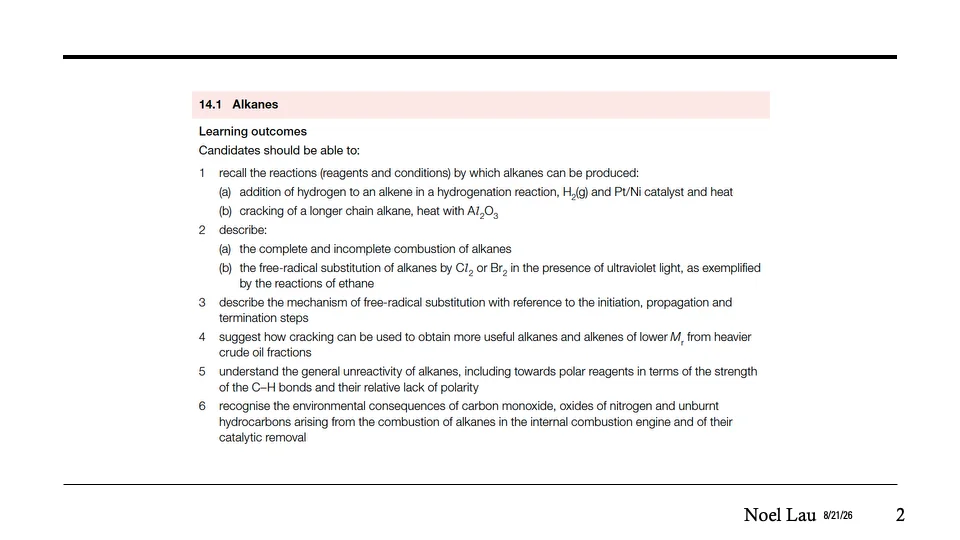
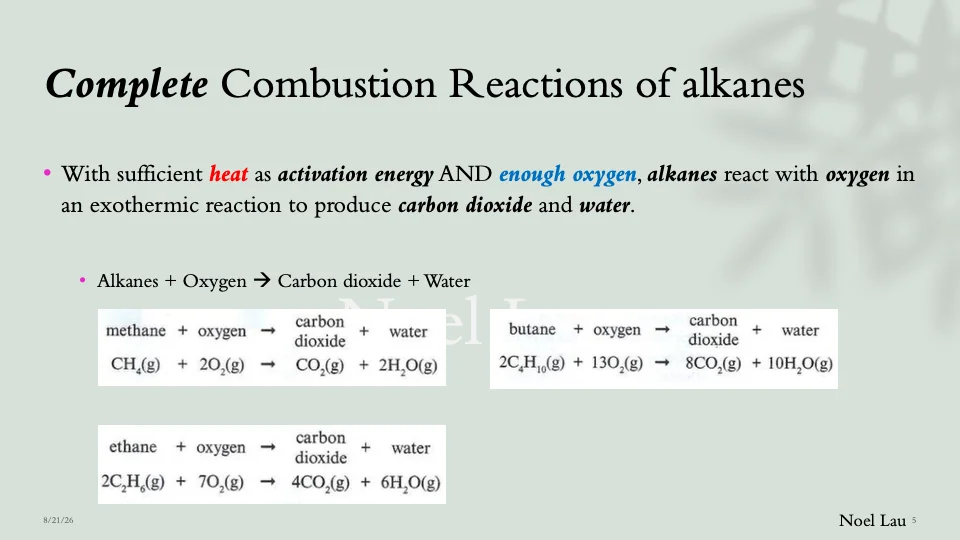
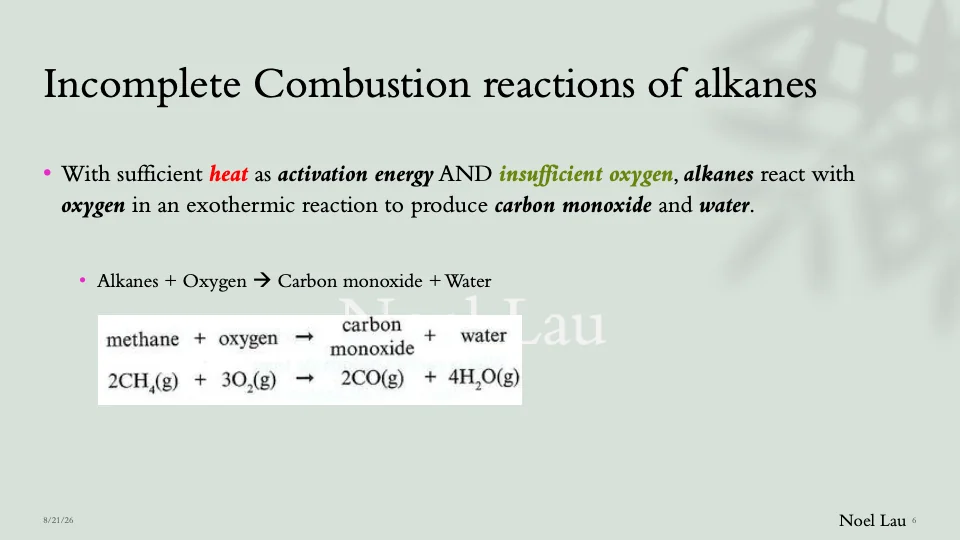
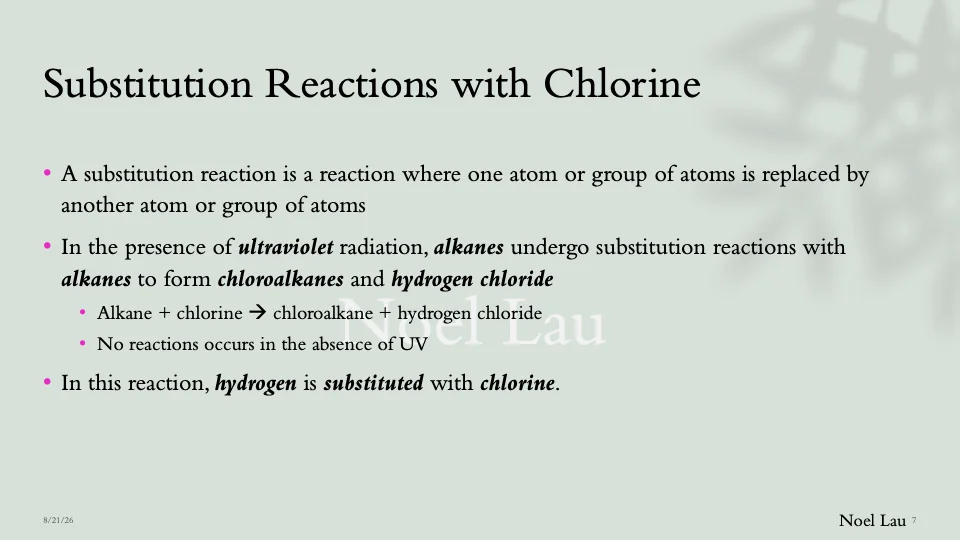
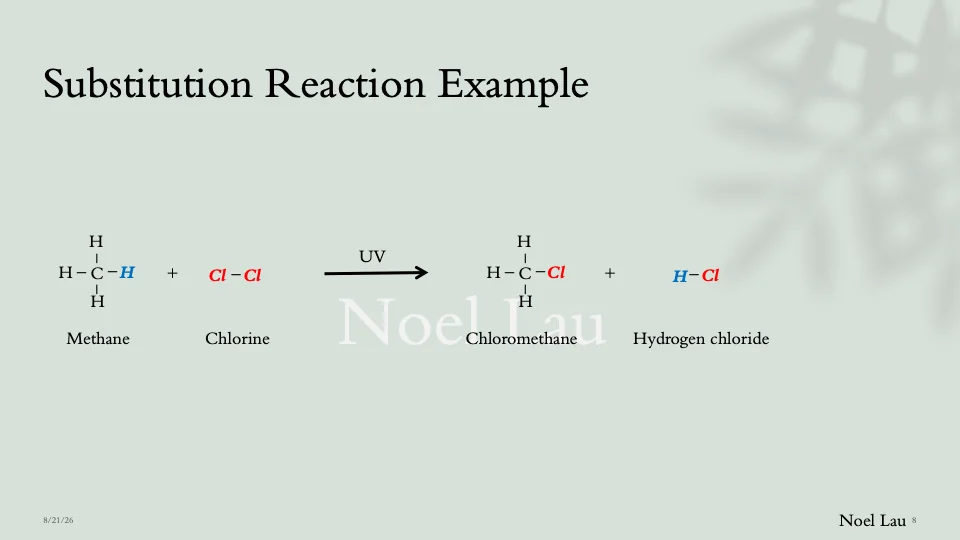
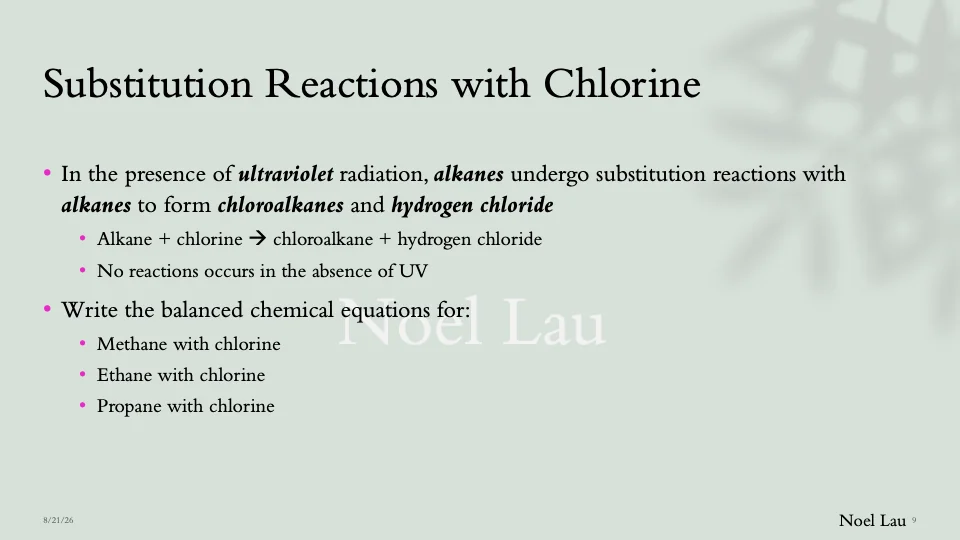
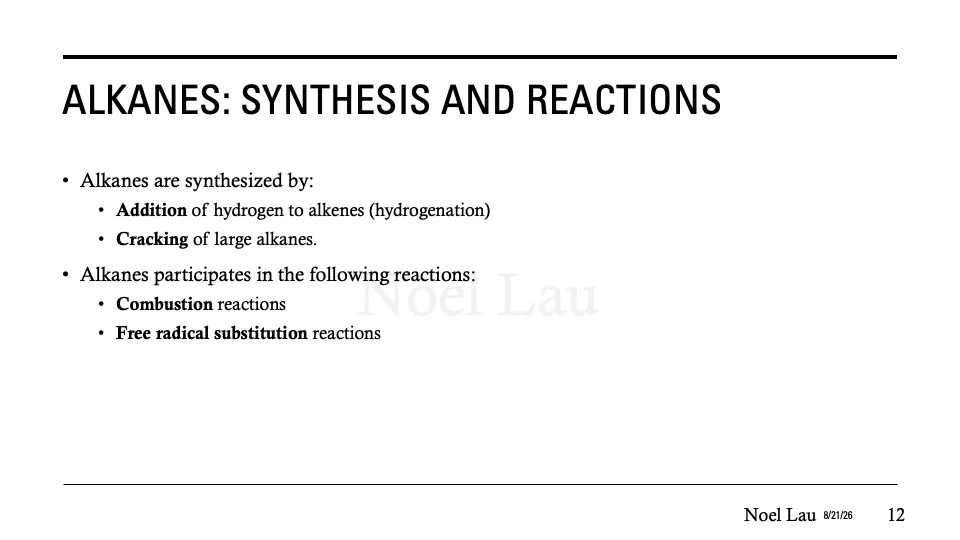
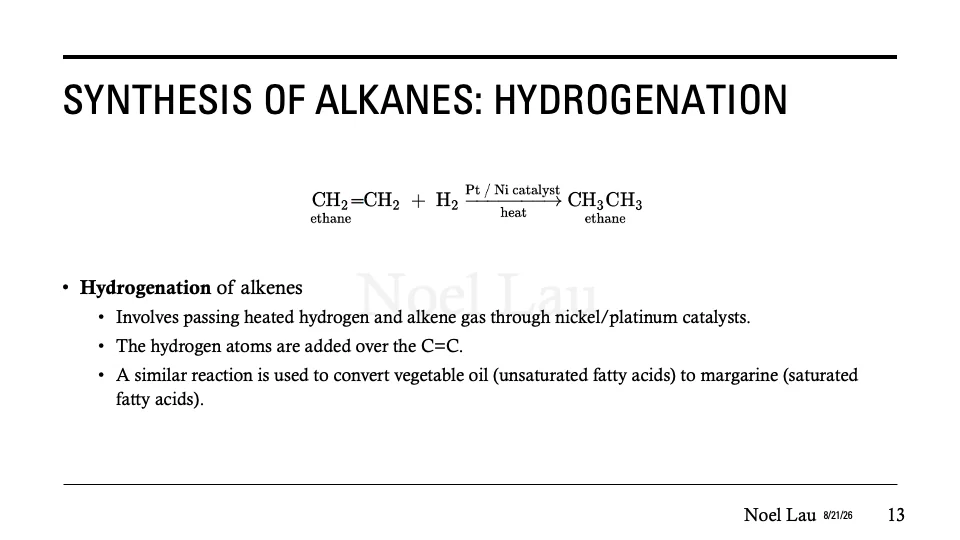
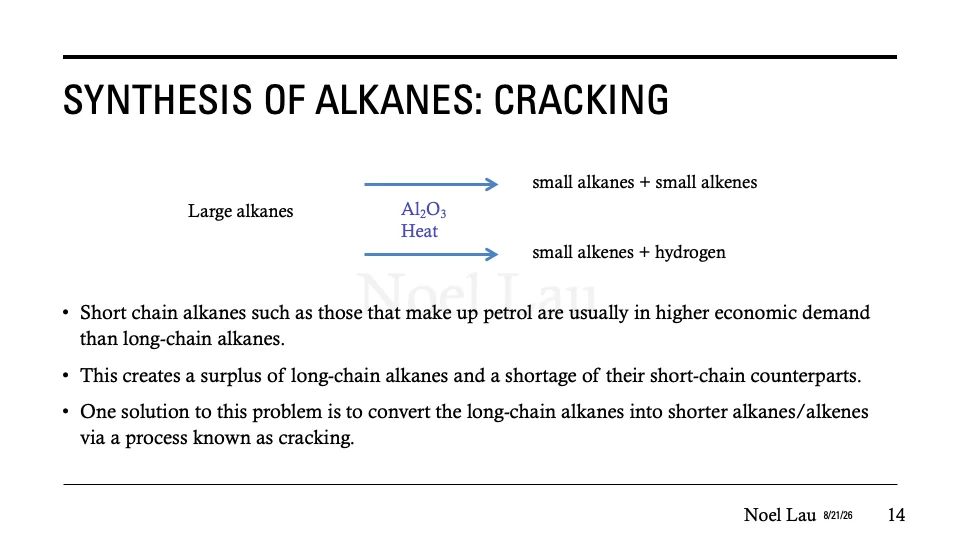
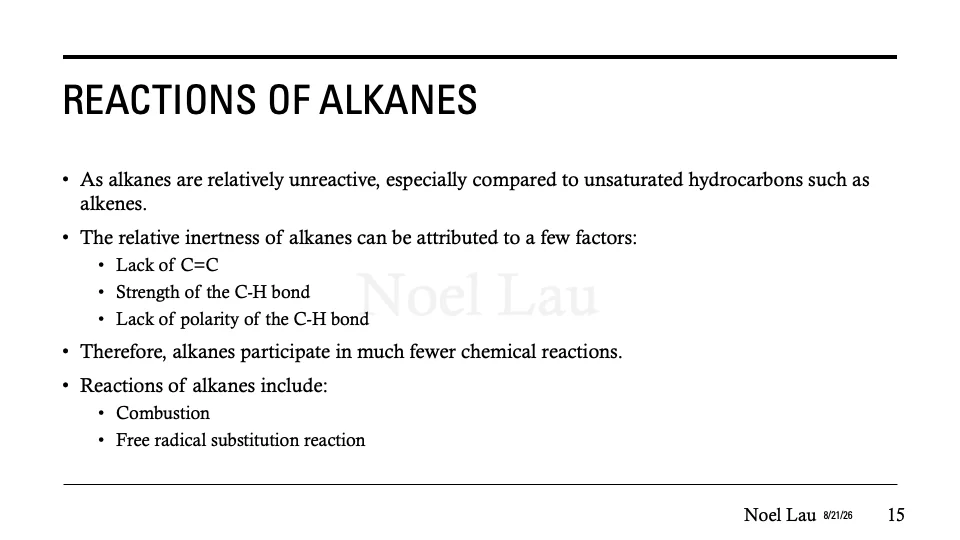
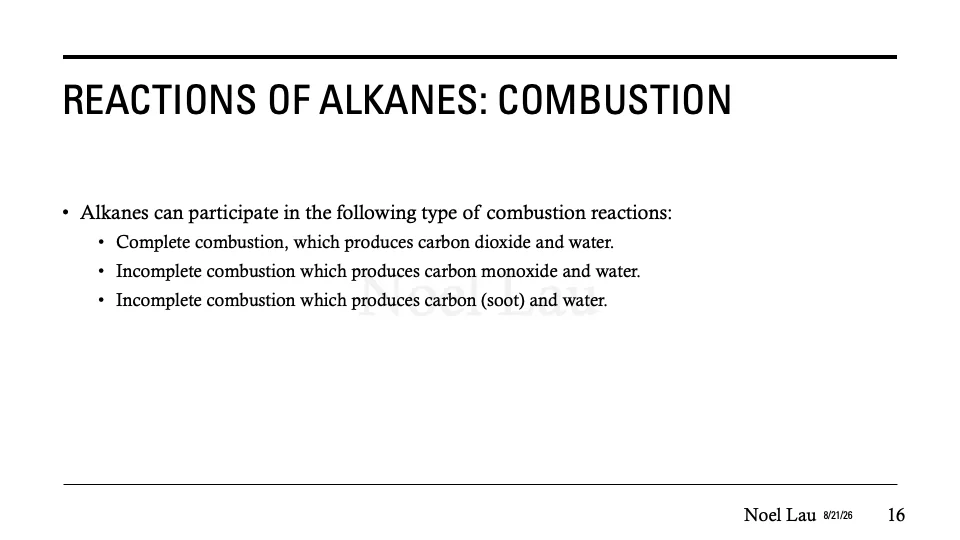
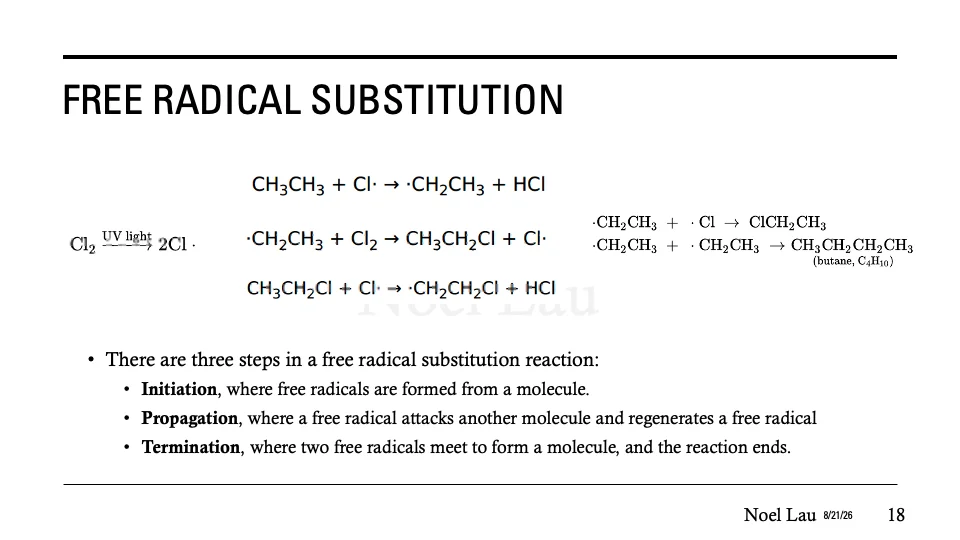
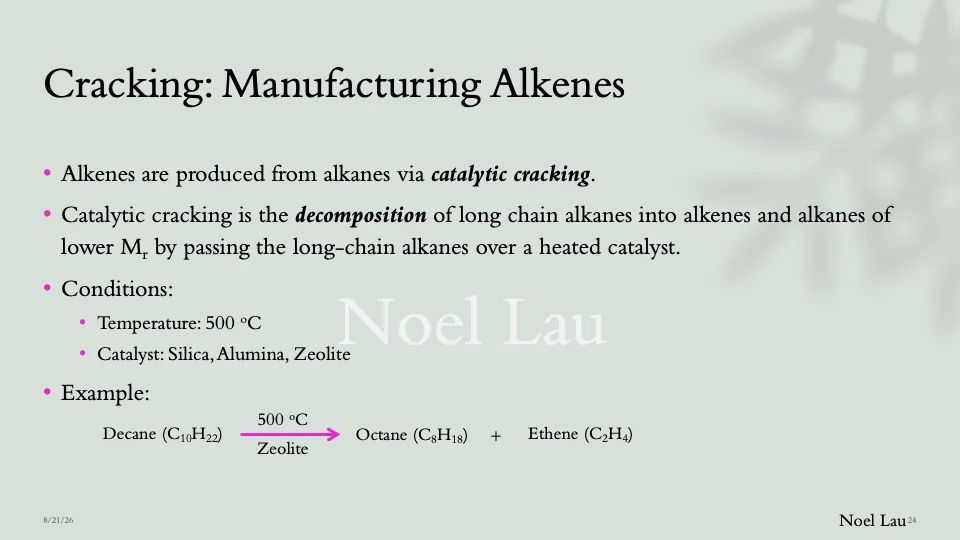
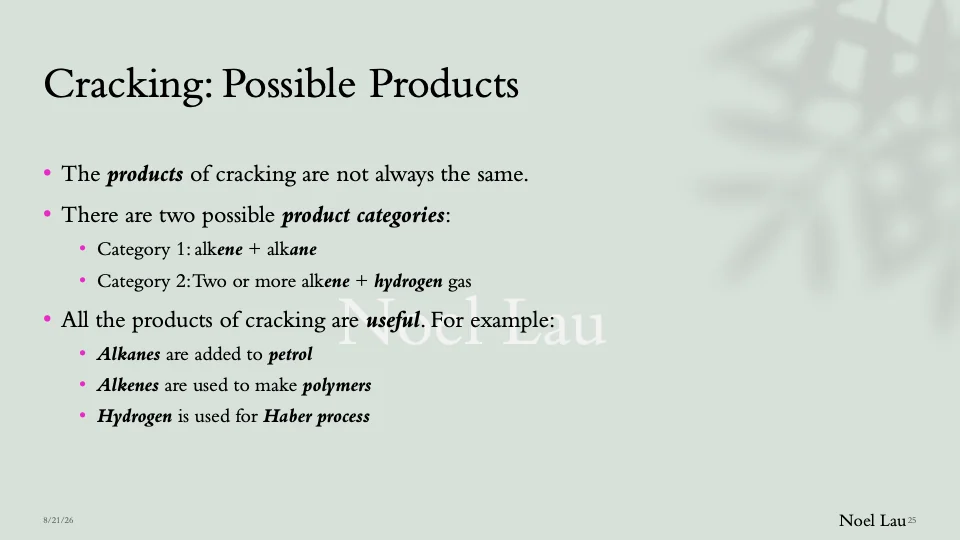
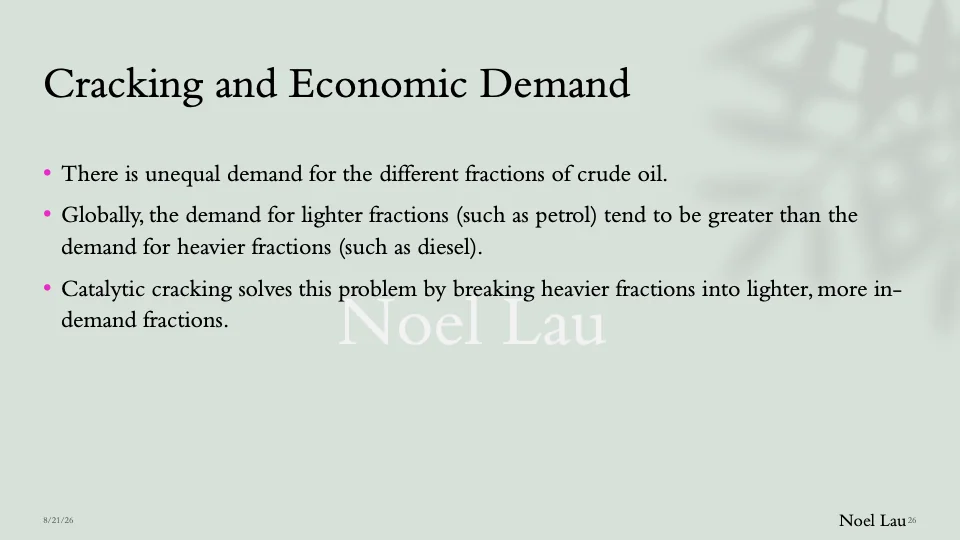
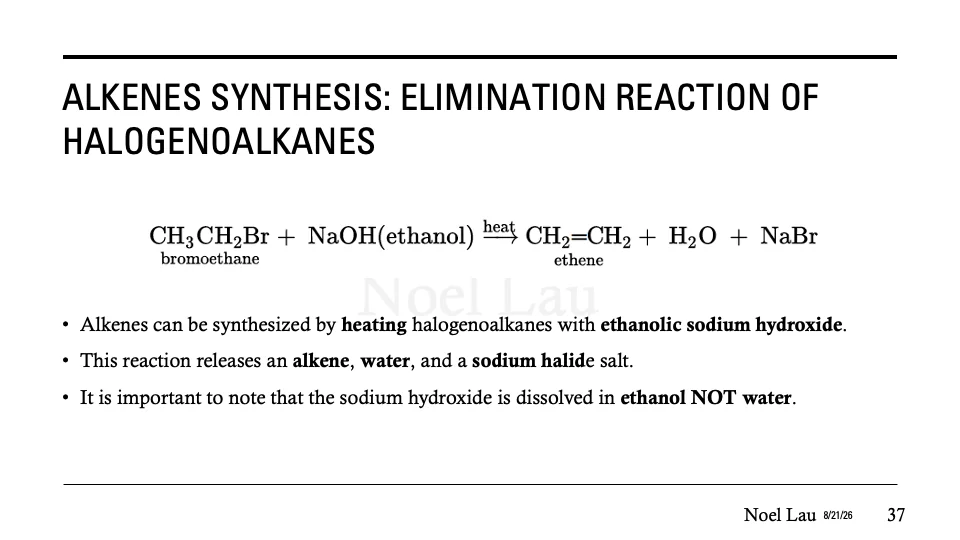
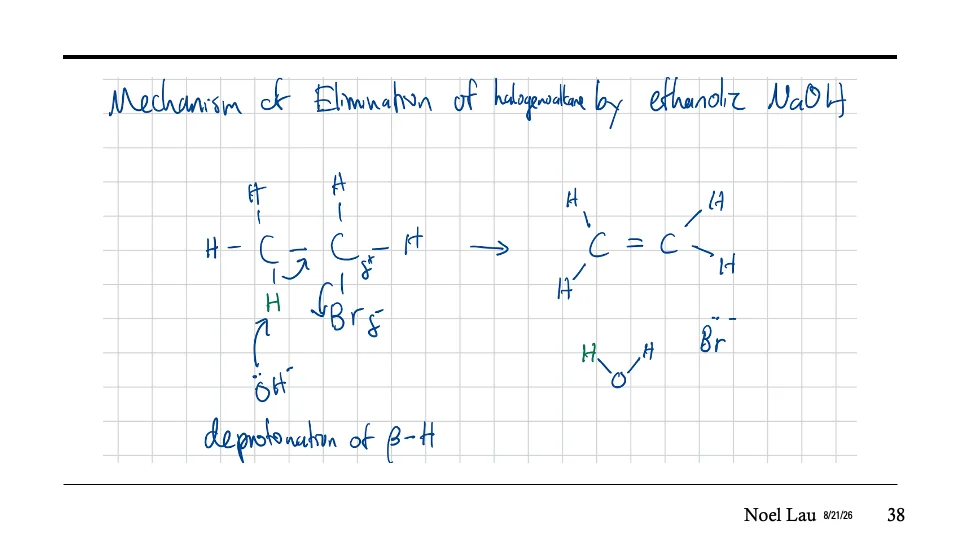
Alkanes are addressed first. Their general unreactivity towards polar reagents is accounted for in terms of C-H bond strength and low polarity. The combustion of alkanes is described for both complete and incomplete conditions, and the environmental consequences of carbon monoxide, nitrogen oxides and unburned hydrocarbons from internal combustion engines are noted. Free-radical substitution by chlorine or bromine under ultraviolet light is treated in mechanistic detail, with initiation, propagation and termination steps described explicitly. The chapter also examines how cracking is used industrially to obtain more useful shorter-chain products from heavier crude oil fractions.
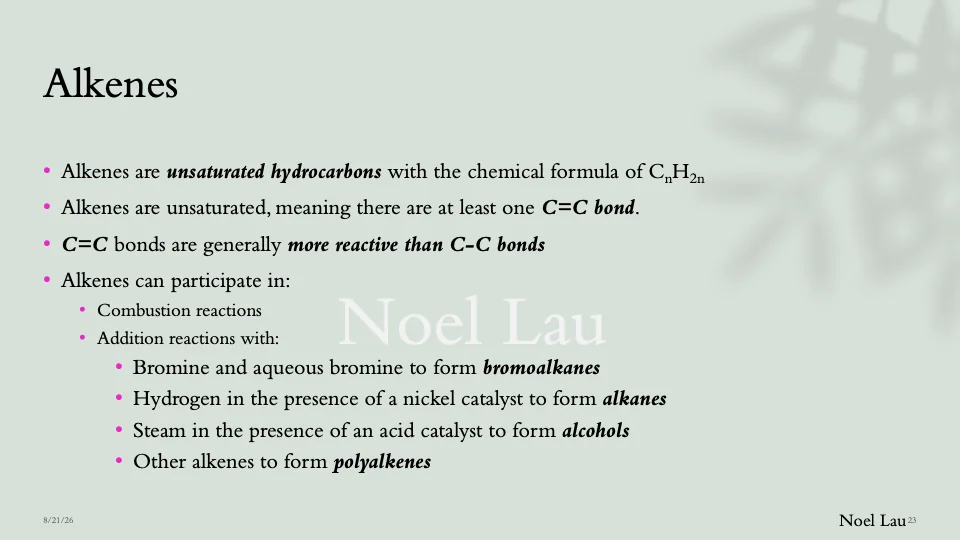
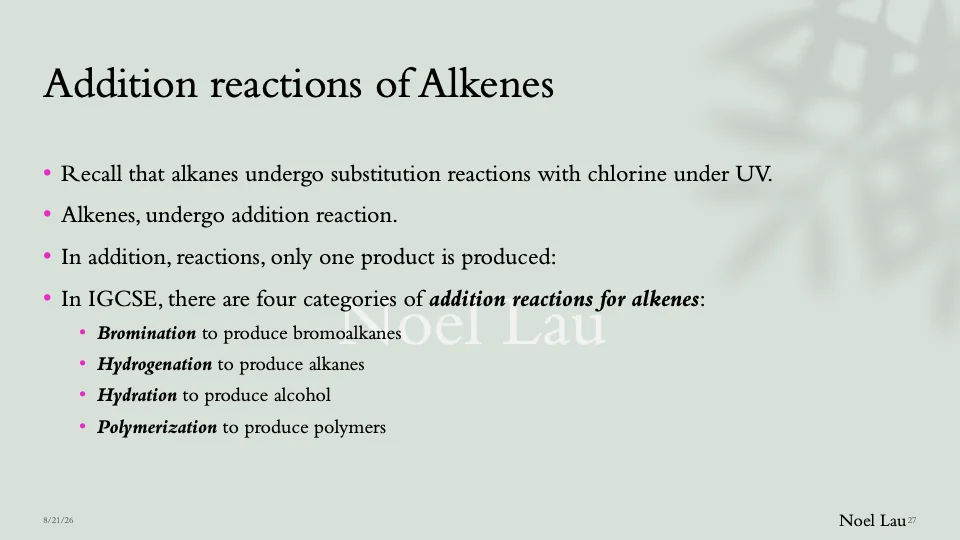
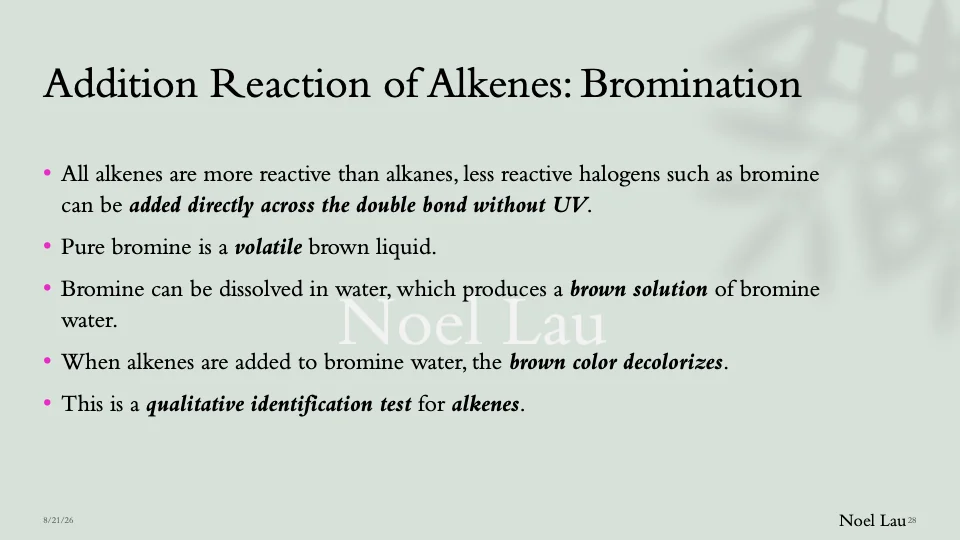
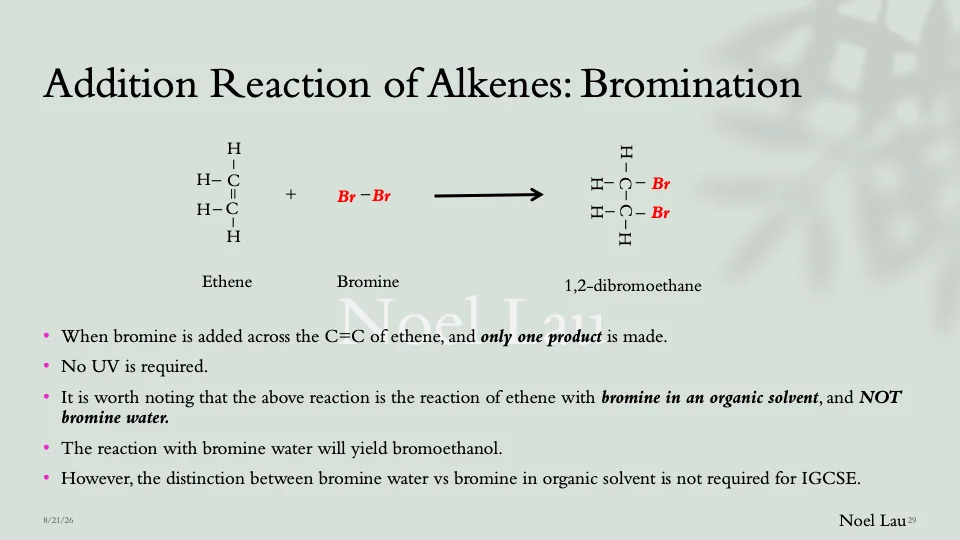
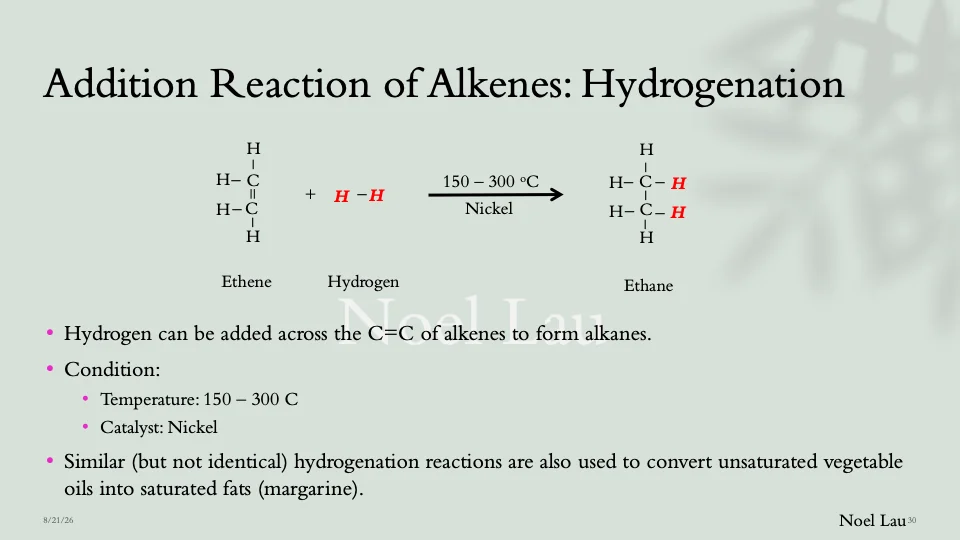
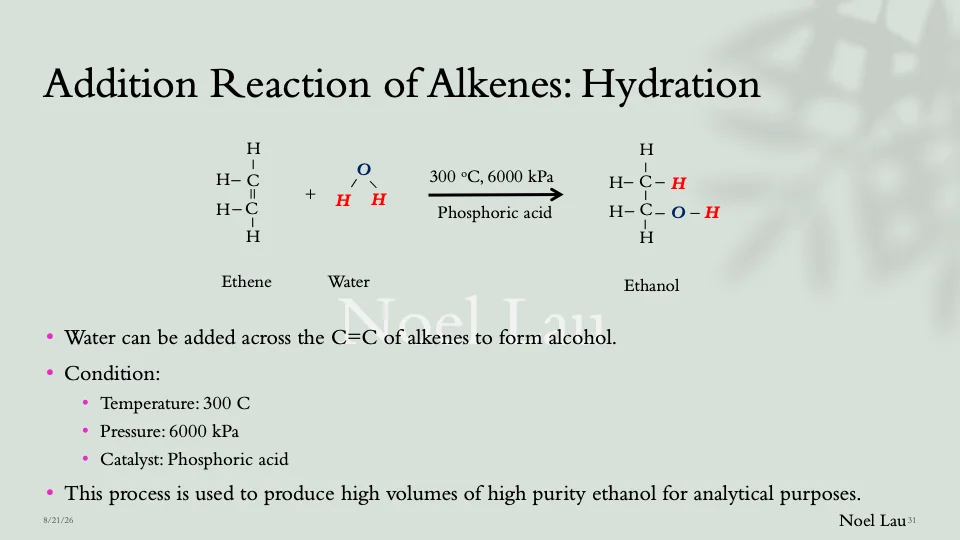
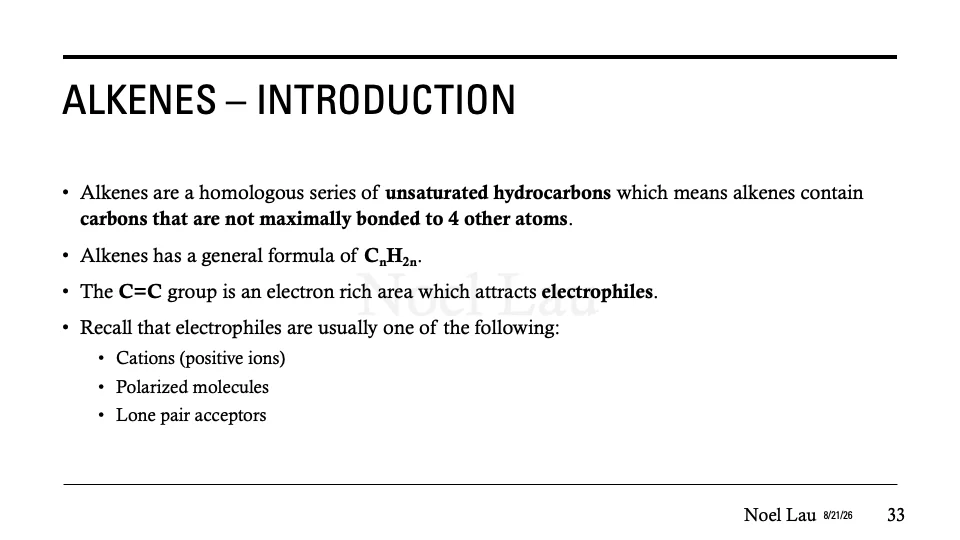
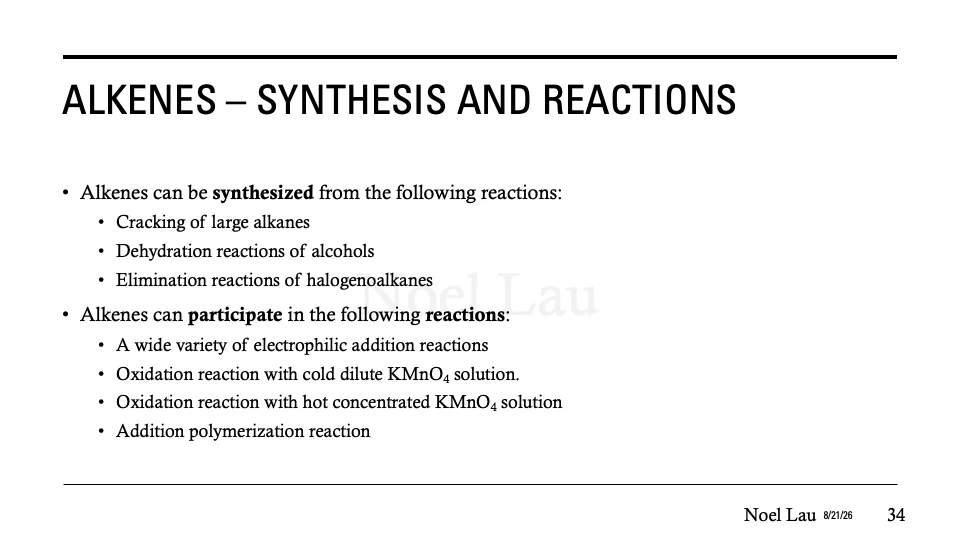
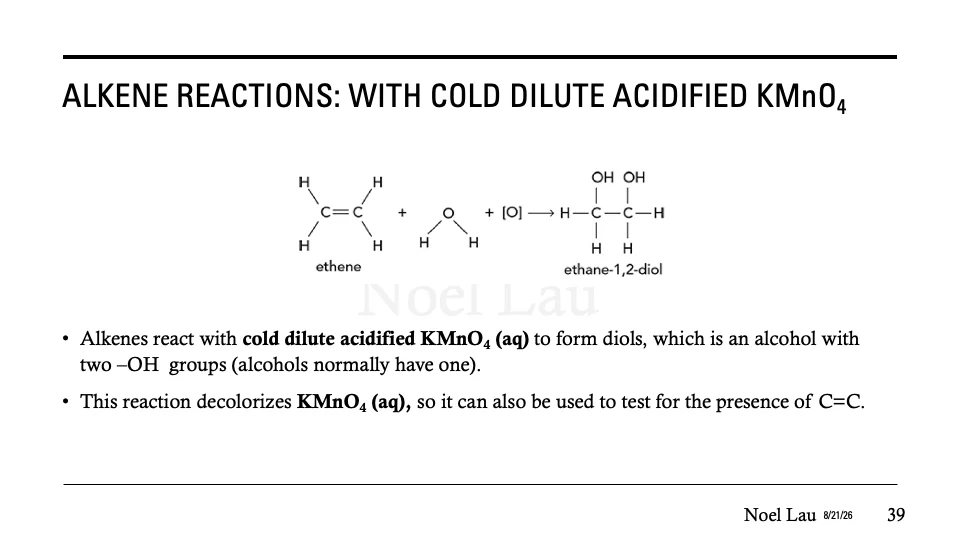
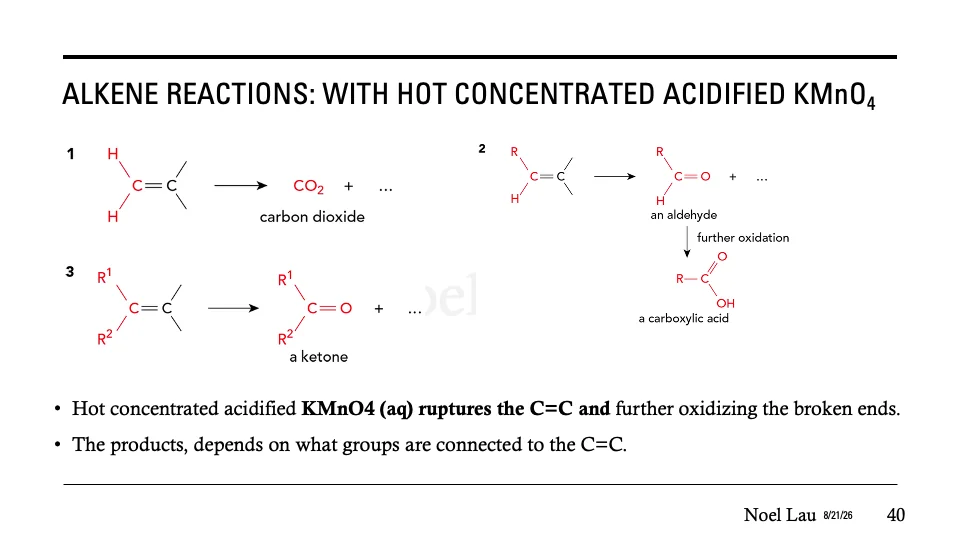
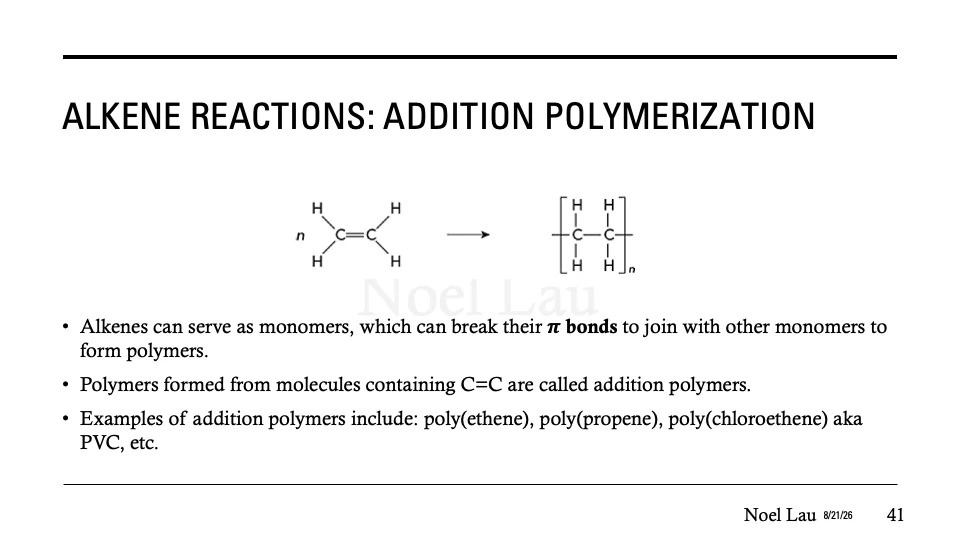
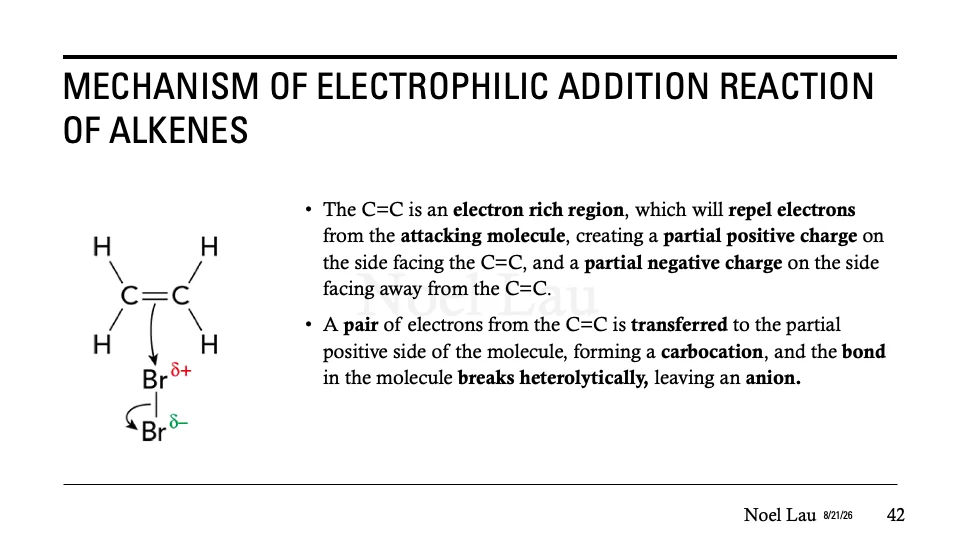
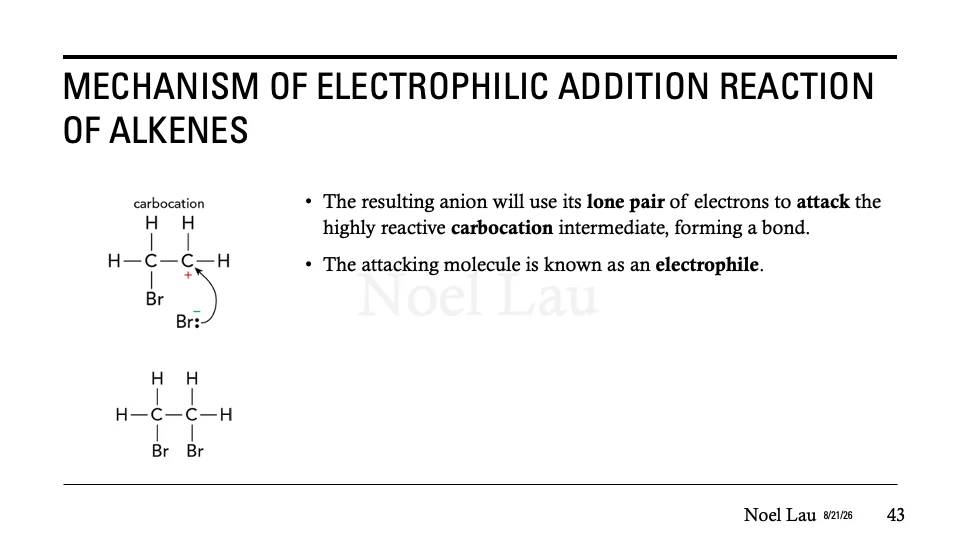
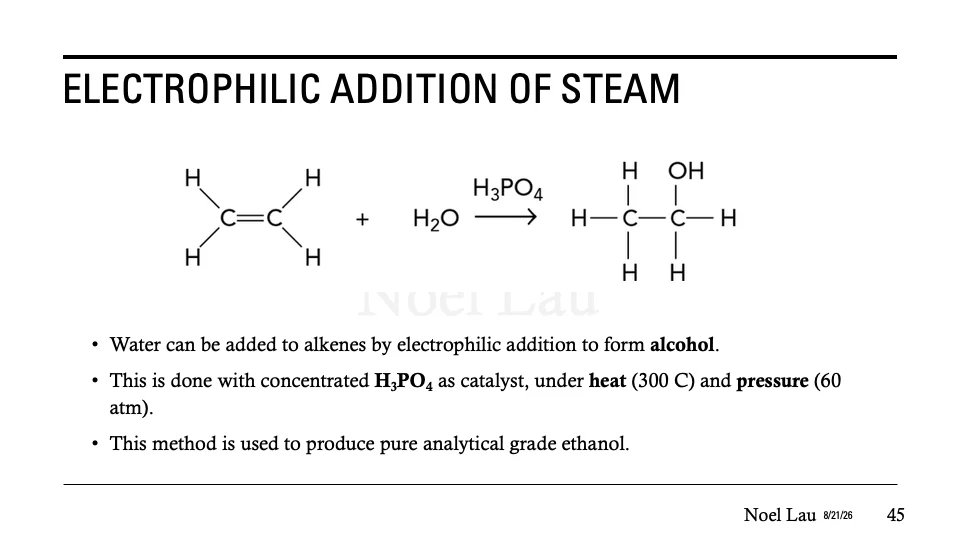
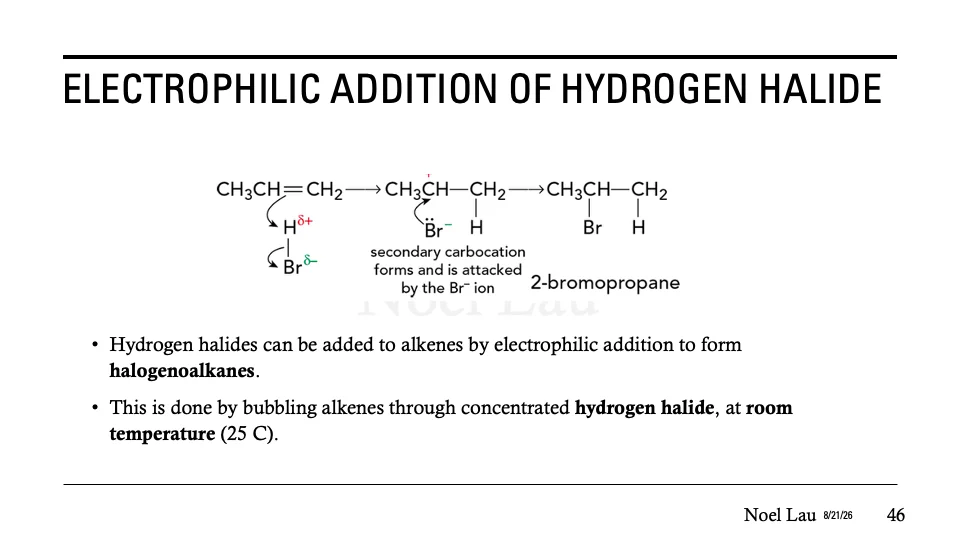
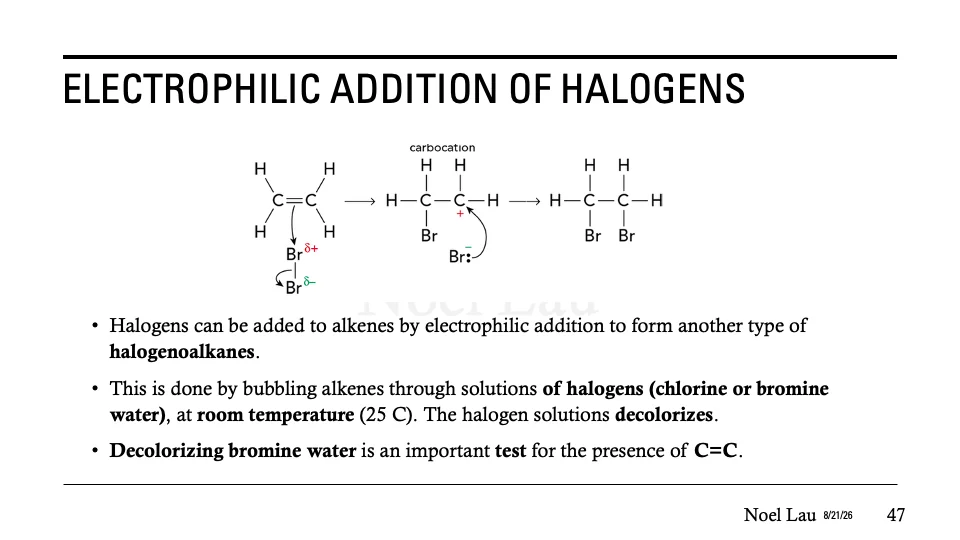
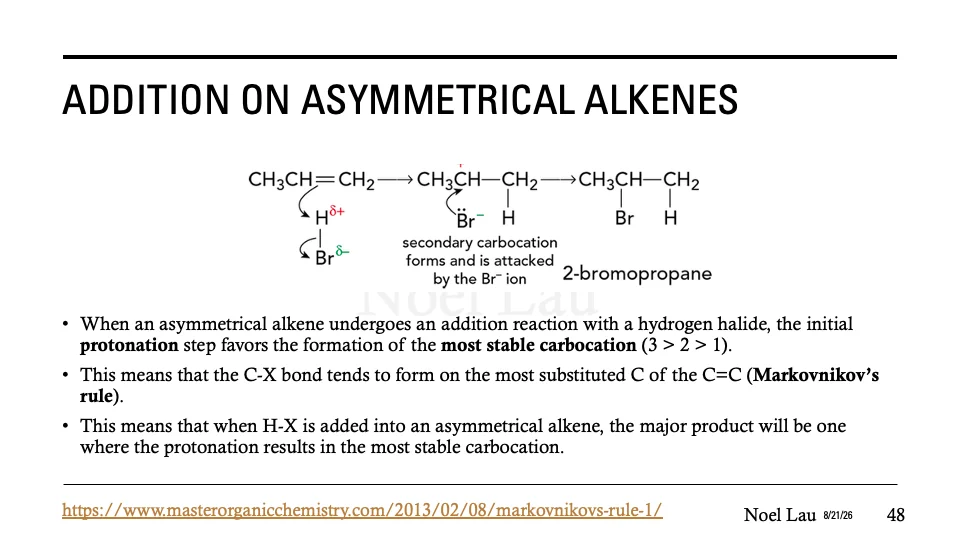
The chapter then turns to alkenes, where the presence of the pi bond introduces a markedly different reactivity profile. The electrophilic addition mechanism is described using bromine and hydrogen bromide as examples, and the regioselectivity of addition to unsymmetrical alkenes is rationalised through the inductive stabilisation of carbocations, leading to Markovnikov's rule. Oxidation by cold dilute acidified potassium manganate(VII) to give a diol, and by hot concentrated acidified potassium manganate(VII) with rupture of the double bond, are both described. The chapter closes with addition polymerisation and the use of aqueous bromine as a test for the presence of a carbon-carbon double bond.