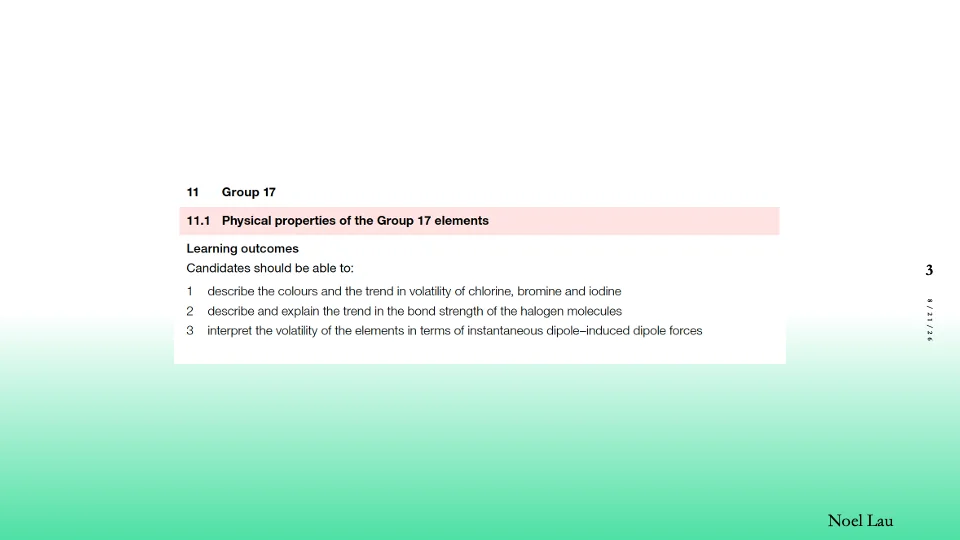
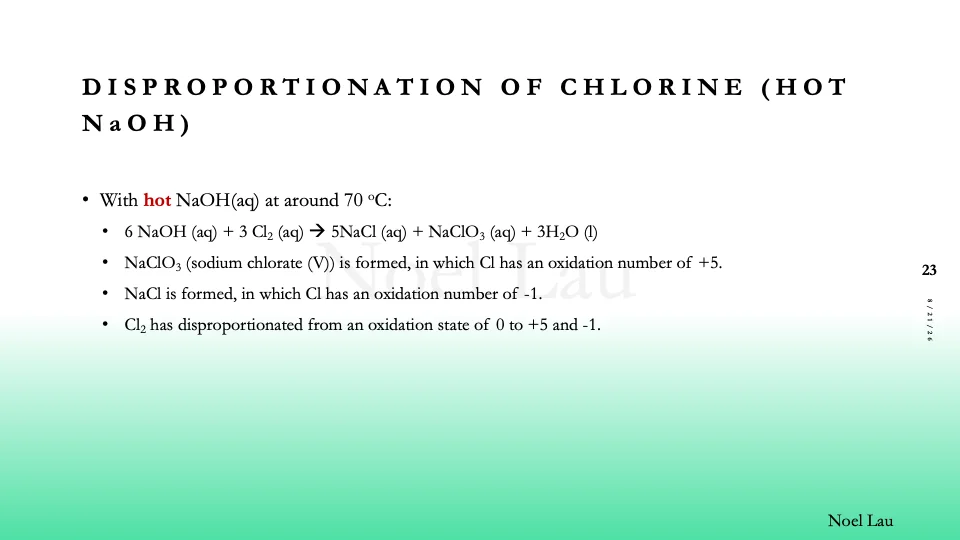
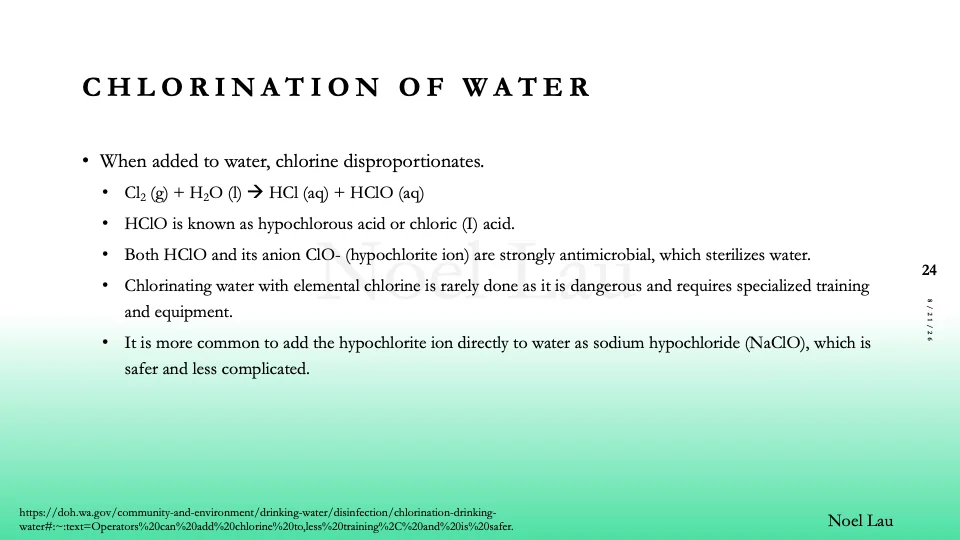
Chapter 11 examines the halogens as a group, developing a coherent picture of how physical and chemical properties vary from chlorine to iodine and why. The chapter covers both the behaviour of the elemental halogens and the chemistry of their ions, providing a detailed and connected account of this important group.
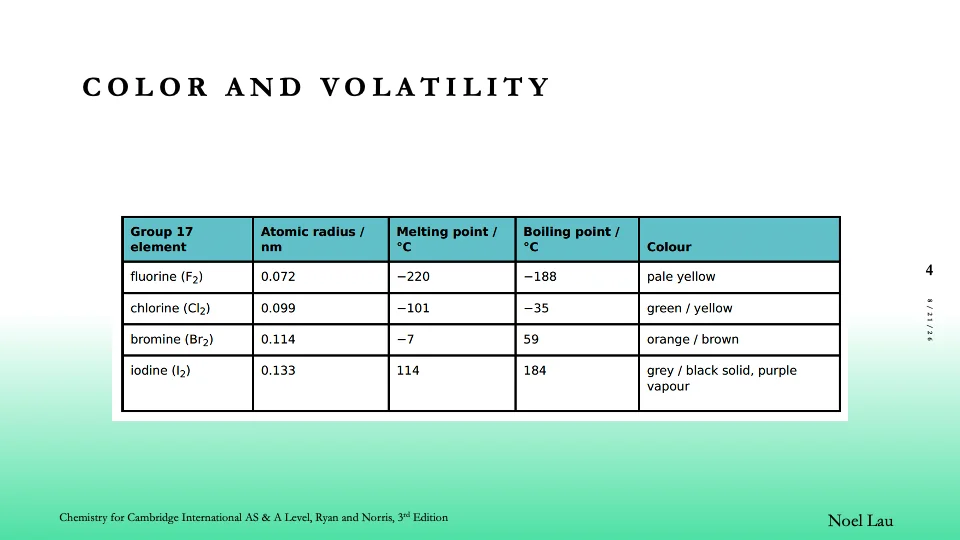
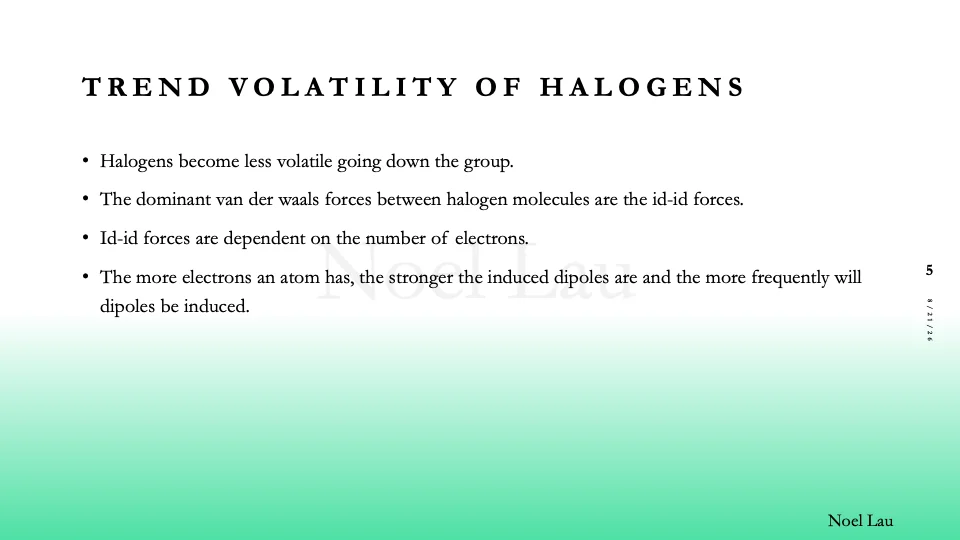
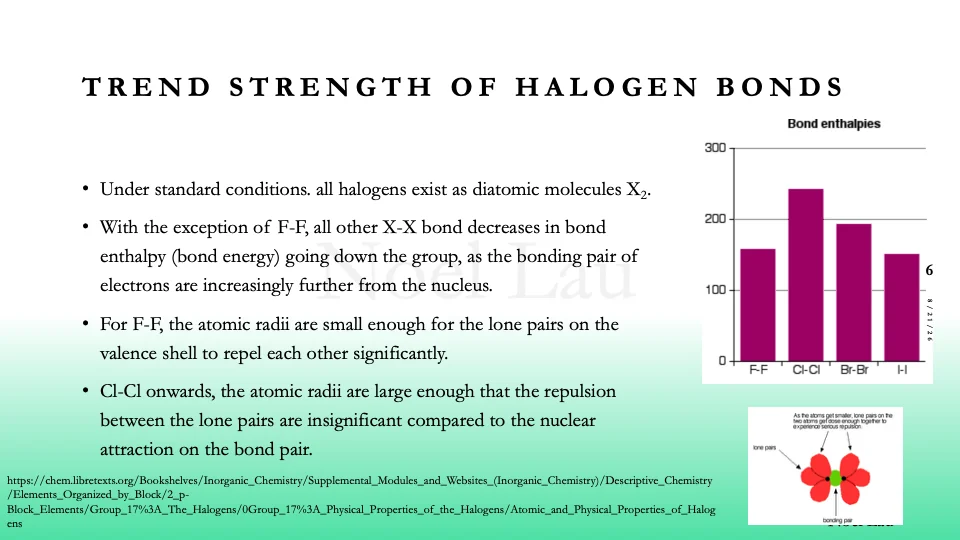
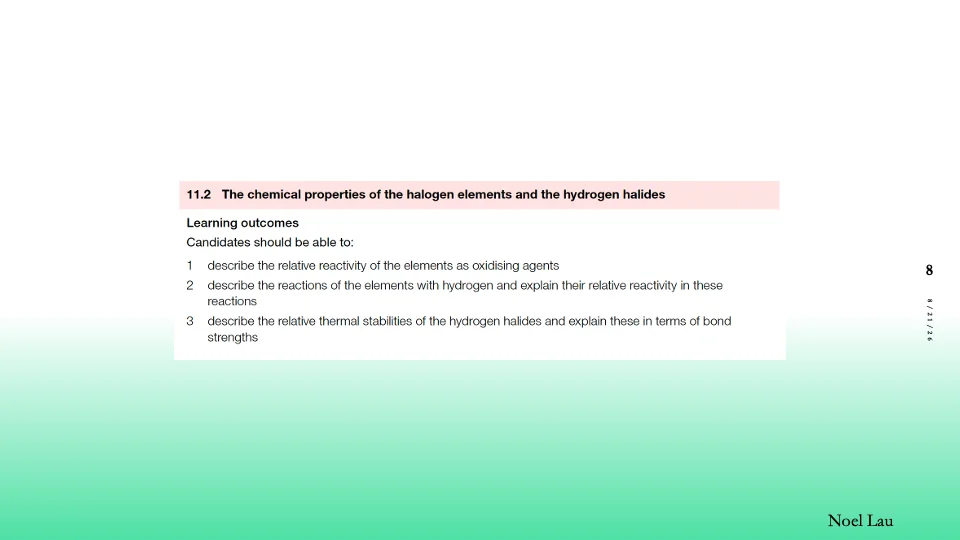
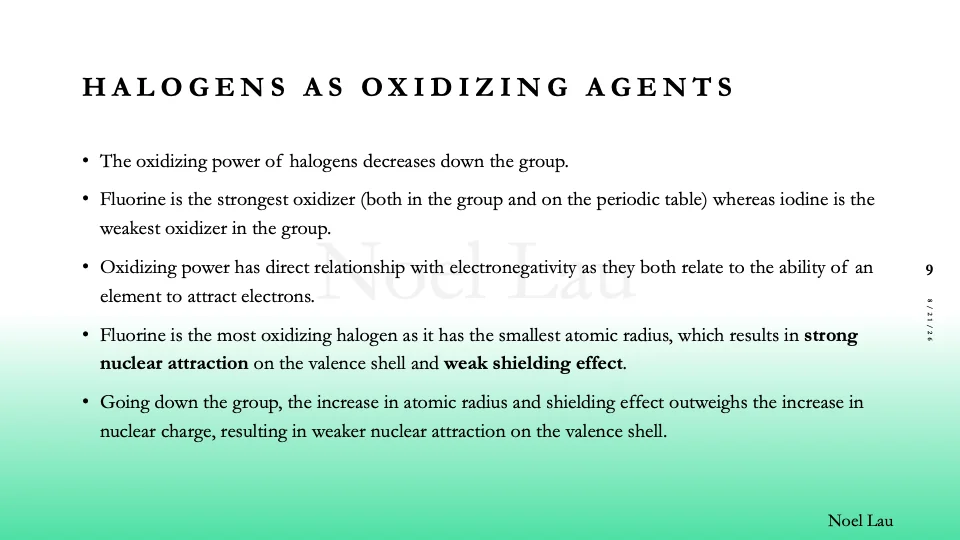
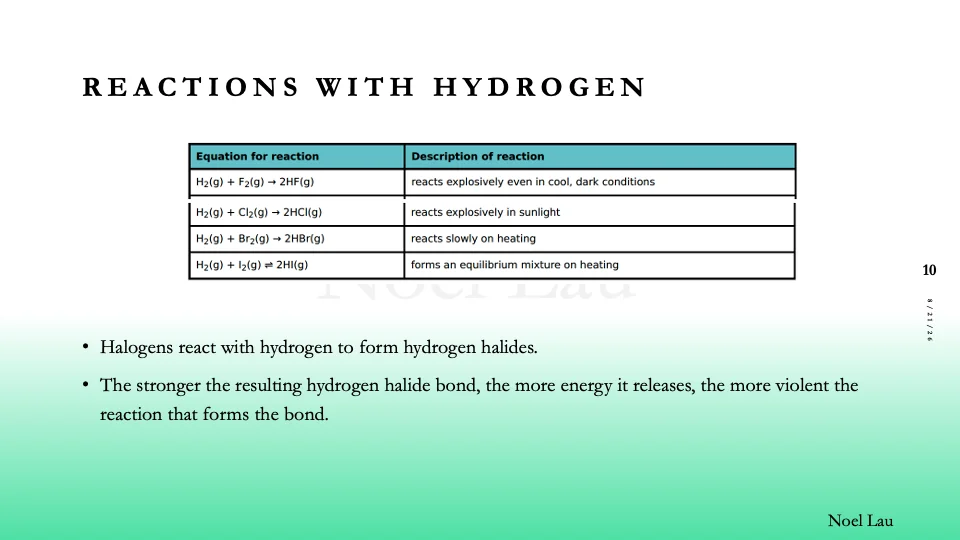
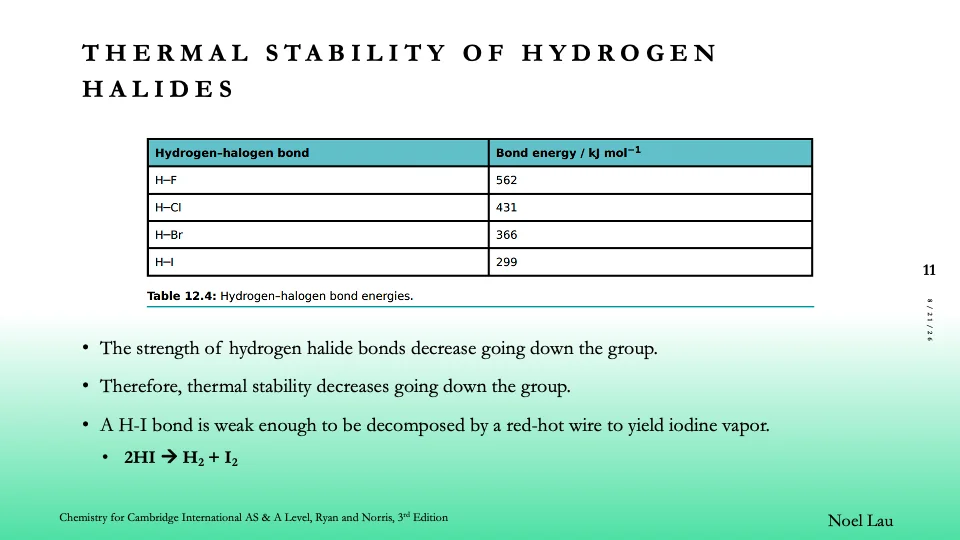
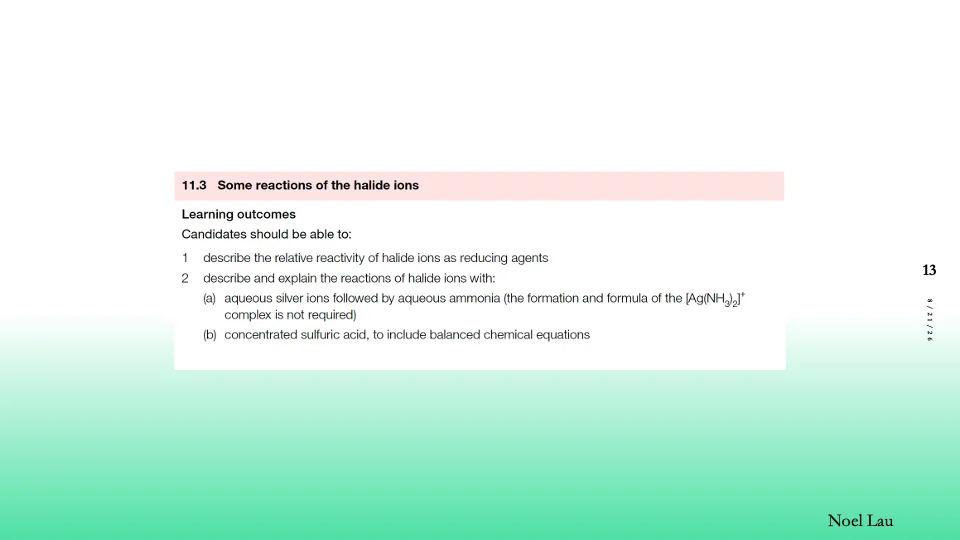
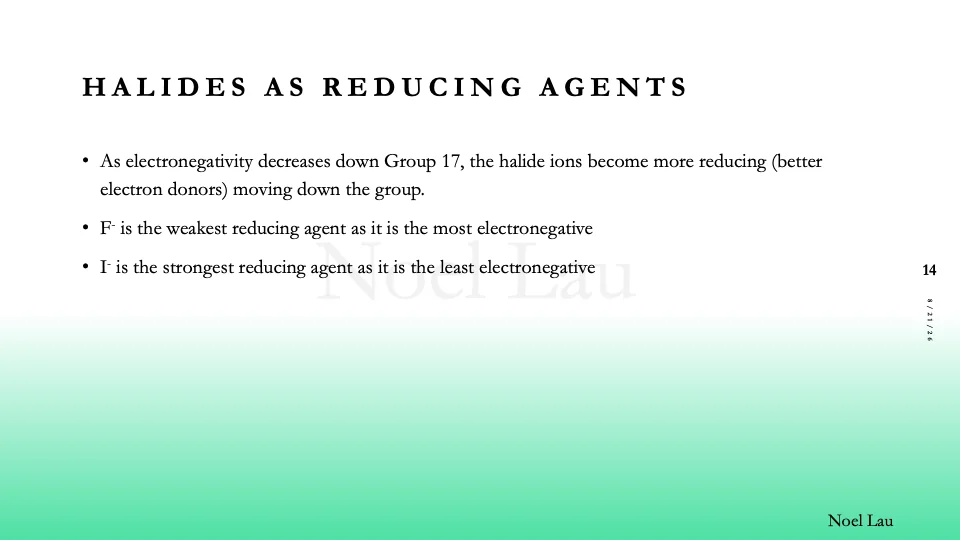
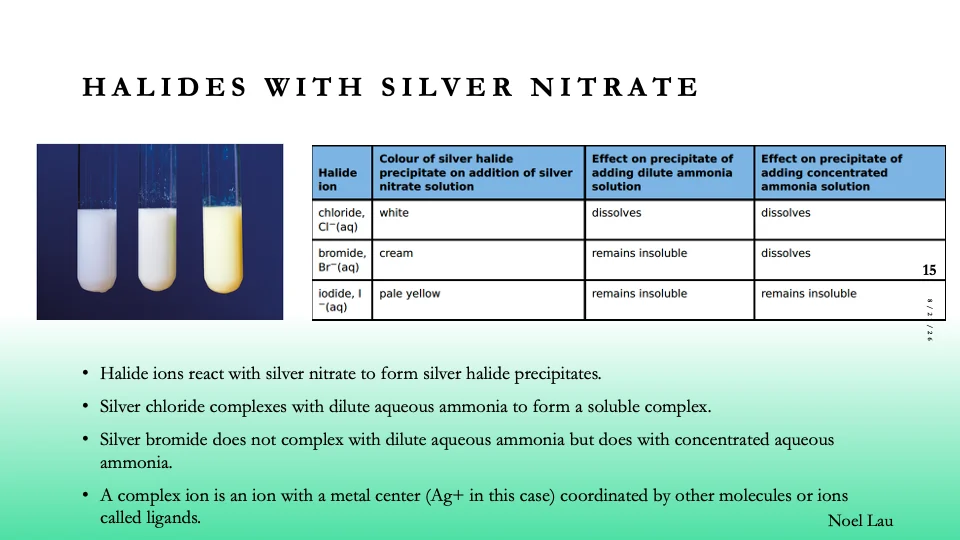
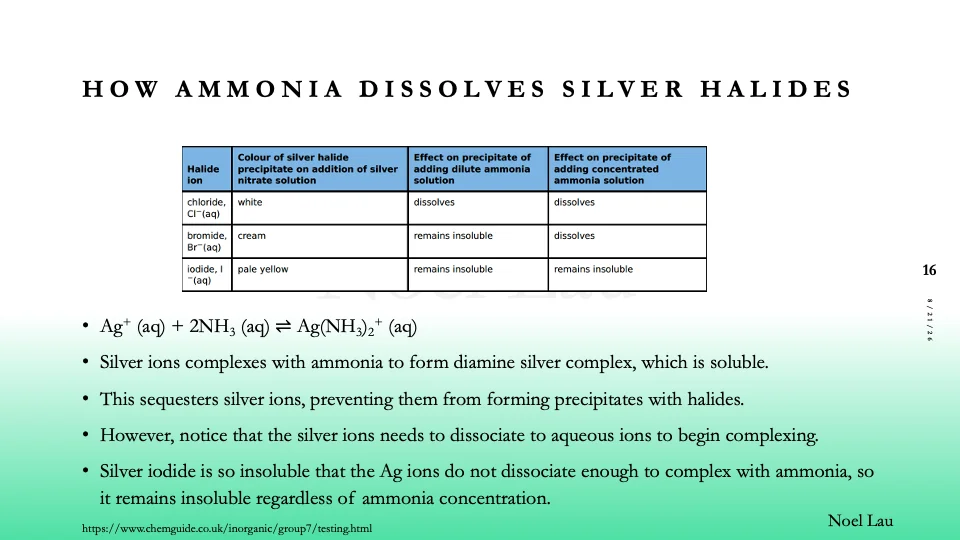
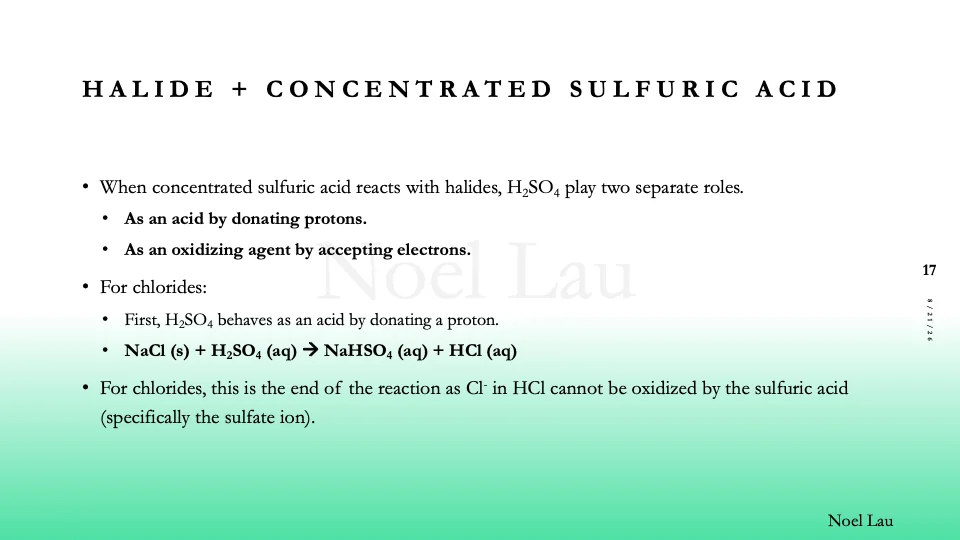
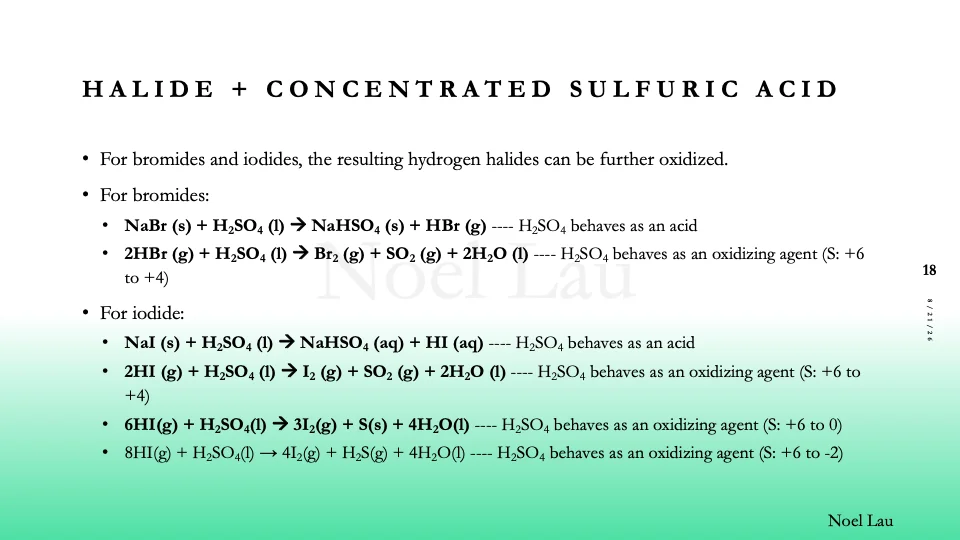
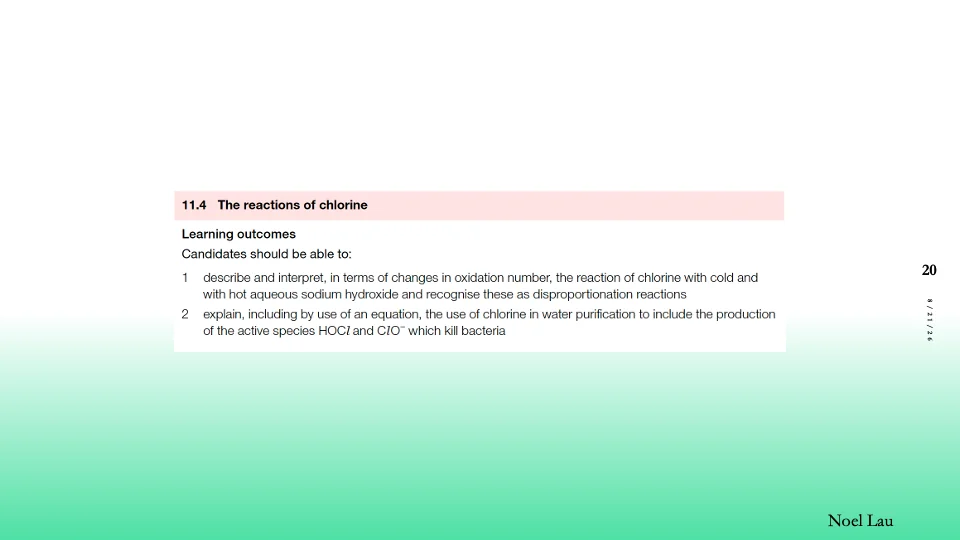
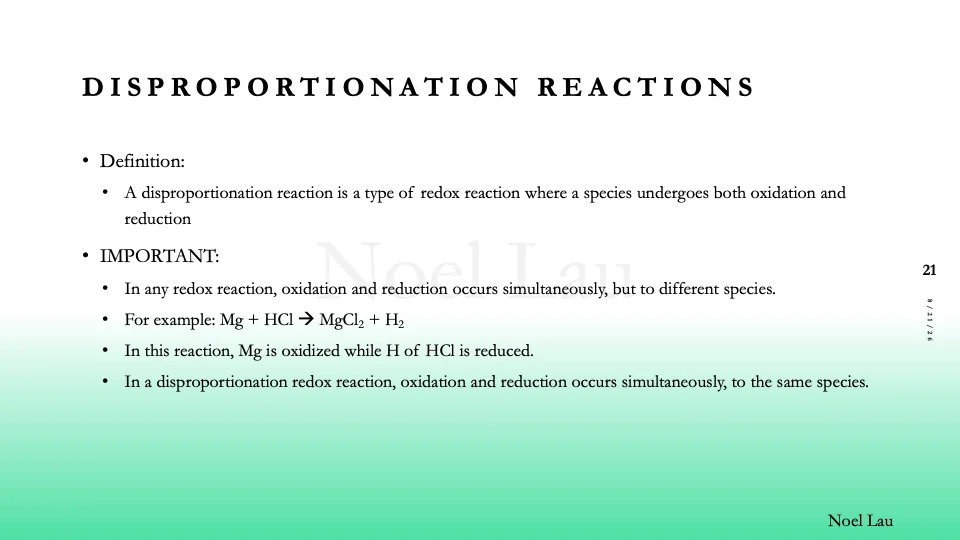
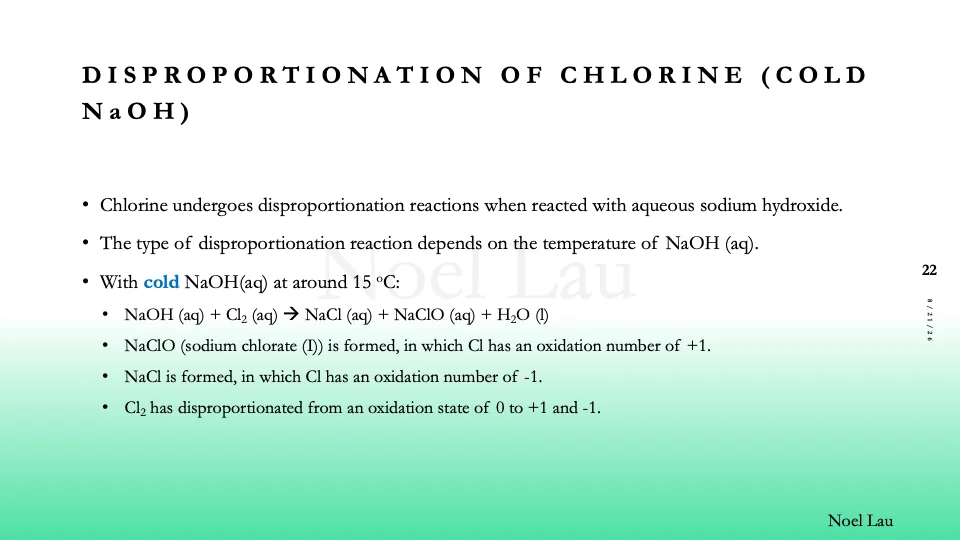
The physical properties of chlorine, bromine and iodine are described first, with trends in volatility and bond strength rationalised in terms of instantaneous dipole-induced dipole forces and bond energies respectively. The chemical properties of the halogens are then examined, including their relative reactivity as oxidising agents, their reactions with hydrogen, and the thermal stabilities of the resulting hydrogen halides. The chapter then turns to halide ions, addressing their relative reactivity as reducing agents and their reactions with aqueous silver nitrate and concentrated sulfuric acid. It closes with the reactions of chlorine with cold and hot aqueous sodium hydroxide, which are analysed as disproportionation reactions, and the role of chlorine in water purification.