An understanding of atomic structure is fundamental to the study of chemistry at this level. Chapter 1 establishes the theoretical and quantitative framework that underpins the entire course, beginning with the composition of the atom and progressing to the detailed electronic models that explain chemical behaviour and periodic trends.
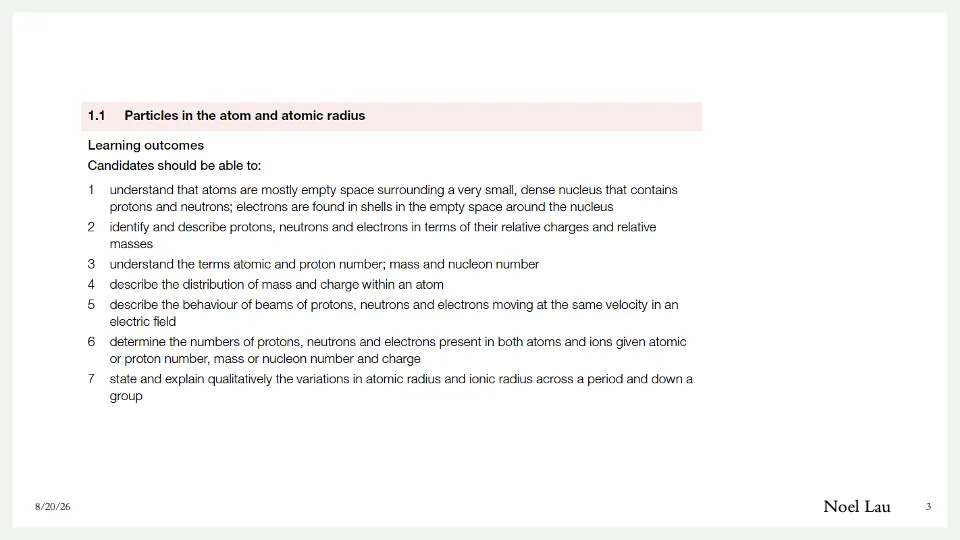
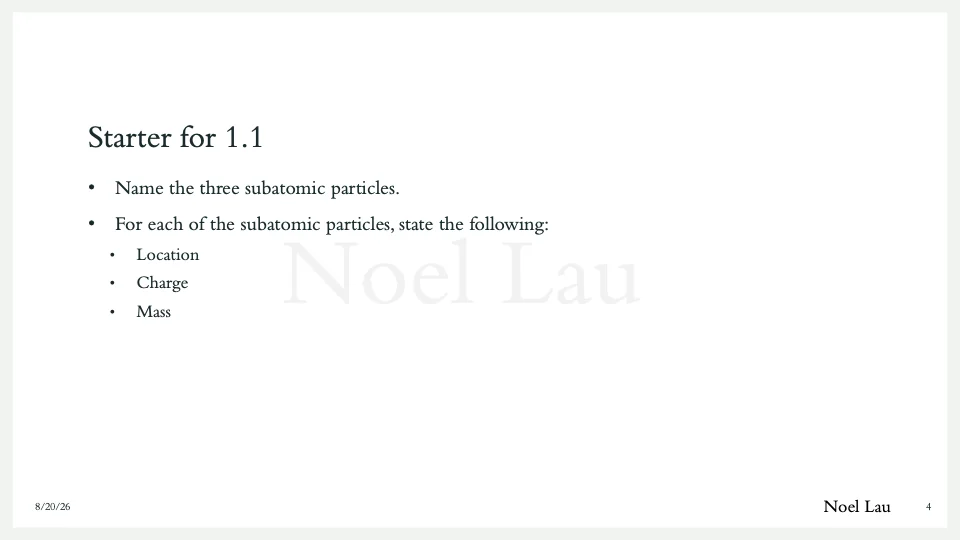
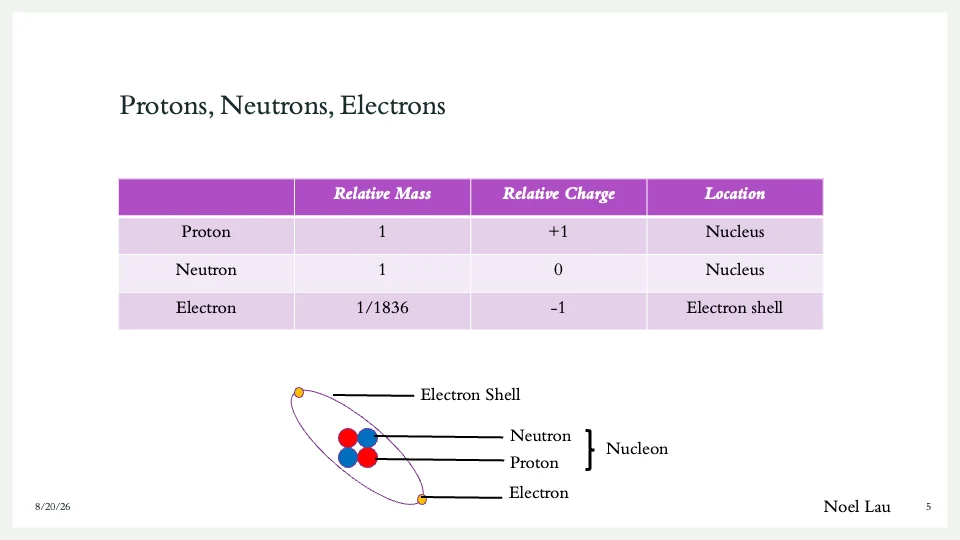
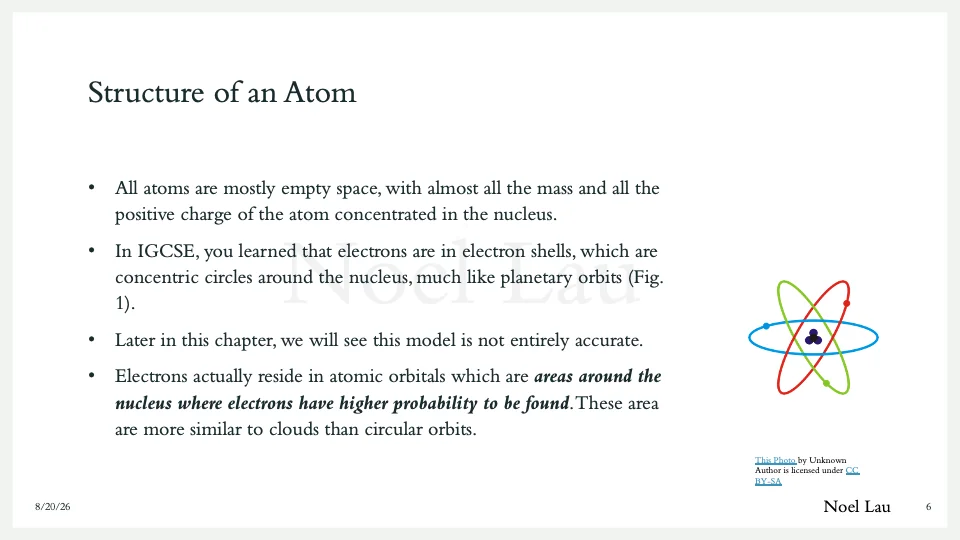
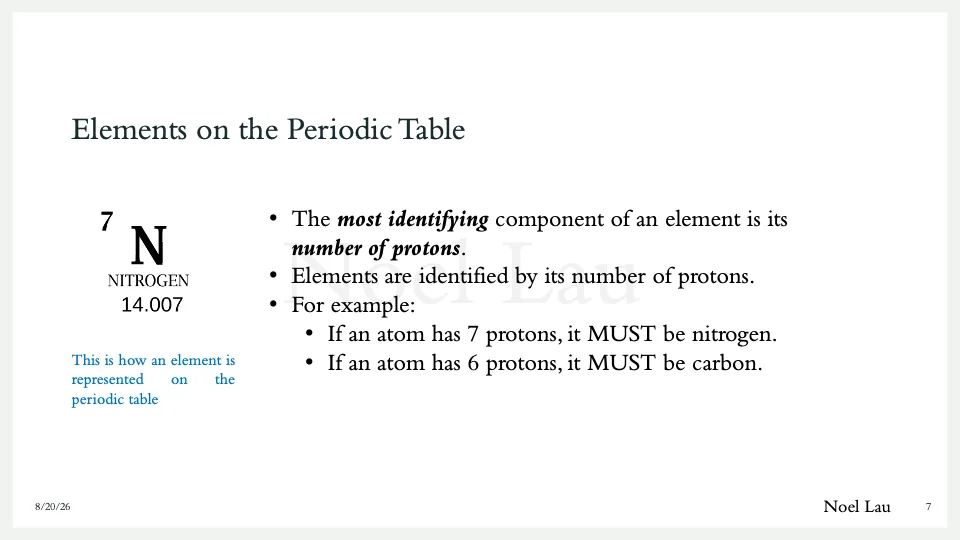
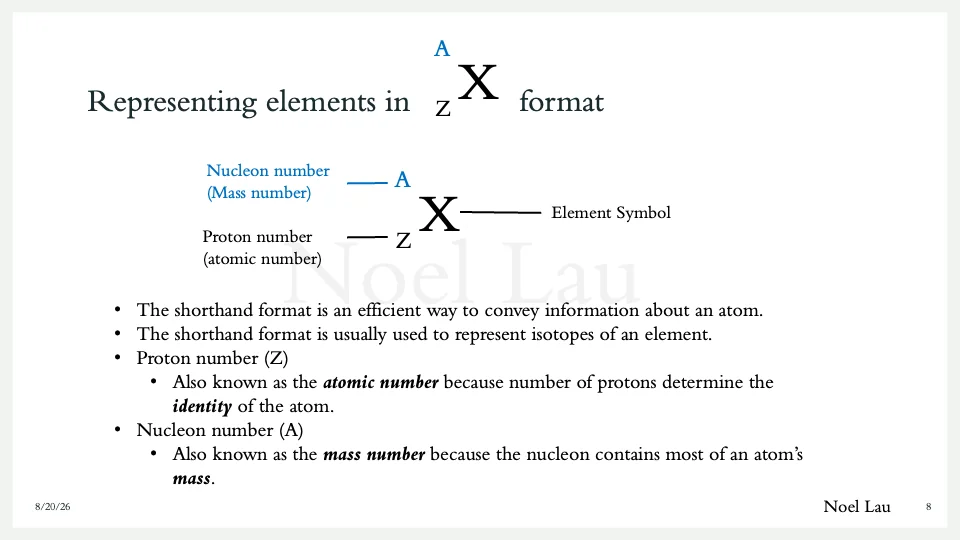
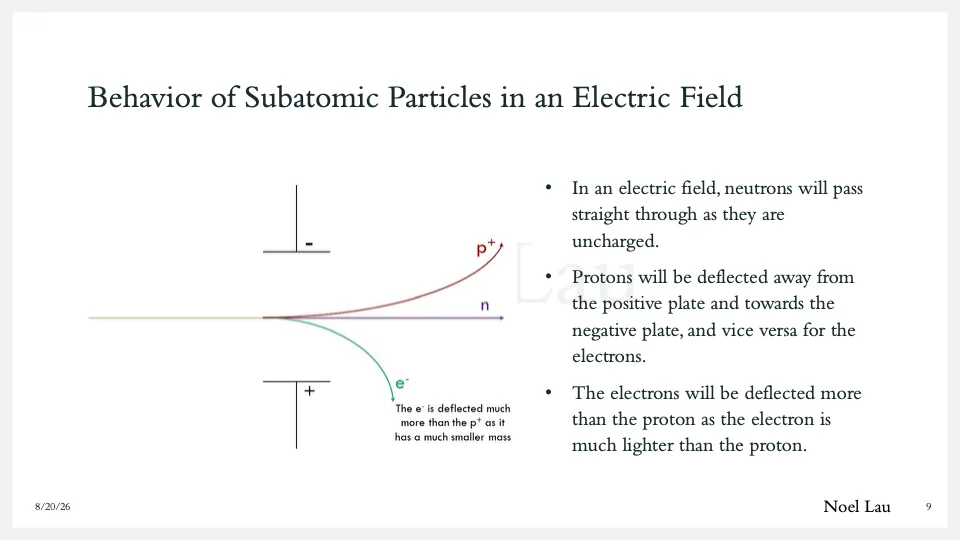
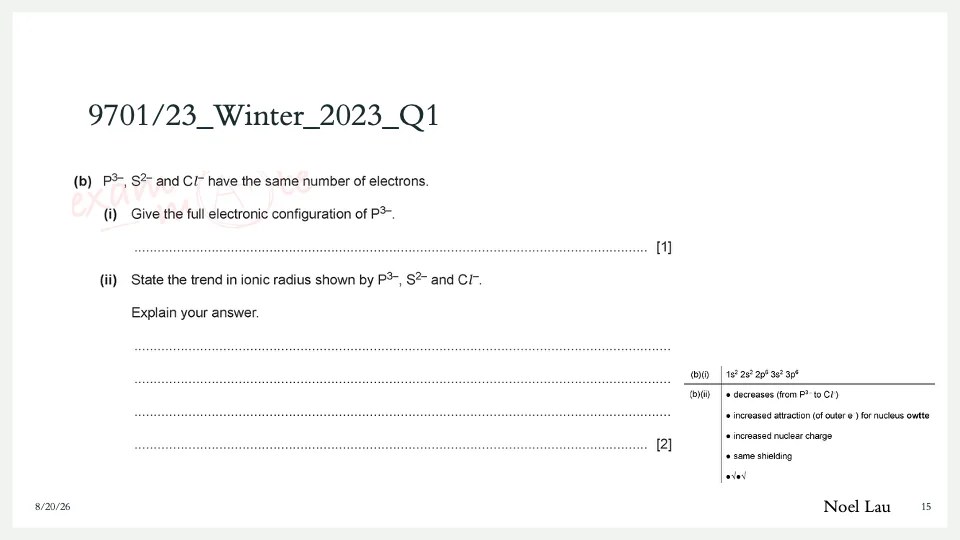
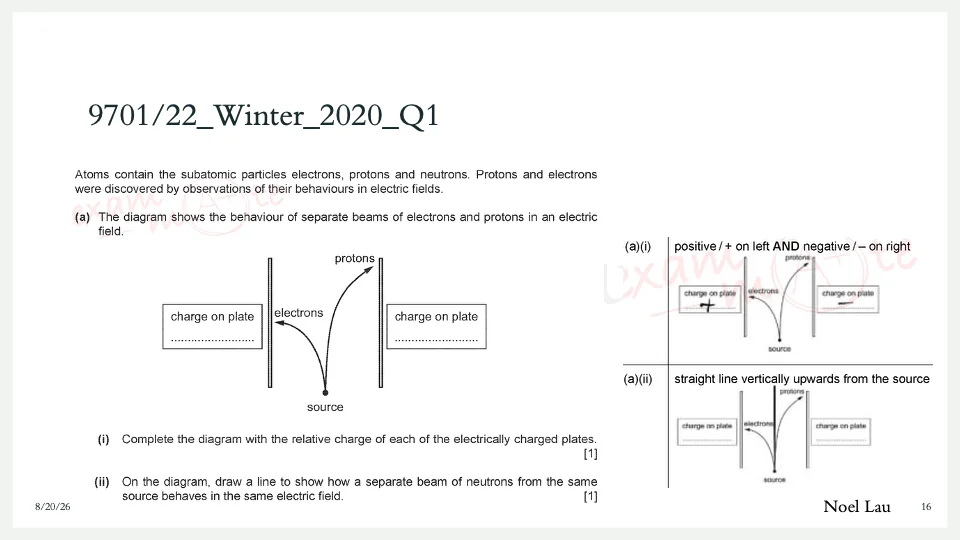
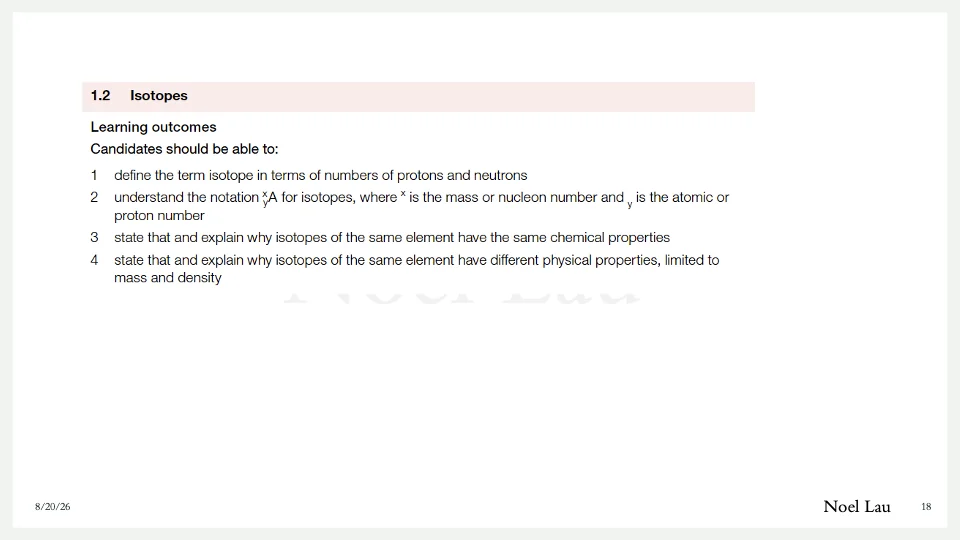
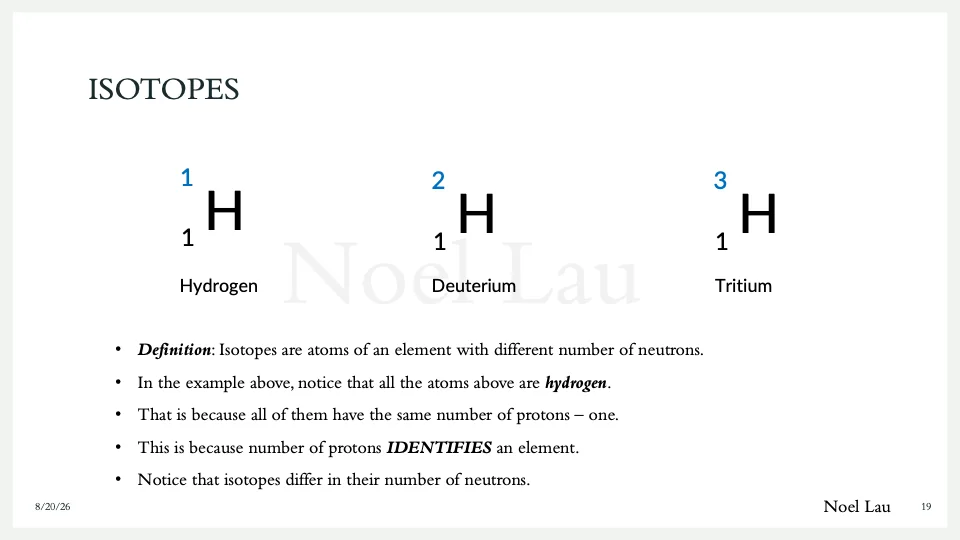
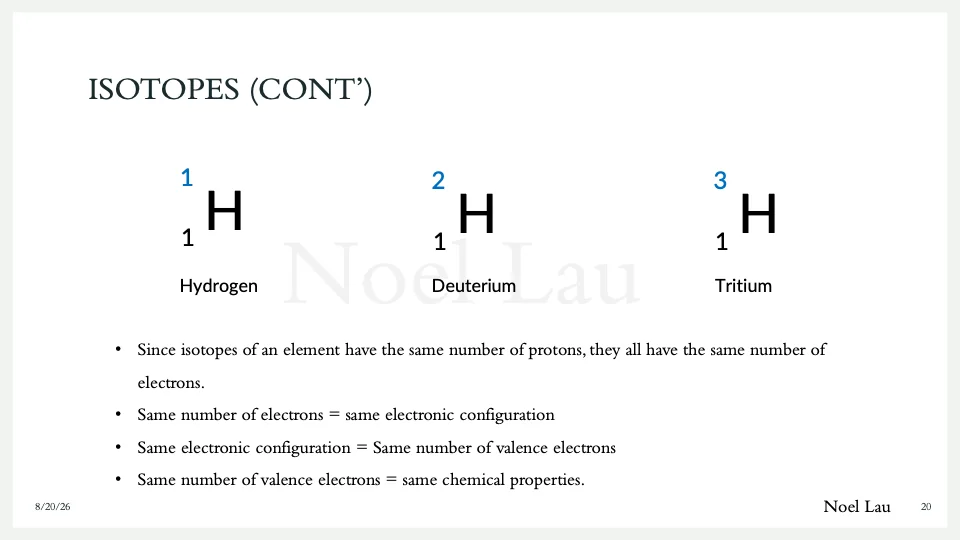
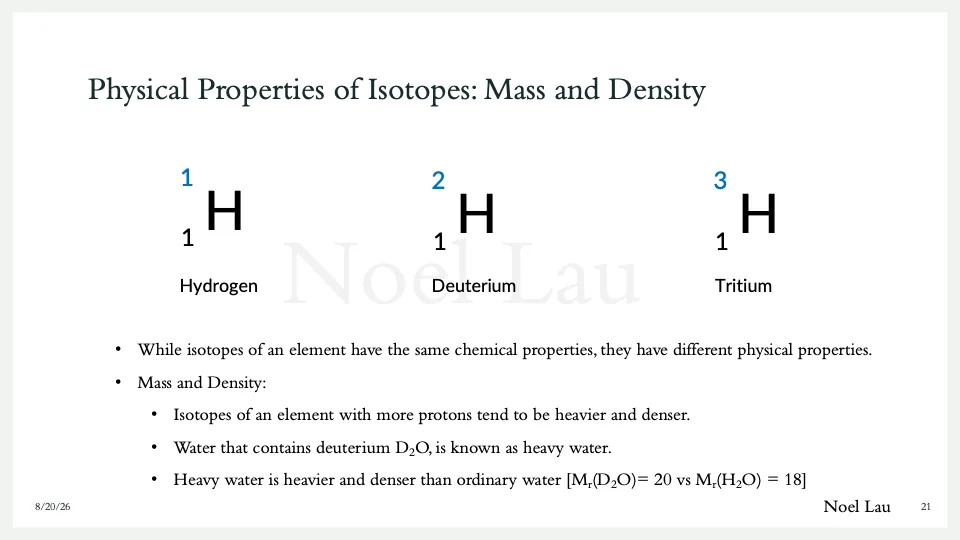
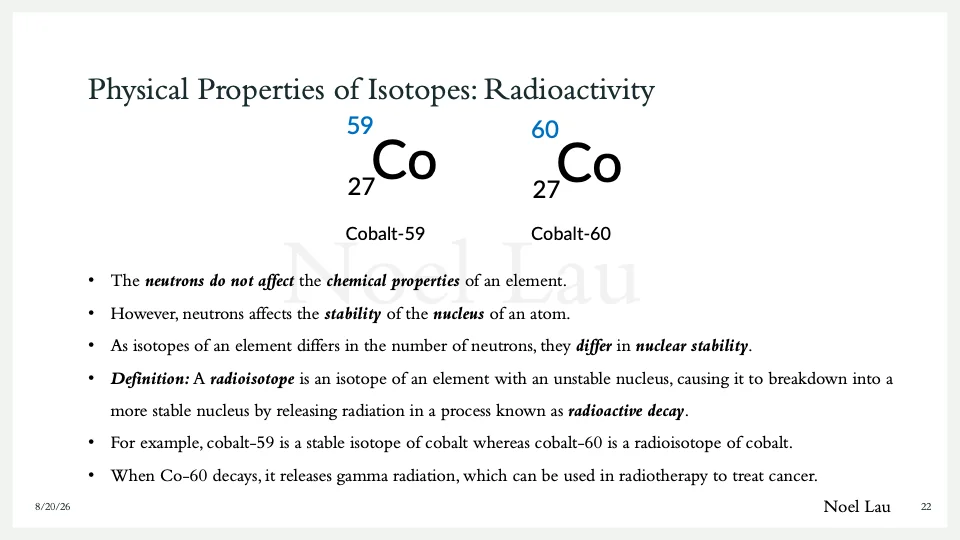
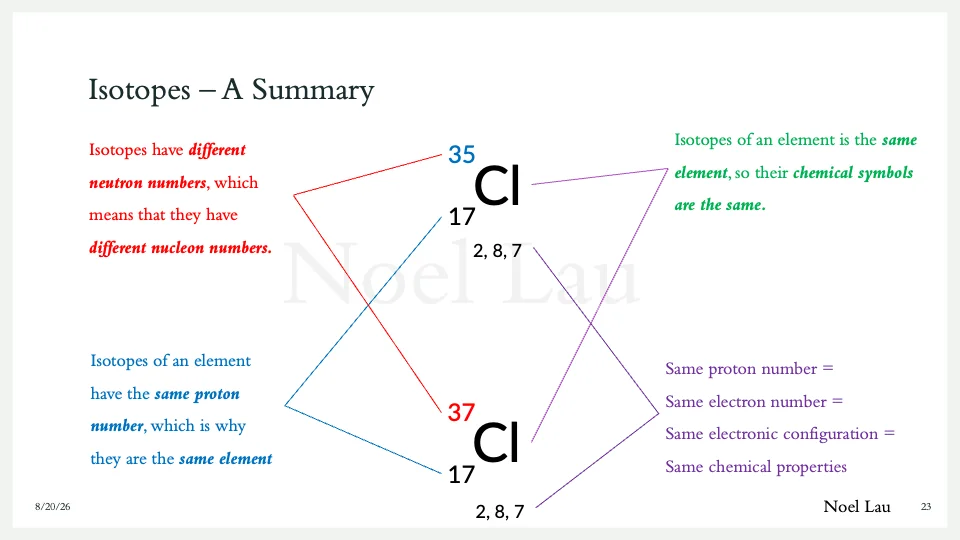
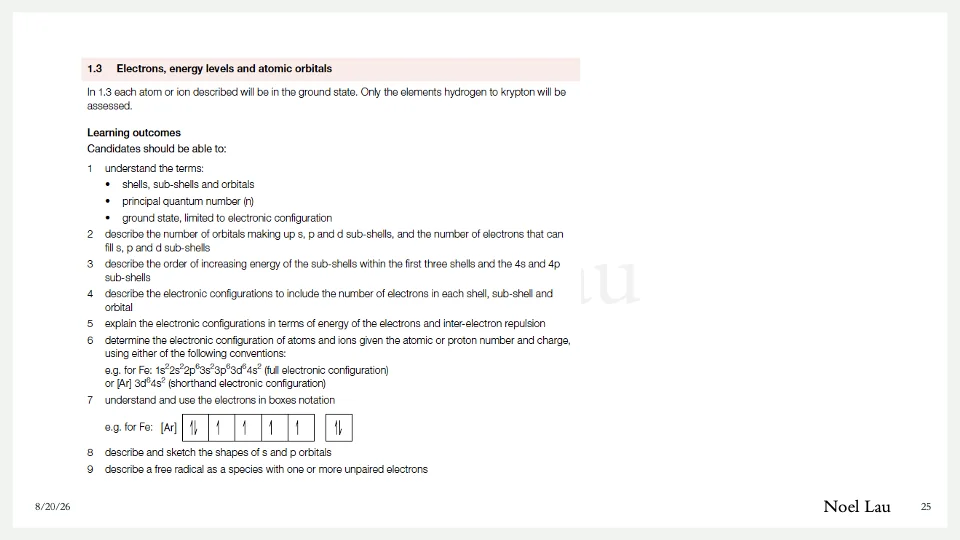
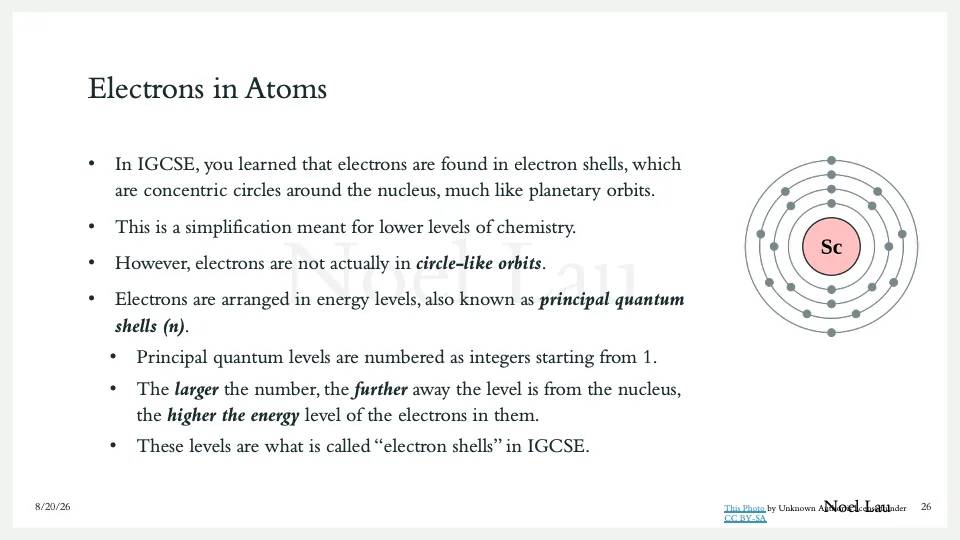
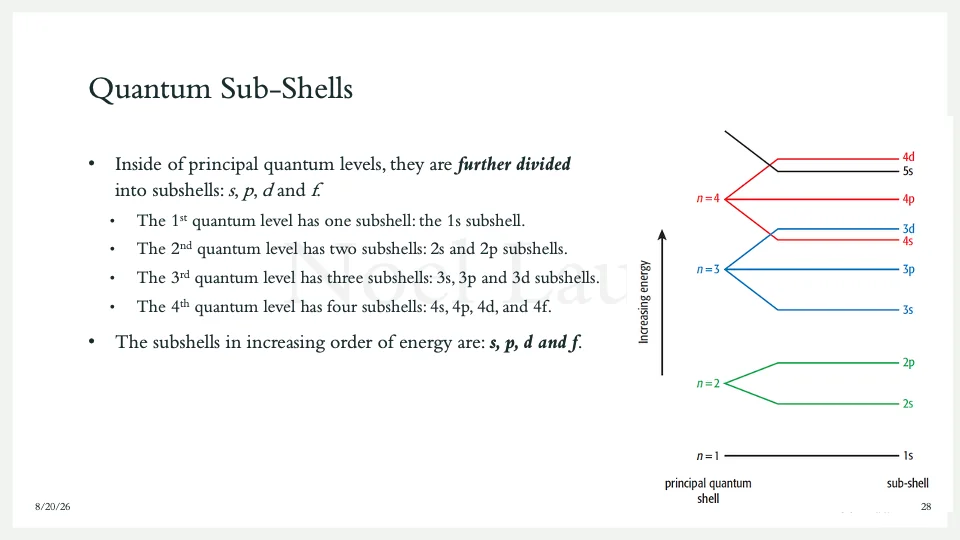
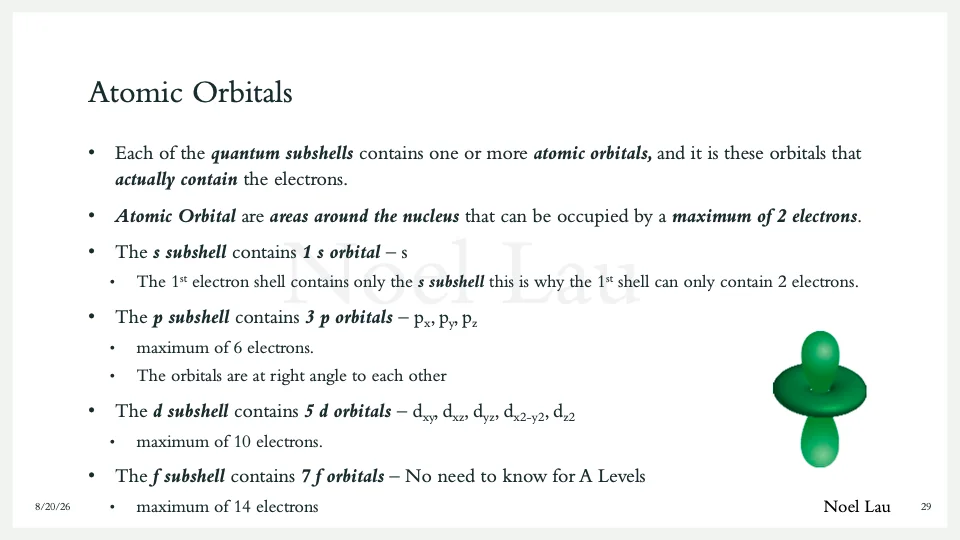
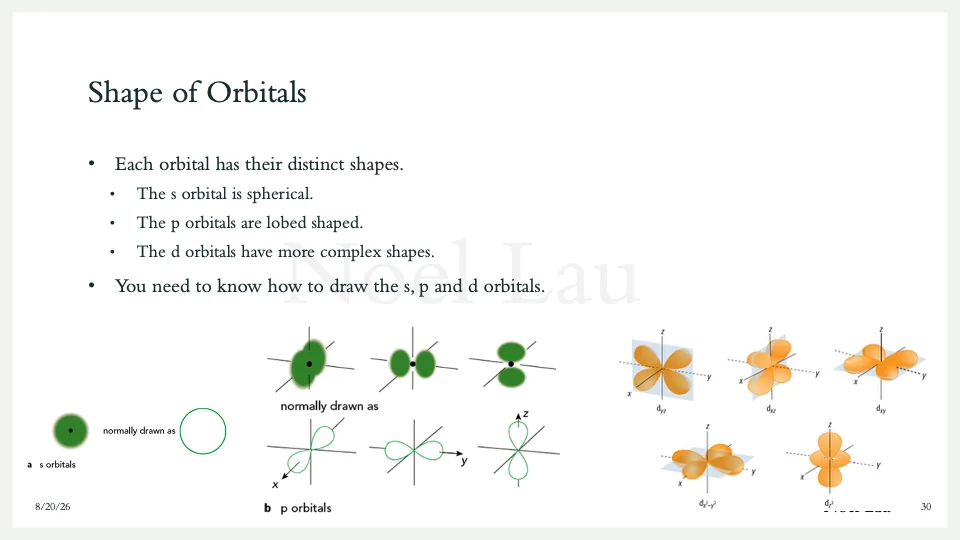
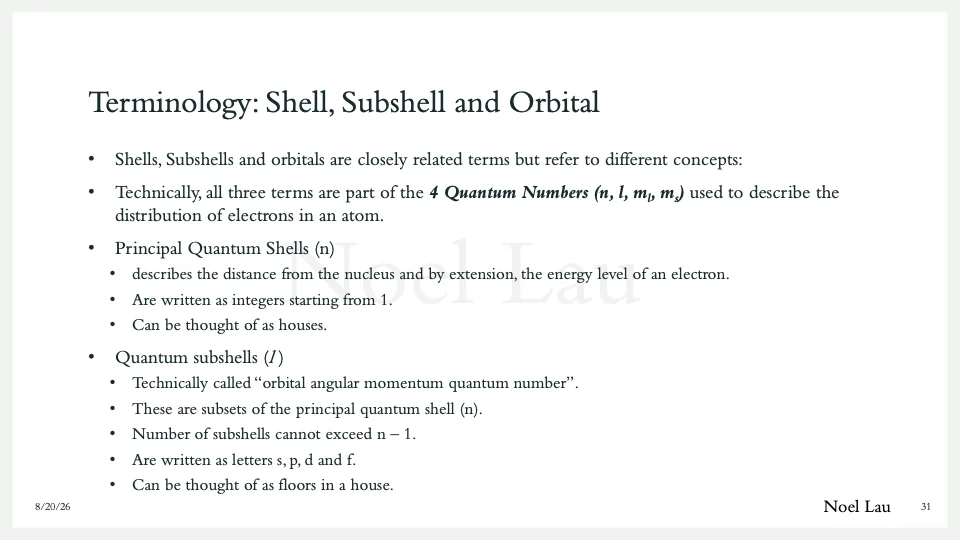
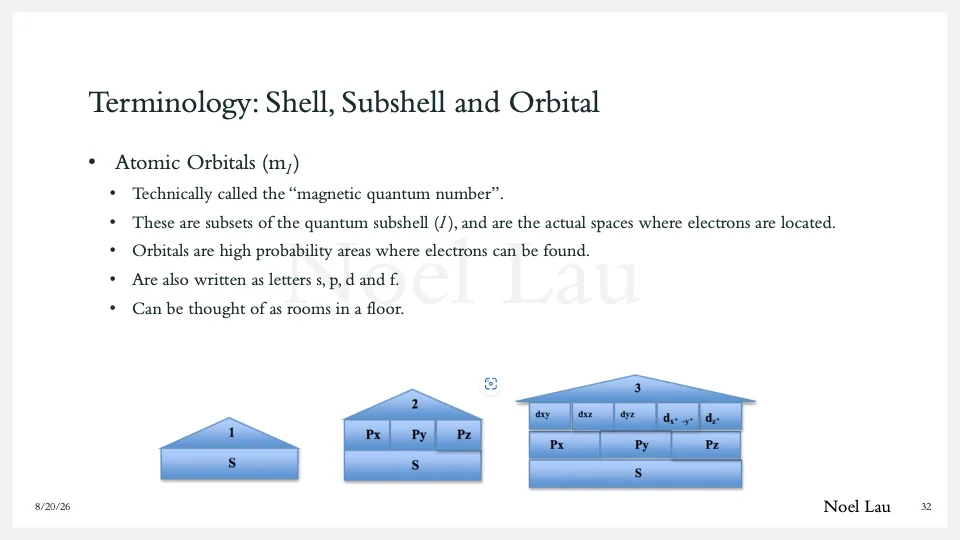
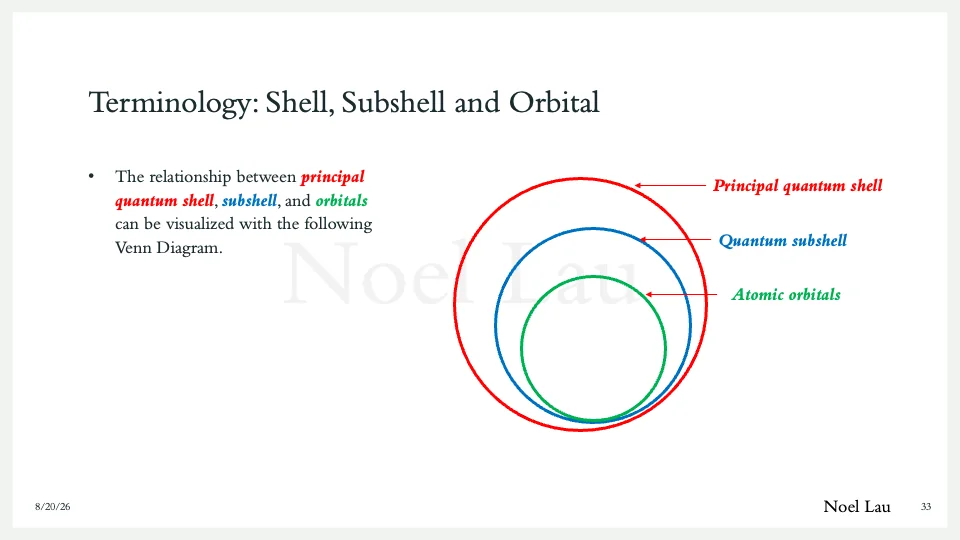
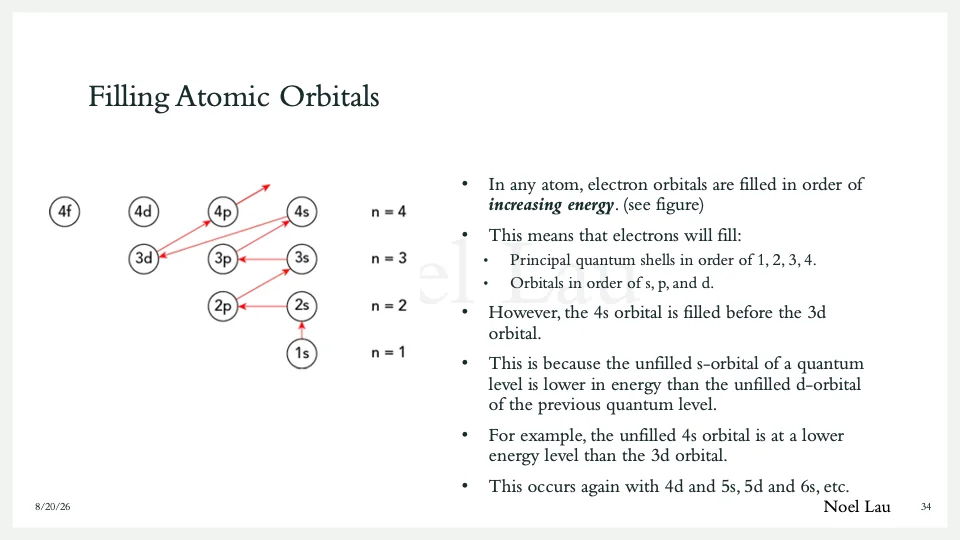
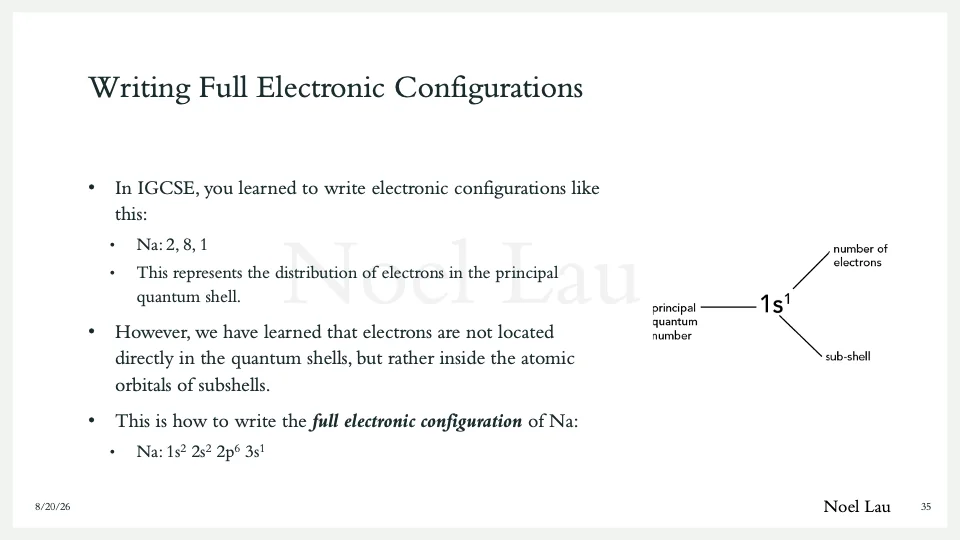
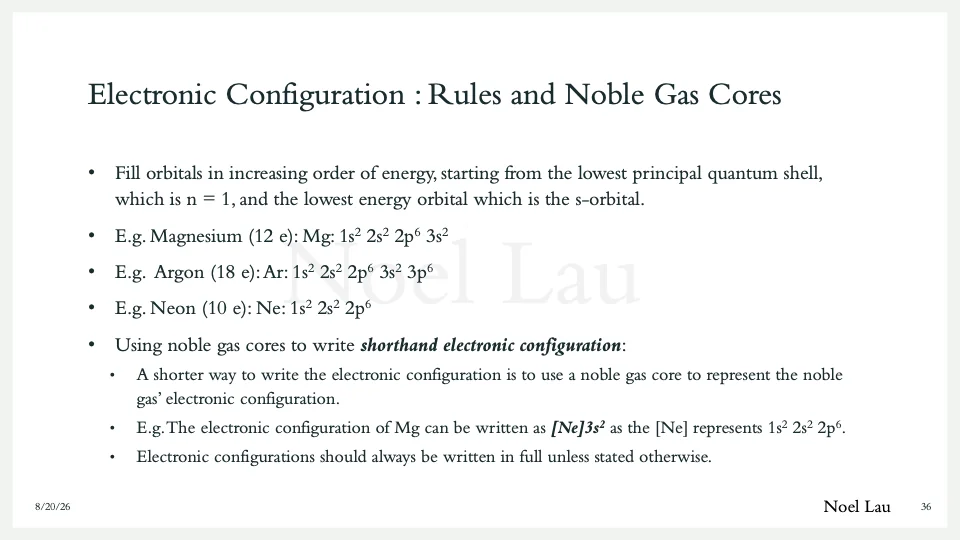
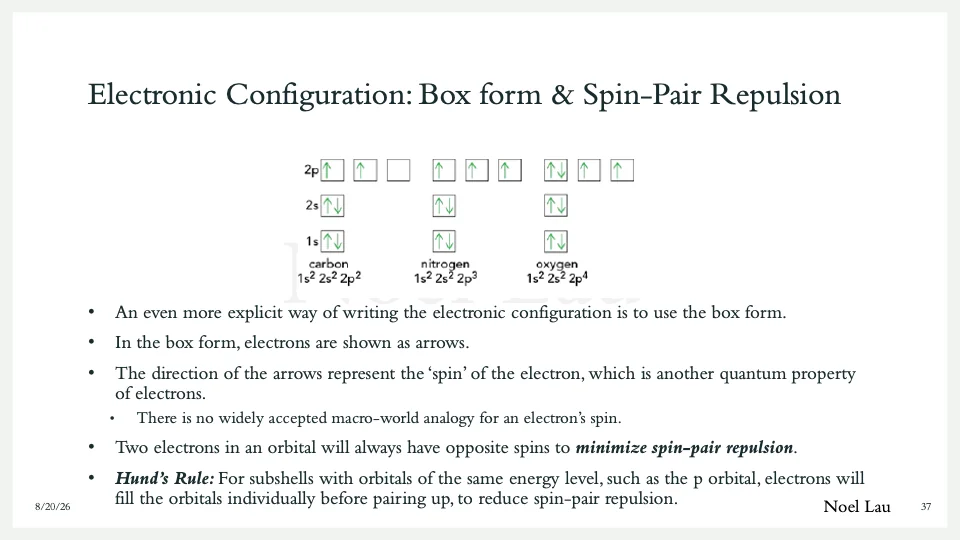
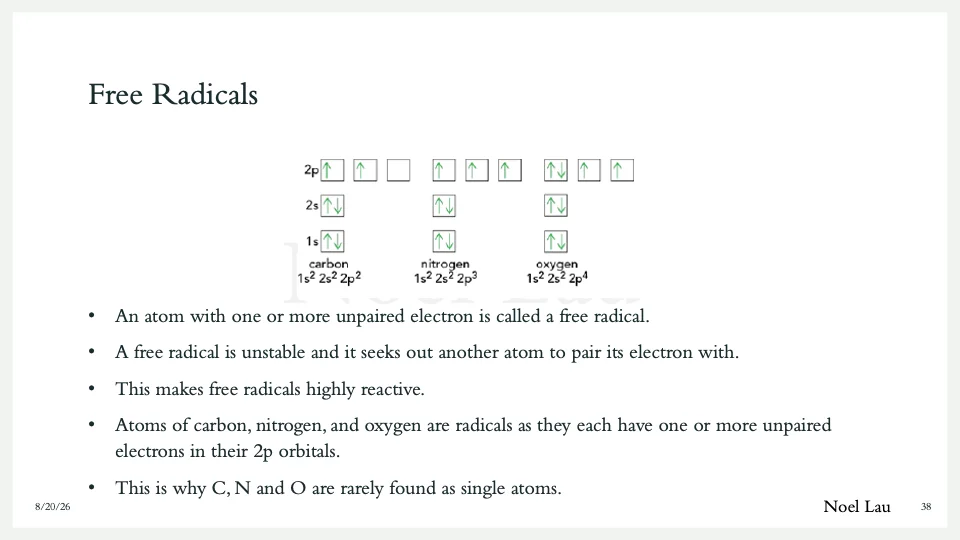
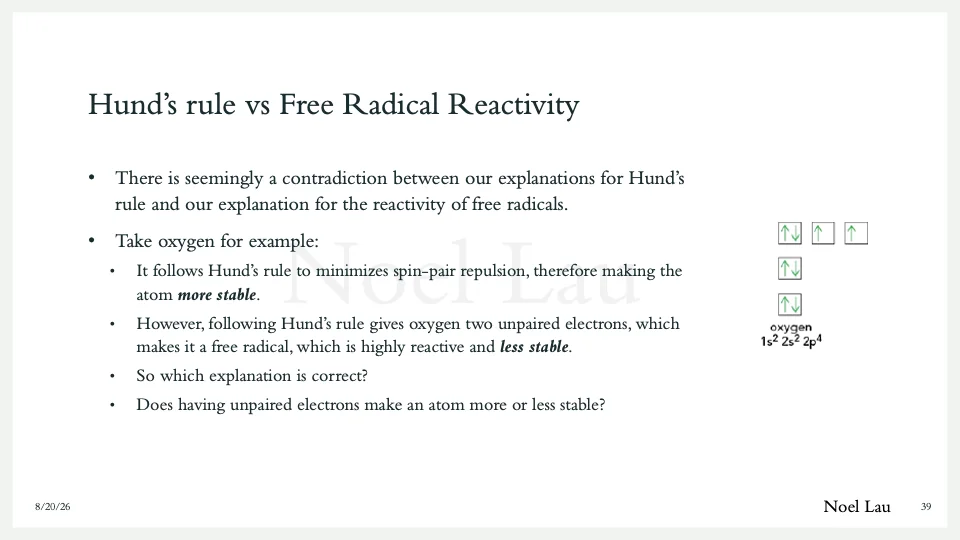
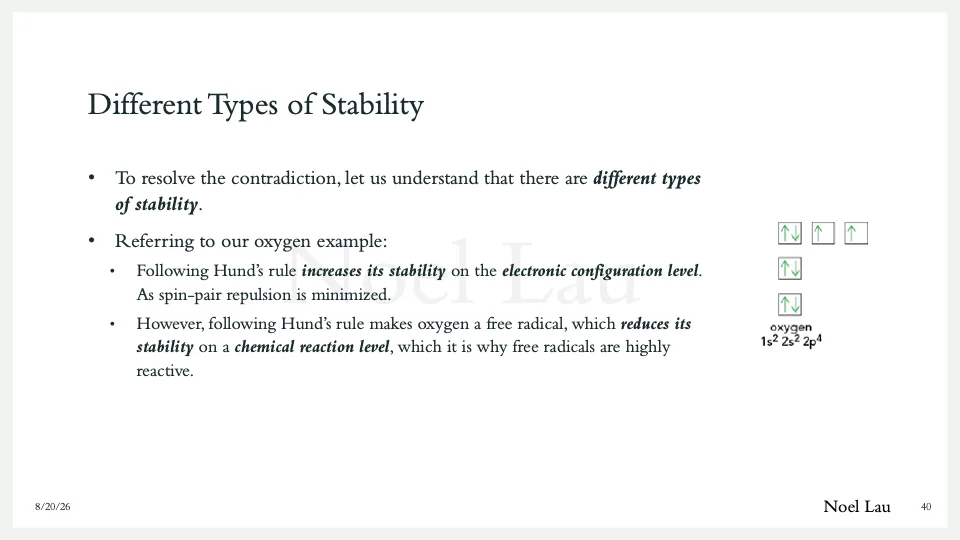
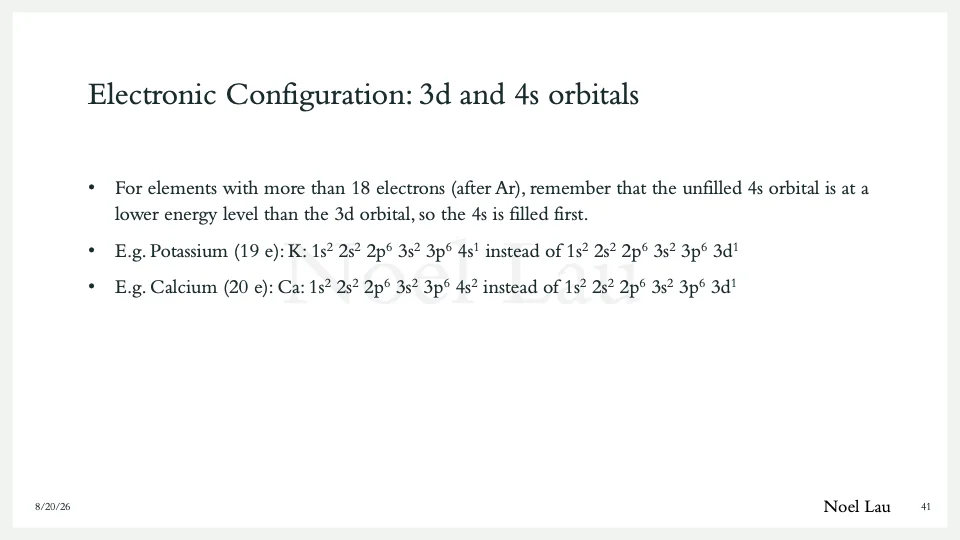
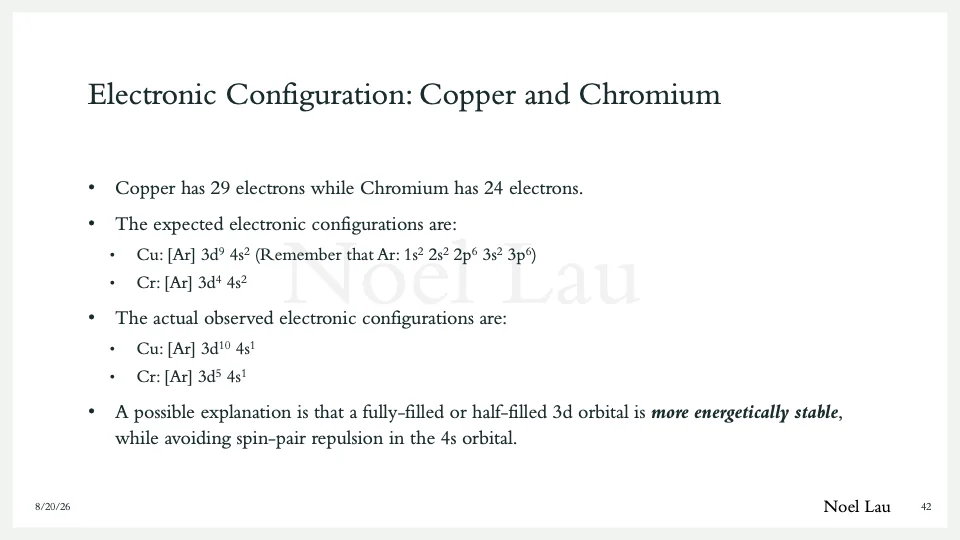
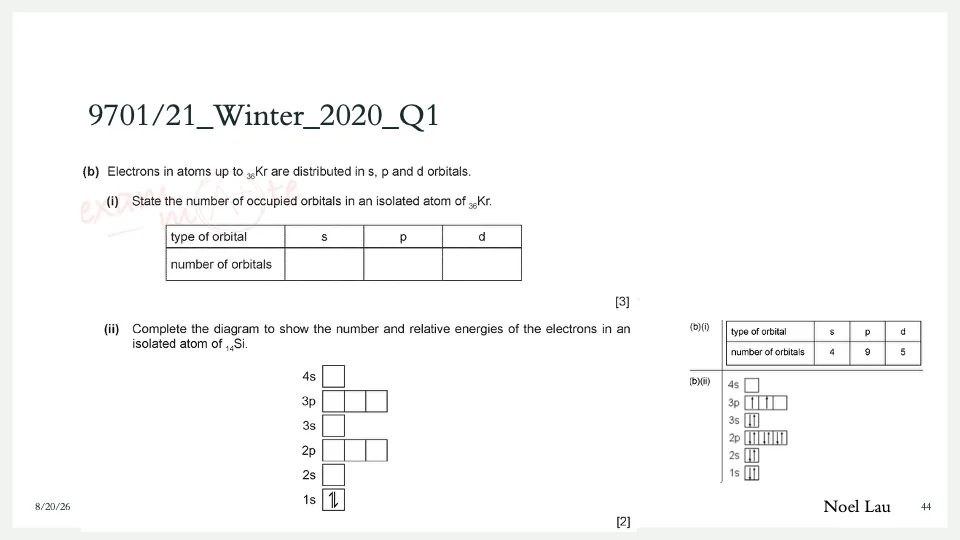
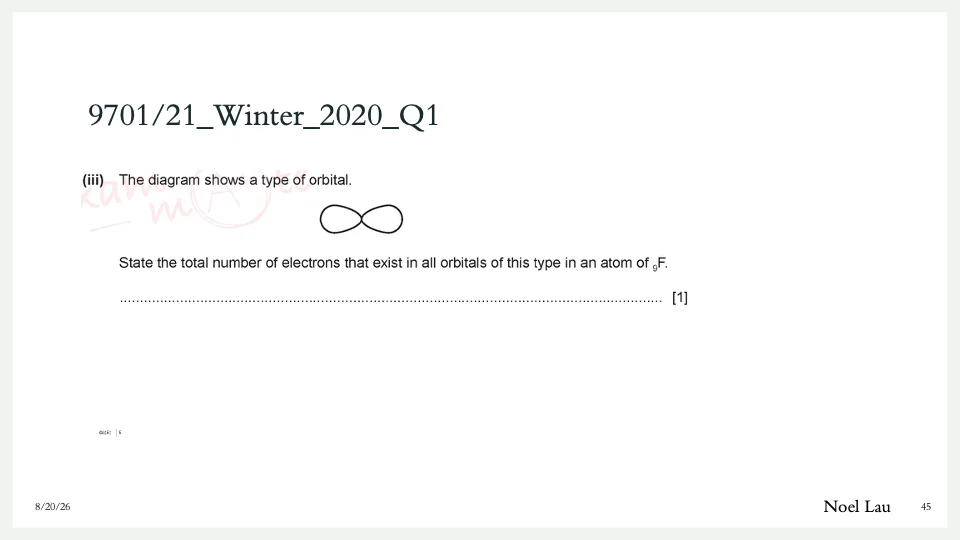
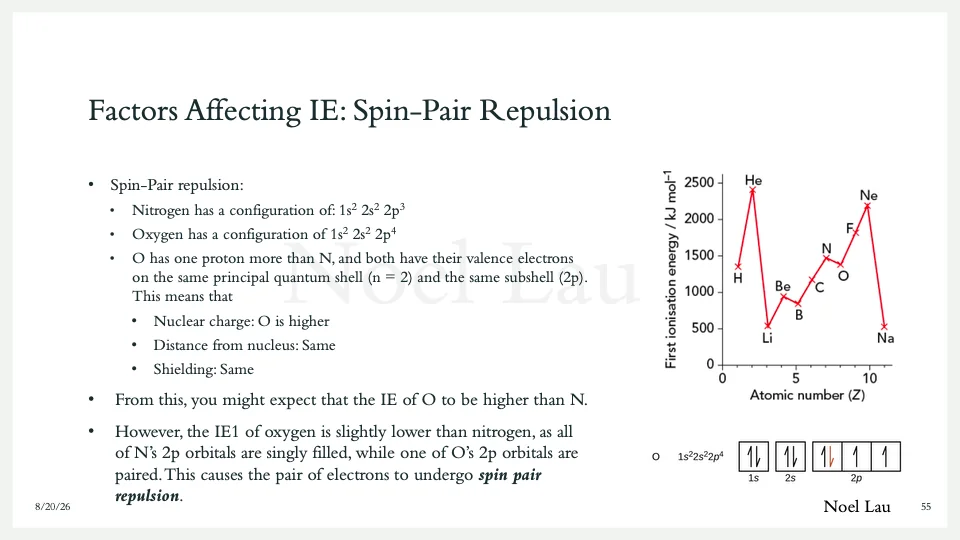
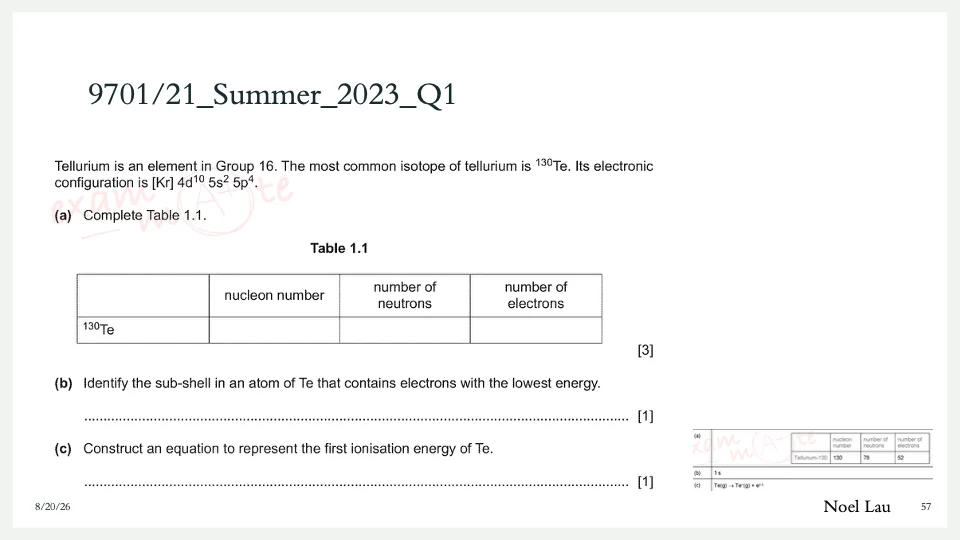
The chapter opens with a treatment of subatomic particles, their relative masses and charges, and their distribution within the atom. The concepts of atomic number, mass number and isotopy are defined precisely, and the physical and chemical consequences of isotopic variation are examined. From there, the focus shifts to electronic structure, where shells, sub-shells and orbitals are introduced alongside the principal quantum number. Candidates are expected to write electronic configurations in both full and shorthand notation, to use the electrons-in-boxes representation, and to account for the ordering of orbital energies in terms of inter-electron repulsion and spin pairing.
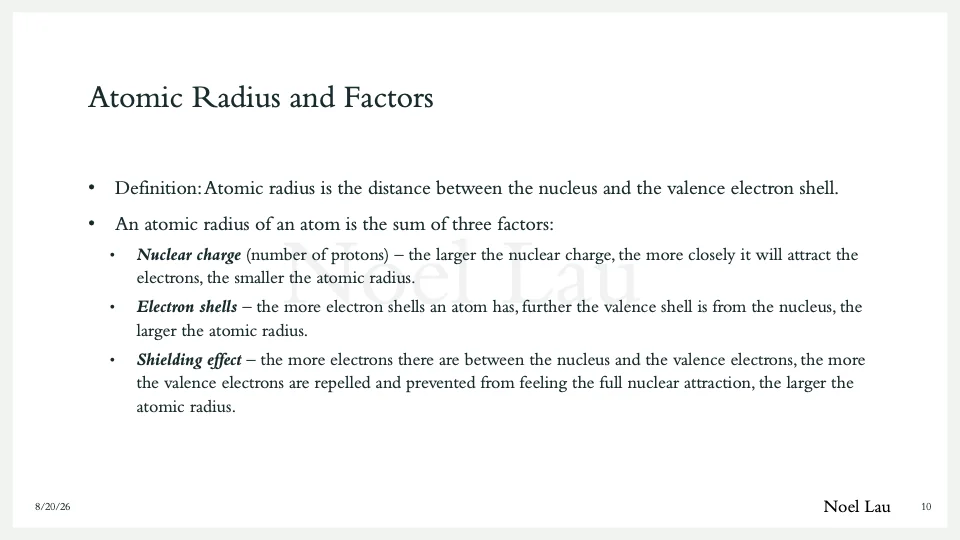
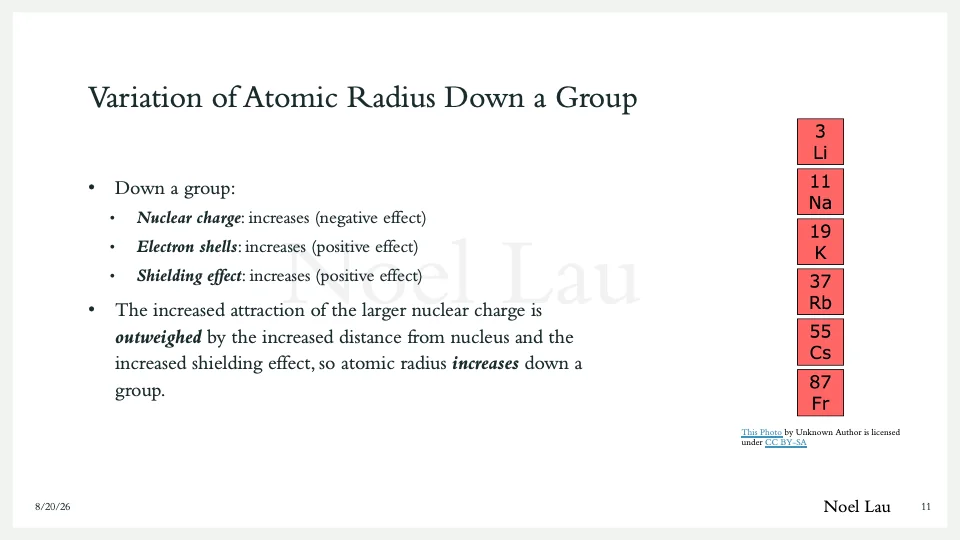
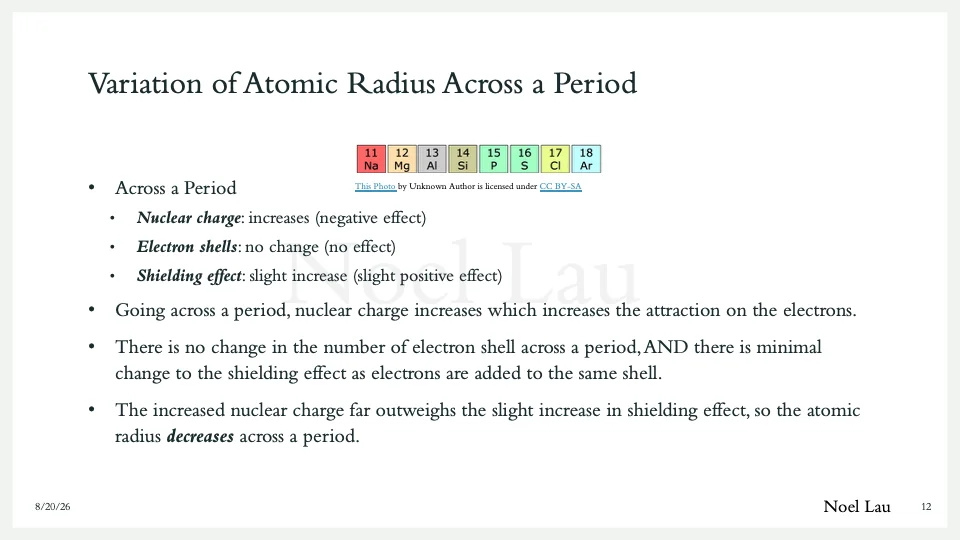
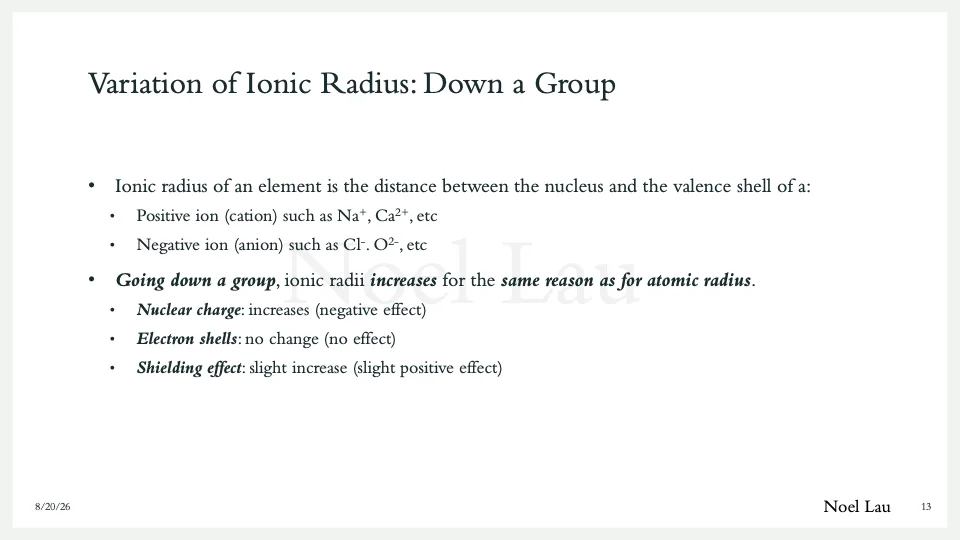
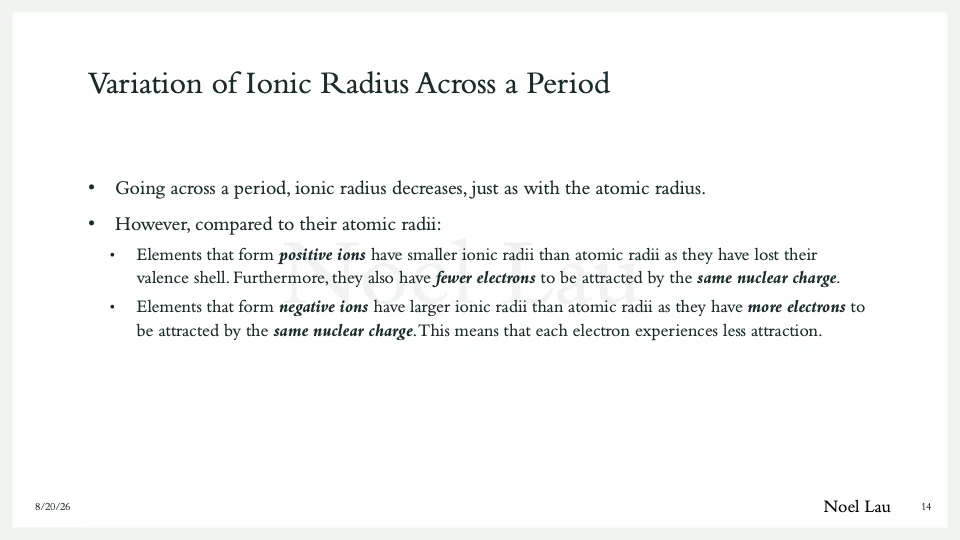
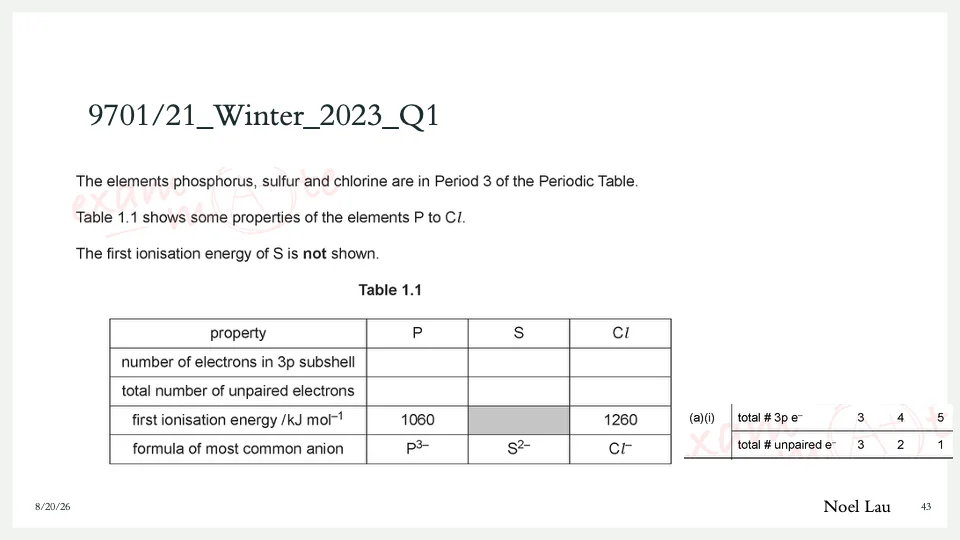
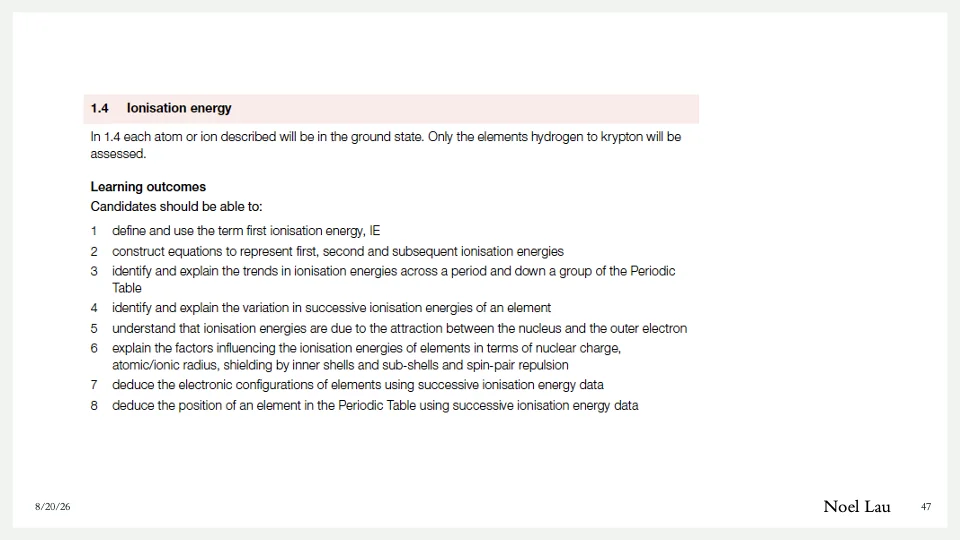
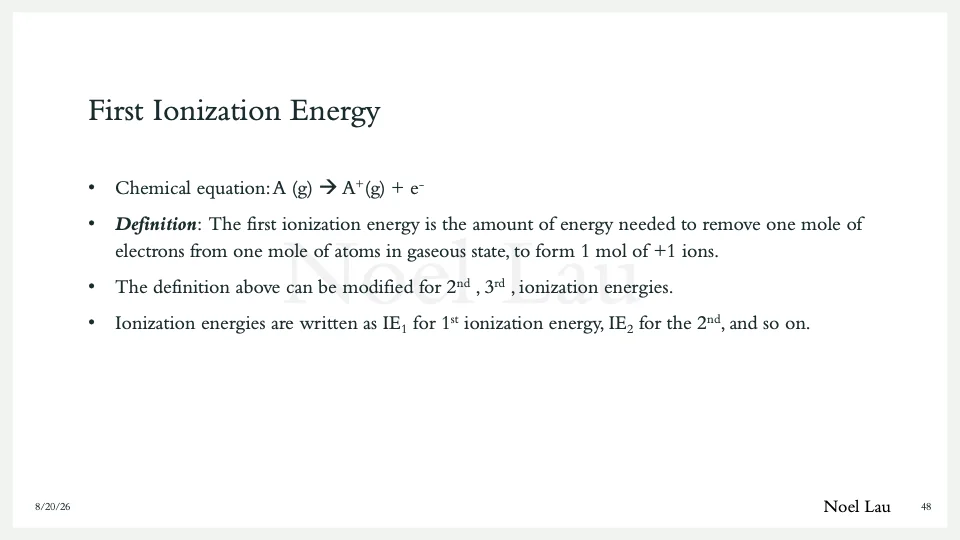
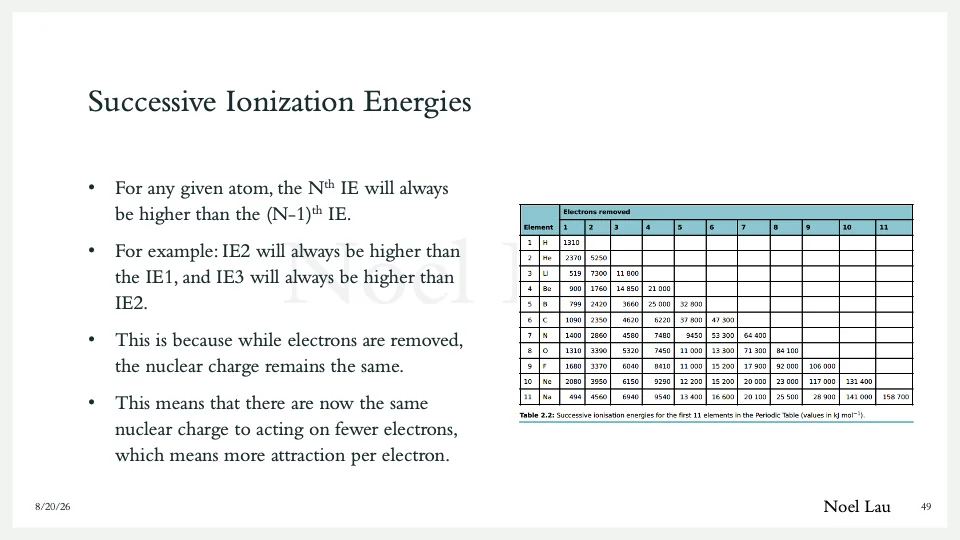
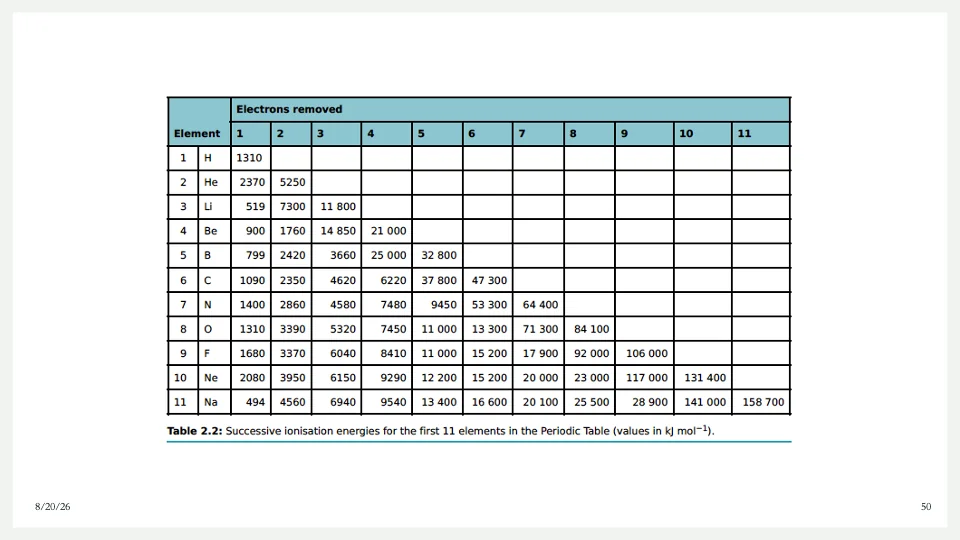
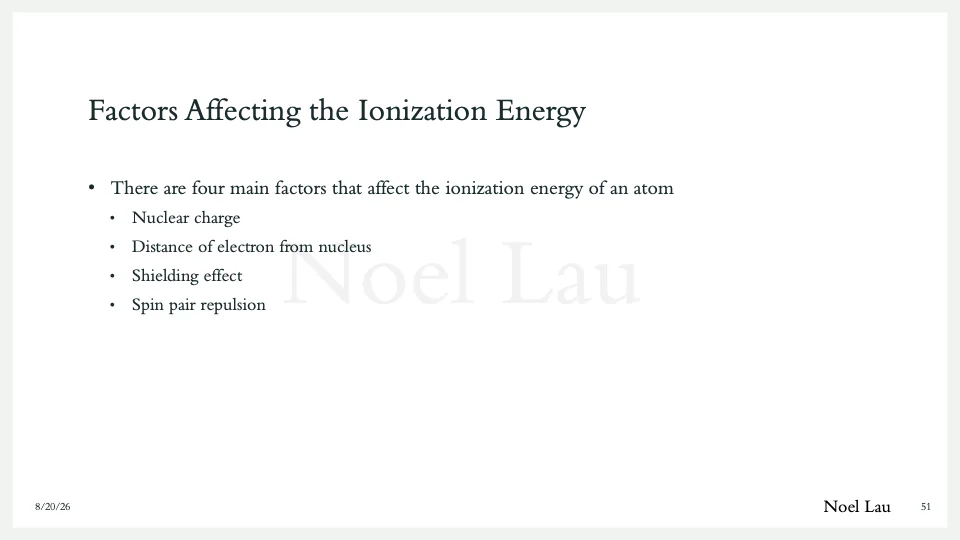
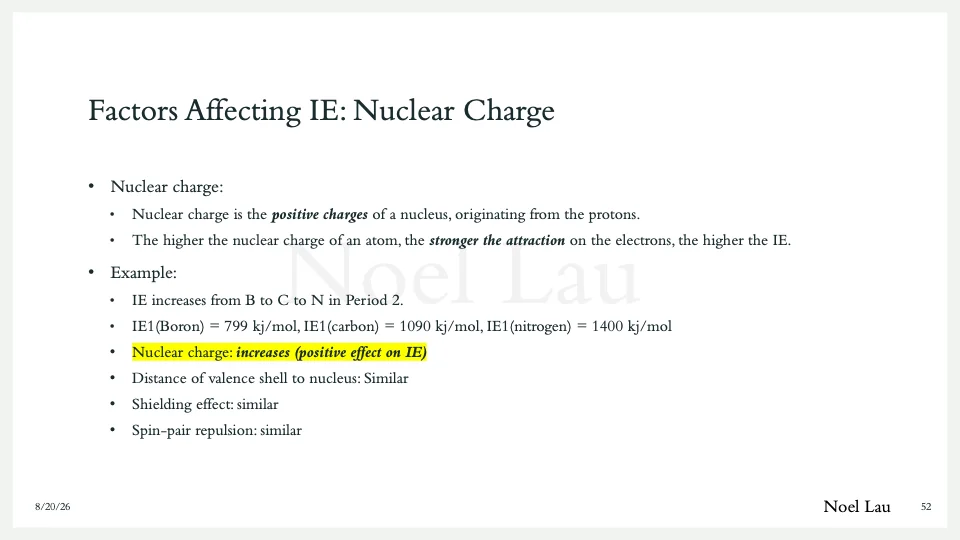
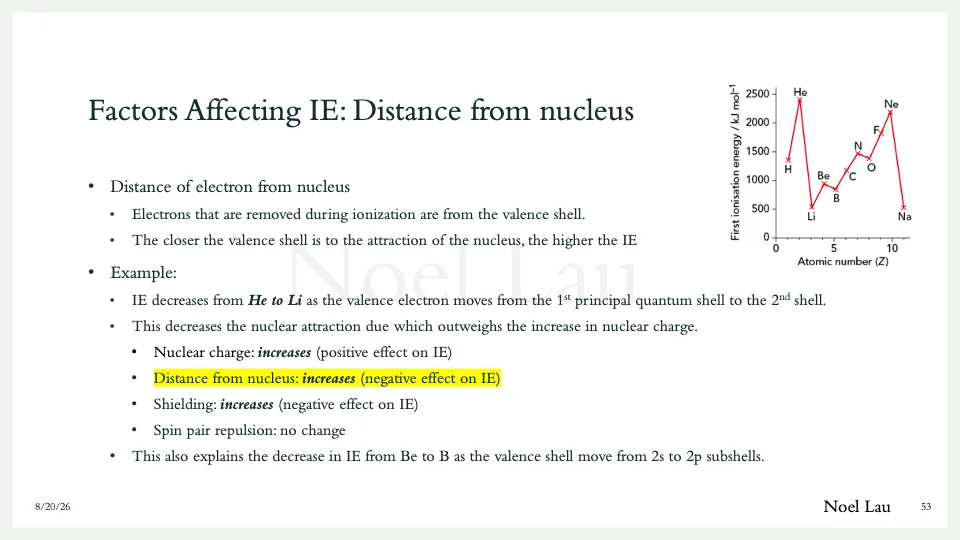
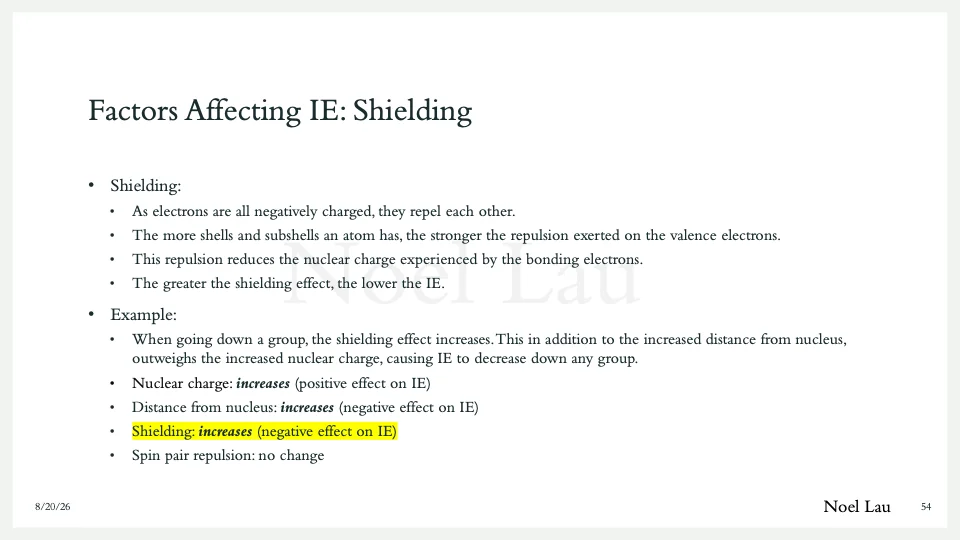
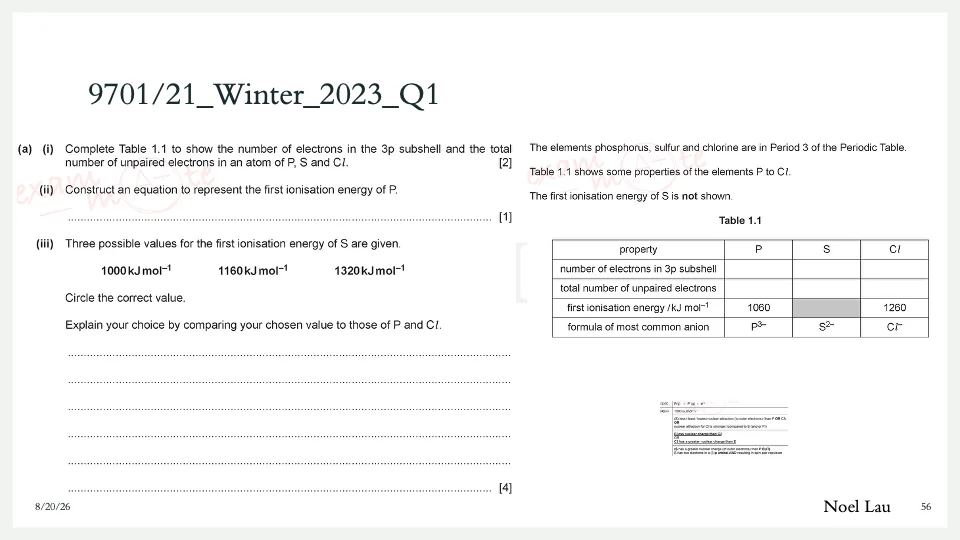
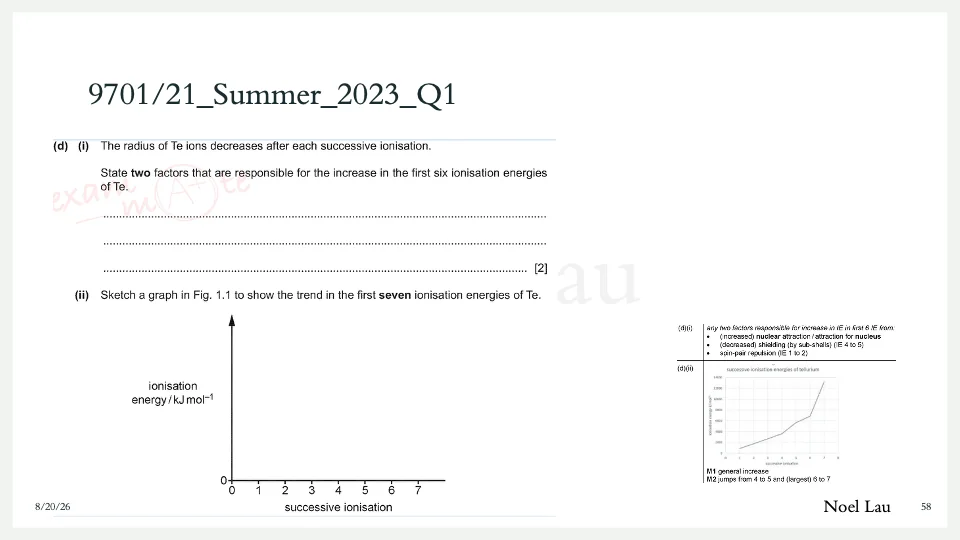
The chapter concludes with a systematic treatment of ionisation energies. Successive ionisation energy data are used to probe the arrangement of electrons within an atom, and the trends observed across periods and down groups are rationalised in terms of nuclear charge, atomic and ionic radius, and the shielding contributions of inner shells and sub-shells. This analytical approach to ionisation energy data, connecting experimental evidence to electronic configuration, is a skill that recurs throughout the course.